
REVIEW · RIJKSMUSEUM TICKETS
Skip-the-line Rijksmuseum & Rembrandt House & City – Exclusive Tour Guided Tour
A skip-the-line plan makes art click. This half-day tour pairs skip-the-line entry at the Rijksmuseum with Rembrandt House for a story you can follow from paintings to the artist’s life, and you get a guide who helps you choose what to see instead of wandering in circles. I like that the focus stays on the most important works plus the oddball details, like 17th-century dollhouses and Delft ceramics, and I also like how the walking part connects the museum day to real Amsterdam streets. One thing to keep in mind is that even with skip-the-line access, security can still mean some waiting, and the Rijksmuseum can occasionally shift plans if it closes unexpectedly.
You’ll start at Cobra Café, meet your guide, and spend about 5.5 hours total with a lunch break built in. It’s offered in English, it runs rain or shine, and it’s set up as a private experience for just your group. A recent highlight from feedback is the way guides give extra context and clear direction, including a guide named Frank who was praised for pointing out areas many people miss on their own.
In This Review
- Key Highlights You’ll Feel Right Away
- From Cobra Café to Rijksmuseum: Starting Smart in Amsterdam
- Inside the Rijksmuseum: 8,000 Objects, But You Still Know Where to Look
- What you’ll likely see, and why it helps
- A note on what can interrupt your museum flow
- Rembrandt House Museum: Seeing the Artist’s Work and Real Working Life
- What you’ll get out of it
- Spiegelkwartier and the Canal Borders: Amsterdam’s Water as a Map
- Why this walking segment has value
- Keizersgracht, Museum Van Loon, and Ferdinand Bol’s Connection
- Bloemenmarkt and Munttoren: The Flower Market Meets Medieval City Walls
- Rembrandtplein and the Bronze Night Watch: Art in Public Space
- The Amstel River: Skinny Bridge, Blue Bridge, and Stopera Views
- Jodenbuurt: Walking Through a Preserved Past
- Ending at Rembrandt House: A Strong Finish to a Half-Day Plan
- Price and Value: Is $284.15 Worth It?
- Practical Tips for a Smooth Museum-and-Canal Day
- Should You Book This Rijksmuseum and Rembrandt House Tour?
- FAQ
- Is this tour offered in English?
- How long is the experience?
- Where does the tour start and when?
- Is it private, or will I be with other groups?
- Does the price include museum admission?
- Is the Rijksmuseum and Rembrandt House skip-the-line access included?
- Will the tour run in bad weather?
- Do I need a mobile ticket or mobile phone number?
- Does the price include hotel pickup or drop-off?
- What bag size should I plan to bring?
Key Highlights You’ll Feel Right Away
- Skip-the-line entry at both the Rijksmuseum and Rembrandt House, so your time goes to looking, not queuing
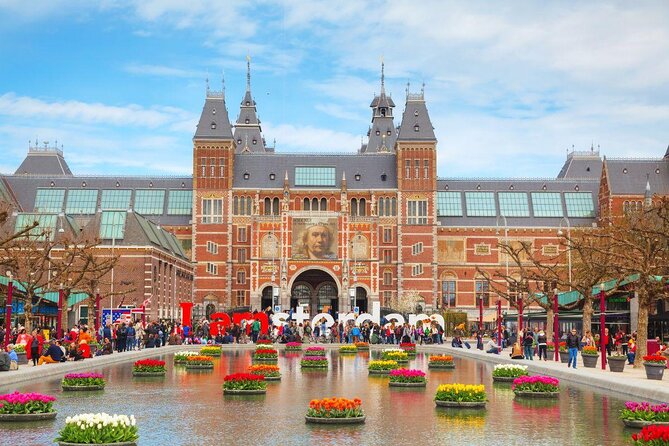
- A focused Rijksmuseum route through key masterpieces and memorable “first-timer” context across Dutch art
- Rembrandt’s home as a museum, including what he made and how his working life shaped the art world
- Canal and city landmarks between museums, from Singelgracht and Keizersgracht to the Amstel bridges
- Landmark stops that tie to art, like the bronze cast of The Night Watch on Rembrandtplein
From Cobra Café to Rijksmuseum: Starting Smart in Amsterdam
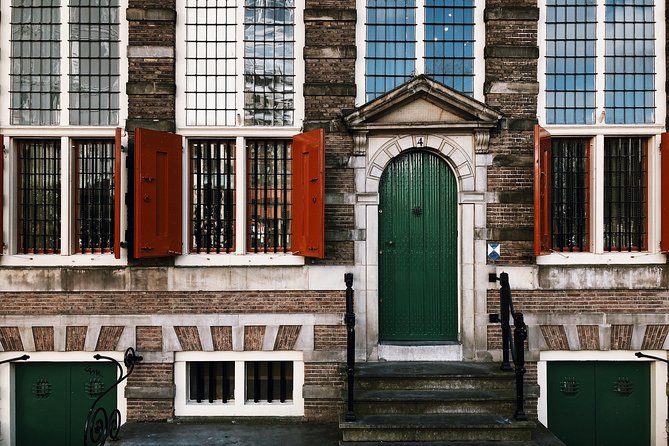
Your morning begins at Cobra Café, Hobbemastraat 18, near public transport. The start time is 10:00 am, which is a good move for two reasons: you beat the worst daytime crowds, and you get enough energy left for the later walking stops.
From there, the day is structured around two anchor visits. You get a guided museum session first, then a scenic walk through central Amsterdam, and finally you end at Rembrandt House. That sequencing matters. If you do Rembrandt House first, you can end up doing Rijksmuseum with a vague feel for who he was. If you do it the other way around, the paintings in the Rijksmuseum make more sense because you know the man behind the work.
This is a private tour for your group only, so you are not competing with a big shuffle of strangers for the guide’s attention. That also helps if your group has mixed interests, like one person who wants paintings and another who wants the museum buildings and everyday objects.
Practical note: you’ll need a mobile phone number (with country code) for confirmation and coordination, and you’ll get a mobile ticket. If you hate last-minute phone tasks, it’s worth making sure your number is handy before the day arrives.
More Rembrandt and Dutch Masters bookings:
- Amsterdam: Rembrandt House Museum Entrance Ticket
★ 4.7 · 3,385 reviews - Amsterdam: Fabrique des Lumières Dutch Masters Ticket
★ 4.6 · 2,373 reviews - Amsterdam: Van Gogh & Rembrandt Captivating Experience Entry
★ 4.3 · 615 reviews
Inside the Rijksmuseum: 8,000 Objects, But You Still Know Where to Look
The Rijksmuseum visit runs about 2 hours 30 minutes and includes admission. Think of it as a guided “first-time orientation” to Dutch art, not a speed-run where you sprint past everything.
Yes, the museum holds around 8,000 objects on display, and that can feel paralyzing. What I like about this tour format is that it turns the museum into a set of decisions. Your guide helps you connect the major artists and famous pieces with the broader Dutch culture around them.
What you’ll likely see, and why it helps
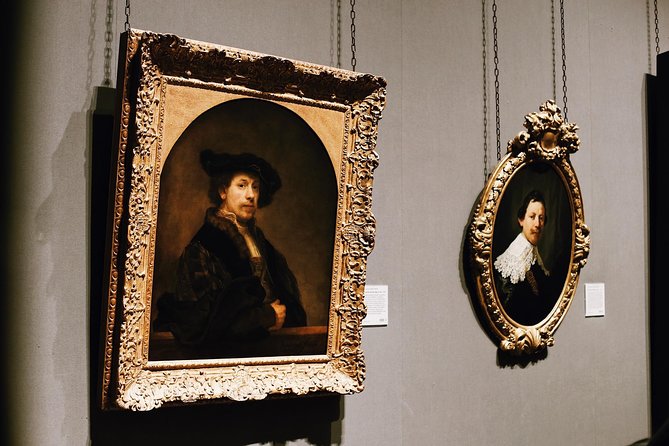
You’ll get a guided route that spotlights major Rembrandt masterworks and big-name Dutch art, including The Night Watch, The Jewish Bride, and The Syndics of the Drapers’ Guild. Then you’ll also get guided time for Johannes Vermeer’s The Milkmaid, which is often a “wow” moment for first-timers because the painting’s mood and domestic detail land fast.
The tour doesn’t just stop at the obvious canvases. It also includes quirky, concrete Dutch details that make the art feel less like a faraway textbook and more like people’s real life. Look out for time spent on 17th-century dollhouses, globes, ship replicas, and Delft ceramics. Those objects matter because they show how Dutch households and collectors saw the world, from trade and exploration to status and comfort.
One of the most memorable extras in this museum day is the 19th-century library. It’s not the kind of thing you guess you need until you see it, and it’s exactly the sort of room that makes the Rijksmuseum feel larger than just painting halls. If you like the museum as a building and not only as a gallery, this stop is a big part of the value.
A note on what can interrupt your museum flow
There is an important reality check. The Rijksmuseum can have occasional closures without warning. If the museum opening is delayed by more than 1 hour from the tour starting time, the provider says it will offer an appropriate alternative, but refunds or discounts may not be possible. That’s not something you can control as a traveler, but you can control your expectations: plan to stay flexible, and try to avoid any tight same-day appointments after your tour.
Also, dress code and security rules can affect your pace. Some sites require appropriate dress, and large bags and suitcases are not allowed inside the museum. Expect security checks, and even with skip-the-line access, some queues can still form due to increased security measures.
More Rijksmuseum bookings:
- Amsterdam: Rijksmuseum Entry Ticket
★ 4.7 · 29,512 reviews - Amsterdam: City Canal Cruise and Rijksmuseum
★ 4.5 · 2,226 reviews - Rijksmuseum Amsterdam Small-Group Tour with Private Upgrade
★ 4.5 · 1,547 reviews - Amsterdam: Rijksmuseum Entry Ticket and Canal Cruise Combo
★ 4.3 · 1,276 reviews
Rembrandt House Museum: Seeing the Artist’s Work and Real Working Life
After the walking circuit, you end at Rembrandt House Museum at Jodenbreestraat 4, and that part lasts about 1 hour with admission included.
Rembrandt House is not like a standard “look at artifacts behind glass” stop. It’s a period building tied directly to the artist’s own life. The museum covers the years when Rembrandt lived and worked there, between 1639 and 1656. That time span is useful because it anchors what you see to a specific phase of his career, instead of treating him like a generic master.
What you’ll get out of it
The museum collection includes Rembrandt’s etchings and paintings of his contemporaries. That means you’re not only seeing his final products. You’re seeing how he documented people around him, which helps connect the personal observational side of his art to the social world of 17th-century Amsterdam.
I also like that this ending point gives you closure. After seeing paintings at the Rijksmuseum, you finish by learning how he worked and what he focused on. It’s a satisfying loop: big museum art, then the scale of an artist’s actual home.
If your group loves street-level history and human-scale museums, this is the “stay longer” moment. If you’re less into fine art, the setting alone can still be worth it, since it turns Rembrandt into a lived-in figure.
Spiegelkwartier and the Canal Borders: Amsterdam’s Water as a Map
Once the Rijksmuseum part is done, you move into a guided walking segment. Stop time blocks are short, often around 10 minutes, but the idea is to give you orientation without draining your legs before the final museum.
You’ll head toward the Singelgracht canal, which borders the centre of Amsterdam. The tour explains that this canal was once part of the city’s outer defenses. That detail changes how you read the canal. It’s not just pretty water and reflections. It’s a historical boundary marker.
Why this walking segment has value
This is more than scenery. Amsterdam can feel like endless intersections. When your guide gives you a framework, like what Singelgracht and Keizersgracht represent in the city layout, you start navigating in your head, not just following a route on the ground.
Also, shorter outdoor segments help if you’re traveling with mixed energy levels. You get movement, fresh air, and built-in breaks before the next indoor stop.
Keizersgracht, Museum Van Loon, and Ferdinand Bol’s Connection
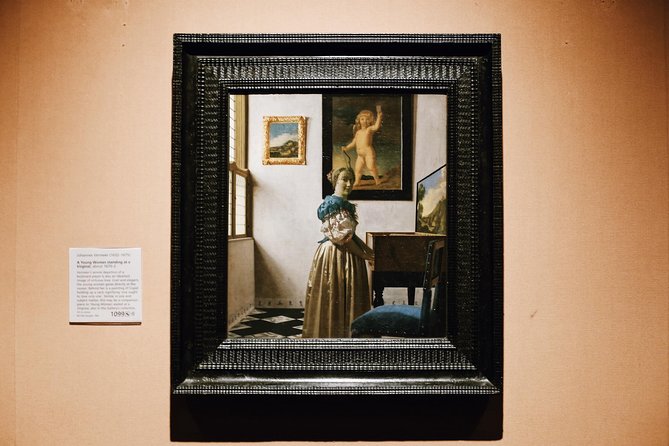
Next comes the Emperor’s Canal, Keizersgracht, the middle of Amsterdam’s three main canals and the widest in the inner city. The name comes from Emperor Maximillian of Austria, which is the kind of fact a good guide drops in so the city has a logic behind it.
Right after that, you’ll pass by Museum Van Loon, housed in a canalside building. This stop is brief and admission is not included, but it’s described as being known as the house of Ferdinand Bol, Rembrandt’s favorite pupil. Even without going inside, it’s a useful connection. It reminds you that Rembrandt wasn’t working in isolation, and Amsterdam had a whole circle around him.
If you do want to step into Van Loon later, you could plan for it independently. The tour’s value here is that it gives context first, so you understand why Bol matters.
Bloemenmarkt and Munttoren: The Flower Market Meets Medieval City Walls
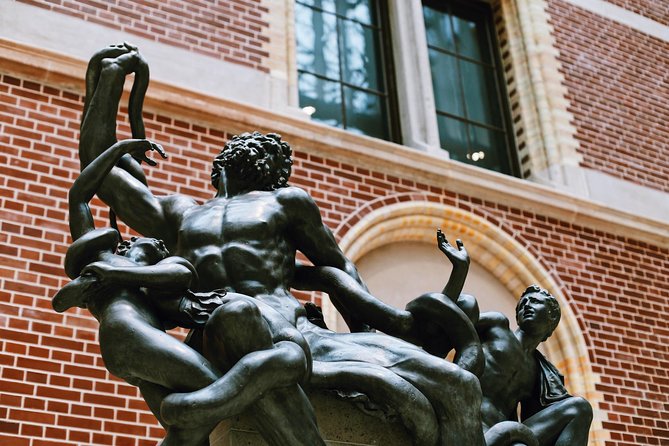
You’ll walk through the Bloemenmarkt, Amsterdam’s flower market, and pass the Munttoren, which is nicknamed the Mind Tower. The tower originally formed part of one of the main gates in Amsterdam’s medieval city wall.
This stop works well because it mixes everyday Amsterdam life with a historical anchor. A flower market can be easy to treat like a photo stop. With the medieval gate context, you start seeing the street pattern as something older than the shops.
Also, the tour repeats the walking loop through this area, so you are not rushing through it once and forgetting it. The point is to show you landmarks in a way you can later recognize while walking around on your own.
Rembrandtplein and the Bronze Night Watch: Art in Public Space
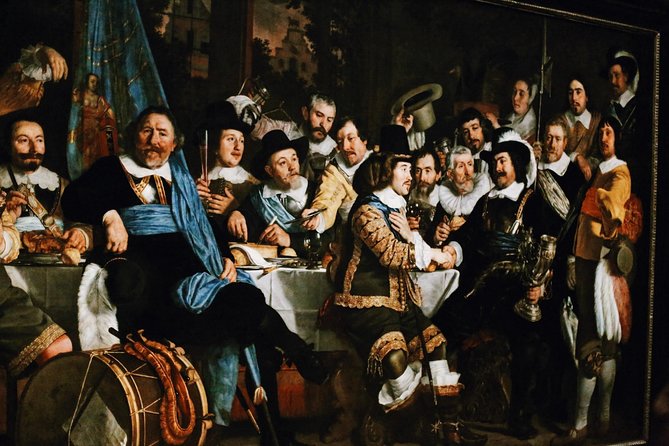
Rembrandtplein is one of the busiest squares in the city, and the tour guides you through it with a clear art connection. You’ll see a bronze-cast representation of The Night Watch. The cast was displayed as part of celebrations for Rembrandt’s 400th birthday in 2006.
This is one of my favorite kinds of landmark stops because it turns a famous painting into something you can physically point to while standing in the city. It also helps you remember what you saw earlier in the Rijksmuseum. When the painting is still fresh in your mind, the bronze cast becomes a kind of memory trigger.
The square is busy, so if you like quiet, this might feel less peaceful than the museum rooms. Still, it’s a solid reminder that Rembrandt is not only housed in galleries. He’s part of how Amsterdam talks about itself.
The Amstel River: Skinny Bridge, Blue Bridge, and Stopera Views
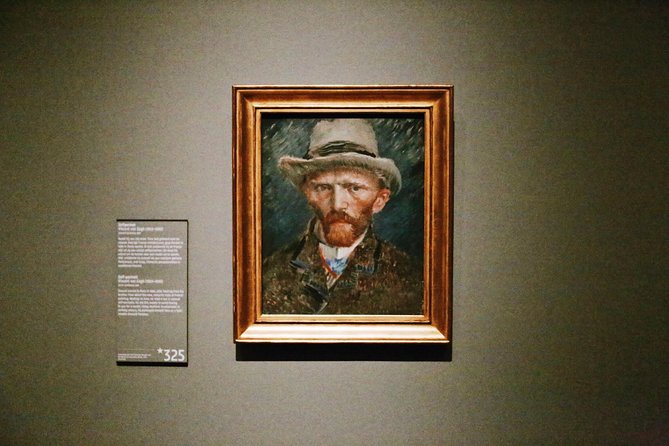
The walk continues along the Amstel River. You’ll see two bridges: the Skinny Bridge and the Blue Bridge.
The Skinny Bridge is described as Amsterdam’s most famous bridge, and it spans the Amstel from 1934. The Blue Bridge name is a quick reality check, because it is not blue at all. The name comes from a wooden blue bridge that spun across the Amstel in the 17th century. Those small, almost-story-like details are exactly where a good guide makes the city feel human.
Then you’ll pass by the Stopera, a building complex that houses both the city hall and the Dutch National Opera and Ballet. Construction took at least 60 years. That fact is useful because it frames the building as a long-term project, not a quick architectural trend.
This section is short, but it gives you variety. After museum time and canal time, it adds landmarks you can remember even after you leave the guided route.
Jodenbuurt: Walking Through a Preserved Past
The day’s final stretch includes a walk toward Jodenbuurt, the former Jewish neighborhood. The tour notes that many historically important buildings are preserved and managed by the Jewish Cultural Quarter.
You should expect this part to feel more solemn than the market or the busy square. Even without going inside, it provides a sense that Amsterdam’s history is layered, not a single timeline. It’s also a practical buffer before Rembrandt House, since it keeps you moving while still slowing the pace emotionally and mentally.
If your group enjoys respectful, contextual walking, this is a good place for a reflective moment. If your group prefers pure sightseeing, keep it moving, but don’t skip listening for the guide’s framing.
Ending at Rembrandt House: A Strong Finish to a Half-Day Plan
The tour ends at Rembrandt House Museum, where you spend about an hour. This ending is smart because you finish with something personal and specific. The Rijksmuseum gives you scale. Rembrandt House gives you personhood.
That contrast is what makes this combo work. It’s not just two stops in the same day. It’s a story arc: Dutch art masterpieces and cultural objects, then the artist in his working life.
Price and Value: Is $284.15 Worth It?
At $284.15 per person for a 5.5-hour private experience, the price is not cheap. But you can judge value by what you actually get, not by the sticker shock.
Here’s where the value comes from:
- Two guided museum admissions included (Rijksmuseum and Rembrandt House), which matters in a city where tickets add up fast
- Skip-the-line privileges at the Rijksmuseum and Rembrandt House, which saves time for sightseeing and reduces stress
- A private guide for your group, which improves your odds of seeing the things you care about
- A structured route that connects art to city landmarks, so the day feels like more than walking from ticket to ticket
There is also mention of group discounts. If you’re traveling with friends or family, the total cost may feel more reasonable because you can justify paying for a guide versus doing everything independently.
One key detail: the tour description says the guide is exclusively for you, but it does not apply if you choose a semi-private option. If you care about one-on-one pacing, choose the fully private version.
Who this fits best:
- You’re a first-timer in Amsterdam who wants a plan that makes the city and the art museums feel connected
- You like big museums but hate decision fatigue
- Your group includes at least one Rembrandt fan, because the art links are strong
Who should think twice:
- You dislike walking and outdoor segments, since you do multiple short stops
- You’re extremely budget-focused and want to do everything on your own
- You can’t handle any schedule uncertainty, because the Rijksmuseum may occasionally shift with closures, and the provider may offer alternatives without guaranteed refunds
Practical Tips for a Smooth Museum-and-Canal Day
Before you go, set yourself up for easy wins:
- Bring a small bag only. Large bags and suitcases are not allowed inside the Rijksmuseum, only handbags or small thin bag packs through security.
- Dress appropriately for museum entry. Some sites require it.
- Expect security checks. Skip-the-line helps, but lines can still happen at some attractions due to increased security.
- Plan for quiet rules indoors. Some rooms inside the Rijksmuseum may require quiet or restrict speaking, and your guide will tell you before entering.
- Have your phone number ready. You must provide a mobile phone number including country code, and you’ll use a mobile ticket.
- Wear comfortable shoes. The walking stops are short, but you’ll still be on foot for much of the half-day.
Should You Book This Rijksmuseum and Rembrandt House Tour?
If you’re choosing between doing this area on your own and hiring a guide, my advice is simple: book this if you want to see the best of the Rijksmuseum without losing time, and you want Rembrandt House to land as a meaningful ending rather than a random add-on.
I especially like that the day mixes art with city reading. You’re not just consuming masterpieces. You’re learning how Amsterdam’s canals, gate structures like the Munttoren, and public art like the bronze Night Watch relate to the bigger story.
Skip the tour only if your group truly prefers total freedom, you’re not into museums, or you’re traveling with a tight schedule where a possible museum closure could throw you off. For most people, this is a strong, practical way to get from Dutch art icons to the streets where the city remembers them.
FAQ
Is this tour offered in English?
Yes. The tour is offered in English.
How long is the experience?
It runs about 5 hours 30 minutes.
Where does the tour start and when?
It starts at Cobra Café, Hobbemastraat 18, 1071 ZB Amsterdam, Netherlands at 10:00 am. It ends at Rembrandt House Museum, Jodenbreestraat 4, 1011 NK Amsterdam, Netherlands.
Is it private, or will I be with other groups?
It is a private tour/activity, meaning only your group participates.
Does the price include museum admission?
Yes. All entrance fees are included.
Is the Rijksmuseum and Rembrandt House skip-the-line access included?
Yes. The tour includes skip-the-line guided museum tour access at both.
Will the tour run in bad weather?
Yes. The tour runs rain or shine.
Do I need a mobile ticket or mobile phone number?
Yes. It uses a mobile ticket, and you must provide a mobile phone number including country code.
Does the price include hotel pickup or drop-off?
No. Hotel pickup and drop-off are not included.
What bag size should I plan to bring?
No large bags or suitcases are allowed inside the Rijksmuseum. Only handbags or small thin bag packs are allowed through security.
Newest bookings around Amsterdam
- Amsterdam Breakfast Cruise on Private Luxury Boat★ 5.0 · 5 reviews
- Amsterdam-West Food Tour with local guide★ 5.0 · 16 reviews
- Van Gogh Museum Tour excluding Entrance Tickets★ 5.0 · 16 reviews
- Van Gogh Museum with Audio Guide★ 3.5 · 80 reviews
- Amsterdam: Explore the Van Gogh Museum & His Masterpieces★ 3.5 · 64 reviews
- Van Gogh Museum Ticket with Audio Guide and Unlimited Access Time★ 5.0 · 25 reviews
- Van Gogh Museum Entry Ticket and Guided Tour★ 4.5 · 48 reviews
- Van Gogh Museum Private Tour★ 5.0 · 5 reviews
Rijksmuseum Tickets, compared.


Rijksmuseum Amsterdam Small-Group Tour with Private Upgrade
Read our review →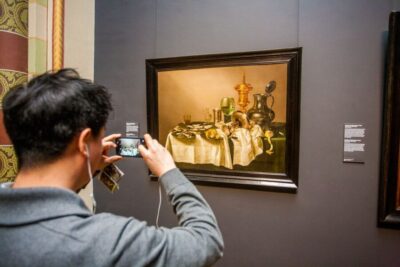
Rijksmuseum Entry Ticket and Canal Cruise Combo
Read our review →
Go City Amsterdam Pass: Attractions Pass with Rijksmuseum
Read our review →

Rijksmuseum Amsterdam Exclusive Guided Tour w/ Reserved Entry
Read our review →
Van Gogh & Rijksmuseum w/ Reserved Entry Semi-Private 8ppl Max
Read our review →Browse the lists this tour appears in