
REVIEW · VAN GOGH MUSEUM TICKETS
Van Gogh Museum Private Tour
Van Gogh gets human, fast. In this private 2-hour visit at the Van Gogh Museum in Amsterdam, you get a focused route through the highlights, with admission tickets built in and time to ask questions instead of just wandering. It is also a great way to break up a sightseeing day without committing to a half-day museum marathon.
Two things I really like about this experience are the private guide attention and the pace. Guides in reviews, like Sylvia, Giulia, and Kiran, kept small groups moving along while still making room for questions, and the whisper system helped make the explanations clear. You get more meaning from the paintings when someone can point out what to notice and why.
One possible drawback to think about: you only have about 2 hours, so you will not see every room or every major work. Also, after your tour you are not allowed to stay in the museum unless you travel lightly (small jacket and small handbag, no thick winter jackets, suitcases, large bags, or liquids).
In This Review
- Key highlights to know before you go
- Why this 2-hour private Van Gogh Museum tour makes sense in Amsterdam
- Getting there and meeting point flow at Cobra Café
- Stop 1: Van Gogh Museum self-portraits and the “who is this man?” moment
- Stop 2: Millet and Breton influence, plus the potato-themed core works
- Stop 3: Paris years between 1886 and 1888, color, cafe life, and quiet romance
- Stop 4: Arles and the South of France, sunflowers, the Yellow House, and Japanese echoes
- Stop 5: Saint-Rémy-de-Provence, calmer skies that hide tension
- Stop 6: The Auvers Room, Tree Roots and Wheatfield with Crows
- Why the guide you get can change everything
- Price and value: what $263.20 buys you in a 2-hour tour
- Practical tips for a smoother museum visit
- Who should book this private Van Gogh Museum tour?
- Should you book it?
- FAQ
- How long is the Van Gogh Museum private tour?
- Is admission to the museum included?
- What languages are offered?
- Where do we meet at the start?
- Where does the tour end?
- Can we stay in the museum after the tour?
- Is this tour only for adults?
- What is the cancellation policy?
Key highlights to know before you go
- Private, language-chosen guide with a whisper system so you can actually hear the story
- Admission tickets included, so you are not juggling extra steps during your visit
- A tight route that hits self-portraits, Paris, Arles, Saint-Rémy, and Auvers
- Interactive feel based on real guide feedback, not just one-way talking
- Short enough to fit between canal walks and dinner, especially if you hate rushing
- Stops built around eras, so you see how his style and themes shift
Why this 2-hour private Van Gogh Museum tour makes sense in Amsterdam
Amsterdam is good at overloading you. One canal cruise, one museum, one walk, and suddenly it is 6 p.m. and you have seen ten things but understood almost none of them. A short private museum tour fixes that problem by doing two things at once: it gets you into the right rooms quickly, and it gives you a guide who helps you connect the dots.
This tour also works if you like your art with context. The Van Gogh Museum is not just a catalog of famous paintings. It is a story, told through works across different periods. The visit is built around those periods, so you are not just looking at masterpieces, you are seeing how the artist changed as his life changed.
And because it is private, you can slow down for the pieces that grab you. If you want to spend an extra minute with something like the Potato Eaters or the Saint-Rémy wheatfields, you can. If you want the quick overview first, you can get that too.
More Museum Tours in Amsterdam
- Amsterdam: Van Gogh Museum Ticket
★ 4.7 · 52,054 reviews - Moco Museum Amsterdam Entrance Tickets with Banksy & More
★ 4.4 · 10,088 reviews - Amsterdam: Red Light Secrets Museum Entry Ticket
★ 4.2 · 5,722 reviews
Getting there and meeting point flow at Cobra Café
You start at Cobra Café (Hobbemastraat 18, 1071 ZB Amsterdam) and your visit ends at Museumplein 6 (1071 DJ Amsterdam). That location choice matters because Museumplein is a practical hub for public transport, and you can pair the tour with other sights nearby without complicated logistics.
One thing I find calming about this setup is that the tour is structured. Even if you know the museum exists, inside it can feel like a maze. Here, you are guided through a set sequence of stops, so you are not constantly checking directions or second-guessing where to go next.
The whisper system is another big practical win. In the feedback, people specifically noted that the ear pieces worked well. That is especially useful in a museum where sound can bounce around. You want to hear the guide clearly, not play guessing games while you are looking at brushwork.
Stop 1: Van Gogh Museum self-portraits and the “who is this man?” moment
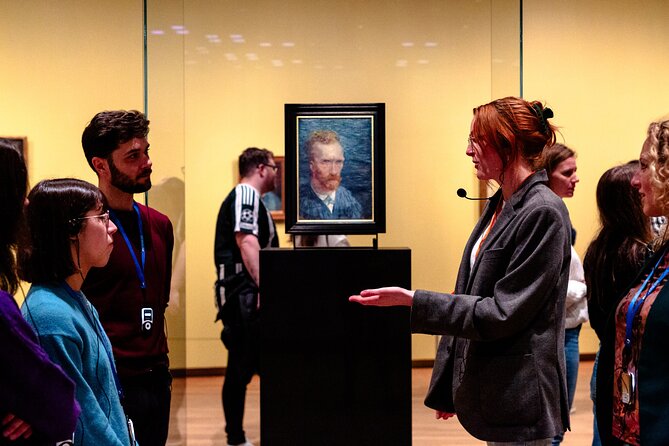
Your first stop focuses on Van Gogh’s self-portraits. That might sound obvious, but it is a smart opener. Self-portraits do more than show a face. They show how an artist wants to be seen at a particular point in time.
This is where you start to notice a pattern you will keep seeing in later rooms. His look, his expression, and the choices in background and clothing change with his situation. When a guide points out details like posture or how he uses paint and tone, the portraits start acting like a timeline.
At around 20 minutes for the stop, you get enough time to do more than just glance. You can read what the painting is trying to communicate and then move forward with your eyes better tuned for what comes next.
Stop 2: Millet and Breton influence, plus the potato-themed core works
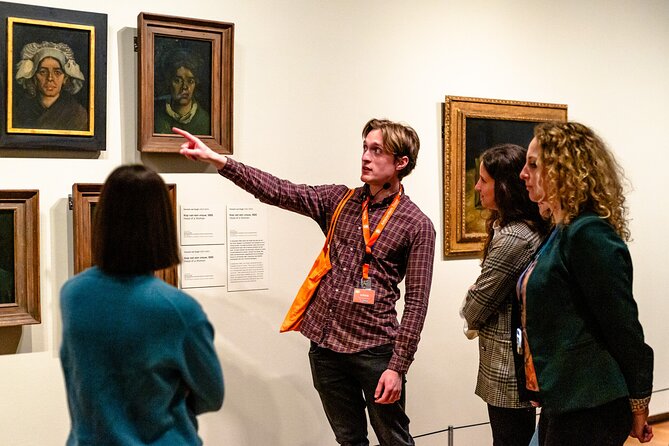
The next portion shifts to influences and early themes. You get the first floor foyer paintings tied to Millet and Jules Breton, along with standout works such as Woman Lifting Potatoes and the Potato Eaters. You also see the wall of portraits titled Head of a Peasant Woman.
Why this stop matters: Van Gogh did not create in a vacuum. He learned from earlier painters, and he absorbed ideas about everyday life, labor, and dignity. The potato works are especially important because they show more than rural poverty or hardship. They show the dignity of ordinary people rendered with seriousness.
A guide can help you notice what many visitors miss. For example, in works like the Potato Eaters, the composition and faces pull you in. You start to see emotional weight in the way the figures sit, look, and share the space. Without guidance, it is easy to categorize the scene too quickly. With guidance, it becomes human.
One practical thought: if you have limited patience for crowded rooms, this is a good place to use the guide’s pacing. Stay close enough to hear, but do not feel pressured to rush your own visual reading. The time here is designed to be just enough.
More Van Gogh Museum bookings:
- Amsterdam: Van Gogh Museum Ticket and City Canal Cruise
★ 4.6 · 3,899 reviews - Amsterdam: Van Gogh Museum Ticket & Canal Cruise
★ 4.5 · 3,304 reviews - Van Gogh Museum Amsterdam Exclusive Tour w/ Reserved Entry
★ 5.0 · 1,760 reviews - Van Gogh Museum Tour Reserved Entry Semi Private
★ 5.0 · 1,437 reviews
Stop 3: Paris years between 1886 and 1888, color, cafe life, and quiet romance
Then comes Paris, from 1886 to 1888. You see Self Portrait with Felt Hat, Still Life with Absinthe, In the Café: Agostina Segatori in Le Tambourin, and Garden with Courting Couples.
This part is where Van Gogh’s life starts to feel more social and electric. The museum route uses these pieces like chapters. The felt hat self-portrait gives you a face framed by style and self presentation. The absinthe still life brings in that era’s atmosphere and mood.
The cafe painting, with Agostina Segatori, is often a turning point for visitors because it mixes observation and story. A guide can help you track how Van Gogh places figures and uses color to suggest energy without turning it into chaos. Then the garden scene with courting couples adds a softer note, letting you see how he could shift from public life to intimate moments.
This stop is also a good test for whether you enjoy stories with your art. If you like your museum time to come with clear connections, you will probably love this section. If you prefer pure technique study and minimal context, you can still focus on color changes and composition, but you will want the guide’s explanation to keep things grounded.
Stop 4: Arles and the South of France, sunflowers, the Yellow House, and Japanese echoes
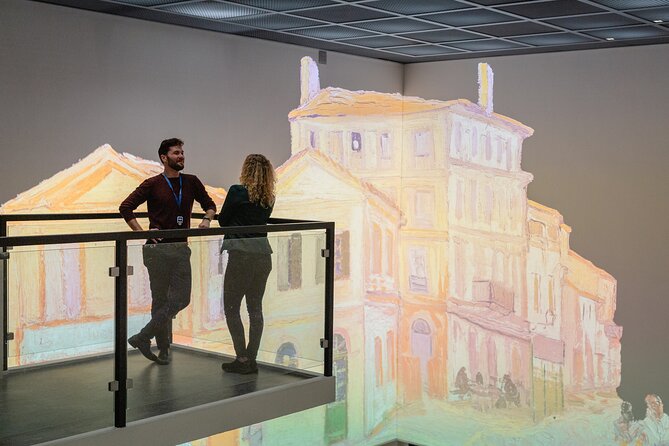
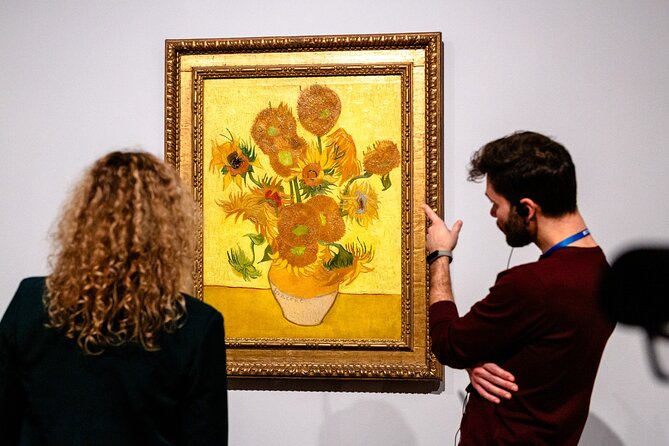
Next is Arles, starting in 1888. The works you see include Sunflowers, Almond Blossoms, The Bedroom, Japanese Paintings (copies from prints), and The Yellow House.
This is the part where many people finally feel it, the shift to bolder color and more confident settings. Sunflowers is the obvious magnet. But what I like about including it in a route is that you do not stop at one famous canvas. You move through related pieces that build a complete feeling of place.
Almond Blossoms brings in a season and a kind of light. The Bedroom is intensely personal, like a small world he is building for living and dreaming. The Japanese Paintings segment matters because it shows how Van Gogh looked outward and adapted. He was inspired by prints, and seeing copies within the museum context helps you understand how those ideas filtered into his own style.
The Yellow House ties the Arles story to its emotional atmosphere, almost like you are walking through the walls with him. If you are the kind of person who loves place-based art, this stop is where you will connect the most.
Drawback to keep in mind: because you have limited time, you will likely focus on a handful of major pieces in this period. It is still a strong overview, just not a full Arles deep study.
Stop 5: Saint-Rémy-de-Provence, calmer skies that hide tension
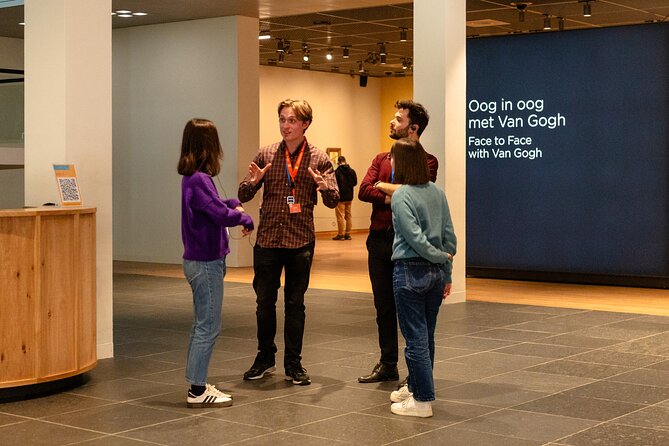
On Level 3, you shift to Saint-Rémy-de-Provence. The stops here include Almond Blossoms, Wheatfield with a Reaper, Iris, and Pieta (After Delacroix).
This section is built like a mood change. The works are still visually striking, but the emotional temperature feels different. Wheatfield with a Reaper can be read as peaceful, yet the composition can also feel watchful. Iris often draws people in because it is both delicate and forceful at the same time. And Pieta (After Delacroix) is a reminder that Van Gogh was not only reacting to the world around him. He was also in dialogue with art he admired, even when the connection came through existing works.
A guide helps you hold more than one idea at once. You can appreciate the beauty without ignoring the gravity. That is a hard balance to maintain if you are just rushing room to room, trying to read labels.
Time here is about 20 minutes. That is enough to notice what repeats across his periods, and enough to start recognizing his visual language.
Stop 6: The Auvers Room, Tree Roots and Wheatfield with Crows
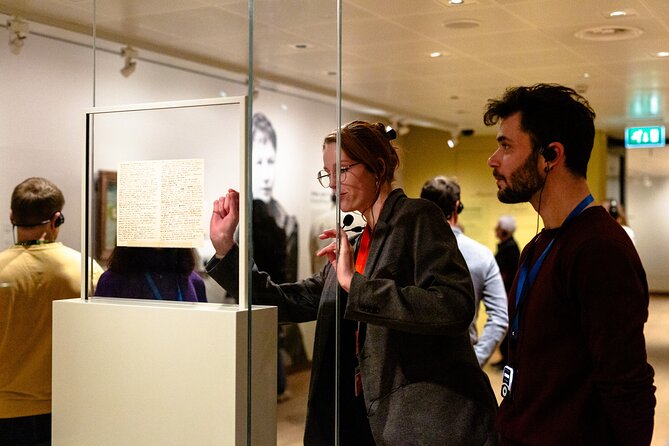
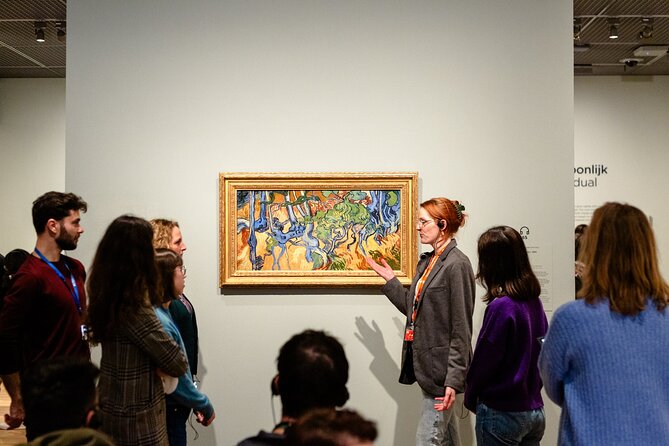
Finally, you move to Level 3 for the Auvers Room with Tree Roots and Wheatfield with Crows, about 15 minutes.
This ending works because it is short and focused. You leave with a sense of closure without exhausting yourself. Wheatfield with Crows is one of those paintings that can feel impossible to explain in a sentence, but it becomes easier once someone points out how the sky and field pull your eye.
Tree Roots is a different kind of emotion. It is not landscape as sightseeing. It is landscape as structure, almost like a living diagram. A good guide will help you see the marks and forms as more than texture.
If your brain gets tired after hours of walking, this final stop is a good landing pad. You are not forced to keep hunting for meaning after the tour ends, because the last moments are chosen to make a lasting impression.
Why the guide you get can change everything
What stands out in the reviews is how much people valued the guide’s role, not just the access. Sylvia was described as sweet, interactive, and fun, with a clear enthusiasm for welcoming visitors. Giulia was praised for a perfect pace and explanations that left plenty of room for questions. Kiran was singled out for being very informative and patient, and for making the stories feel easy to follow.
In plain terms, this matters because the museum can tempt you into passively consuming information. Audio guides can help, but a live guide can react to your questions, adjust the pacing, and point out what matters most right now.
The whisper system supports that. If you can hear the guide clearly, you will ask more questions. If you can ask more questions, you will notice more paint.
So, when you are deciding whether this tour is worth it, think of the guide as part lecturer and part translator. They turn the museum’s visual language into something you can actually read.
Price and value: what $263.20 buys you in a 2-hour tour
At $263.20 per person for about 2 hours, you are paying for three things: a private guide, included museum admission, and a guided route that keeps you from wasting time.
If you were to enter the museum on your own, you could save money on the guide. But you would likely spend extra time figuring out what to see first and how to understand it. The trade is simple. You pay for direction and interpretation, and you gain time and clarity.
This price starts to make more sense if you care about getting value from a short visit. The tour is designed to cover key periods and big works without demanding you stay all day. If you have limited time in Amsterdam, the guided structure is not a luxury. It is a shortcut to understanding.
Also remember: admission tickets are included for each stop listed, which helps prevent “surprise costs” that sometimes pop up with add-ons.
Practical tips for a smoother museum visit
A few details can make your experience better right away:
- Keep your bag small if you want options after the tour. After the visit, you are not allowed to stay in the museum unless you are traveling lightly. That means no thick winter jackets, suitcases, large bags, or liquids. A small jacket and small handbag are the better bet.
- Wear shoes you can stand in. Even a 2-hour tour includes multiple rooms and floors.
- Bring questions, even simple ones. The best part of having a private guide is that you can ask what you are stuck on, like what a symbol might mean or why a period looks different.
- Plan your day around this being a break. It is short enough to pair with other Museumplein sights, and it can reset you before dinner.
One small note: this tour is for adults 18 and older, and it is a private tour where only your group participates. That matters if you are traveling with mixed ages, or if you prefer the calm of a group that matches your pace.
Who should book this private Van Gogh Museum tour?
This is a strong fit if you are:
- An art lover who wants a clear story, not just a list of paintings
- Short on time in Amsterdam and want a 2-hour plan you can trust
- Visiting with a partner or small group and want personal attention
- Someone who benefits from hearing explanations in English through the whisper system
If you are the type who likes to linger for hours, read every label, and wander freely, you might find the time limit too strict. But if you want understanding fast, this route is built to get you there.
Should you book it?
Yes, if you want the Van Gogh Museum to feel like a story you can follow instead of a maze of rooms. The included admission, the private guide, and the guide quality highlighted in reviews make this a smart buy for a short visit. Pay attention to the two-hour limit and the post-tour rules about staying in the museum, and you will set yourself up well.
If you are unsure, book early and plan your art day with the tour as your anchor. You will leave with clearer connections between Paris, Arles, Saint-Rémy, and Auvers, and you will know what to look for next time you see Van Gogh works elsewhere.
FAQ
How long is the Van Gogh Museum private tour?
It lasts about 2 hours.
Is admission to the museum included?
Yes. Admission tickets are included for the stops listed on the tour.
What languages are offered?
The tour offers a private guide in your chosen language, and the tour is offered in English.
Where do we meet at the start?
The start point is Cobra Café, Hobbemastraat 18, 1071 ZB Amsterdam, Netherlands.
Where does the tour end?
The tour ends at Museumplein 6, 1071 DJ Amsterdam, Netherlands.
Can we stay in the museum after the tour?
You are not allowed to stay in the museum after the visit unless you are traveling lightly, such as with just a small jacket and a small handbag. Thick winter jackets, suitcases, large bags, and liquids are not included for staying after.
Is this tour only for adults?
Yes. It is only available for adults age 18 and older.
What is the cancellation policy?
Free cancellation is available. You can cancel up to 24 hours in advance for a full refund, and the cut-off is based on the local experience start time.
More Museums in Amsterdam
- Amsterdam’s Weirdest Museum: Ripley’s Believe It or Not!
★ 4.5 · 4,920 reviews - Amsterdam: Rembrandt House Museum Entrance Ticket
★ 4.7 · 3,385 reviews - Amsterdam: NEMO Science Museum Ticket
★ 4.4 · 2,979 reviews - Amsterdam: Streetart Museum STRAAT Entrance Ticket
★ 4.8 · 2,137 reviews
Newest bookings around Amsterdam
- Amsterdam Breakfast Cruise on Private Luxury Boat★ 5.0 · 5 reviews
- Amsterdam-West Food Tour with local guide★ 5.0 · 16 reviews
- Amsterdam: Explore the Van Gogh Museum & His Masterpieces★ 3.5 · 64 reviews
- Van Gogh Museum Tour excluding Entrance Tickets★ 5.0 · 16 reviews
- Van Gogh Museum with Audio Guide★ 3.5 · 80 reviews
- Van Gogh Museum Ticket with Audio Guide and Unlimited Access Time★ 5.0 · 25 reviews
- Van Gogh Museum Entry Ticket and Guided Tour★ 4.5 · 48 reviews
- Amsterdam Van Gogh Museum with Audio or Guided Tour★ 4.0 · 266 reviews
Van Gogh Museum Tickets, compared.


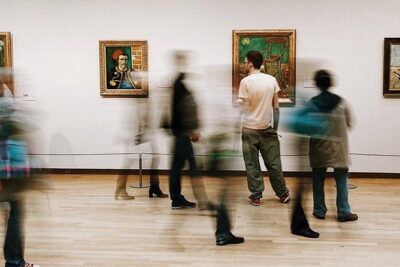
Van Gogh Museum Amsterdam Exclusive Tour w/ Reserved Entry
Read our review →
Van Gogh Museum Tour Reserved Entry Semi Private
Read our review →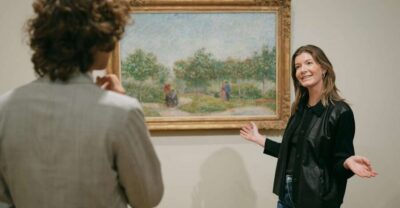
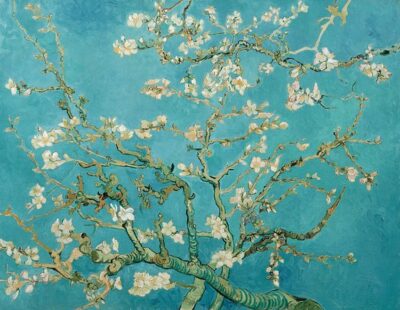
Combo Ticket: Van Gogh Museum Ticket and 1-Hour Canal Cruise
Read our review →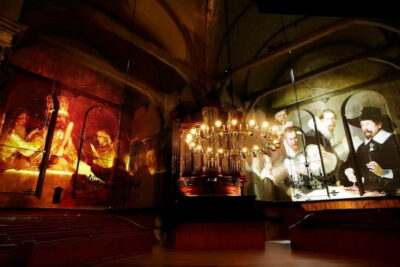
Van Gogh & Rembrandt Captivating Experience Entry
Read our review →Browse the lists this tour appears in