
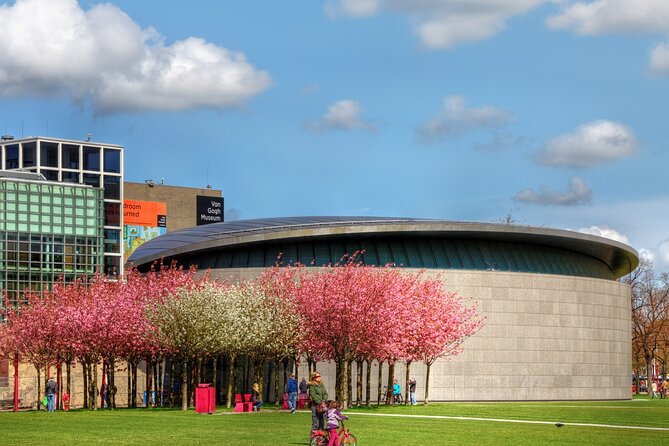
REVIEW · VAN GOGH MUSEUM TICKETS
Van Gogh Museum Amsterdam Small Group Guided Tour
Two hours can change how you see Van Gogh. This small-group guided walk through the Van Gogh Museum uses a whisper-style headset so you can follow the story without straining in busy rooms.
I love two things right away. First, the wireless headphone system makes the guide’s explanations easy to catch even when the gallery is crowded. Second, the best part is how the tour connects paintings to Van Gogh’s life, with guides like Martina S and Clare W being called out for tying personal context to what you’re looking at.
One possible drawback is pacing. The tour is timed, so if you get obsessed with one painting, you’ll have to save extra lingering for after the group finishes, when you can still stay in the museum until closing.
In This Review
- Key takeaways before you go
- A 2-hour plan that makes Van Gogh easy to follow
- Cobra Café start, museum-floor finish
- Self-portraits and peasant life: the early years mood
- Paris 1886 to 1888: cafés, still lifes, and the shift in energy
- Arles and the South of France: sunflowers and the Yellow House
- Saint-Rémy and the Auvers Room: later works with emotional signals
- Is $77.43 good value for a guided Van Gogh museum visit?
- Morning or afternoon: how to choose the best slot
- Who this tour suits best, and who should reconsider
- Should you book this Van Gogh Museum small-group tour?
- FAQ
- How long is the Van Gogh Museum small-group guided tour?
- What language is the tour offered in?
- What is the group size limit?
- Is admission to the museum included?
- Where does the tour start?
- Where does the tour end?
- Can I visit special exhibitions during or after the tour?
- Is this tour for adults only?
Key takeaways before you go
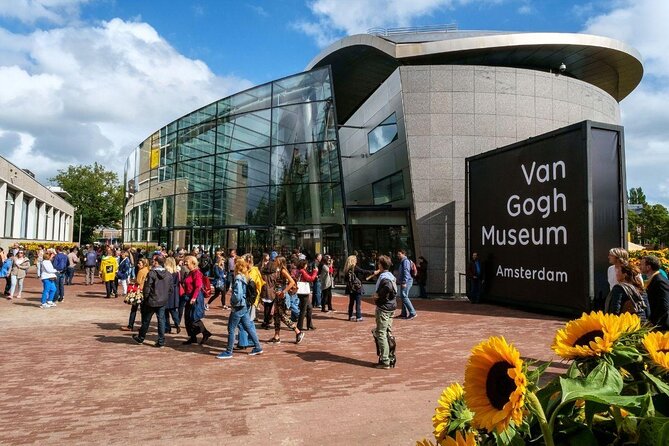
- Whisper headsets help you hear clearly while you move through popular rooms
- Max 14 travelers keeps the group small enough for questions and closer attention
- Permanent collection focus with planned time at major works, not a slow wander
- Career timeline across floors, from Dutch realism to Paris, Arles, Saint-Rémy, and Auvers
- Admission included, so you’re not juggling tickets while trying to enjoy the art
- Tour ends inside the museum, so you can continue on your own after the guided portion
A 2-hour plan that makes Van Gogh easy to follow
The Van Gogh Museum can feel like a lot at once. Rooms are busy, the artwork is dense, and it’s easy to miss the little clues that make the paintings click.
This tour fixes that with a tight structure. You get a live guide in English and a whisper system that keeps the audio clear while you’re standing close to specific works. The group size stays small, so you’re not just shuffled along like part of a crowd.
And because you’re working through Van Gogh’s development year by year, you’re not left staring at masterpieces with no thread. You start noticing patterns in subjects, technique, and what was happening in his life.
More Museum Tours in Amsterdam
- Amsterdam: Van Gogh Museum Ticket
★ 4.7 · 52,054 reviews - Moco Museum Amsterdam Entrance Tickets with Banksy & More
★ 4.4 · 10,088 reviews - Amsterdam: Red Light Secrets Museum Entry Ticket
★ 4.2 · 5,722 reviews
Cobra Café start, museum-floor finish
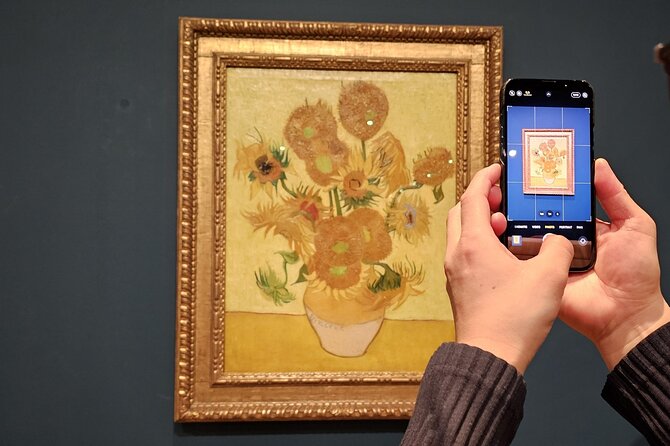
Your tour begins at Cobra Café, Hobbemastraat 18 (a handy, recognizable starting point in the area). The end point is listed as Museumplein 6, and the key detail is that the tour finishes inside the Van Gogh Museum.
That matters because you’re not pushed out right after the last stop. You can keep exploring on your own until the museum closes, which is a great way to handle the one pacing issue, if you find a painting you really want to sit with.
You’ll also want to know the basics: the experience is for adults 18 and older, it’s in English, it runs about 2 hours, and the group max is 14 travelers. It’s also described as near public transportation, so you can build it into a larger Amsterdam museum day without stress.
Self-portraits and peasant life: the early years mood
The tour opens in the museum with a focused look at self portraits, with about 20 minutes here and an admission ticket included as part of the experience.
Why this opening works: it sets a baseline. Self portraits are how you track the artist turning himself into a subject, over and over. You’re not just meeting Van Gogh as a legend, you’re meeting him as a person changing with time.
Next, you move to the first floor foyer area and spend another chunk of time on major works tied to the Dutch years. You’ll see paintings like Woman Lifting Potatoes, The Potato Eaters, and a wall of portraits such as Head of a Peasant Woman, plus works by artists connected to the same world of rural life, including Millet and Jules Breton.
This part is where you start to understand the emotional atmosphere of early Van Gogh. The subjects are grounded. The brushwork and darker tones (you’ll notice the feel) push you to slow down and look at faces and hands, not just scenery. If you care about how artistic influence spreads across Europe, this section is a smart starting point because it shows connections rather than treating Van Gogh like a lone planet.
Paris 1886 to 1888: cafés, still lifes, and the shift in energy
Then the tour moves into a different chapter: Van Gogh in Paris between 1886 and 1888. You get about 20 minutes covering works including Self Portrait with Felt Hat, Still Life with Absinthe, and In the Café: Agostina Segatori in Le Tambourin, plus Garden with Courting Couples.
This section is less about one theme and more about momentum. In Paris, the art world is intense, and Van Gogh’s work starts responding to new styles and new ways of looking at everyday scenes. The paintings here are a mix of portraiture, social moments, and still life, so you can compare how he shifts his attention from faces to objects to atmosphere.
Practical tip for this stop: stand where you can see the whole composition, then move your angle slightly to catch details. The tour structure pushes you to do both, which is key. If you only look at one part of a painting, you miss how Van Gogh directs your eye.
More Van Gogh Museum bookings:
- Amsterdam: Van Gogh Museum Ticket and City Canal Cruise
★ 4.6 · 3,899 reviews - Amsterdam: Van Gogh Museum Ticket & Canal Cruise
★ 4.5 · 3,304 reviews - Van Gogh Museum Amsterdam Exclusive Tour w/ Reserved Entry
★ 5.0 · 1,760 reviews - Van Gogh Museum Tour Reserved Entry Semi Private
★ 5.0 · 1,437 reviews
Arles and the South of France: sunflowers and the Yellow House
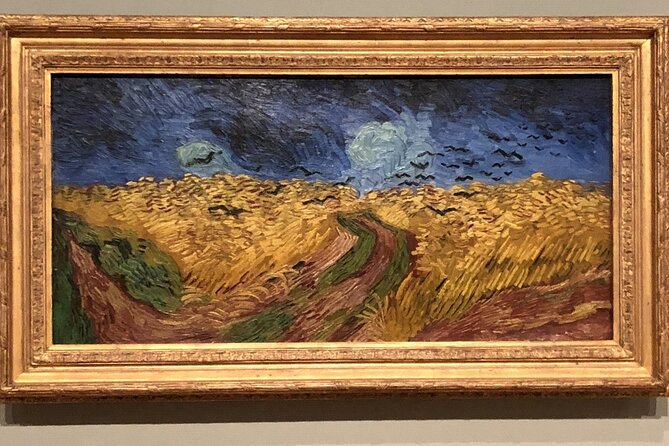
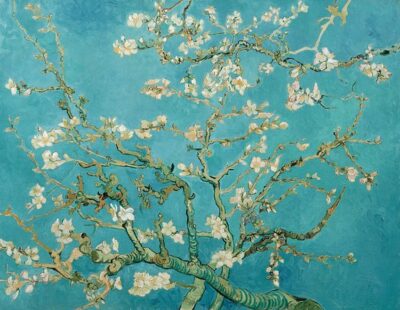
After Paris comes the big turning point: Arles and the South of France, with Van Gogh arriving there in 1888. You’ll spend about 20 minutes here, with works like Sunflowers, Almond Blossoms, The Bedroom, and The Yellow House.
This is one of the tour’s best stretches for instant payback. Even if you are new to Van Gogh, these are the paintings that make people stop, point, and say, I get it now.
What’s especially useful is that the works aren’t shown in isolation. You see the forward motion of his style while the setting shifts. Sunflowers and Almond Blossoms bring a sense of brightness tied to place and season. The Bedroom pushes the feeling of comfort and solitude, and it’s worth looking at how his color choices and layout create mood, not just decoration.
The tour also includes Japanese paintings, described as copies from prints. This detail matters because it’s a reminder that Van Gogh wasn’t copying art for fun. He was studying visual ideas from elsewhere, and those influences show up in the way he shapes space and pattern.
If you like when art history becomes practical, this is where you’ll feel it. You can literally watch how his attention changes from one environment to the next.
Saint-Rémy and the Auvers Room: later works with emotional signals
Next is Level 3, framed as Saint-Rémy-de-Provence. You get about 20 minutes, and the focus includes Almond Blossoms, Wheatfield with a Reaper, Iris, and Pieta (After Delacroix).
If the earlier stops give you “what changed,” this one gives you “what it felt like.” Even without reading every label, you can sense that these paintings carry more inward intensity. The tour helps you stay with that idea long enough to notice how composition and color choices work together.
One small advantage of having a guide here is timing. Later-career galleries can get you stuck in overthinking mode. A good guide keeps you moving just enough to see multiple works, while still encouraging you to slow down at the right moments.
After that, you move to the Auvers Room on Level 3 for about 15 minutes, including Tree Roots and Wheatfield with Crows.
This final room is a strong closer because it compresses the last stage into two images with different kinds of drama. The dark intensity in Wheatfield with Crows lands differently after you’ve already tracked changes through Paris, Arles, and Saint-Rémy. By the time you reach Auvers, you’re not just seeing famous paintings. You’re reading them as part of the same human arc.
Is $77.43 good value for a guided Van Gogh museum visit?
At $77.43 per person for about 2 hours, the question isn’t just whether it’s cheaper than going solo. It’s whether you’re buying something concrete.
Here’s what you do get, based on what’s included:
- A live English guide
- A whisper system so you can hear in crowded galleries
- Admission ticket(s) included for the permanent collection stops in the tour flow
- A structured path across key phases of Van Gogh’s career
- The chance to keep exploring inside the museum after the group ends, until closing
That’s real value if you want more than a quick look. The museum is big, and Van Gogh’s story is not simple. Paying for a guide here saves you time and guesswork. You also avoid the classic problem where you start with enthusiasm, then drift into walking around without a framework.
Is it worth it if you’re the type who likes to read every label and take your time? Maybe less so. This tour is paced, and you’ll want to use your post-tour time wisely for deep re-reading and lingering.
Morning or afternoon: how to choose the best slot
You can pick either a morning or afternoon tour option. From a practical standpoint, I’d choose based on how you like museums.
- If you love getting big things done early, start in the morning. Your later energy can go into a second museum or a long Amsterdam meal.
- If you prefer a relaxed start, the afternoon works well. The guided portion still gives you structure, then you can take your time after.
Either way, aim to plan for the fact that the tour ends inside the museum, so you’re not wasting time rushing out.
Also, because the group max is 14 travelers, the experience stays comfortable for people who hate chaotic lines and constant shoulder checks.
Who this tour suits best, and who should reconsider
This tour is a great fit if you:
- Love art and want Van Gogh explained through life events and technique
- Want an easy audio setup, especially in crowded rooms
- Prefer a guided path over trying to plan the best order yourself
- Appreciate seeing key works grouped by period, not scattered
It may not be perfect if you:
- Want to spend long stretches on a single painting. The tour gives timed viewing, then moves on.
- Only care about one or two super-famous works. You’ll still see a lot, but the tour is built around the bigger story.
Should you book this Van Gogh Museum small-group tour?
I think you should book if you want a smarter first pass. The combo of a small group, whisper headsets, and a career timeline makes it easier to actually learn what’s going on in Van Gogh’s paintings without turning it into homework.
If you already know Van Gogh well and you’re the kind of person who wants hours alone with the labels, you might feel the structure is a constraint. But you can still use the tour as a launch pad, then stay after and go slower.
My best advice: if you can only do one organized Van Gogh experience in Amsterdam, pick this one. It’s not just about seeing famous works close up. It’s about understanding why those works look the way they do, and how the “why” changes as he moves from Dutch realism into Paris, Arles, Saint-Rémy, and finally Auvers.
FAQ
How long is the Van Gogh Museum small-group guided tour?
It runs for about 2 hours.
What language is the tour offered in?
The tour is offered in English.
What is the group size limit?
The tour has a maximum of 14 travelers.
Is admission to the museum included?
Yes. Admission ticket(s) are included for the permanent collection stops covered during the guided tour.
Where does the tour start?
The tour starts at Cobra Café, Hobbemastraat 18, 1071 ZB Amsterdam.
Where does the tour end?
It ends inside the Van Gogh Museum, listed under Museumplein 6, 1071 DJ Amsterdam, and you can stay until closing time afterward.
Can I visit special exhibitions during or after the tour?
Special exhibitions are not included in the guided portion, but you can visit them afterward at your own pace.
Is this tour for adults only?
Yes, it is only available for adults age 18 and older.
More Museums in Amsterdam
- Amsterdam’s Weirdest Museum: Ripley’s Believe It or Not!
★ 4.5 · 4,920 reviews - Amsterdam: Rembrandt House Museum Entrance Ticket
★ 4.7 · 3,385 reviews - Amsterdam: NEMO Science Museum Ticket
★ 4.4 · 2,979 reviews - Amsterdam: Streetart Museum STRAAT Entrance Ticket
★ 4.8 · 2,137 reviews
Newest bookings around Amsterdam
- Amsterdam Breakfast Cruise on Private Luxury Boat★ 5.0 · 5 reviews
- Amsterdam-West Food Tour with local guide★ 5.0 · 16 reviews
- Van Gogh Museum Tour excluding Entrance Tickets★ 5.0 · 16 reviews
- Van Gogh Museum with Audio Guide★ 3.5 · 80 reviews
- Amsterdam: Explore the Van Gogh Museum & His Masterpieces★ 3.5 · 64 reviews
- Van Gogh Museum Ticket with Audio Guide and Unlimited Access Time★ 5.0 · 25 reviews
- Van Gogh Museum Entry Ticket and Guided Tour★ 4.5 · 48 reviews
- Van Gogh Museum Private Tour★ 5.0 · 5 reviews
Van Gogh Museum Tickets, compared.


Van Gogh Museum Amsterdam Exclusive Tour w/ Reserved Entry
Read our review →
Van Gogh Museum Tour Reserved Entry Semi Private
Read our review →
Combo Ticket: Van Gogh Museum Ticket and 1-Hour Canal Cruise
Read our review →
Van Gogh & Rembrandt Captivating Experience Entry
Read our review →Browse the lists this tour appears in