
REVIEW · WALKING TOURS
The Hague: Courtyard Walking Tour
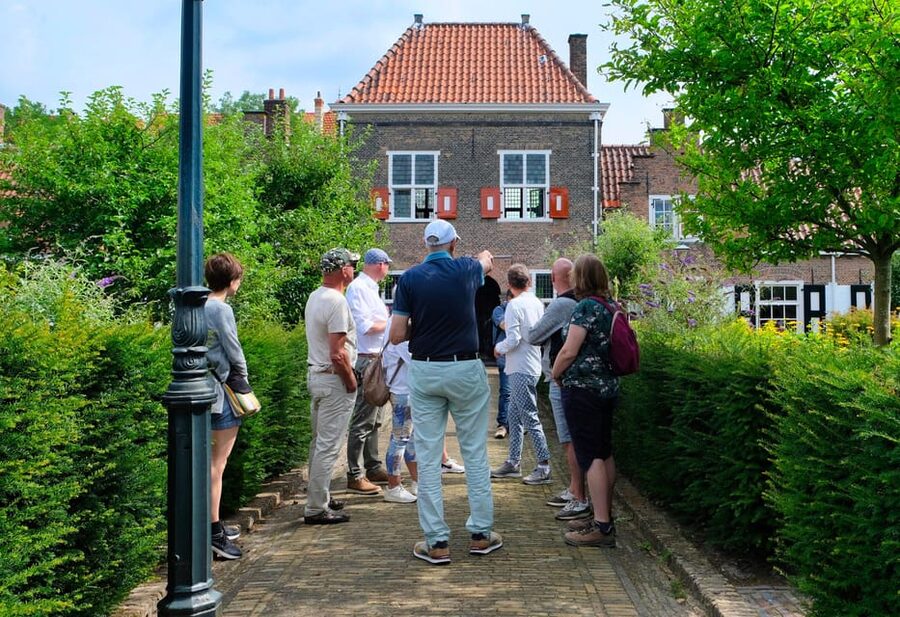
Courtyards hide in plain sight. That is exactly what makes this walk in The Hague so fun: you start on busy streets and then slip through walls into calm little worlds with a story behind them. I especially like how the guide explains the hofje tradition, and I also like the mix of Renaissance style details with the everyday human angle of where people once lived.
One thing to consider is that courtyards can be tight in spots, and if you are nervous around dogs, it is worth knowing that pets are not allowed but one review mentioned a special case. For most people, it is a relaxed, eye-opening way to see a side of The Hague you would miss on your own.
In This Review
- Key things to look for on this courtyard walk
- Courtyards hide in plain sight, and that changes how you see The Hague
- Price and time: what $9 buys you in a 1.5-hour story walk
- Meeting at ’t Goude Hooft, pleintje: starting in the right mood
- The hofje tradition: from 16th-century housing to today’s quiet rhythm
- Stop-by-stop feel: how the walk builds with each hidden courtyard
- 1) First “wait, how do we get in?” moments
- 2) Architecture and layout, explained without turning into a textbook
- 3) Renaissance details, plus the feeling of being protected from street life
- 4) Charity and the people story: where poverty and care shaped design
- 5) A final loop back, with added monuments and context
- Small group touring: better answers, fewer bottlenecks, more respect
- Dutch guide only: how to make the language work for you
- Courtyard etiquette and the pet question, especially if you are dog-sensitive
- Accessibility and what to expect walking through courtyards
- Who should book this courtyard tour in The Hague
- Should you book this Courtyard Walking Tour?
- FAQ
- How long is the Courtyard Walking Tour?
- How much does the tour cost?
- What language is the guide?
- What is the group size?
- Where does the tour meet?
- Is the tour wheelchair accessible?
- Are pets allowed?
- Can I cancel for a refund?
Key things to look for on this courtyard walk
- Hidden entrances: you often cannot spot the courtyard from the street, so the walk feels like a series of discoveries
- Hofje living: you will learn how this 16th-century housing model served poorer and older residents
- Renaissance touches: the architecture and layouts show up in ways that make the courtyards feel more than just backyards
- Charity in plain sight: the courtyards are not only pretty, they connect to a social-support system that shaped daily life
- Short, focused route: with a 1.5-hour duration and small group size, the pace stays tight and purposeful
Courtyards hide in plain sight, and that changes how you see The Hague

The Hague can feel straightforward from the main roads, with streets laid out like you can read them at a glance. Then you turn a corner, pass a wall, or walk through an entrance you might otherwise ignore, and suddenly you are inside a quieter world. These courtyards, often barely visible from the street, are the heart of the walk.
I like tours like this because you are not just looking at buildings, you are learning how people actually lived. The courtyards were built as a traditional Dutch way of creating housing community, dating back to the 16th century, and they still hold onto their appeal today. That timeline matters, because it gives you a sense of continuity: the city changed around them, but the basic idea of inward living held steady for hundreds of years.
More Walking Tours in The Hague
- The Hague: City Walking Tour
★ 4.5 · 156 reviews - The Hague: Old City Private Walking Tour
★ 4.4 · 81 reviews - The Hague 2-Hour Walking Tour | Discover The City With A Local
★ 4.5 · 81 reviews
Price and time: what $9 buys you in a 1.5-hour story walk
At about $9 per person for a 1.5-hour walk, this is the kind of sightseeing value that makes sense for a tight schedule. You are paying for access plus interpretation. In other words, you are not just paying to walk past doors, you are paying to understand why those doors exist and what life looked like behind them.
This matters in The Hague because courtyards are not obvious. If you try to hunt them down solo, you might find a few, but you can also spend time wandering without the context that makes the place click. A good guide turns “I saw a courtyard” into “I understand how this space functioned.”
Meeting at ’t Goude Hooft, pleintje: starting in the right mood
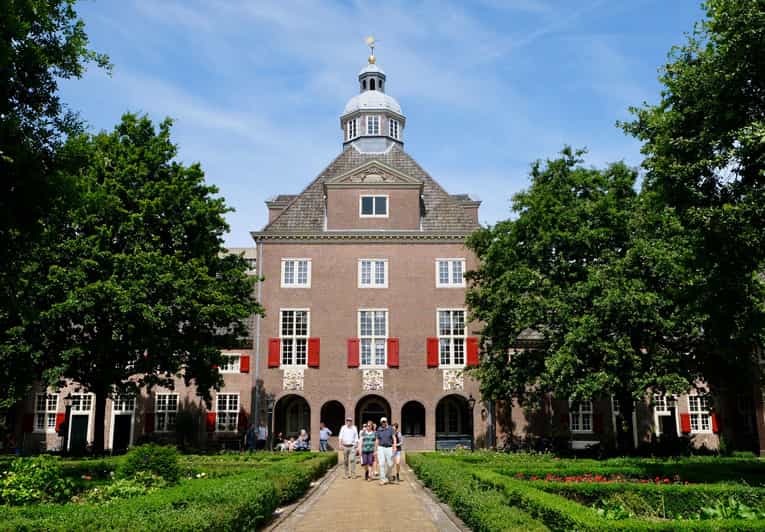
The tour meets at ’t Goude Hooft, pleintje. Starting at a real public spot helps because you can orient quickly, then settle into the slow shift from street noise to courtyard calm.
From the first minutes, expect the guide to set expectations. The courtyards may look modest from outside, so part of the experience is learning to look for clues: small openings, wall boundaries, and those subtle transitions where one space becomes private and sheltered.
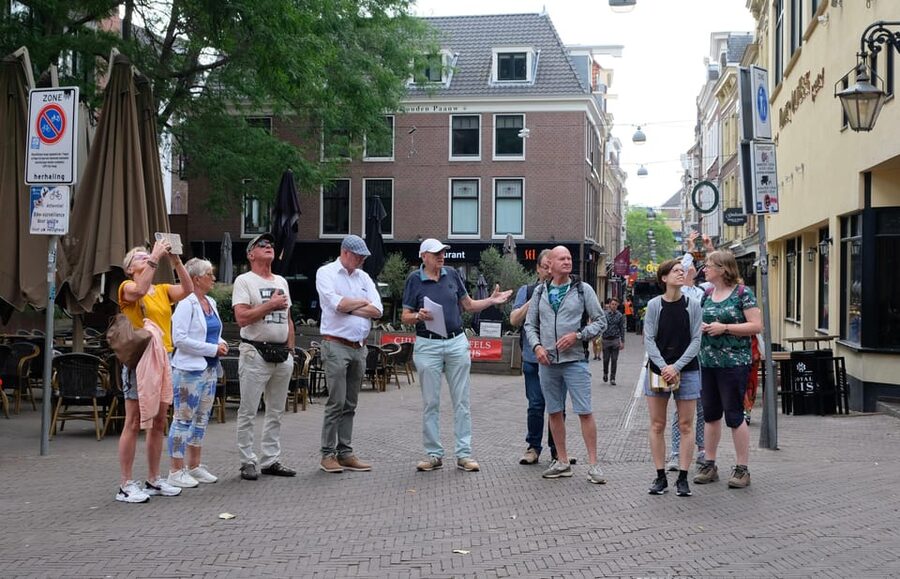
This is also where small-group format helps. With a cap of 10 participants, you are less likely to get jostled or separated, and the guide can pace the group so everyone stays together when paths narrow.
The hofje tradition: from 16th-century housing to today’s quiet rhythm
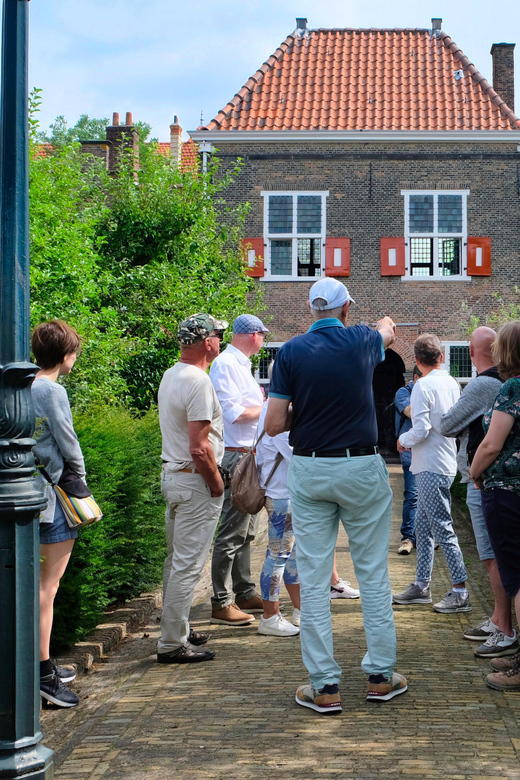
The tour centers on a very specific Dutch living concept called hofje. You can think of it as a courtyard-centered housing arrangement tied to community and support. Historically, these places housed people who were older or poorer. That is the key idea the guide will bring forward as you move from courtyard to courtyard.
What I like about this framing is that it keeps the walk human. Yes, you are seeing architecture and layout. But the emotional value comes from understanding the purpose. Hofjes were built for stability and care, not for show. When you picture that, the quiet inside the courtyard feels different than it would if you only saw it as a picturesque stop.
Also, the tour highlights a shift that is easy to miss when you read guidebooks. Today’s residents can enjoy the peace and quiet in addition to the city’s busy life. That contrast, between former residents and current life, is part of what keeps the courtyards relevant.
A different way to spend an afternoon around The Hague:
- The Hague: Mauritshuis Entrance Ticket
★ 4.7 · 2,706 reviews - The Hague: Madurodam Miniature Park Entry Ticket
★ 4.6 · 1,559 reviews - The Hague: The Pier SkyView Ticket with Drink and Snack
★ 4.4 · 1,398 reviews - The Hague: Hop-on Hop-off Heritage Tram Tour
★ 4.5 · 1,311 reviews
Stop-by-stop feel: how the walk builds with each hidden courtyard
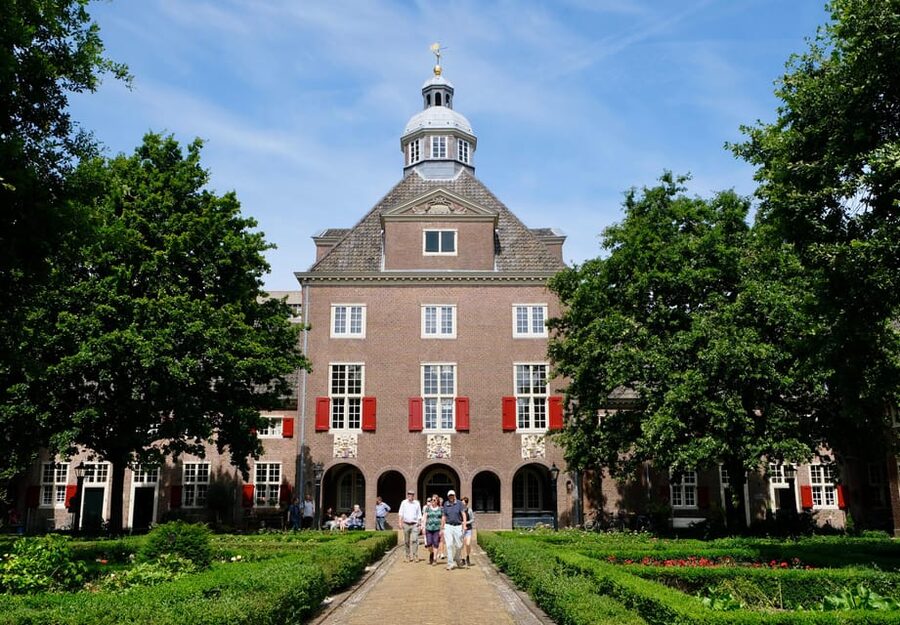
This is a courtyard walk, so the exact order of every door you see may vary, but the experience has a clear flow. I think of it as four phases.
1) First “wait, how do we get in?” moments
Early on, you get that initial surprise factor. You follow the guide to a spot where you might reasonably assume there is nothing special behind it. Then you see how the courtyard sits behind walls and houses, often with entrances that do not broadcast themselves from the street.
This phase is about training your eyes. The guide’s job here is to make you notice what you would otherwise walk past: boundaries, access points, and how the courtyard’s inward design creates calm.
Possible drawback: if you are expecting every stop to be a dramatic showpiece, you might feel a few courtyards are less spectacular than you hoped. One review mentioned wanting more of the most “real” hofjes, while still appreciating the rest of the route. If your ideal is variety plus quantity, you might wish the walk had more time, but the tour is designed to stay focused.
2) Architecture and layout, explained without turning into a textbook
Once you are inside the first courtyards, the guide takes time to talk. You should expect a mix of architectural observations and practical explanations: how courtyards are organized, what makes certain ones feel distinct, and how the design supports community living.
This is where the guide’s approach really matters. In reviews, guides like Hans and Kees were praised for knowing a lot and telling it in an engaging way. That is exactly what you want, because courtyard details can be subtle. If the guide rushes, you lose the meaning. If they slow down, you understand why a place is arranged the way it is.
3) Renaissance details, plus the feeling of being protected from street life
A big promise of the tour is Renaissance. In practice, you will likely see that in courtyard style, proportions, and the look of building facades that frame the inward space. Even when you are not identifying every architectural feature, you can feel the difference. Courtyards with Renaissance influence often look more composed and deliberately styled.
The best part is the shift in atmosphere. The city is still nearby, but the courtyard acts like a buffer. You can stand still and feel how quiet it becomes once you are no longer in the open street corridor.
4) Charity and the people story: where poverty and care shaped design
The walk also has a strong charity angle. You will hear that poor and older people used to live in these courtyards, and the guide will connect that social role to the physical space.
This is one of the most valuable parts of the experience, because it gives you a reason to care about the walls, not just the visuals. If you understand that these courtyards were tied to support, then you read the place as a tool for community and safety. The quiet becomes purposeful rather than accidental.
5) A final loop back, with added monuments and context
Between courtyards, you will also pass other interesting locations and monuments. You are not just walking from one courtyard entrance to the next. The route includes additional sights along the way, and the guide uses the walking time to keep the context moving.
That matters because the courtyards can be the main event, but the street-level city context helps you place them. You get a better sense of how The Hague grew around these sheltered pockets.
Small group touring: better answers, fewer bottlenecks, more respect
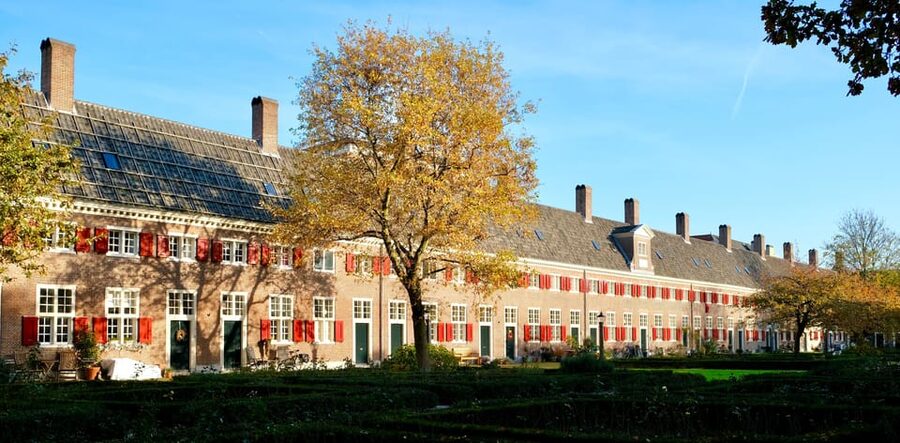
With a small group limited to 10, you get a different quality of experience than big-bus style walking. The guide can actually slow down, and you can ask questions without feeling rushed or lost.
The reviews also point to guides being respectful with the courtyards. One comment praised how the guide kept things considerate for the residents and adapted the tour to two foreign guests. That kind of adjustment is not a small detail. It usually means you get clearer explanations and a pace that works for your group’s language comfort.
Dutch guide only: how to make the language work for you
This tour is live and Dutch speaking. If Dutch is not your strong suit, you can still enjoy it, but you should plan to rely on nonverbal cues and any simple translation tools you like.
What helps most is that the topics are visual. Courtyards, boundaries, architectural styles, and social-purpose stories all come through even when every sentence is not fully understood. Still, if you want maximum comprehension, try to bring a translation app, or at least be ready to catch the big ideas instead of every detail.
Courtyard etiquette and the pet question, especially if you are dog-sensitive
Pets are listed as not allowed, and assistance dogs are allowed. That is the baseline.
However, one review described confusion where a dog was expected to be allowed and then was not, with an exception apparently made during the tour. The takeaway for you is simple: if you are strongly uncomfortable around dogs, it is smart to check directly with the provider before you go. Ask what will happen in practice if someone arrives with a pet, and request that you be placed in a way that keeps things comfortable.
For most people, this will not be an issue. But this is one of the few “watch out for it” points surfaced in the feedback.
Accessibility and what to expect walking through courtyards
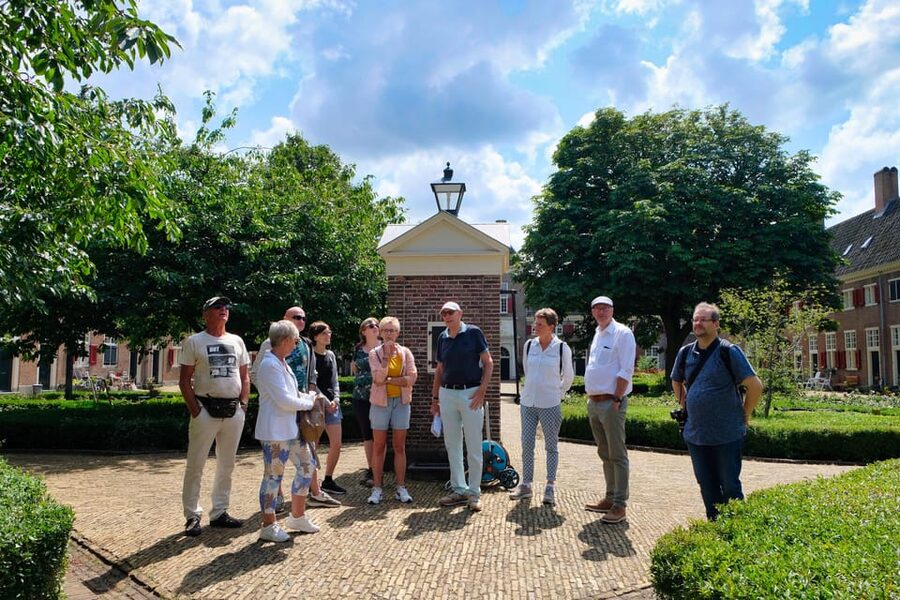
The tour is wheelchair accessible. That is a big plus, since courtyard entrances and inner paths can be tricky on your own. Still, since courtyards can involve turns, narrow passages, or uneven surfaces in historic areas, if you use a wheelchair, it is wise to be prepared for slower movement and a guide who keeps the group together.
Who should book this courtyard tour in The Hague
I think this walk is a great fit if you:
- want a short, high-impact way to see The Hague beyond the main thoroughfares
- love architecture and also care about how people lived, not just what buildings look like
- enjoy quiet places and small discoveries, courtyards behind walls, not landmark crowds
- are fine with a Dutch-only guide and can use a translation tool if needed
You might think twice if you:
- expected a large number of top-tier courtyards in one tight loop, since the walk is only 1.5 hours
- need the tour to be fully English-speaking for comfortable understanding
- are extremely sensitive to dogs and cannot tolerate any chance of exceptions
Should you book this Courtyard Walking Tour?
Yes, if your idea of a good time in The Hague is stepping off the main streets and into places with atmosphere and purpose. For $9 and a small group of up to 10, you get guided context, courtyard access you may not find easily alone, and a clear story connecting space to life, including the charity side of hofje living.
I would book it if you want a thoughtful, compact experience that makes historic everyday life feel real. I would not book it if you need a long, exhaustive courtyard crawl or if dog-free comfort is nonnegotiable and you cannot verify how exceptions are handled.
FAQ
How long is the Courtyard Walking Tour?
The tour lasts about 1.5 hours.
How much does the tour cost?
The price is $9 per person.
What language is the guide?
The live tour guide speaks Dutch.
What is the group size?
It is a small group with a limit of 10 participants.
Where does the tour meet?
The meeting point is ’t Goude Hooft, pleintje.
Is the tour wheelchair accessible?
Yes, the tour is listed as wheelchair accessible.
Are pets allowed?
Pets are not allowed, but assistance dogs are allowed.
Can I cancel for a refund?
Free cancellation is available up to 24 hours in advance for a full refund.
Newest bookings around The Hague
- The Hague: Powerboat Tour Scheveningen★ 4.5 · 15 reviews
- The Hague Walking Tour★ 4.5 · 16 reviews
- The Hague: Private Boattour up to 10 persons★ 4.9 · 37 reviews
- The Hague: Private Custom Walking Tour With A Local Guide★ 4.5 · 13 reviews
- The Hague: The Hague Tower climb Guided Tour★ 4.6 · 52 reviews
- The Hague: individual tickets for an electric boattour!★ 4.8 · 57 reviews
- The Hague: Ping Pong Table Rental at a Secret Ping Pong Bar★ 4.5 · 7 reviews
- The Hague: Mystery Figures Walking Tour★ 5.0 · 3 reviews
Walking Tours, compared.

Amsterdam Anne Frank: Small-Group Walking Tour & Local Guide
Read our review →
Anne Frank’s Story – Guided Walking Tour through Amsterdam
Read our review →
Absolutely Amsterdam – the Essential Introductory Walking Tour
Read our review →
Anne Frank Guided Walking Tour in DE/EN/IT/ES
Read our review →
Anne Frank Walking Tour Amsterdam Including Jewish Cultural Quarter
Read our review →Browse the lists this tour appears in