
REVIEW · HISTORICAL TOURS
Rotterdam Must Do Tour: Highlights, History, WW2 and Architecture
Rotterdam is a city you can read like a book. I especially love the WW2-to-architecture story and the small group feel that keeps questions in play. One consideration: it packs a lot into about 2 hours, so this is not the tour for slow strolls or long stops indoors.
This walk is built for people who want the Rotterdam that makes sense fast. You’ll connect key landmarks like the Cube Houses, Markthal, and the city’s postwar “new downtown” thinking to the damage the city took and the bold rebuilding that followed.
And if you care about design, you’ll get plenty to chew on. Guides such as Mr. Ed, Michel, Susan, Tony, John, Edwin, and Stephan are often praised for turning streets and buildings into clear, human stories, not just dates and names.
In This Review
- Key Things That Make This Rotterdam Tour Worth Your Time
- Why Rotterdam Works So Well for a Walking Tour
- Starting at Stationsplein, then Rotterdam Centraal’s Architectural Clues
- Groot Handelsgebouw: WWII Rebuilding You Can Point To
- Lijnbaan and the Postwar Shopping Streets (Kruiskade and West-Kruiskade)
- Luchtsingel: A 390-Meter Wooden Bridge With Urban Hope
- Nieuwe Delftse Poort: A Steel Reconstruction on Historic Ground
- Sint-Laurenskerk: The Medieval Remnant You Shouldn’t Skip
- Markthal: MVRDV Architecture Plus a Market You Can Actually Enjoy
- Oude Haven and the Cube Houses: Rotterdam’s Iconic Waterfront Mood
- Price, Timing, and What You Get for About $29
- Who This Tour Suits Best (and Who Should Rethink It)
- Should You Book This Rotterdam Must Do Tour?
- FAQ
- How long is the Rotterdam walking tour?
- What does the tour cost?
- Where do I meet the guide?
- Is the tour in English?
- How big is the group?
- Is admission included for the stops?
- Are food and drinks included?
- Do I need a physical ticket?
- What is the cancellation policy?
- Is the tour walk-only?
Key Things That Make This Rotterdam Tour Worth Your Time
- A local guide-led walk that connects harbor, rebuilding, and everyday city life
- Small group size (up to 15 people) that makes it feel personal, not rushed
- WW2 reconstruction highlights like the Groot Handelsgebouw, completed in 1953
- Design-first stops, from Markthal’s MVRDV form to the Luchtsingel pedestrian bridge
- Easy-to-scan major sights across central Rotterdam, including Cube Houses and Oude Haven
Why Rotterdam Works So Well for a Walking Tour
Rotterdam is one of those places where the streets do the talking. Unlike cities that feel frozen in one era, Rotterdam looks like it’s still deciding what it should be. That’s why architecture matters here more than almost anywhere else in the Netherlands.
You’ll walk through areas shaped by major change. The guide focuses on how the harbor and the city’s layout pushed certain kinds of growth, and then how the WWII destruction forced a different kind of rebuilding. The result is a tour where buildings aren’t just backdrops. They’re evidence.
Also, the tour is intentionally compact. In two hours you hit major landmarks without spending your day riding trams or buses. If you’re trying to get the “big picture” before you branch out on your own, this format is efficient.
A handful of other Rotterdam outings
- Rotterdam: Highlights, Gems, Architecture & History Walk
★ 5.0 · 191 reviews - Rotterdam: Maritime Museum and historic museum harbor ticket
★ 3.9 · 92 reviews - MUST DO: Rotterdam highlights & history with a local guide
★ 4.5 · 57 reviews
Starting at Stationsplein, then Rotterdam Centraal’s Architectural Clues
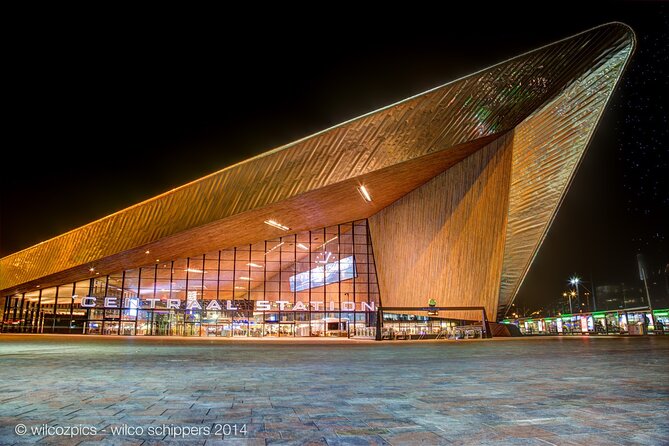
The tour begins at Stationsplein 10, right by the station area in central Rotterdam. It’s a good starting point because you’re not hunting for hidden alley meeting spots, and it’s near public transportation.
From there, you connect the dots with a first stop at Rotterdam Centraal Station. Expect the guide to frame the station’s architecture and what it signals about the city’s posture: Rotterdam has always been outward-facing, trade-driven, and practical.
This part is also a quick “warm up” for the rest of the walk. You’ll get a sense of what to look for, so when you see later buildings with war-era and postwar markers, they click instead of feeling random.
Groot Handelsgebouw: WWII Rebuilding You Can Point To
One of the most memorable stops is the Groot Handelsgebouw, finished in 1953. This is not a generic old building. It’s one of the first major structures put up after the bombing that reshaped Rotterdam.
For you, that means the guide can explain the shift from destruction to reconstruction using a real example you can stand near. You’re not just hearing big-picture history. You’re looking at an actual marker from the recovery era.
If you’re the kind of person who likes to understand why a city looks the way it does, this stop is a highlight. Even if the exterior is what you see most, the “why” is what the tour delivers.
Lijnbaan and the Postwar Shopping Streets (Kruiskade and West-Kruiskade)
The tour then moves into Rotterdam’s central shopping streets, including Kruiskade and West-Kruiskade, plus Lijnbaan, the main pedestrian shopping street.
Here’s what I like about this stretch: it turns commerce into city planning. Lijnbaan opened in 1953 as the pedestrian heart of a new shopping district after the older shopping area was destroyed during the bombing. So yes, it’s shopping streets. But it’s also postwar city design in everyday form.
You’ll get short stops where the guide can point out how these areas were rebuilt to be walkable and functional, not just rebuilt. The practical takeaway is that Rotterdam’s modern downtown layout is not an accident. It’s a response.
Possible drawback: because these are active streets, you’ll move through quickly. If you want tons of time to browse shops, consider pairing this tour with independent time after.
A different way to spend an afternoon around Rotterdam:
- Rotterdam: Harbor Sightseeing Cruise
★ 4.3 · 7,599 reviews - Rotterdam: 1-Hour Sightseeing Splash Tour
★ 4.5 · 3,299 reviews - Rotterdam: Rotterdam Zoo Blijdorp Entry Ticket
★ 4.6 · 2,754 reviews - Rotterdam: “Remastered” Digital Art Audiovisual Experience
★ 4.3 · 2,240 reviews
Luchtsingel: A 390-Meter Wooden Bridge With Urban Hope
Next up is Luchtsingel, a 390-meter wooden pedestrian bridge linking Rotterdam North with the center.
This is one of those stops that feels simple at first. Then the guide explains why it matters. The bridge helps bring new life to an area that had been abandoned for years, with neglect and vacancy. In other words, this is not just a pretty crossing. It’s an urban “connector” built to change how people move and where they feel welcome.
For you, this adds balance to the WWII-heavy story. Rotterdam didn’t only rebuild after the war. It kept adjusting and reactivating spaces, even later on. And a bridge is a perfect symbol for that kind of progress.
If the weather is nice, this segment is especially enjoyable because it’s a change of pace from street-level browsing.
Nieuwe Delftse Poort: A Steel Reconstruction on Historic Ground
Then you’ll reach Nieuwe Delftse Poort (described as a reconstruction in steel designed by the artist Cor Kraat). The idea here ties to a city gate, the original Delft gate, with the last one built in 1764.
So what you’re seeing is a “past place, present form” situation. The reconstruction sits on the virtually original site on the Pompenburg area, which helps the guide explain how Rotterdam preserves layers of its identity even when the city keeps rebuilding.
I like this stop because it gives you a different kind of history lesson. It’s not medieval ruins or untouched old walls. It’s Rotterdam doing continuity its own way: recreate, reference, and build forward.
Sint-Laurenskerk: The Medieval Remnant You Shouldn’t Skip
Rotterdam’s past is mostly modern, but Sint-Laurenskerk adds a crucial older anchor. The Protestant church is described as the only remnant of the medieval city of Rotterdam.
Better yet, you can go inside for free. That matters on a tour like this because it adds real variety. You’re not just looking at modern forms. You get a sense of what still survived, even as the rest of the city was reshaped.
If you’re making a “first Rotterdam visit” decision, this church is a strong reason to do this tour early. It helps you balance the story. The city rebuilt after destruction, but it also kept one meaningful piece from before.
Markthal: MVRDV Architecture Plus a Market You Can Actually Enjoy
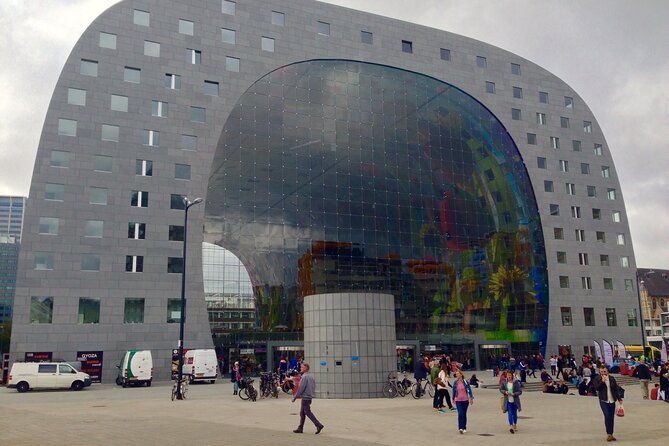
Markthal is a centerpiece of the tour, with about 30 minutes set aside for it. It’s designed by MVRDV and described as a grey nature stone building with an archwise, horseshoe-like structure.
What makes Markthal special for you isn’t only the exterior. It’s what’s inside: restaurants and that famous ceiling artwork showing enlarged fruits, vegetables, seeds, fish, flowers, and insects.
This stop is where the tour becomes fun, not just informative. You get to look at architecture in a human setting, not an isolated museum vibe. And if you like design, Markthal is the kind of place where even a quick stop teaches you how Rotterdam thinks about public space.
One caution: since the tour time is limited, you may not get long, slow exploration. If you want to linger with the artwork and browse the food scene, plan to return later on your own.
Oude Haven and the Cube Houses: Rotterdam’s Iconic Waterfront Mood
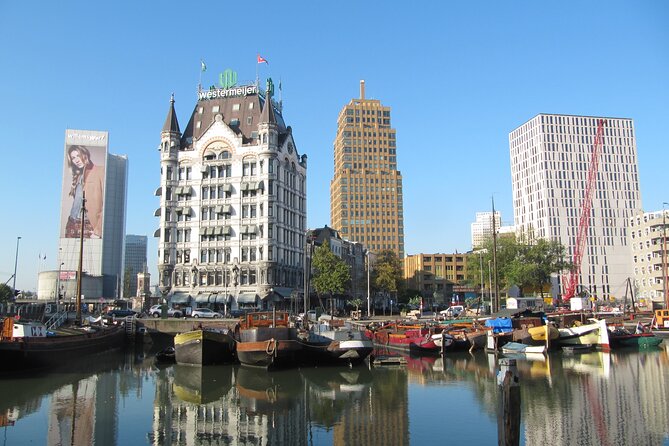
The walk finishes at Oude Haven, the old harbor area north of the Maas River. It’s described as a historical hotspot in Rotterdam’s city center and a lively area where you’ll also find the Cube Houses.
This is where your mental map locks in. Up to this point, you’ve seen rebuilding logic, postwar shopping, and modern urban fixes like the Luchtsingel bridge. Oude Haven pulls those themes together in a single, photogenic waterfront pocket.
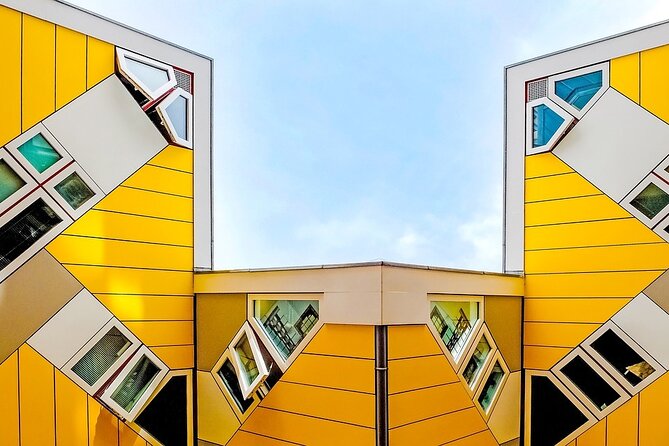
The Cube Houses are the obvious highlight, but the bigger value is how the guide frames why they belong here. They’re not random eccentric design. They reflect Rotterdam’s willingness to experiment and adapt.
If you’ve got time after the tour, this is also the best area to wander independently. It’s the easiest spot to turn a guided overview into your own small discoveries.
Price, Timing, and What You Get for About $29
The price is $29.41 per person for around 2 hours, with a local guide included. Do the math and you’re paying roughly the cost of a good coffee per hour, but for a structured walk with multiple major stops.
That value comes from three things the tour delivers well:
- You get a guide who connects architecture and WWII rebuilding to what you see on the street.
- Key attractions on the route have admission ticket free notes, so you’re not hit with extra entrance fees for the main stops listed.
- The group is capped at 15 people, which usually makes it easier to ask questions than it is on big bus-style tours.
On timing, you can choose from different tour times, and confirmation comes at booking. It’s also scheduled as a walking tour, so comfortable shoes matter more than anything else.
About pacing: the tour covers many locations, with short segments like 10 minutes at several landmarks. That’s great for first-time orientation. It can feel fast if you like lingering.
Who This Tour Suits Best (and Who Should Rethink It)
This is a strong fit if you:
- want a compact, guided overview of Rotterdam’s architecture and WWII rebuilding
- like design, city planning, and “why this looks like this” explanations
- travel with a small group and prefer personal interaction over crowd noise
It may feel less ideal if you:
- want long indoor time, especially at Markthal
- prefer very unhurried walking and deep study at fewer sites
- need a slow-paced, sensory-first tour rather than a highlights-and-context route
Practical note: it’s listed as “most travelers can participate,” and service animals are allowed. It’s also near public transportation, which helps if you’re arriving or leaving on a tight schedule.
Should You Book This Rotterdam Must Do Tour?
If your goal is to understand Rotterdam quickly, yes, I’d book it. The combination of WW2 reconstruction context, major architecture stops like Markthal and the Cube Houses, and the city-setting details around Oude Haven is exactly what makes a short visit feel complete.
I’d book especially if you’re the type who likes asking one good question and hearing multiple answers. The small group size and guide quality, often praised in names like Mr. Ed, Michel, Susan, Tony, John, Edwin, and Stephan, is the kind of thing that turns “a list of sights” into actual comprehension.
Only skip it if you know you need long time at each stop. This is a compact two-hour orientation, not a slow gallery-style experience.
FAQ
How long is the Rotterdam walking tour?
It’s approximately 2 hours.
What does the tour cost?
The price is $29.41 per person.
Where do I meet the guide?
Meet at Stationsplein 10, 3013 AJ Rotterdam, Netherlands.
Is the tour in English?
Yes, it’s offered in English.
How big is the group?
The maximum group size is 15 people.
Is admission included for the stops?
The stops listed include admission ticket free.
Are food and drinks included?
No, food and drinks are not included.
Do I need a physical ticket?
No, you get a mobile ticket.
What is the cancellation policy?
You can cancel for a full refund up to 24 hours before the experience’s start time.
Is the tour walk-only?
Yes, it’s a walking tour.
Newest bookings around Rotterdam
- e-Scavenger hunt Breda: Explore the city at your own pace★ 4.5 · 27 reviews
- e-Scavenger hunt Rotterdam: Explore the city at your own pace★ 4.5 · 13 reviews
- Rotterdam: City Walk Audio Guide in 7 Languages on your Phone★ 3.5 · 6 reviews
- All-Inclusive Private Windmill Tour to Kinderdijk from Rotterdam★ 4.5 · 59 reviews
- Rotterdam in half a day: All-inclusive, Authentic private Tour of Rotterdam★ 5.0 · 146 reviews
- Discover Rotterdam: Classic Highlights Bike Tour with a Local★ 5.0 · 22 reviews
- Breda Fun Puzzle Quest: True Lord Self-Guided Tour★ 4.0 · 9 reviews
- Delfshaven Self-Guided Tour: A Guide to Rotterdam’s Old Town★ 5.0 · 4 reviews
Historical Tours, compared.
Amsterdam Food and Cultural Tour with Tastings
Read our review →
Kinderdijk UNESCO World Heritage Entry Ticket
Read our review →

Amsterdam High-End Dutch Food & History Tour – Up to 8 guests
Read our review →
Cruise through the Historic City Center with Guide
Read our review →Browse the lists this tour appears in