
REVIEW · ROTTERDAM TOURS
Rotterdam in half a day: All-inclusive, Authentic private Tour of Rotterdam
Rotterdam can feel like a puzzle at first. This private, all-inclusive half-day route helps you sort it fast, with the story behind the cube houses, the rebuilt harbor, and the city’s modern design choices. I love that admission tickets are included, so you are not doing math every time you stop. I also like that the pacing mixes big sights with quick context, which is perfect for first-timers.
You’ll also get a local guide experience that goes beyond the usual photo stops. Guides like Eleftheria, Russell, Izzy, Smaranda, and Abdullah are repeatedly praised for energetic explanations and real city pride, and that matters when Rotterdam is less about medieval castles and more about how people rebuilt life after WWII. One thing to consider: it’s mostly walking plus public transportation, and the tour is weather-dependent.
In This Review
- Key Highlights Worth Your Time
- The Point of This Half-Day Rotterdam Tour (and Who It’s For)
- Price and What You’re Really Paying For
- Meeting at Rotterdam Central Station, Then Moving Like Locals
- Kijk-Kubus Cube Houses: When Housing Became a Statement
- Luchtsingel: Citizen Participation in Urban Form
- Rotterdam Tourist Information Coolsingel: Your Map With a Human Face
- Central Station History at Stationsplein 2
- Laurenskerk: The Medieval Heart That Survived WWII
- Markthal: The Cornucopia Art Hall You Walk Into
- Nieuwe Delftse Poort: A City Gate That Didn’t Make It
- Oude Haven: The Historic Harbor That Still Feels Lived-In
- The Witte Huis and Meent: Quick Hits of Local Style
- The Watertaxi Finale: A Waterfront Send-Off If It’s Available
- Private Guide Energy: What Makes the Experience Feel Better Than a Checklist
- What to Bring, What to Expect, How to Pace Yourself
- Should You Book This Rotterdam Half-Day Tour?
Key Highlights Worth Your Time
- Admissions are built in, including the Cube Houses and Laurenskerk, so you can spend your attention on the sights.
- A tight, efficient route that connects Rotterdam’s postwar architecture with the older pieces that survived.
- Public transportation ticket included, which helps you keep the day simple and local.
- Watertaxi ride if available, a fun finale that fits Rotterdam’s waterfront identity.
- Service animals allowed, so more people can join comfortably.
The Point of This Half-Day Rotterdam Tour (and Who It’s For)
If you only have a few hours, Rotterdam can be tricky. The city is famous for modern architecture and clever urban reinventions, but it’s not arranged like a single straight-line tourist trail. This tour is designed to give you your bearings quickly, with stops that connect the city’s look, its history, and its everyday rhythm.
It’s also a smart choice if you are traveling solo, as a couple, or with a small group. The tour is private, meaning only your group participates, and you get the kind of back-and-forth questions that are hard on large group buses. Expect about 3 to 4 hours, with a lot packed in without feeling like a sprint.
Where it fits best: new arrivals, cruise passengers, and anyone who wants a practical orientation before deciding what to do the next day. Where it may not fit: if you hate walking or you dislike moving by tram and subway, because this is not a car tour.
A handful of other Rotterdam outings
- Rotterdam: Harbor Sightseeing Cruise
★ 4.3 · 7,599 reviews - Rotterdam: 1-Hour Sightseeing Splash Tour
★ 4.5 · 3,299 reviews - Rotterdam: Rotterdam Zoo Blijdorp Entry Ticket
★ 4.6 · 2,754 reviews
Price and What You’re Really Paying For
At $151.23 per person, this is not the cheapest “grab a bus and go” option. But it is easier to judge the value because so much is included. You get lunch or local streetfood, bottled water, coffee and/or tea, and a soda/pop, plus a public transportation ticket.
The big win is admissions. The tour includes entrance tickets for the Cube Houses and Laurenskerk, and it also lists included admissions for several stops. In plain terms, you pay once, then you can focus on the day instead of anticipating add-on fees.
There’s also a timing advantage. This is often booked about 88 days in advance, which tells me people plan early for limited time in Rotterdam. If you are rolling in with a tight schedule, booking ahead is usually the move.
Meeting at Rotterdam Central Station, Then Moving Like Locals
The tour starts at Rotterdam Central Station, then it ends back at the meeting point. There is pickup offered, but the tour description is clear that you’ll get around by walking and public transportation, with no transportation by car. That matters for your planning: comfortable shoes and a rain layer are not optional in this city.
The route is built to feel walkable. Stops are close enough that you get real street atmosphere, not just window views from transit. You also get a mobile ticket, which keeps things simple when you’re juggling time and schedules.
One practical note: the tour requires good weather. If the weather is poor, you’ll be offered a different date or a full refund. That is worth remembering if you are visiting in shoulder season.
Kijk-Kubus Cube Houses: When Housing Became a Statement
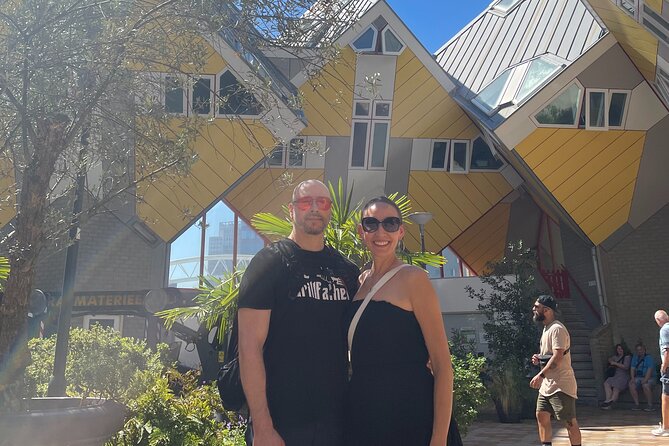
Your first stop is the Cube Houses (Kijk-Kubus). These aren’t just a quirky skyline photo. They came out of a postwar mindset where architects wanted residential areas to feel hospitable, with the participation of residents and other users. That idea was a response to the large-scale, gray modernism that followed WWII reconstruction.
What to look for: don’t rush past the angles. The cube form is the message, but the real fun is in seeing how the design turns a problem (space, density, and rebuilding) into something that feels human. This is also a great first stop because it signals the theme of Rotterdam, which is design as survival plus improvement.
If you enjoy architecture, plan to spend a bit more time here than you think you need. The architecture is the headline, and the context from your guide makes it land.
A different way to spend an afternoon around Rotterdam:
- Rotterdam: “Remastered” Digital Art Audiovisual Experience
★ 4.3 · 2,240 reviews - Rotterdam: Pancake Cruise
★ 4.4 · 1,986 reviews - Rotterdam: Harbor Cruise with Live Guide
★ 4.0 · 1,270 reviews - Rotterdam: WaterShuttle Ticket to Kinderdijk
★ 4.6 · 731 reviews
Luchtsingel: Citizen Participation in Urban Form
Next up is Luchtsingel. This is where Rotterdam turns governance into something you can walk on. The story here connects to 2011 and the city’s initiative to stimulate administrative innovation and citizen participation. Residents submitted projects, and the city set aside an amount of 4 million to make the concept real.
In practice, you’ll appreciate this stop more if you pay attention to how the city invites people to move and gather. Rotterdam is often described as functional, but Luchtsingel shows how the city tries to make “function” feel social.
It’s also a good contrast point. After the theatrical cube geometry, Luchtsingel feels more grounded and civic.
Rotterdam Tourist Information Coolsingel: Your Map With a Human Face
Then you’ll visit Rotterdam Tourist Information on Coolsingel. This stop is short, about 15 minutes, but it helps you orient for the rest of the day. The tour includes time in the exhibition area, and your guide accompanies you.
The practical value is big: you’re not just looking around blind. Your guide can connect what you see in the exhibition to what you’ll visit next. It’s also a reminder that Rotterdam is still giving visitors a welcome, even when the city’s vibe is more modern and less postcard.
If you love good signposts and “where should I go next,” this stop is a helpful reset before the major landmarks.
Central Station History at Stationsplein 2
One stop is Stationsplein 2, which frames the Central Station story. Before WWII, there was no single Central Station in the same place. Instead, there were four stations around the center. In 1957, Central Station opened at its current location.
After that, things scaled up. A total renovation began in 2004, and the current result was delivered in 2014 because the old setup could not keep up with passenger volume. This is a surprisingly useful stop if you want to understand why Rotterdam feels so transit-forward.
What I like about this part is that it explains the city’s movement. Rotterdam’s identity is not only architecture and harbor life, it’s also systems. Once you grasp that, you understand why public transportation is so central to how you experience the city.
Laurenskerk: The Medieval Heart That Survived WWII
Next is Grote of Sint-Laurenskerk (Laurenskerk). This is the only remnant of Rotterdam’s medieval center. Built between 1449 and 1525, it’s described as a cross between a hall church and a cruciform basilica, with different tower heights.
You’ll likely feel the contrast immediately. Rotterdam’s modern buildings are dramatic, but Laurenskerk provides a calmer, sturdier anchor. It also helps you understand why the city places importance on what remained intact after WWII.
This stop is about 30 minutes and includes admission. I recommend using the time to look at proportions, not just the exterior. Your guide’s framing will make the building feel like a surviving document, not a standalone monument.
Markthal: The Cornucopia Art Hall You Walk Into
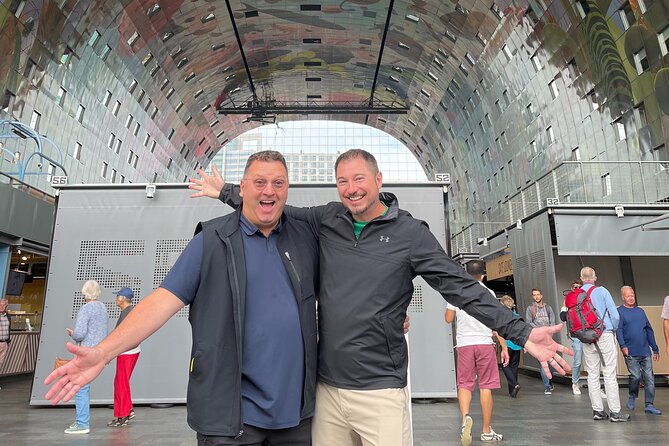
Markthal is next, and it’s one of Rotterdam’s most photogenic experiences. The interior façade is covered by artwork called Hoorn des Overvloeds, spanning about 11,000 square meters. The theme is a cornucopia, symbolizing abundance, and the art includes enlarged fruits, vegetables, grains, fish, flowers, and insects.
What to do here: step back and take it in at a distance first, then come closer. Large murals can look like decorative noise until you realize it’s organized storytelling.
Markthal also works as a practical break in the tour. It’s a place where you naturally slow down, and it sets you up for the next stops along the city’s historic and harbor edges.
Nieuwe Delftse Poort: A City Gate That Didn’t Make It
At Nieuwe Delftse Poort, you’ll hear about Rotterdam’s old city gates. In the Middle Ages, Rotterdam had 10 city gates, and this one was part of the system.
Then the city grew quickly in the 1930s, and the gate started to block traffic flow. The decision was made to move the gate about 100 meters, and the description notes that demolition faced a lot of resistance. During the bombardment in WWII, the gate was severely damaged. A year after the bombing, it was demolished because it could not be finished.
The interesting twist is what survived. Ornamental works from the old gate were saved and incorporated into the walls of buildings on the corner of town hall square. That’s a very Rotterdam type of story, using fragments of the past inside a newer city.
This stop is short, about 15 minutes, but it adds depth to why Rotterdam feels like it layers eras instead of wiping the slate clean.
Oude Haven: The Historic Harbor That Still Feels Lived-In
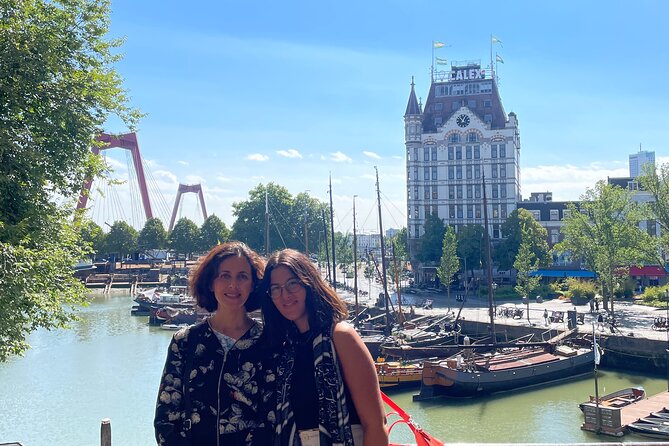
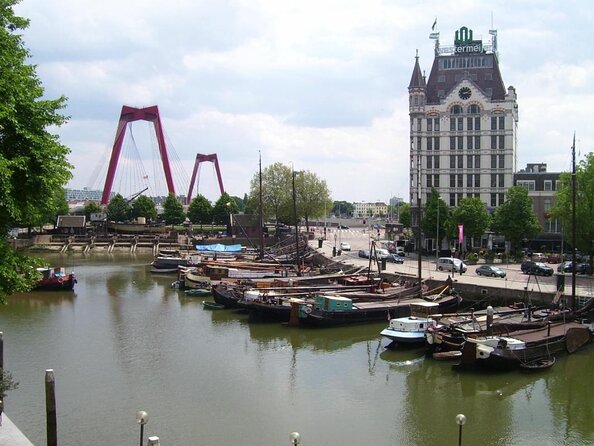
Oude Haven is next, about 15 minutes, and it’s one of the best places in the itinerary to feel actual harbor atmosphere. Not much of the historic center remained intact after WWII, but Oude Haven is preserved. You’ll see historic, charming old boats in the harbor and a colorful mix of buildings along the quays.
This is where Rotterdam shifts from architecture lecture to atmosphere. If you love boats, canal life, or simply watching people take photos while eating something simple, this stop delivers.
It’s also free on the tour, which means you can spend time without worrying about ticket logistics.
The Witte Huis and Meent: Quick Hits of Local Style
Then you’ll get two fast, useful stops that help balance the day.
First is Witte Huis, built in 1889. At 43 meters, it’s described as the first skyscraper in Belgium, the Netherlands, and Luxembourg. This is a sharp reminder that Rotterdam has always been looking upward, even before today’s modern skyline.
After that, you’ll pass Meent, which is currently a hotspot with cafés, eateries, and clothing shops. The vibe is about seeing and being seen, so it’s less about history and more about living city culture.
These two stops are short, about 15 minutes each, but they help you understand Rotterdam today, not only Rotterdam’s reconstruction story.
The Watertaxi Finale: A Waterfront Send-Off If It’s Available
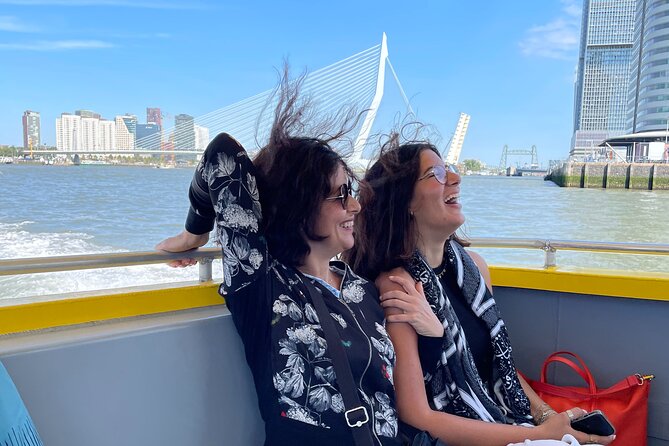
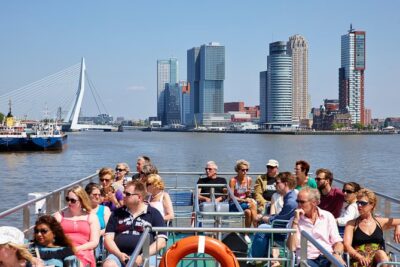
One of the included perks is a watertaxi ride if available at the time of booking. Some tours end with a river taxi style ride back to where you started, and it makes the day feel like it wraps around Rotterdam’s core idea, which is water plus movement.
Because it depends on availability, don’t treat it like a guaranteed photo op. Still, if the ride works out, it’s a smart way to see what you’ve learned from ground level, then get a different angle from the water.
Private Guide Energy: What Makes the Experience Feel Better Than a Checklist
The itinerary itself is impressive, but what really makes it work is the guide style. In the feedback you provided, guides such as Eleftheria, Russell, Izzy, Smaranda, Abdul, and Saad are repeatedly praised for being energetic, fun to talk with, and strong at connecting history and architecture to how Rotterdam functions today.
That matters because Rotterdam has fewer famous “must-see” icons than cities like Amsterdam or Paris. You’re not only collecting sights here. You’re learning a way of reading the city.
Also, since this is private, you can often steer the day toward your own interests. Some groups even added extra time for interiors like Rotterdam City Hall when it was possible through the guide, and that kind of flexibility can turn a good tour into a memorable one.
What to Bring, What to Expect, How to Pace Yourself
This tour is built around short stops and efficient transitions. If you want to enjoy it, come ready for movement.
Bring:
- comfortable walking shoes
- a layer for cool or rainy weather
- a charged phone for the mobile ticket
Expect:
- walking plus public transport, no car ride driving you from point to point
- mostly outdoor viewing, with indoor time at major stops
- a tight rhythm that still leaves room for questions
If you’re someone who likes to linger, tell your guide early. Your guide can sometimes adjust where time goes, within the structure of the tour.
Should You Book This Rotterdam Half-Day Tour?
Yes, if you want a fast, structured introduction to Rotterdam that includes tickets and lunch, and you don’t mind getting around by foot and transit. It’s especially worth it for first-time visitors because it connects the city’s WWII story, its rebuilding choices, and its modern design identity into a day you can actually use.
Maybe skip it if you want a slow, mostly seated experience, or if you have trouble with walking and transfer-style navigation. Rotterdam is walkable and transit-friendly, but this format still demands your legs and your flexibility.
If your goal is to leave Rotterdam Central Station with real context and a short list of what to explore next, this tour is a strong starting move.
Newest bookings around Rotterdam
- e-Scavenger hunt Breda: Explore the city at your own pace★ 4.5 · 27 reviews
- e-Scavenger hunt Rotterdam: Explore the city at your own pace★ 4.5 · 13 reviews
- Rotterdam: City Walk Audio Guide in 7 Languages on your Phone★ 3.5 · 6 reviews
- All-Inclusive Private Windmill Tour to Kinderdijk from Rotterdam★ 4.5 · 59 reviews
- Rotterdam Must Do Tour: Highlights, History, WW2 and Architecture★ 5.0 · 20 reviews
- Breda Fun Puzzle Quest: True Lord Self-Guided Tour★ 4.0 · 9 reviews
- Delfshaven Self-Guided Tour: A Guide to Rotterdam’s Old Town★ 5.0 · 4 reviews
- Discover Rotterdam: Classic Highlights Bike Tour with a Local★ 5.0 · 22 reviews
Rotterdam Tours, compared.


“Remastered” Digital Art Audiovisual Experience
Read our review →
Browse the lists this tour appears in