
REVIEW · RIJKSMUSEUM TICKETS
Rijksmuseum & Amsterdam City Center Semi-Private Tour 12ppl Max
This is the Amsterdam tour that actually feels relaxed. You get pre-booked Rijksmuseum entry and then a long, landmark-filled walk through the old core, with lots of short stops that help you connect the city to its stories.
I like two things most: the small group size (max 8), which keeps the pace sane and lets the guide answer questions, and the way the Rijksmuseum visit is guided with clear focus instead of you wandering alone for hours. In my case, the guide was Diana, and she did a great job making big-name artists and smaller details feel equally easy to understand.
One drawback to plan for: it is a walking-heavy city-center route. This tour is not recommended if you have walking disabilities or use a wheelchair, and you’ll also need to follow museum rules on bags.
In This Review
- Key highlights to know before you go
- Why semi-private max 8 changes the whole experience
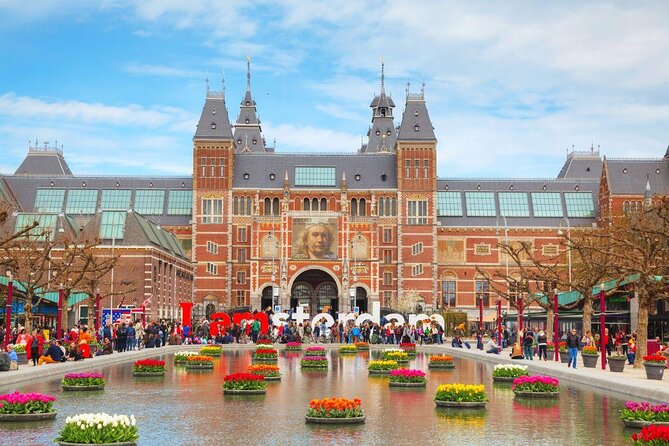
- Entering the Rijksmuseum the easy way, meeting by the I am Amsterdam sign
- What your guide covers inside: Dutch masters, dollhouses, and the library
- The 5.5-hour plan: lunch on your own, then a city-center history walk
- St. Nicholas Basilica to Zeedijk Chinatown: Amsterdam’s layers in quick stops
- Waag, Trippenhuis, and the East India Company courtyard
- Churches, hofjes, and the city’s quiet corners
- Dam Square, the Golden Bend, and stepping near big names
- Hofjes in the Jordaan area and ending at Papeneiland
- Price and value: what you are paying for, and what you should plan
- Should you book this Rijksmuseum and city-center tour?
- FAQ
- Where does the tour meet, and what time does it start?
- How big is the group on this semi-private tour?
- What tickets or entrance fees are included?
- Is lunch included?
- Is the tour suitable for wheelchair users or people with walking disabilities?
- Can I cancel for a full refund?
Key highlights to know before you go
- Skip-the-line Rijksmuseum entry plus an all-day ticket for a second look later
- Max 8 guests for a true semi-private feel and more guide attention
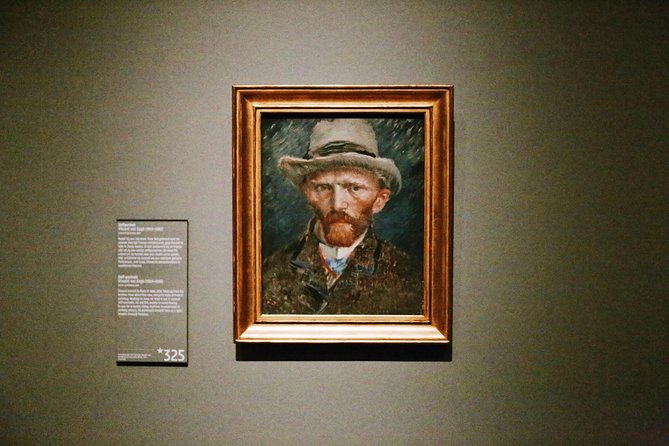
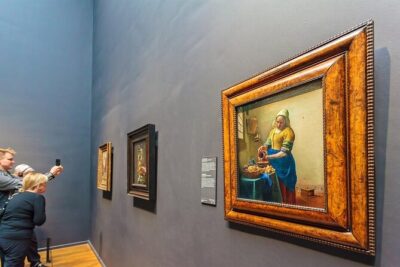
- Rembrandt and Vermeer explained in context, including The Milkmaid
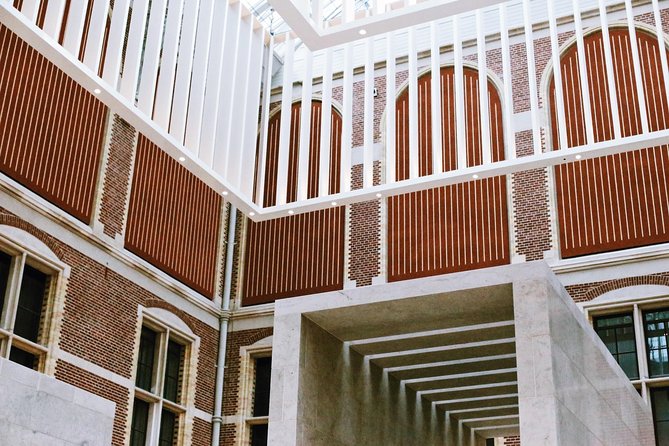
- 19th-century Rijksmuseum library with a surprising amount to see
- Lots of quick stops across the city center, so you leave with better bearings fast
- Rain or shine tour, designed for steady movement through neighborhoods
Why semi-private max 8 changes the whole experience
Amsterdam can punish you if you get stuck behind a big herd. Here, group size tops out at 8, so you spend less time waiting, and you can move at a pace that matches your group.
That matters on two parts of the day. First, in the Rijksmuseum area, where security and getting through the start can be slow. Second, on the walking portion, where the route includes many exterior viewpoints, canal houses, churches, and hofjes. In a big group, those quick stops turn into a blur. In a small group, they stay meaningful.
You are also going to notice how much easier it is to ask questions. Some museum rooms have restrictions on speaking quietly. With a small group, your guide can explain the rules before you enter and then keep everyone on track.
More Rijksmuseum bookings:
- Amsterdam: Rijksmuseum Entry Ticket
★ 4.7 · 29,512 reviews - Amsterdam: City Canal Cruise and Rijksmuseum
★ 4.5 · 2,226 reviews - Rijksmuseum Amsterdam Small-Group Tour with Private Upgrade
★ 4.5 · 1,547 reviews
Entering the Rijksmuseum the easy way, meeting by the I am Amsterdam sign
You meet at 10:00 am at the letter I of the giant I am Amsterdam sign outside the Rijksmuseum. Your tour is scheduled to help you avoid the usual long museum line by going straight inside for your visit.
The Rijksmuseum portion is about 2 hours 30 minutes, and admission is handled for you. This is a smart way to start if it is your first time in Amsterdam, because the museum gives you a framework for what you’ll see later on the streets: Dutch culture, trade, art, and the long arc of the city’s power.
A few practical things you should take seriously:
- Bag limits inside the museum: no large bags or suitcases. Only handbags or small thin bag packs are allowed through security.
- Security can still create lines at some sites, even with skip-the-line style access.
- Dress may be required for entry into some stops on the route.
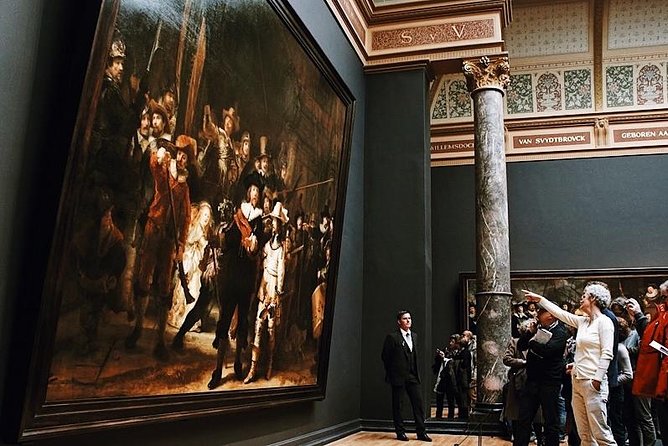
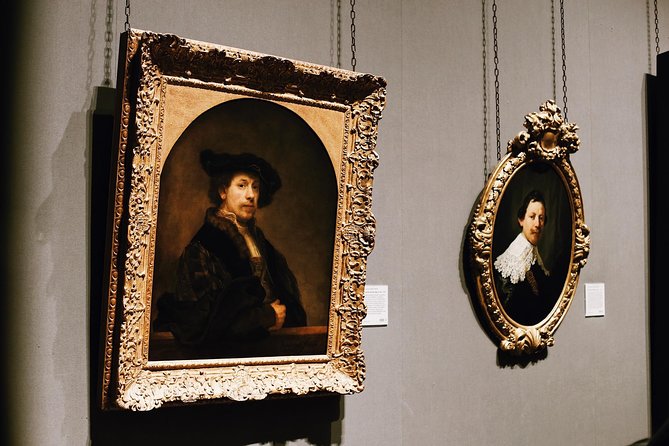
Inside the museum, the visit focuses on key works across Dutch history. You’ll run into the familiar names, especially Rembrandt and Vermeer, but you’ll also get pointed at smaller details like 17th-century dollhouses and everyday scenes that help art make sense. One example your guide will highlight is Vermeer’s domesticity painting The Milkmaid.
What your guide covers inside: Dutch masters, dollhouses, and the library
This is not just a highlights checklist. The tour is designed to give you a sense of how the Rijksmuseum collection tells the story of the Netherlands over time.
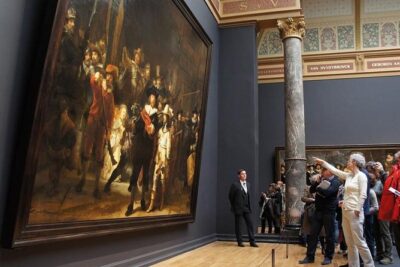
In the art galleries, you’re guided through masterpieces associated with Dutch artists like Rembrandt, along with major themes tied to the era. You’ll also get time on the museum’s 19th-century library, which is included in the guided stop. That library can feel like an odd bonus at first, but it works. It connects Dutch culture to books and reading, not just painting and sculpture.
I also appreciated how the guide sets expectations for what the museum contains. You’re facing more than 8,000 objects total, so you have to pick a path. With the guided focus, you leave with a mental map and a sense of what to look for if you return on your own.
A nice extra built into the ticket: after your walking tour ends, you are free to come back to the Rijksmuseum later the same day, since your ticket is valid all day. This is perfect if the museum is your true priority and you want a second pass at a slower tempo.
The 5.5-hour plan: lunch on your own, then a city-center history walk
The full tour runs about 5 hours 30 minutes total, including a lunch break. Lunch itself is own expense, so you’ll want to plan a quick meal nearby and then regroup.
Why this structure is good: you get a strong start with art and context while you’re fresh, then later you connect Amsterdam’s streets to what you just learned. If you wait until the afternoon to do the museum, you often get tired and rush the galleries. Doing it first helps you absorb the big picture.
After lunch, the walking tour takes over. Most stops are short, typically 5 to 10 minutes, which means you get a burst of context without long waits or huge detours. The tradeoff is obvious: you won’t have time for in-depth ticketed visits at every stop.
A handful of other Amsterdam outings
- Amsterdam: Van Gogh Museum Ticket
★ 4.7 · 52,054 reviews - Amsterdam: Heineken Experience Ticket including 2 Drinks
★ 4.6 · 36,014 reviews - Amsterdam Classic Saloon Boat Cruise with Drinks and Cheese
★ 5.0 · 31,825 reviews - Amsterdam Luxury Canal Cruise + Unlimited Drinks & Bites option
★ 5.0 · 30,518 reviews
St. Nicholas Basilica to Zeedijk Chinatown: Amsterdam’s layers in quick stops
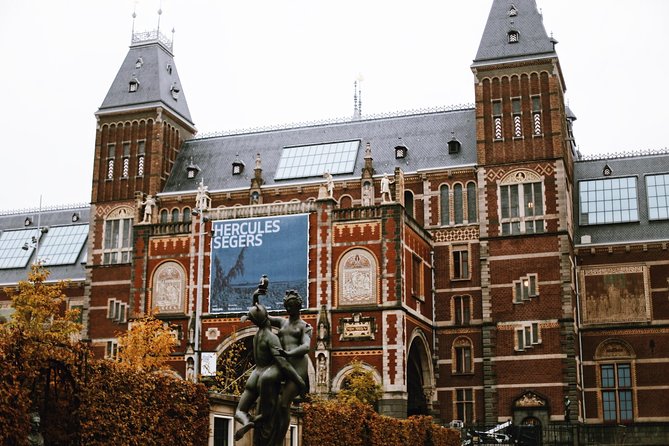
After the museum, the tour moves into central Amsterdam with a sequence of themed stops.
First up is St. Nicholas Basilica. It is Amsterdam’s primary Roman Catholic church, built at the end of the 19th century when Catholics could once again practice openly after three centuries of prohibition. The building mixes styles and art movements, and your guide gives the quick historical meaning behind it. Admission is listed as free for this stop.
Next you head toward the Schreierstoren, often called the Weeping Tower or Tower of Tears. This one is mainly known for a local belief: women would weep there as their husbands left from the port for war or fishing. The stop time is short, and the value is the story, not a long visit. Admission is marked as not included.
Then the route shifts to Zeedijk, known as the Chinatown area of Amsterdam. You’ll see Asian markets and restaurants along with the Zeedijk Buddhist temple, described as the largest Chinese-style Buddhist temple in Europe. It is another “quick stop with context” moment, and it helps you understand how Amsterdam’s global trade ties show up in neighborhoods today.
From there, you reach Nieuwmarkt, a lively market square with roots going back to the 17th century. Your guide points out why the square mattered for traders and shoppers, since it sat just inside an older city gate.
Waag, Trippenhuis, and the East India Company courtyard

This part of the walk leans into trade and power, which is especially fitting right after Rijksmuseum because so much Dutch art and architecture connects to money, shipping, and merchants.
At The Waag, you’re looking at a 15th-century non-religious building. It’s one of Amsterdam’s oldest remaining examples, and it originally functioned as a city gate and part of the walls. Over time it served as a guildhall, museum, and even a fire station. Admission is listed as not included, so think of this as an exterior viewing stop.
Then the tour moves to Trippenhuis and Klein Trippenhuis. You’ll learn how distinct they are from each other, even though both are in the same visual cluster. Trippenhuis is described as Amsterdam’s widest home, spanning around 22 meters, while Klein Trippenhuis is known as one of the narrowest houses in the city and sits across the street. Again, this is a short, architecture-focused pause.
You also get a stop near the Oost-Indisch Huis, Dutch East India Company headquarters. The key idea here is that it is tied to the birthplace of the world’s first multinational corporation. That sounds like a big claim, but it’s the kind of anchor fact that makes the rest of the trade stories click. Admission is listed as not included for this stop, so plan for a brief look, then keep moving.
The route repeats the theme with another look at a narrow house, Kleine Trippenhuis, tying the architecture to the idea that land taxes encouraged tall, thin buildings. It’s quick, but it gives you a reason behind the look of the city instead of just showing façades.
Churches, hofjes, and the city’s quiet corners
This section adds a softer side to the walk, with religious landmarks and hofjes, the little courtyard-style enclaves that make Amsterdam feel human in a way maps do not show.
At Zuiderkerk, you’ll see Amsterdam’s first purpose-built Protestant church. The tower is described as a defining landmark, and it was designed by Hendrick de Keyser. Admission is marked as free for this stop.
You’ll also pass Museum Het Rembrandthuis area. You do not go inside as part of the tour, but you’ll learn it is Rembrandt’s house museum, where he lived and worked from 1639 to 1656. The collection includes Rembrandt’s etchings and paintings of his contemporaries. Admission is listed as not included, so it’s mainly a look and a context stop.
The walk then brings you to the Stopera complex, where the Dutch National Opera and Ballet share a building complex with the city hall. Construction took at least 60 years, which is a useful detail because it tells you Amsterdam’s civic and arts ambitions were long-term projects. Admission is marked as not included.
Next is Huis Aan De Drie Grachten, a rare canal house whose façades face three directions because it sits at the junction of three canals. It’s one of those places you look up at and instantly get why it’s special.
Then you reach Begijnhof, one of Amsterdam’s oldest hofjes. This place is built around a secluded courtyard and garden, with houses for the Beguines, a group of unmarried women who lived together under vows of chastity. Today, it includes two churches. Admission is listed as not included, but the fact that it is a quiet courtyard makes it worth the pause.
Dam Square, the Golden Bend, and stepping near big names
Now the walking route snaps you back to postcard Amsterdam.
Dam Square is next. It is packed with activity and famous buildings, and it includes the Royal Place, the New Church, and the National Monument. Admission is marked as free for this stop.
Then comes the Herengracht area, called the Golden Bend. Your guide will point out the canal’s line of richer, more ornate canal mansions from the Dutch Golden Age. This is a short stop, but it gives you a visual target for what “Golden Age wealth” looks like on the ground.
You’ll also pause outside the Anne Frank House. You are not entering as part of this tour, but you learn the basic WWII context of her hiding and you’ll see the nearby Westerkerk, noted for having Amsterdam’s tallest church tower. Admission is not included for this stop.
Finally in this zone, you’ll spot the gable stones at De Drie Hendricken aan de Bloemgracht 87 to 91, decorated with allegories and trade emblems. It’s quick, but it connects art details to the merchant culture you’ve been learning about.
Hofjes in the Jordaan area and ending at Papeneiland
The last stretch shifts toward smaller courtyards and quieter landmarks, before you finish by one of Amsterdam’s pretty canal corners.
At Karthuizerhof, called the largest hofje in Amsterdam, you’ll learn it began as almshouses for the poor and elderly around a tranquil courtyard. Admission is marked as free for this stop.
Then the tour reaches Noorderkerk, a 17th-century Protestant church built for the Jordaan district. The unusual part is its cross-shaped floor plan, tied to Reformation worship ideals. Admission is marked as free, and you’re mostly seeing it from the outside as your guide explains the thinking behind the layout.
You finish at Papeneiland, near Prinsengracht, one of Amsterdam’s prettiest canal corners. The final touch is the café Het Papeneiland, a brown café dating to 1642, described as serving some of the best apple pie in town. Admission is marked as free for this stop, so you can linger if you want.
Price and value: what you are paying for, and what you should plan
At $286.56 per person for about 5.5 hours, this is not a budget tour. What makes it feel more like value is what’s included.
You are getting:
- Semi-private guiding (max 8), which costs more than standard group tours in practice
- Rijksmuseum admission and entrance fees covered under the tour
- A guided city-center walk that strings together multiple neighborhoods and landmark viewpoints in one block
The main extra cost is just lunch, since it is own expense. Also, if you want to enter any of the stops marked as not included, you may need separate tickets or planning.
If you’re the kind of visitor who wants a head start on understanding Amsterdam fast, this price can feel fair. If you’re the kind who likes long museum time and would rather wander without a schedule, you might prefer a museum-only plan or a separate canal cruise.
Should you book this Rijksmuseum and city-center tour?
I’d book it if you want two things at once: a guided, skip-the-line Rijksmuseum start and a guided orientation walk that helps you connect canal-side landmarks to Dutch culture.
Book it especially if:
- You dislike large groups and want real semi-private pacing
- You want help understanding Rembrandt, Vermeer, and what else matters inside the Rijksmuseum
- You’re comfortable with moderate walking and multiple short stops
Skip it or rethink if:
- You need wheelchair access or have serious mobility limits
- You want a long sit-down museum day with minimal walking
- You are not ready for museum bag restrictions and security rules
If you do book, bring comfortable walking shoes, keep your bag small for the Rijksmuseum, and plan lunch so you do not rush it. The reward is a day that ends with Amsterdam feeling less confusing and more connected.
FAQ
Where does the tour meet, and what time does it start?
The start time is 10:00 am. The meeting point is listed as outside the Rijksmuseum at the letter I of the giant I am Amsterdam sign. There is also a start location listed at Cobra Café, Hobbemastraat 18, 1071 ZB Amsterdam.
How big is the group on this semi-private tour?
The group is limited to a maximum of 8 travelers.
What tickets or entrance fees are included?
Rijksmuseum admission is included, and the tour lists all entrance fees as included. Some specific stops are marked as free, and others are marked as not included, so those are not ticketed entries as part of the tour.
Is lunch included?
Lunch is not included. You get a break for lunch during the tour, and it is your own expense.
Is the tour suitable for wheelchair users or people with walking disabilities?
No. The tour is not recommended for those with walking disabilities or using a wheelchair.
Can I cancel for a full refund?
Yes. You can cancel up to 24 hours in advance for a full refund. If you cancel less than 24 hours before the experience starts, you will not receive a refund.
Newest bookings around Amsterdam
- Amsterdam Breakfast Cruise on Private Luxury Boat★ 5.0 · 5 reviews
- Amsterdam-West Food Tour with local guide★ 5.0 · 16 reviews
- Amsterdam: Explore the Van Gogh Museum & His Masterpieces★ 3.5 · 64 reviews
- Van Gogh Museum Tour excluding Entrance Tickets★ 5.0 · 16 reviews
- Van Gogh Museum with Audio Guide★ 3.5 · 80 reviews
- Van Gogh Museum Ticket with Audio Guide and Unlimited Access Time★ 5.0 · 25 reviews
- Van Gogh Museum Entry Ticket and Guided Tour★ 4.5 · 48 reviews
- Van Gogh Museum Private Tour★ 5.0 · 5 reviews
Rijksmuseum Tickets, compared.

Rijksmuseum Amsterdam Small-Group Tour with Private Upgrade
Read our review →
Rijksmuseum Entry Ticket and Canal Cruise Combo
Read our review →
Go City Amsterdam Pass: Attractions Pass with Rijksmuseum
Read our review →
Rijksmuseum Amsterdam Exclusive Guided Tour w/ Reserved Entry
Read our review →
Van Gogh & Rijksmuseum w/ Reserved Entry Semi-Private 8ppl Max
Read our review →Browse the lists this tour appears in