
REVIEW · RIJKSMUSEUM TICKETS
Rijksmuseum & Amsterdam City Center – Exclusive Guided Tour
One tour packs the city’s best. I love the way this private combo pairs Rijksmuseum art with an on-foot Amsterdam history walk, so you see the big names, then spot the echoes of that past in the streets. You start with Dutch masters like Rembrandt and Vermeer, then shift gears to canals, bridges, hofjes, and old neighborhoods, with lots of chances to pause for photos.
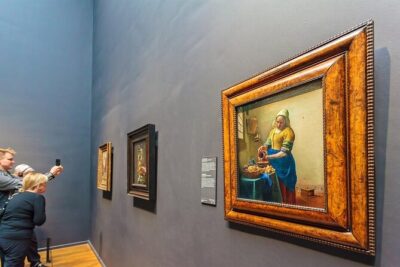
Two things stand out for me. First, the museum time is guided in a way that makes the Rijksmuseum feel doable, not overwhelming, even with its 8,000-plus objects, plus a focus on major works like Rembrandt and Vermeer’s The Milkmaid, along with curiosities such as 17th-century dollhouses and a 19th-century library. Second, the walking portion gives you structure, so the city landmarks connect in your head, from the Amstel River and medieval gate area to canal houses and landmark churches.
One consideration: this is not a sit-and-sightsee day. You need moderate walking comfort (cobblestones and lots of short stops), and lunch is on your own. Also, the Rijksmuseum can be affected by closures, and if delays stretch more than an hour, you may get an alternative without refunds or discounts.
In This Review
- Key things to know before you go
- Price and Logistics, Without the Headaches
- Rijksmuseum Highlights Session: How They Make 8,000 Objects Feel Manageable
- Lunch Break: You Control the Pace, and That’s a Good Thing
- From the Museum to the Streets: Amstel River, Leaning Houses, and Photo-Friendly Walking
- St. Nicholas Basilica and the Tower of Tears: Faith and Everyday Legends
- Zeedijk and Nieuwmarkt: Chinatown Street Energy and the Old-City Market Square
- De Waag and Trippenhuis: Old Walls, Guild Power, and House Tricks
- Oost-Indisch Huis Courtyard: Trade Routes That Literally Changed the World
- Zuiderkerk and Noorderkerk: Protestant Architecture With Meaning
- The Stopera, Begijnhof, Dam Square, and Golden Canal Money
- Anne Frank House From the Outside, Plus Gable Stones and Trade Symbols
- The Largest Hofjes and a Sweet Finish at Papeneiland
- Who This Tour Suits Best (and Who Might Want a Different Plan)
- Should You Book This Tour?
- FAQ
- How long is the Rijksmuseum and Amsterdam City Center tour?
- What time does the tour start?
- Where do we meet for the tour?
- Where does the tour end?
- Is this tour private?
- Is the tour offered in English?
- Are entrance fees included?
- Is lunch included?
- What should I bring or know about bags for the Rijksmuseum?
- Can I cancel for free?
Key things to know before you go
- Private guided museum focus on Dutch masters, domestic life themes, and museum storytelling across many galleries
- A canal-and-cobblestone city walk built for quick orientation, with frequent photo stops
- Big-name landmarks without long ticket battles, since most stops are outside views or free-to-see areas
- Entrance fees handled, so you are not constantly checking what is included
- A single meeting point and a single finish at Papeneiland, which keeps your day smooth
- Rijksmuseum bag and dress rules matter, so plan light (handbag or small thin bag pack)
Price and Logistics, Without the Headaches
At $287.18 per person for about 5.5 hours (including a lunch break), this tour is priced like a premium “time saver.” You are paying for (1) a dedicated guide, (2) museum guidance, and (3) a whole-day arc that strings together art and street-level Amsterdam. For many people, that is better value than doing the museum alone and then trying to figure out what to see on foot afterward.
A few practical details help you plan. The tour starts at 10:00 am and begins at Cobra Café, Hobbemastraat 18. It ends at Het Papeneiland, Prinsengracht 2, so you finish right in the canal-photo zone instead of backtracking. It runs rain or shine, and it uses a mobile ticket.
Most importantly, entrance fees are included, and private transportation is included between locations if needed. That means you should not spend your energy on “how do we get there fast?” questions.
More Rijksmuseum bookings:
- Amsterdam: Rijksmuseum Entry Ticket
★ 4.7 · 29,512 reviews - Amsterdam: City Canal Cruise and Rijksmuseum
★ 4.5 · 2,226 reviews - Rijksmuseum Amsterdam Small-Group Tour with Private Upgrade
★ 4.5 · 1,547 reviews
Rijksmuseum Highlights Session: How They Make 8,000 Objects Feel Manageable
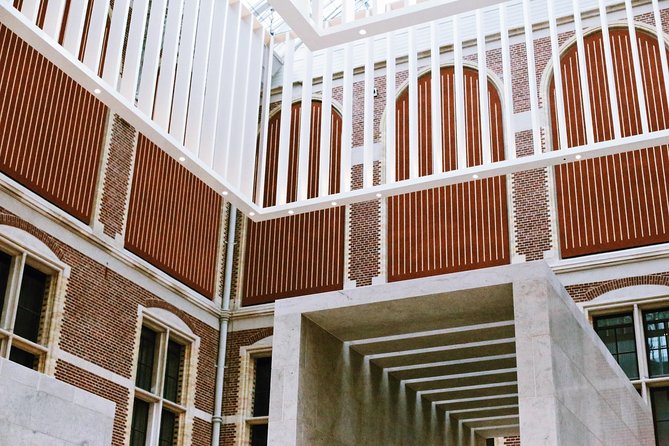
The day starts at the Rijksmuseum, with about 2 hours 30 minutes inside. The Rijksmuseum is often described as the Netherlands’ answer to a Louvre-style anchor museum, and the scale is real. The guide’s job is to make that scale feel like a route, not a maze.
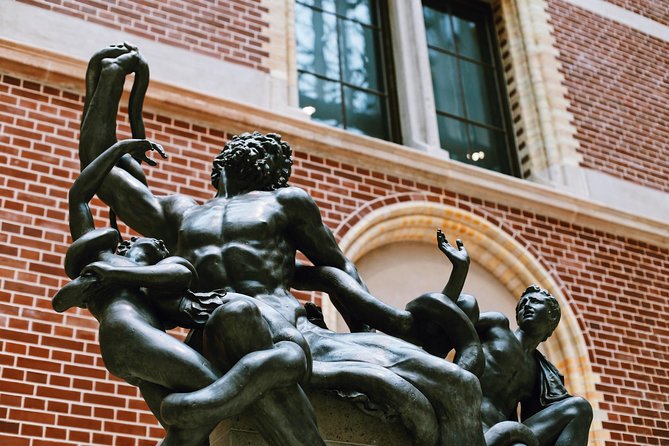
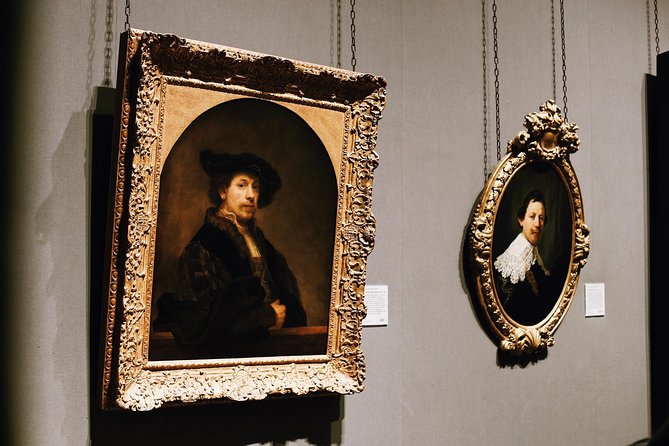
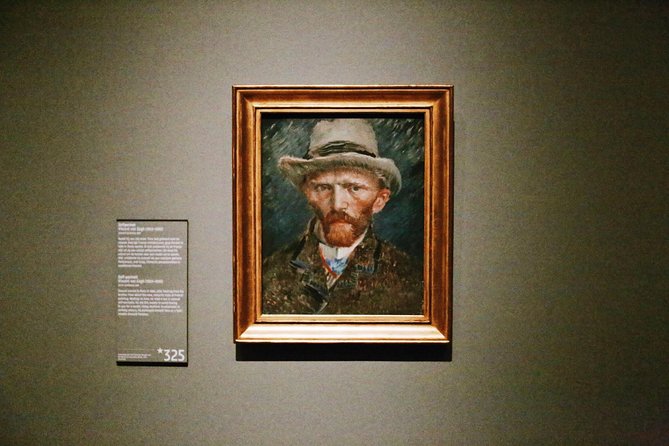
Here is what your time is structured around. You get works by Dutch masters, with standout attention on Rembrandt and Vermeer. Vermeer’s The Milkmaid is specifically part of the plan, and you also see how the museum uses themes to connect paintings, decorative arts, and objects from daily life. One of the most fun parts for me is the promise of small-but-meaningful context, like 17th-century dollhouses that show domestic life from another angle. Add in the mention of a 19th-century library, and you get the sense that the museum is not only about paintings, but about how knowledge and culture were built.
There are also museum rules to keep in mind:
- You will need appropriate dress for entry into some sites on the route.
- No large bags or suitcases inside the museum. Plan on a handbag or a small thin bag pack through security.
- Some rooms can be quiet or restrict speaking, and your guide will tell you about those areas before you enter.
One more wildcard: the Rijksmuseum can face occasional closures. If the museum opening time is delayed by more than 1 hour from the tour start, you will get an appropriate alternative, but no refunds or discounts. If you are booking this trip with tight timing, it is worth keeping that in mind.
Lunch Break: You Control the Pace, and That’s a Good Thing
Lunch is included as a break in the overall timing, but lunch itself is not included. That is actually useful. You can pick something that fits your appetite and budget, and you can choose a spot that minimizes walking strain before you head back out.
A smart way to handle lunch with this kind of itinerary: keep it efficient. You do not want a long sit-down that turns the afternoon into a race. Since the afternoon walk is built from many short stops, treat lunch like refueling, not a second day.
From the Museum to the Streets: Amstel River, Leaning Houses, and Photo-Friendly Walking
After the museum, you pivot to Amsterdam on foot. This is where the tour starts to feel more than “two attractions.” The guide uses what you learned indoors to help you see the city’s bones outdoors.
You will get the big orientation pieces fast: the Amstel River, bridges, and the famous canal-area look, including leaning houses along the canals. Amsterdam can be confusing if you wander without a plan. With this format, you walk cobblestones while learning what shaped the city, including the medieval gate context near the Amstel-area history.
Because it is walking, you can stop regularly for photos. And you will want to, because a lot of Amsterdam’s best views are not single monuments, they are layers: canal angles, gabled facades, and the way older buildings sit next to newer city life.
A handful of other Amsterdam outings
- Amsterdam: Van Gogh Museum Ticket
★ 4.7 · 52,054 reviews - Amsterdam: Heineken Experience Ticket including 2 Drinks
★ 4.6 · 36,014 reviews - Amsterdam Classic Saloon Boat Cruise with Drinks and Cheese
★ 5.0 · 31,825 reviews - Amsterdam Luxury Canal Cruise + Unlimited Drinks & Bites option
★ 5.0 · 30,518 reviews
St. Nicholas Basilica and the Tower of Tears: Faith and Everyday Legends
Your next cluster of stops leans into the city’s mix of faith, architecture, and storytelling.
At St. Nicholas Basilica, you start at the designated meeting point and get the background on the city’s primary Roman Catholic Church. The building goes up at the end of the 19th century, during a time when Roman Catholics could profess their faith in public again after three centuries of prohibition. It is also described as a blend of different architectural styles and artistic movements, so you get a quick architectural “why does it look like that?” moment.
Then you head toward the Weeping Tower, also known as Schreierstoren. This one is short, but memorable. The local belief tied to the tower is simple and human: women wept there for husbands who would leave from the port to go to war or to fish. Even if you do not treat legends like documented history, they explain why people cared about certain places.
Note on logistics: St. Nicholas Basilica includes a free admission ticket, while the Weeping Tower stop lists admission as not included. Practically, you are there to see and learn from the landmark, not to plan your day around an extra paid museum room.
Zeedijk and Nieuwmarkt: Chinatown Street Energy and the Old-City Market Square
Next up: a quick walk through a part of Amsterdam many people recognize from its food and markets.
Zeedijk is known as the city’s Chinatown area. Expect Asian markets, restaurants, and shops. There is also the Zeedijk Buddhist temple, described as the largest Chinese-style Buddhist temple in Europe. Even if you just spot it from the street and move on, the stop helps you connect Amsterdam’s trade story to its modern community layers.
From there, you reach Nieuwmarkt, a lively nightspot and market square in the old city center. The key historical idea here is that it has been a center for commerce and socializing since the 17th century. The square’s location just inside the old city gate made it a convenient meeting point for traders and shoppers, especially for fresh produce. That is one of those “now I get it” facts, because the market square vibe makes perfect sense when you hear the gate logic.
De Waag and Trippenhuis: Old Walls, Guild Power, and House Tricks
At De Waag, you see a 15th-century building that is one of the oldest remaining non-religious buildings. It started as a city gate and a part of Amsterdam’s wall system. Later it served in multiple roles, including guildhall, museum, and fire station. That variety matters because it shows how buildings in Amsterdam constantly change jobs without losing their core presence.
You also move through the world of narrow and wide houses at Trippenhuis and Klein Trippenhuis. Trippenhuis is described as Amsterdam’s widest home, spanning 22 meters, while Klein Trippenhuis is one of the narrowest across the street. You even get the “why” story behind the architecture: tall, narrow buildings connect to land taxes, which pushed owners toward vertical space.
If you are the type who notices shapes and wants the reason behind them, this part of the walk is where you’ll feel the guide earn their fee.
Oost-Indisch Huis Courtyard: Trade Routes That Literally Changed the World
At the Oost-Indisch Huis, you step into the courtyard tied to the Dutch East India Company’s headquarters. The stop is brief, but the idea is big: it is described as the birthplace of the world’s first multinational corporation.
Even if you already know Amsterdam had a major trading era, a courtyard stop like this turns the topic from a textbook paragraph into an actual physical location. You get a quick grounding in why so many canal-era mansions and institutions exist in the first place.
Zuiderkerk and Noorderkerk: Protestant Architecture With Meaning

Churches in Amsterdam can look similar until someone points out why they are different. Here you get that help.
Zuiderkerk is described as Amsterdam’s first purpose-built Protestant church, designed by Hendrick de Keyser. Its elegant tower is called one of Amsterdam’s defining landmarks. The stop is short, but it helps you read the skyline instead of just admiring it.
Later you also reach Noorderkerk, a 17th-century Protestant church built for the Jordaan district. What matters here is the shape: it has an unusual cross-shaped floor plan. The tour frames that layout as reflecting new ideals of Reformation worship. So you are not just seeing a church, you are seeing a physical “belief system” layout.
The Stopera, Begijnhof, Dam Square, and Golden Canal Money
This is the stretch where the tour balances old Amsterdam and big, visible civic landmarks.
You pass by the Stopera, a building complex housing both the city hall and the Dutch National Opera and Ballet. Construction is described as taking at least 60 years, which gives you a sense of how long the city invested in mixing governance and culture under one roof.
Then you hit Huis aan de Drie Grachten, a rare 17th-century canal house at the junction of three canals, with façades facing in three directions. If you like geometry in buildings, this is a satisfying “stop and look up” moment.
At Begijnhof, you see one of Amsterdam’s oldest hofjes, meaning almshouses arranged around a secluded courtyard and garden. The story is specific: it provided homes for Beguines, unmarried women living together under vows of chastity. Today, there are two churches on the site. This stop changes how you think about neighborhoods. It is not only street life, there was always a parallel world for quiet community living.
After that, you reach Dam Square, one of the city’s best-known locations. It includes the Royal Place, New Church, and National Monument. This is where your orientation really lands. You stop thinking only in canal angles, and start seeing Amsterdam as a civic stage.
Then comes Herengracht, described as the “Golden Bend,” lined with the richest and most ornate canal mansions from the Dutch Golden Age. This stop is short, but it sets the contrast with the smaller, quieter hofjes you just saw.
Anne Frank House From the Outside, Plus Gable Stones and Trade Symbols
The tour includes time to pause outside the Anne Frank House. Next door rises the Westerkerk, noted as the tallest church tower in Amsterdam. This part is not about museum entry. It is about placing the names and periods in their real city context.
Then you look up at ornate façades, including the De Drie Hendricken cluster on Bloemgracht 87 to 91. The tour calls out quirky gable stones carved with allegories and trade emblems. If you have ever wondered why Dutch buildings look so busy at street level, this is the explanation: trade, symbolism, and pride all show up as decoration.
The Largest Hofjes and a Sweet Finish at Papeneiland
The last section brings you to quiet corners and then back to one of Amsterdam’s prettiest canal endings.
You see Coöperatieve Vereniging Karthuizerhof, described as the largest hofje in Amsterdam. It was built as almshouses around a tranquil courtyard for the city’s poor and elderly. It is a reflective stop, and it helps you connect the city’s wealth to how it cared for people who were not part of the Golden Age crowd.
You then reach Papeneiland, ending at a canal corner where you can look toward Het Papeneiland, a brown café said to be from 1642 and known for serving the best apple pie in town. Even if you do not stop for pie right away, it is a satisfying finale because you finish where Amsterdam looks like a postcard without trying too hard.
Who This Tour Suits Best (and Who Might Want a Different Plan)
This is a great match for you if:
- You want Dutch art plus Amsterdam street history in one day, without losing time.
- You like being guided through the “what am I looking at” moments, not just staring at paintings.
- You can handle walking for most of the afternoon and are okay with short stops rather than long museum wandering.
You might want a different plan if:
- You prefer a slow, museum-only day. The Rijksmuseum highlights focus is designed for coverage, not for total immersion.
- Your group wants lunch that is already planned into the itinerary. Here, lunch is your choice.
- Your travel schedule is extremely tight, since Rijksmuseum closures can trigger an alternative if delays exceed an hour.
Should You Book This Tour?
If you are coming to Amsterdam with a limited window and you want the city to make sense, I think this is a smart booking. You get entrance fees handled, a guided route that connects the Rijksmuseum to canal-era landmarks, and a finish at Papeneiland that feels like a reward rather than a detour.
It is also a good sign that this format keeps the day practical: rain or shine, lots of short landmark stops, and on-foot photo moments. The one real tradeoff is price and pace. If you are sensitive to walking cobblestones or you want a long, sit-down museum afternoon, this may feel rushed.
My quick advice: book it if your priority is seeing the big Rijksmuseum names like Rembrandt and Vermeer, then getting an organized, human-scale Amsterdam walk afterward. Skip it if you mainly want one attraction at a time and you enjoy planning routes on your own.
FAQ
How long is the Rijksmuseum and Amsterdam City Center tour?
It is about 5 hours 30 minutes, including a lunch break.
What time does the tour start?
It starts at 10:00 am.
Where do we meet for the tour?
The meeting point is Cobra Café, Hobbemastraat 18, 1071 ZB Amsterdam.
Where does the tour end?
The tour ends at Het Papeneiland, Prinsengracht 2, 1015 DV Amsterdam.
Is this tour private?
Yes. It is a private tour/activity, with only your group participating.
Is the tour offered in English?
Yes, it is offered in English.
Are entrance fees included?
Yes. All entrance fees are included.
Is lunch included?
Lunch is not included. There is a break for lunch, but you pay for it on your own.
What should I bring or know about bags for the Rijksmuseum?
No large bags or suitcases are allowed inside the museum. Plan for a handbag or a small thin bag pack that can go through security.
Can I cancel for free?
Yes, you can cancel for a full refund up to 24 hours in advance of the experience start time.
Newest bookings around Amsterdam
- Amsterdam Breakfast Cruise on Private Luxury Boat★ 5.0 · 5 reviews
- Amsterdam-West Food Tour with local guide★ 5.0 · 16 reviews
- Van Gogh Museum with Audio Guide★ 3.5 · 80 reviews
- Amsterdam: Explore the Van Gogh Museum & His Masterpieces★ 3.5 · 64 reviews
- Van Gogh Museum Tour excluding Entrance Tickets★ 5.0 · 16 reviews
- Van Gogh Museum Ticket with Audio Guide and Unlimited Access Time★ 5.0 · 25 reviews
- Van Gogh Museum Entry Ticket and Guided Tour★ 4.5 · 48 reviews
- Van Gogh Museum Private Tour★ 5.0 · 5 reviews
Rijksmuseum Tickets, compared.

Rijksmuseum Amsterdam Small-Group Tour with Private Upgrade
Read our review →
Rijksmuseum Entry Ticket and Canal Cruise Combo
Read our review →
Go City Amsterdam Pass: Attractions Pass with Rijksmuseum
Read our review →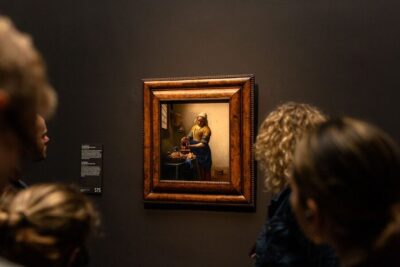
Rijksmuseum Amsterdam Exclusive Guided Tour w/ Reserved Entry
Read our review →
Van Gogh & Rijksmuseum w/ Reserved Entry Semi-Private 8ppl Max
Read our review →Browse the lists this tour appears in