
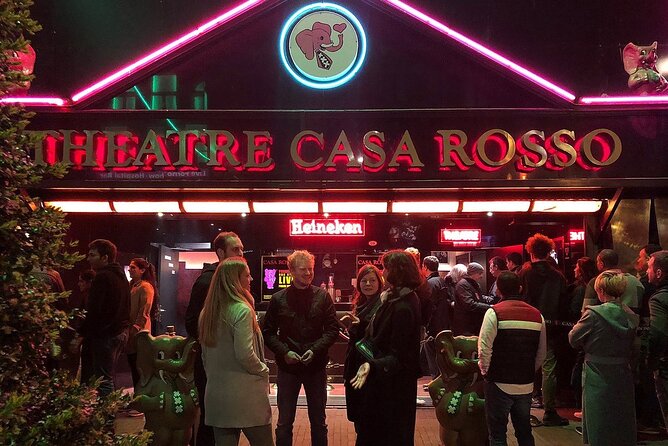
REVIEW · RED LIGHT DISTRICT TOURS
Red Light District tour in Amsterdam
Amsterdam’s Red Light District is never just one thing. This guided walk helps you make sense of De Wallen and the surrounding streets, with clear context on prostitution, the city’s tolerance, and why coffee houses became part of Amsterdam’s identity.
Two things I really like: the small group size (max 15) that makes it easier to ask questions, and the way the guides bring local color, humor, and practical expectations. One drawback to plan for, since city rules matter, is that you won’t enter the Red Light District during the tour, so you’ll mostly cover the perimeter and then get a map for the last stretch on your own.
You should come with a curious, respectful mindset. The route is mostly flat, and the pace is designed to feel relaxed, but you still need moderate walking comfort for about 1.5 hours.
In This Review
- Key Things to Know Before You Go
- Red Light District, Coffee Shops, and the Real Reason This Tour Works
- Price and Value for a 90-Minute Walk Around De Wallen
- Logistics That Matter: Meeting Point, Getting There, and Group Size
- What the Pace Feels Like (And Why That’s a Good Thing)
- Stop 1: De Wallen, Prostitution, and How Amsterdam’s Reputation Took Shape
- Stop 2: Dam Square and the Coffee Shop Origin Story
- Stop 3: Warmoesstraat, Old Streets, and the Old Church Glimpse
- Stop 4: Zeedijk and Chinatown’s Transformation from 1970s Danger
- Stop 5: Nieuwmarkt, Legalization, and What Sex Workers Face Now
- Stop 6: Kloveniersburgwal and Coffee Shops, Legal Status, and Expectations
- Stop 7: Paulusbroederssluis, Your Map, and Exploring the Outskirts
- Guides: Funny, Patient, and Good at Tough Questions
- Who Should Book This Tour, and Who Might Want to Skip It
- Should You Book This Red Light District Walking Tour?
- FAQ
- How long is the Red Light District walking tour?
- Will the tour go into the Red Light District itself?
- Is the tour offered in English?
- What’s included in the tour price?
- Where does the tour start and end?
- How big is the group?
- What is the cancellation policy?
Key Things to Know Before You Go
- Outskirts only due to city regulations: you learn from the edges, not by walking through the district.
- Coffee shops get real context: you connect the dots from culture to legal reality.
- A guide-led history you can question: many guides are praised for answering tough questions with patience.
- Small group energy: max 15 travelers keeps things human-sized.
- You get a map for your follow-up walk: Paulusbroederssluis is where the tour gives you a self-guided route.
- Expect Chinatown on the route: Zeedijk is part of the plan, even if you’d rather skip it.
Red Light District, Coffee Shops, and the Real Reason This Tour Works
This isn’t a sightseeing loop that tries to shock you for fun. It’s a structured walk that tries to explain how Amsterdam ended up with a Red Light District in the first place, and why the city’s attitudes got shaped the way they did.
I like that the tour stays grounded in everyday facts and street-level context. You’ll hear what made certain people settle here, why Amsterdam developed a reputation for liberal tolerance, and how legal shifts changed the landscape over time.
You also get a big help with the coffee shop story. The tour frames coffee shops not as a random tourist attraction, but as part of a bigger cultural debate about freedom, rules, and what Amsterdam allows.
More Red Light District walks:
- Amsterdam: Red Light District Tour in DE/EN/IT/ES/FR
★ 4.9 · 7,136 reviews - Amsterdam: Red Light Secrets Museum Entry Ticket
★ 4.2 · 5,722 reviews - Amsterdam Red Light District & Coffee Shop Tour
★ 4.6 · 4,134 reviews
Price and Value for a 90-Minute Walk Around De Wallen
At $31.44 per person for about 1 hour 30 minutes, you’re paying for guided explanation, not entry tickets. The stops are built around walk-by viewpoints, and the tour is designed so you learn as you go.
The value comes from a few add-ons baked into the experience: a map for after the group walk and a small gift meant to bring a smile. One review even mentioned funny genital-shaped gummies, which tells you the gift tends to lean playful, not formal.
Is it worth it if you already planned to read about Amsterdam online? Probably, only if you want help turning facts into a clearer picture. The guides are repeatedly praised for being friendly, open to questions, and able to explain what’s going on without making it feel like a cold lecture.
Logistics That Matter: Meeting Point, Getting There, and Group Size
You’ll start at Bistro Berlage, Beursplein 1, 1012 JW Amsterdam, and the activity ends back at the same meeting point. The tour runs in English and uses a mobile ticket, so you’ll want to have your phone ready.
Group size is capped at 15 travelers, which is a big deal in this neighborhood. A smaller group makes it easier to keep a steady pace and gives your guide room to answer questions without rushing everyone.
One practical note: a couple of people said they had trouble finding the exact meeting location. I’d give yourself a few extra minutes, confirm the address in your maps app, and arrive ready to look for the group rather than speed-running the meetup.
What the Pace Feels Like (And Why That’s a Good Thing)
The tour is about 1.5 hours, but it’s not a fast march. In reviews, the walk is described as manageable, with guides careful about conditions like rain or snow, and willing to slow down for questions.
That matters in a sensitive topic like this. You don’t want a guide who speed-talks and moves on before you process what you’re hearing.
You should also know the timing can shift. Some reviews mention the tour finishing closer to 1 hour, while others say it stretched longer than the suggested duration. That usually comes down to group size, questions, and how quickly the guide covers each stop.
A handful of other Amsterdam outings
- Amsterdam: Van Gogh Museum Ticket
★ 4.7 · 52,054 reviews - Amsterdam: Heineken Experience Ticket including 2 Drinks
★ 4.6 · 36,014 reviews - Amsterdam Classic Saloon Boat Cruise with Drinks and Cheese
★ 5.0 · 31,825 reviews - Amsterdam Luxury Canal Cruise + Unlimited Drinks & Bites option
★ 5.0 · 30,518 reviews
Stop 1: De Wallen, Prostitution, and How Amsterdam’s Reputation Took Shape
De Wallen is where the tour sets the tone. Here you’ll learn the history behind the district and why prostitution became established in this specific area.
What I like about starting here is that it gives you a framework before the tour moves onto nearby streets. Instead of treating sex work as a random “thing to look at,” you get the why behind it, including why sex workers chose to settle in this area and how Amsterdam developed a reputation for tolerance.
This is also the first place where you need to adjust expectations. Since tours aren’t allowed to enter the district, you’re learning from the outside. You may see the neighborhood’s atmosphere and context, but you’re not walking inside the active windows.
Stop 2: Dam Square and the Coffee Shop Origin Story
Dam Square is a smart pivot. The tour connects it to the idea of where the coffee shop concept originated and how this area once sat at the center of Amsterdam’s tolerance and freedom.
Even if you’ve read about Amsterdam’s coffee shops before, this stop helps you understand why the city’s approach took the shape it did. You’re not just hearing rules; you’re hearing the cultural reasoning behind the rules.
One useful takeaway from this kind of framing: you’ll be less likely to confuse Amsterdam’s policies with a free-for-all. The whole tour keeps pointing you back to the difference between what’s socially accepted and what’s officially permitted.
Stop 3: Warmoesstraat, Old Streets, and the Old Church Glimpse
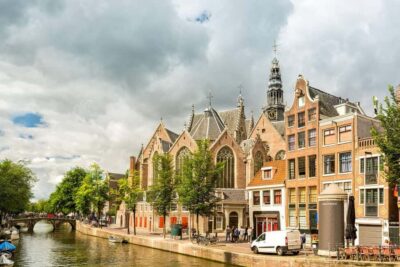
Warmoesstraat is one of Amsterdam’s older streets, and the tour uses it to show how “old bones” can become part of modern entertainment life. This stop is also where you’ll catch a glimpse of the Old Church.
Why this matters: when you’re learning about the Red Light District, it’s easy to see only the stereotypes. Warmoesstraat reminds you this neighborhood is layered, and the streets have a long life beyond their most famous reputation.
This stop also tends to feel like a breather. You get movement and new scenery, while still staying focused on how the district fits into the broader city.
Stop 4: Zeedijk and Chinatown’s Transformation from 1970s Danger
Zeedijk is a history lesson with a dramatic arc. You’ll learn about Chinatown’s past, including how it was once seen as one of the most dangerous areas in Amsterdam during the 1970s.
Then the tour explains the decline and the street’s transformation into a favorite spot for many Amsterdammers. For me, that change is the whole point of including this stop: Amsterdam keeps reinventing itself, and the Red Light District area is tangled up in that same momentum.
A heads-up if this matters to you: some people said they didn’t want the Chinatown area included and that it wasn’t what they expected. If you want the tour to stay strictly focused on De Wallen, plan to treat Zeedijk as part of the “neighborhood context package,” not a detour.
Stop 5: Nieuwmarkt, Legalization, and What Sex Workers Face Now
At Nieuwmarkt, the tour shifts from history to modern policy. You’ll learn about the legalization of prostitution and the challenges sex workers face today.
This stop is valuable because it prevents the tour from becoming only a past-tense story. Amsterdam’s approach is still evolving, and the lived reality behind the headlines is complex.
I also appreciate that the tone stays explanatory rather than sensational. Some reviews noted that the tour can cover topics that feel inappropriate to certain people, even in the Red Light District context, but the general theme is respectful and honest discussion.
If you’re uncomfortable with direct conversation about sex work or related issues, this is the stop where you should be mentally prepared.
Stop 6: Kloveniersburgwal and Coffee Shops, Legal Status, and Expectations
Kloveniersburgwal is where the tour connects what people actually mean when they say coffee shops. You’ll learn about their renown, their cultural significance, and their legal status.
This stop helps you avoid a common misunderstanding: that Amsterdam’s coffee shop vibe means everything is allowed whenever you want. The tour frames coffee shops as an important cultural element with clear legal boundaries, not just a tourist trend.
In reviews, guides are praised for being able to answer questions, including practical ones. If you’ve got any lingering uncertainty about how coffee shops fit into Dutch law, this is your moment to ask.
Stop 7: Paulusbroederssluis, Your Map, and Exploring the Outskirts
At Paulusbroederssluis, the tour gives you what you need for the last leg: a map with information for the rest of your exploring. Then you head off on your own to see more of the area around the perimeter.
This part is especially useful because city rules prevent the tour from entering the active Red Light District. The map gives you a respectful way to keep going without turning your evening into a chaotic hunt for the wrong places.
One review described the map as a nice way to self-guide afterward. That matches the bigger idea of this tour: think of it as guided context first, then independent exploration with a clearer head.
Guides: Funny, Patient, and Good at Tough Questions
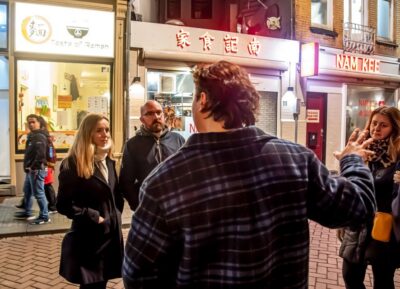
A big strength here is the human delivery. Multiple guides are mentioned in positive reviews, including Carlos, Nadav, Valeria, David, and Manouk, and the repeated pattern is humor plus clarity.
People specifically praised guides for being open to questions, friendly, and careful with pace. Some mentioned the guide helped them feel comfortable even when the topic could be awkward.
If you want a tour that feels like a conversation with a real local rather than a script read aloud, this is the sort of experience to look for.
Who Should Book This Tour, and Who Might Want to Skip It
This tour is a strong fit if you want context more than voyeurism. It’s also a good match if you’re curious about how Amsterdam thinks about tolerance, legalization, and coffee shop culture, and you’d rather ask questions than rely on guesswork.
It’s also a good choice for first-time visitors who want to understand what they’re seeing before they walk around on their own. Starting with the edges helps you interpret what you notice later.
I’d be cautious if you:
- Want to walk directly through the Red Light District during the tour (you cannot)
- Don’t want any Chinatown exposure, since Zeedijk is included
- Prefer a topic that avoids anything that might feel too adult, even if the tone is respectful
If you want something strictly visual, you may feel shortchanged. If you want a street-smart explanation, you’ll likely feel satisfied.
Should You Book This Red Light District Walking Tour?
Book it if you want a guided, English explanation of Amsterdam’s Red Light District area that focuses on why it exists, how coffee shops became part of the story, and what legal changes mean in real life. The small group size and map for the follow-up walk add real practical value.
Skip it if your main goal is to enter the Red Light District during the tour or if you’d be upset by a route that includes Zeedijk and Chinatown context. City rules shape the experience, and the tour is built to respect those limits while still giving you the understanding that makes the neighborhood click.
FAQ
How long is the Red Light District walking tour?
It lasts about 1 hour 30 minutes.
Will the tour go into the Red Light District itself?
No. Tours in the Red Light District have been prohibited since 2020, so this tour goes to the outskirts and covers the surrounding area.
Is the tour offered in English?
Yes, it is offered in English.
What’s included in the tour price?
You get a 1.5-hour walking tour, a map with information for the last stretch of the tour, and a small gift.
Where does the tour start and end?
The tour starts at Bistro Berlage, Beursplein 1, 1012 JW Amsterdam, and it ends back at the same meeting point.
How big is the group?
The tour has a maximum of 15 travelers.
What is the cancellation policy?
You can cancel for a full refund up to 24 hours before the experience starts.
Newest bookings around Amsterdam
- Amsterdam Breakfast Cruise on Private Luxury Boat★ 5.0 · 5 reviews
- Amsterdam-West Food Tour with local guide★ 5.0 · 16 reviews
- Amsterdam: Explore the Van Gogh Museum & His Masterpieces★ 3.5 · 64 reviews
- Van Gogh Museum Tour excluding Entrance Tickets★ 5.0 · 16 reviews
- Van Gogh Museum with Audio Guide★ 3.5 · 80 reviews
- Van Gogh Museum Ticket with Audio Guide and Unlimited Access Time★ 5.0 · 25 reviews
- Van Gogh Museum Entry Ticket and Guided Tour★ 4.5 · 48 reviews
- Van Gogh Museum Private Tour★ 5.0 · 5 reviews
Red Light District Tours, compared.

Amsterdam Red Light District & Coffee Shop Tour
Read our review →
Red Light District Pub Crawl with Unlimited Shots
Read our review →
Private Amsterdam Red Light District and Coffee Shop Tour
Read our review →
Browse the lists this tour appears in