
REVIEW · WORKSHOPS
Kintsugi Workshop “The art of Imperfection”
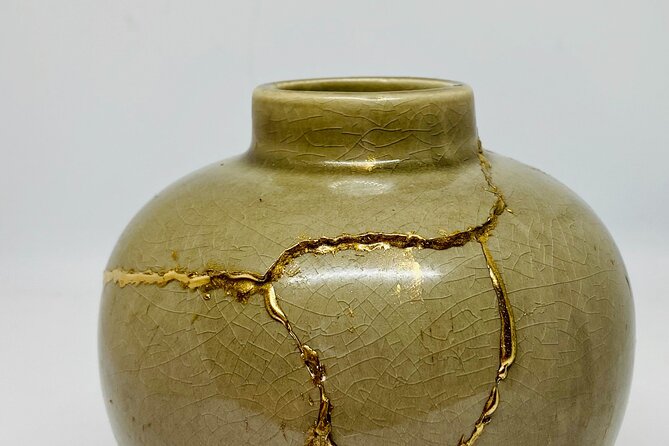
Cracks turn into gold patterns. This Amsterdam Kintsugi workshop, called The art of Imperfection, is a calm, hands-on way to turn damage into design using golden leaf glue and Japanese wabi-sabi ideas.
You’ll start with a serene introduction, then do the real magic part: symbolically breaking a plate and carefully reassembling the shards into something unexpectedly beautiful. The vibe is creative, patient, and practical.
What I like most is the clear, step-by-step flow that keeps you focused from start to finish, and the fact that everything needed for the workshop is included in the $90.11 price. I also appreciate the small group size (max 6), which makes it easier to get help while your hands learn the process.
One thing to consider before you go: it runs about 2 hours, and it is not for kids under 10, so if you want a more family-friendly craft stop or a longer, slower project day, this may feel short.
In This Review
- Key highlights you should know
- Kintsugi in Amsterdam, what you’re really doing in 2 hours
- Price and value, why $90.11 can make sense here
- From plate breaking to golden seams, the workshop flow
- The wabi-sabi lesson you’ll carry beyond the table
- Who this workshop is best for, and who may not enjoy it
- Meeting point and scheduling, how to plan your Amsterdam afternoon
- The guide vibe, and why it can change the whole experience
- Should you book this Kintsugi workshop?
- FAQ
- Where does the Kintsugi workshop start?
- How long is the workshop?
- Is the workshop offered in English?
- What is included in the price?
- Is coffee or tea included?
- How many people are in the group?
- Is it suitable for children?
- Do I need a certain fitness level?
- What is the cancellation policy?
Key highlights you should know
- Small group (max 6), so you get attention without the workshop feeling rushed
- Golden leaf glue repairs, so the fractures become visible, intentional lines
- Symbolic plate breaking, a guided moment that sets the wabi-sabi tone
- Patient reassembly, where careful focus is part of the art, not separate from it
- English instruction with all materials provided, so you can show up light
- Wednesday 2:00 to 4:00 PM, which is easy to slot into an afternoon in Amsterdam
Kintsugi in Amsterdam, what you’re really doing in 2 hours
Kintsugi is famous for one reason: it treats breakage as part of the story, not a problem to hide. In this workshop, you will work with the core idea behind the art, restoring cracked pieces with a gold-toned finish that turns fractures into decorative seams. That is the headline. The bigger win is what the process trains in your mind: steadier focus, gentler attention to detail, and a new way to look at imperfections.
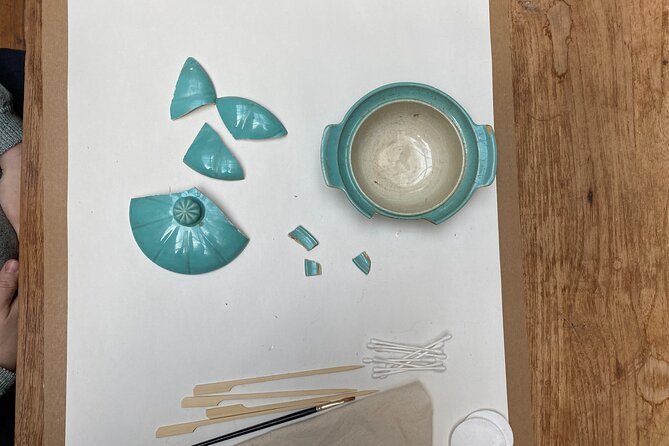
The class is built around three emotional phases. First, there is a serene introduction that sets the tone and helps you shift from tourist mode to maker mode. Then comes a guided symbolic moment where you break a plate, not to be reckless, but to mark a fresh start. After that, you spend time patiently reassembling the shards and watching the piece change as the golden lines bring it together.
This is also a design-friendly take on a very traditional art. Kintsugi began in 15th-century Japan as a restoration practice, but it fits right into modern tastes for natural materials, visible craft, and intentional flaws. You are not just learning a technique. You are getting the mindset that makes the technique meaningful.
A handful of other Amsterdam outings
- Amsterdam: Traditional Dutch Syrup Waffle Making Workshop
★ 4.8 · 4,093 reviews - Amsterdam Traditional Dutch Syrup Waffle Making Workshop
★ 5.0 · 960 reviews - Amsterdam: Bols Cocktail Experience and Cocktail Workshop
★ 4.8 · 666 reviews
Price and value, why $90.11 can make sense here
At $90.11 per person for about 2 hours, this workshop sits in the range of a premium, hands-on experience. The key is what you actually get for that money. You receive all materials needed for the session, and you have a dedicated instructor to guide you through the steps.
You also get something that is hard to replicate on your own while traveling: structure. Kintsugi sounds simple until you try it, then you realize timing and careful reassembly are everything. Here, the workshop flow is designed to walk you through the process in a supported way, with enough time for patience rather than speed.
Another value point is the group size. A maximum of 6 travelers means less waiting and more direct help. If you have ever tried a craft class where you get ten seconds of guidance and then the rest is guesswork, you will appreciate how this format keeps you from feeling lost.
There is also the practical value of ending where you started. The activity finishes back at the meeting point, which saves you from extra planning to continue your day.
From plate breaking to golden seams, the workshop flow
Even if you love arts and crafts, this one is more about controlled attention than frantic creativity. The session starts with a serene introduction, and it matters because it prepares your hands and your brain for the next step. You learn the basic idea behind the restoration style: you are building a meaningful repair line, not trying to erase the evidence of damage.
Then you do the symbolic break. You will break a plate as part of the exercise. The point is psychological as much as artistic. It is a safe, guided way to practice letting go of the idea that everything must stay perfect. If that thought makes you smile, great. If it makes you nervous, you still get a structured moment that keeps things calm.
After the break, the core work begins. You will patiently reassemble shards, focusing on how the pieces meet and how the repair becomes part of the final look. The workshop centers on golden leaf glue, which is the signature element that makes Kintsugi recognizable. As the seams form, the cracks stop being threats and start becoming lines of design.
Here is a practical tip for your comfort: wear clothing you do not mind getting a little messy. Even if materials are well-managed, glue and workshop handling tend to be hands-on. If you are the type who sweats small stains, bring a plan, like old sneakers and a shirt you are fine with.
You should also know that this is an activity with moderate physical fitness expectations. That likely means you will be sitting or moving in a typical workshop setup, with enough manual work to require some comfort with fine motor tasks.
The wabi-sabi lesson you’ll carry beyond the table
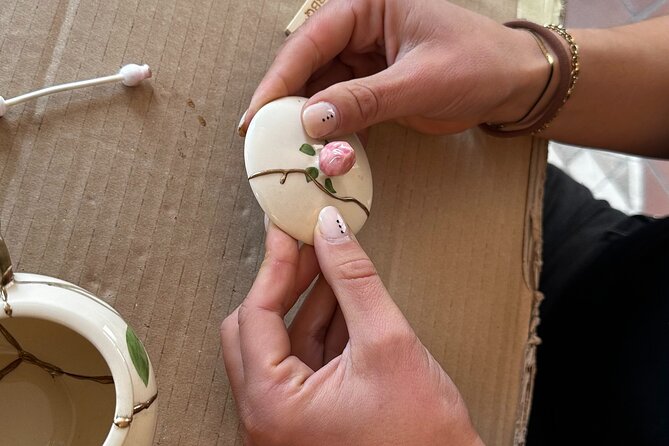
Kintsugi is often described as Japanese art restoring beauty to imperfections, but the deeper idea is wabi-sabi: valuing what is real, worn, uneven, and changed by life. The workshop is built to reflect that philosophy in a simple, unforgettable sequence.
First, the symbolic plate breaking reframes damage. Instead of treating it as the end of something, you treat it as the start of a new form. Then, the reassembly teaches you that repair is not instant. It requires time, careful placement, and the willingness to work slowly enough to get it right.
The final visual effect matters too. Golden lines do not hide fractures. They highlight them. That is a powerful design lesson, especially if you are into contemporary style. It also becomes a personal one. People often connect this idea to resilience, fresh beginnings, and the idea that scars can hold meaning.
If you are the kind of person who likes to bring home a story as much as an object, you’ll like the way this workshop frames your hands-on work as practical mindfulness. It is not heavy-handed. It is just built into the process, with focus and patience as the repeated theme.
And yes, you’ll also learn something useful that you can apply later. Even if your future result is not identical, you will understand the concept of visible repair and how golden seams can turn broken into beautiful.
A different way to spend an afternoon around Amsterdam:
- Amsterdam: Van Gogh Museum Ticket
★ 4.7 · 52,054 reviews - Amsterdam: Heineken Experience Ticket including 2 Drinks
★ 4.6 · 36,014 reviews - Amsterdam Classic Saloon Boat Cruise with Drinks and Cheese
★ 5.0 · 31,825 reviews - Amsterdam Luxury Canal Cruise + Unlimited Drinks & Bites option
★ 5.0 · 30,518 reviews
Who this workshop is best for, and who may not enjoy it
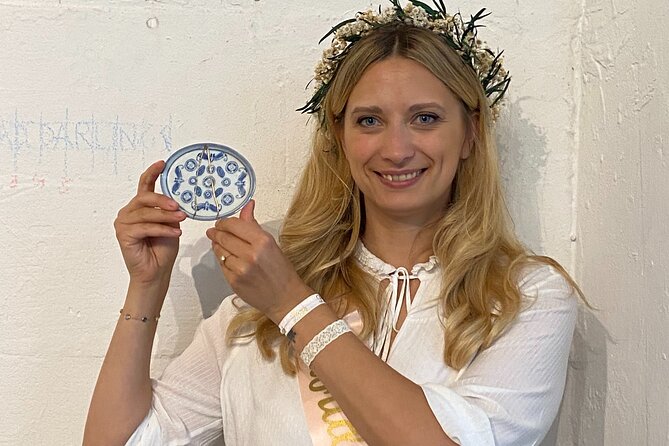
This is a great match if you want a hands-on craft class that is also a meaningful cultural practice. If you enjoy Japanese aesthetics, visible craftsmanship, and design that celebrates age rather than covering it, you will get extra satisfaction out of the golden seams and the philosophy behind the repairs.
You will also likely enjoy it if you like small-group learning. With a maximum of 6 travelers, the workshop feels less like a show and more like a guided making session. That format helps when you want to ask questions or need a reset on a step.
One key restriction is age. The workshop is not suitable for children under 10. If you are traveling with younger kids, this is likely not the best activity for your group.
You should also expect moderate physical fitness requirements. This is not described as strenuous, but it is a workshop with manual work and concentration. If you have mobility issues that make handwork difficult, you might want to think twice.
If you hate messy hands or glue-based crafts, you might find it frustrating. But if you are okay with the idea that craft time can be a little chaotic, you’ll probably find it rewarding.
Meeting point and scheduling, how to plan your Amsterdam afternoon
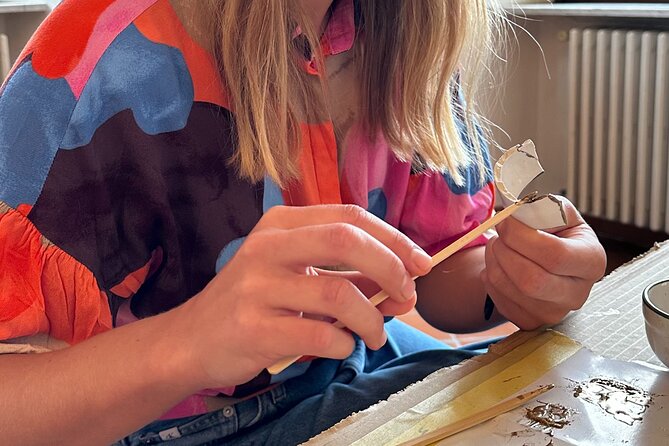
The workshop meets at Paleisstraat 107, 1012 ZL Amsterdam. It also ends back at the same meeting point, which makes planning simple. You can treat it like an afternoon activity, not a complicated scavenger hunt across town.
It runs on Wednesdays from 2:00 PM to 4:00 PM during the listed date windows (from 11/09/2025 to 01/31/2026, and again 11/09/2026 to 01/31/2027). That matters because Amsterdam afternoons can fill up fast. If you are aiming for this class, plan around Wednesdays, not just any free day.
You do not have to worry about printing anything complicated. You get a mobile ticket, and confirmation arrives at the time of booking. It is also described as near public transportation, so you should be able to connect easily from central areas.
Two small practical notes. Coffee and/or tea are not included, so if you want a drink, plan to grab one before or after the session. And because it is offered in English, you can relax if English is your working language.
The guide vibe, and why it can change the whole experience
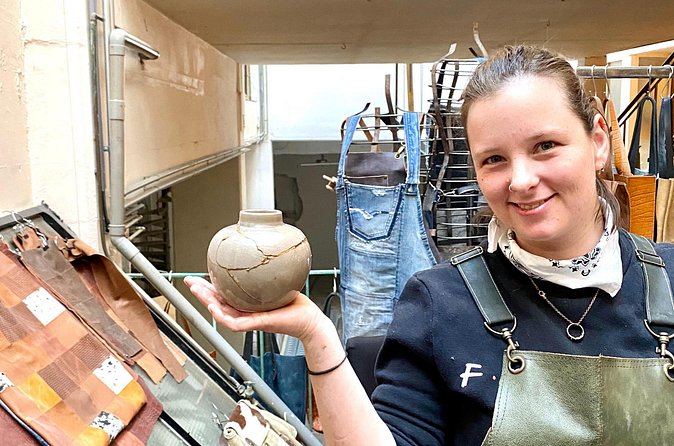
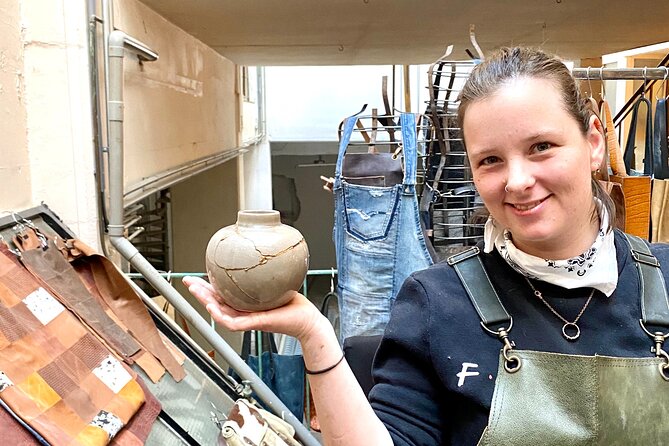
A craft class can be either stiff and rushed, or calm and supportive. Here, the tone is set for you from the start. In particular, the workshop is guided by Annelies, who is described as welcoming and friendly. That kind of guidance matters in Kintsugi, because the steps require patience, not speed.
If you have never done Kintsugi before, you do not need prior experience. The workshop is designed to teach the process through direct participation, starting with that gentle introduction and moving into the hands-on repair work.
One review also pointed out that the instructor brought items that participants broke for the activity. That means you are not expected to bring your own broken piece to participate. If you happen to have a sentimental crack at home, you might still ask ahead whether bringing a personal item is possible, but you should not count on it unless it is explicitly allowed.
The big takeaway is this: a calm guide plus a small group is a recipe for learning. You are not stuck figuring it out while everyone waits.
Should you book this Kintsugi workshop?
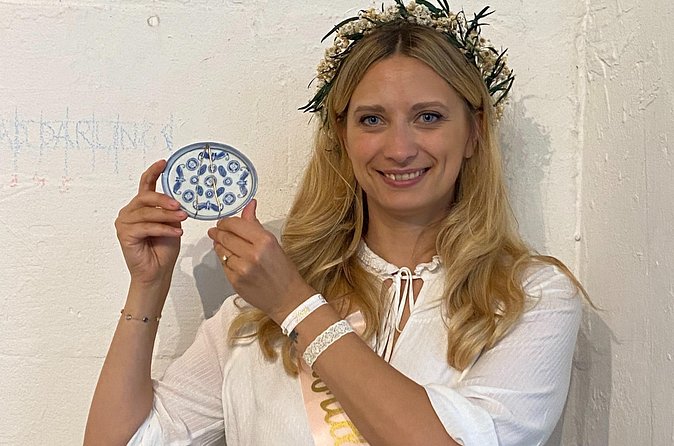
If you want an Amsterdam experience that is hands-on, meaningful, and small-group, I think you should seriously consider booking. The golden leaf glue technique is the obvious draw, but the quieter value is the mindset practice. You get guided focus, a symbolic shift from breakage to rebuilding, and a strong wabi-sabi lesson you can actually remember later.
Book it if:
- You enjoy crafts where you can slow down and work carefully
- You want a Japanese art experience that feels thoughtful, not just hands-on noise
- You like small groups and clear instruction (max 6)
Skip it if:
- You need an activity that includes coffee or runs longer than 2 hours
- You are traveling with kids under 10
- You prefer very minimal manual work or glue handling
FAQ
Where does the Kintsugi workshop start?
It starts at Paleisstraat 107, 1012 ZL Amsterdam, Netherlands, and it ends back at the same meeting point.
How long is the workshop?
The duration is about 2 hours.
Is the workshop offered in English?
Yes, it is offered in English.
What is included in the price?
All materials needed for the workshop are provided.
Is coffee or tea included?
No, coffee and/or tea are not included.
How many people are in the group?
The workshop has a maximum of 6 travelers.
Is it suitable for children?
It is not suitable for children under the age of 10.
Do I need a certain fitness level?
Travelers should have a moderate physical fitness level.
What is the cancellation policy?
Free cancellation is available. You can cancel up to 24 hours in advance for a full refund. If you cancel less than 24 hours before the experience starts, the amount you paid is not refunded.
Newest bookings around Amsterdam
- Amsterdam Breakfast Cruise on Private Luxury Boat★ 5.0 · 5 reviews
- Amsterdam-West Food Tour with local guide★ 5.0 · 16 reviews
- Amsterdam: Explore the Van Gogh Museum & His Masterpieces★ 3.5 · 64 reviews
- Van Gogh Museum Tour excluding Entrance Tickets★ 5.0 · 16 reviews
- Van Gogh Museum with Audio Guide★ 3.5 · 80 reviews
- Van Gogh Museum Ticket with Audio Guide and Unlimited Access Time★ 5.0 · 25 reviews
- Van Gogh Museum Entry Ticket and Guided Tour★ 4.5 · 48 reviews
- Van Gogh Museum Private Tour★ 5.0 · 5 reviews
Workshops, compared.

Traditional Dutch Syrup Waffle Making Workshop
Read our review →Amsterdam Traditional Dutch Syrup Waffle Making Workshop
Read our review →


Amsterdam Bols Cocktail Experience and Cocktail Workshop
Read our review →Amsterdam Traditional Dutch Blue Tile Painting Workshop
Read our review →Browse the lists this tour appears in