REVIEW · TOURS
Groningen: Battlefield tour
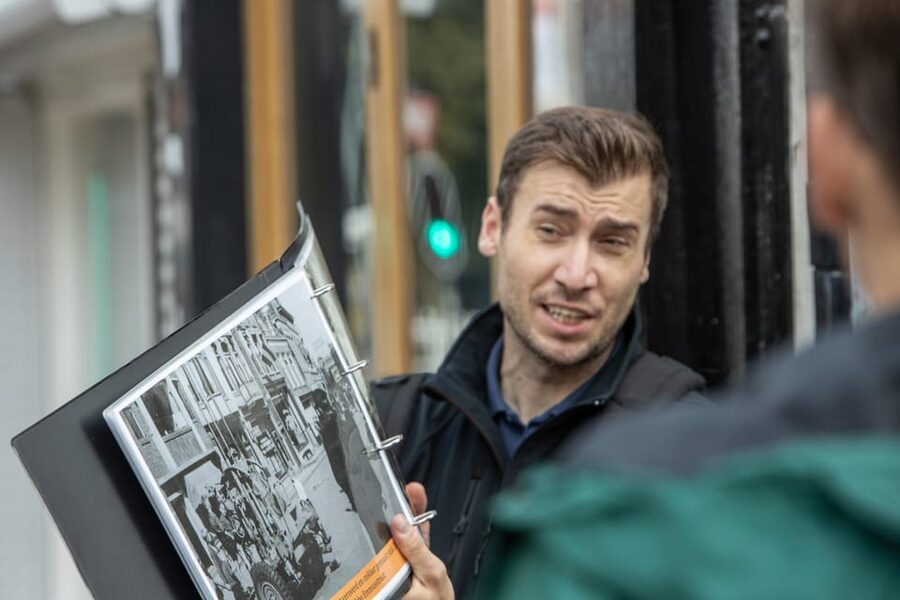
Groningen changes when you learn its April 1945 story. This Groningen Battlefield Tour tracks the 2nd Canadian Infantry Division as they pushed toward the Zuiderdiep and the Grote Markt, while German defenders held on under Festung Holland. Your guide, Joël Stoppels, brings it all to life with authentic photos and objects, and you’ll spot wartime damage still visible around the city.
Two things I like a lot. First, Joël Stoppels is an International Guild of Battlefield Guides guide with badge number 70, so the explanations stay grounded and clear. Second, you follow the route with printed maps that help you match what you see on the street to what happened in those decisive days.
One consideration: the experience is listed as wheelchair accessible, but it also says it is not suitable for people with mobility impairments. If mobility matters for you, confirm directly before booking, and plan for a fair amount of time on city streets for the full 2 hours.
In This Review
- Key highlights you should care about
- Why Groningen’s April 1945 battle still matters on foot
- Getting oriented at De Martinitoren, then starting at the Grote Markt
- Following the Canadian advance toward the Zuiderdiep
- The Grote Markt in ruins, and the meaning of four days of urban fighting
- Ending at the former State Archives in Sint Jansstraat
- What Joël Stoppels adds with photos, objects, and map-based storytelling
- Price and value, from $171 per group up to 25
- Logistics that actually affect your day
- Who this Groningen battlefield tour is perfect for
- Quick practical tips before you go
- Should you book this tour?
Key highlights you should care about
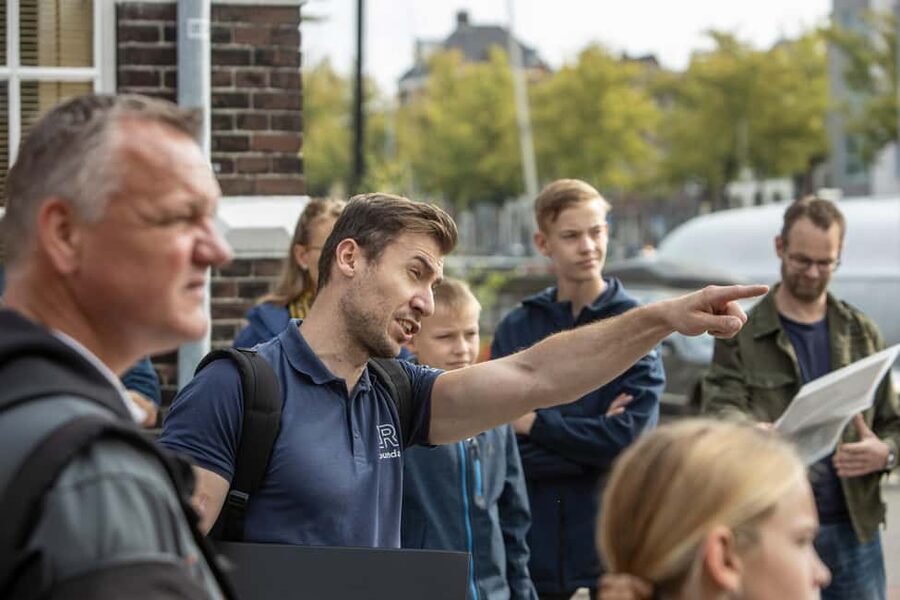
- Joël Stoppels, badge 70 brings professional battlefield guiding in Dutch or English.
- April 13 to April 16, 1945, in one focused walk through the key places where the battle turned.
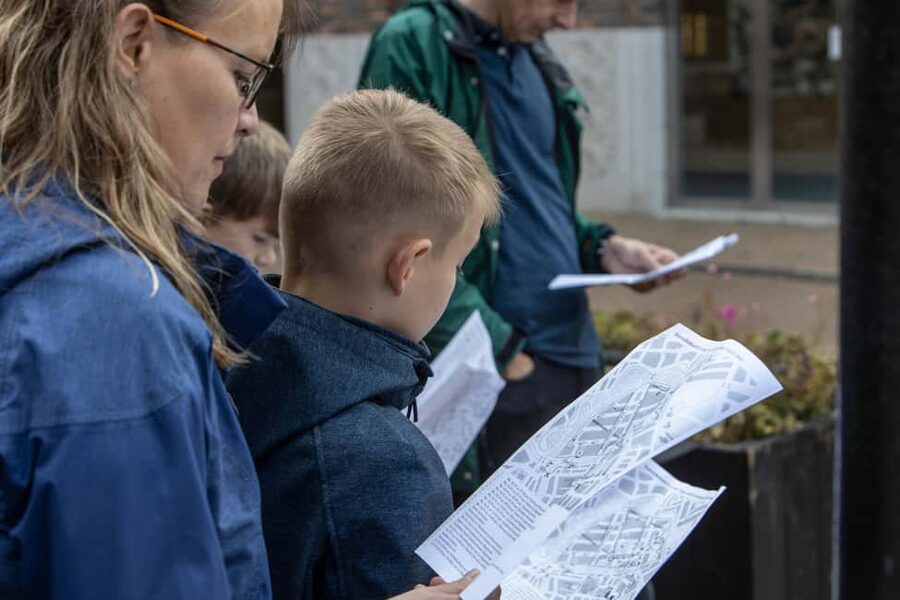
- Printed route maps so you can follow the Canadian advance step by step.
- Photos and original 1945 objects make the story feel specific, not generic.
- Wartime damage remnants are part of the experience, not just background.
Why Groningen’s April 1945 battle still matters on foot
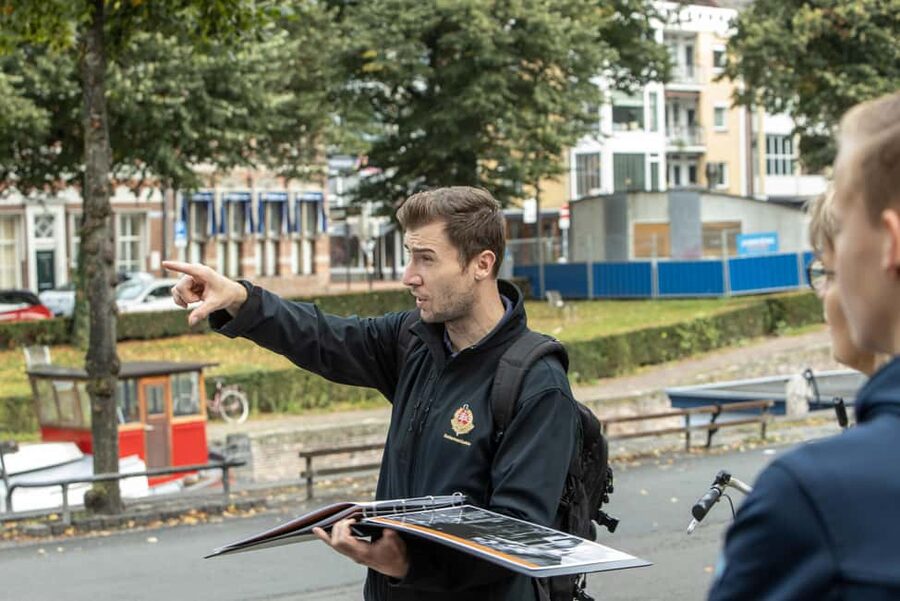
Groningen’s liberation was not a clean, cinematic march. It was a hard urban fight that played out street by street, alley by alley, and house by house. On April 13, 1945, the 2nd Canadian Infantry Division began opening the way through a city that had been turned into a defended stronghold.
The German defense came under Festung Holland, commanded by General Johannes Blaskowitz. Knowing that context helps your brain stop treating the battle as vague World War II history and start seeing it as a real, pressured campaign with specific turning points.
That is what makes this tour compelling. You get to connect the big timeline to real corners and landmarks, and you also get the human cost that sat behind the movement of troops. In four days of fighting, 43 Canadian soldiers and 110 civilians lost their lives, and more than 270 buildings were destroyed. Even today, the city bears traces of that kind of damage.
Nearby in Netherlands, also worth booking:
- Amsterdam: Van Gogh Museum Ticket
★ 4.7 · 52,054 reviews - Amsterdam: Heineken Experience Ticket including 2 Drinks
★ 4.6 · 36,014 reviews - Amsterdam Classic Saloon Boat Cruise with Drinks and Cheese
★ 5.0 · 31,825 reviews
Getting oriented at De Martinitoren, then starting at the Grote Markt
You meet at De Martinitoren, a practical landmark that helps you gather quickly and start on time. From there, you work your way to the Grote Markt, where the liberation story hits hardest.
The Grote Markt matters because it became a symbol of what urban war does to a city center. The tour sets up why this place was so vital, then connects that importance to what happened during the battle. You are not just told that the area was damaged. You learn how the fighting reshaped the heart of Groningen and why the battle’s intensity was felt right here.
This is also where you benefit from having a guide like Joël Stoppels, an experienced battlefield guide with badge number 70. I like how this kind of guiding keeps you from getting lost in names and dates. You get enough structure to follow the advance, and then you get the details that make it real.
If you ask questions, the guide stays engaged. One review highlighted how Joël personalized the tour for the group and did extra research to connect information to people’s interests. That energy matters on a tour like this, because the material can otherwise feel heavy and one-directional.
Following the Canadian advance toward the Zuiderdiep
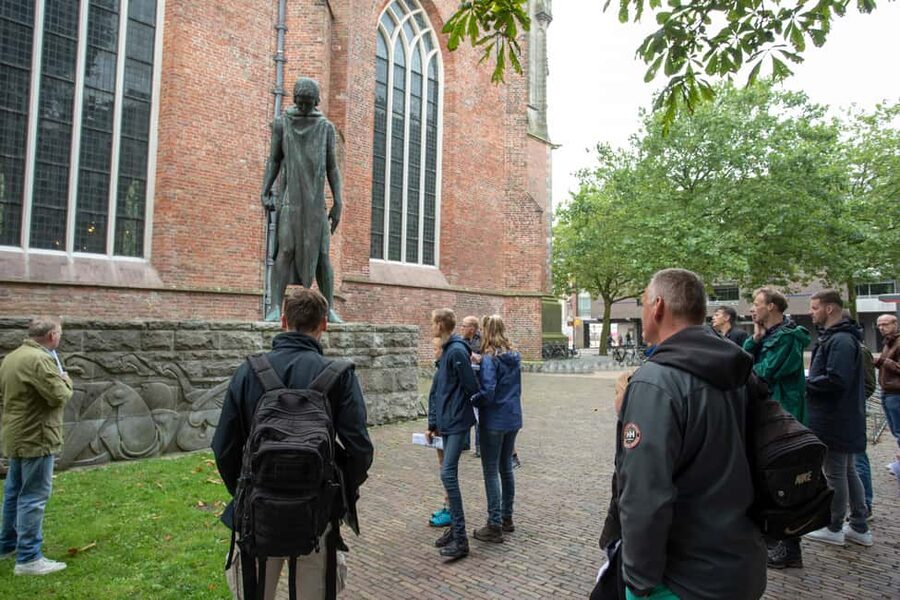
After you get your bearings around the Grote Markt, the narrative starts moving like a campaign. You follow the footsteps of the Canadian soldiers as they advanced toward the Zuiderdiep, and this is where the printed maps pay off.
The maps are not a cute prop. They help you track how the battle advanced in space, not just in time. In other words, you can look at the ground and think, this is where the pressure built, this is where progress mattered, and this is where resistance forced decisions.
The tour also emphasizes the use of detailed maps during the walk, which is ideal if you like understanding routes and lines of movement. If you are the kind of person who enjoys comparing what you see with what you learn, you’ll appreciate that the tour is built to be followed.
This part of the experience also highlights something many history tours skip: how wartime movement had to deal with real terrain. Groningen’s layout, water features, and built-up streets all shaped the fight. Even without getting technical, the guide’s route focus helps you see why these locations were not interchangeable.
The Grote Markt in ruins, and the meaning of four days of urban fighting
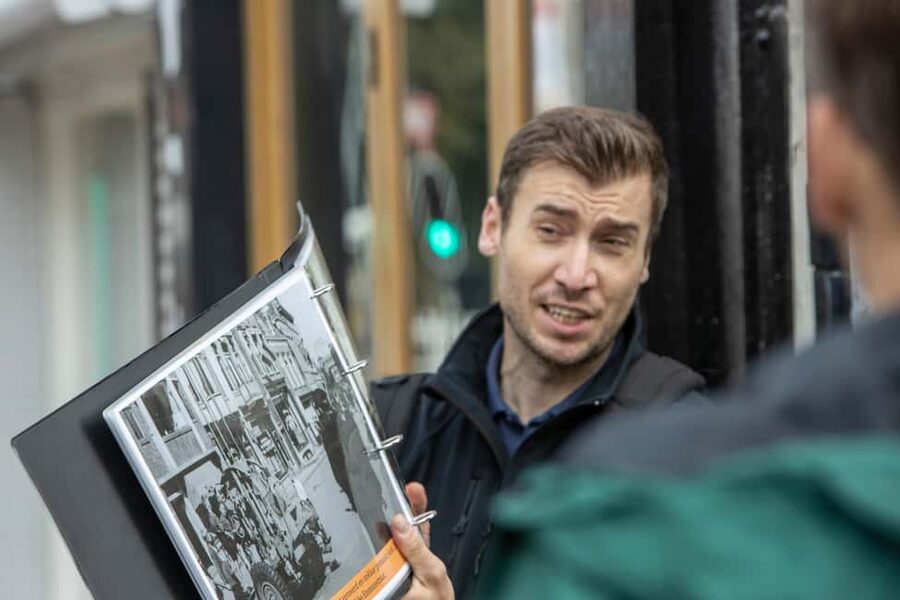
Once the tour is fully underway, you spend real time with the idea of urban combat. The battle in Groningen lasted four days, and that timeframe becomes more than a date range. It becomes a way to think about exhaustion, repeated house clearings, and the stubborn back-and-forth that defines city battles.
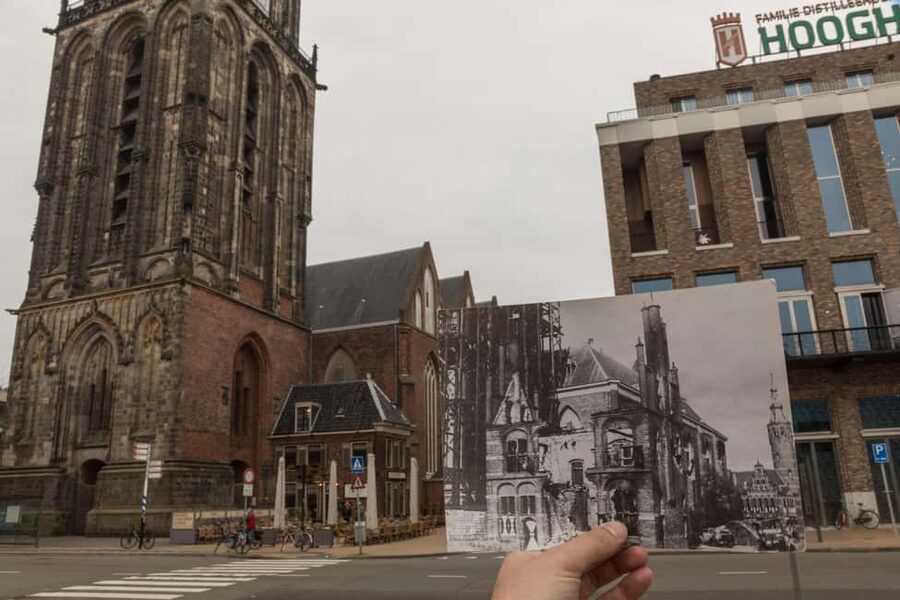
The Grote Markt was left in ruins. That single line in a timeline is devastating, but on this walk it becomes easier to understand why destruction concentrated in specific parts of the city center. You also learn why the fight felt so bitter: street-level warfare forces troops to go point by point, not sweep through empty space.
You will also hear the casualty numbers again in context. Forty-three Canadian soldiers and 110 civilians were killed during those days. That contrast, soldiers on one side and civilians on the other, is part of why the tour feels respectful and serious without being numb.
And then there is the physical reality. The highlights say you can still see many remnants of wartime damage along the way. That is the part that makes the tour more than a lecture. You glance at facades and streetscapes and you start to notice scars you would normally ignore.
A different way to spend an afternoon around Netherlands:
- Amsterdam Luxury Canal Cruise + Unlimited Drinks & Bites option
★ 5.0 · 30,518 reviews - Amsterdam: Rijksmuseum Entry Ticket
★ 4.7 · 29,512 reviews - Amsterdam: Classic Saloon Boat Cruise with Cheese & Wine
★ 4.6 · 27,035 reviews - Amsterdam: Evening Cruise with Optional Wine and Snacks
★ 4.4 · 22,178 reviews
Ending at the former State Archives in Sint Jansstraat
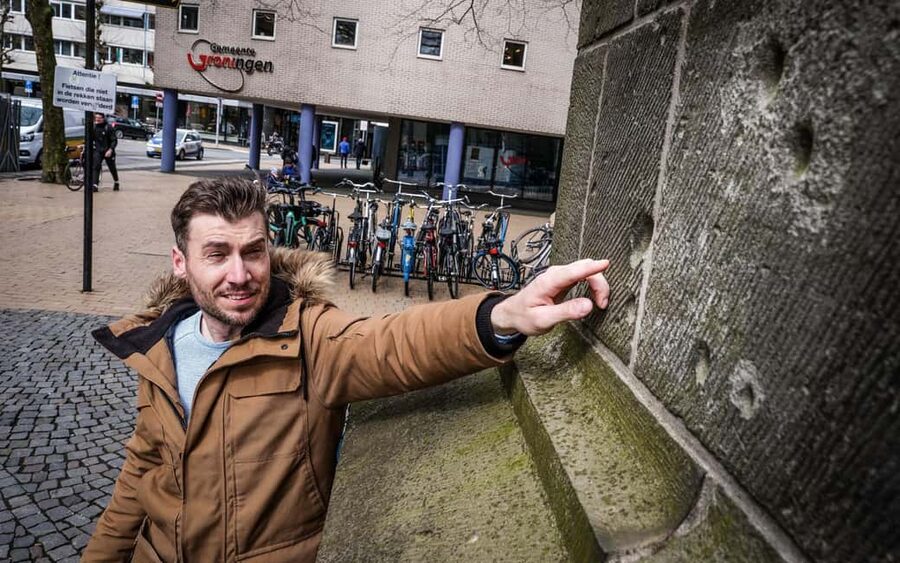
The tour finishes at the former State Archives in the Sint Jansstraat. This ending point is chosen on purpose, because it connects the advance to the battle’s end.
By Monday, April 16, 1945, the German commander surrendered and the Battle of Groningen was over. The tour’s conclusion at a site linked to the moment when German forces were surrounded gives you a satisfying sense of closure. It is not the kind of ending where you just walk away from a plaque. You understand what the surrounding pressure meant and why surrender happened when it did.
I like how the structure works: you start with the city center’s significance, you move through the advance route toward key ground, and you finish where the battle’s outcome crystallized. After 2 hours, you end with a clear mental map rather than a blur of historical facts.
If you enjoy battle narratives that have a beginning, middle, and end, this tour delivers. It’s also well suited to people who like to see how commanders, units, and geography interact, without getting lost in military jargon.
What Joël Stoppels adds with photos, objects, and map-based storytelling
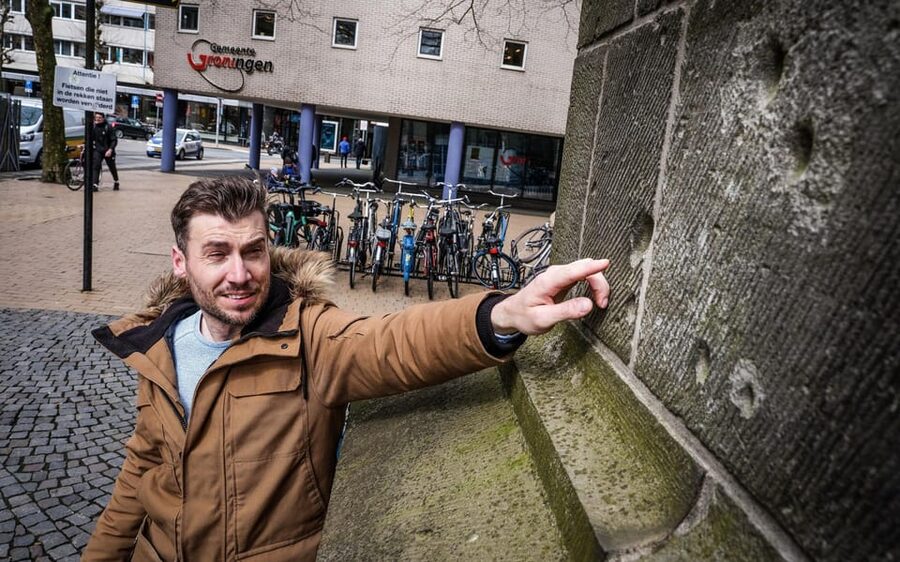
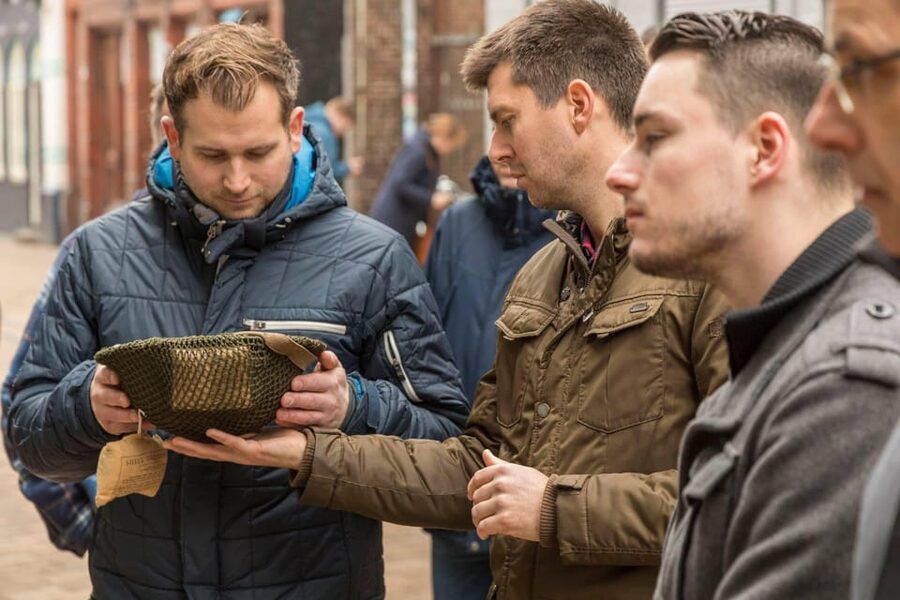
A big reason this tour earns such strong marks is the way it uses tangible material. The experience presents impressive photos and objects from 1945, which makes a difference in how you remember the story later.
Photos give you faces and visual context. Objects give you material culture, even when you cannot hold the items yourself. Together, they prevent the battle from becoming only words. When you connect a photograph or object to a street you are standing on, the past feels less abstract.
Joël Stoppels also brings a guide’s ability to answer questions without derailing the route. One of the most praised points from reviews was his openness to questions and the fact that he sometimes took small detours into other parts of Groningen’s history. You still stay on track, but the tour becomes more human because it responds to your curiosity.
Another valued detail: the tour feels flexible for different group interests. The provider is used to organizing battlefield tours for schools, sports clubs, companies, and defense groups, so the guiding style can adjust to the people in front of you. If you want a tour that is not one-size-fits-all, that matters.
Price and value, from $171 per group up to 25
The price is $171 per group up to 25 people, and the tour runs for 2 hours. That pricing structure can be a great value if you are traveling with friends, a club, or colleagues, because you are not paying an inflated per-person rate for an expert guide.
To make the math simple, if your group reaches the maximum of 25 people, the cost works out to about $6.84 per person. If your group is smaller, the per-person cost rises, so value depends on filling the group size. Either way, you are buying more than walking guidance. You are paying for a credentialed battlefield guide, printed maps for route tracking, and the use of period photographs and objects.
What also helps the value: the tour stays tightly focused. You get a concentrated story tied to the city’s real battle sites, not a half-day spent shuttling to unrelated stops. In a city where you might otherwise spend your time on standard sightseeing, this offers a different lens that is still grounded in what you can see.
Logistics that actually affect your day
This is a private group tour. It is live guided in Dutch and English, so language is rarely a barrier if your group has mixed preferences.
The meeting point is De Martinitoren, and the walk starts from the Grote Markt area as the story begins there. The tour ends at the former State Archives in Sint Jansstraat. For planning, remember it is a guided route, so you will be moving rather than sitting in one place the entire time.
Included: you receive printed maps during the tour. Not included: coffee and tea, transport, and any museum entrance fees. If you are hoping to grab a drink before or after, plan on doing that on your own nearby.
A couple of rules are also part of the experience. Alcohol and drugs are not allowed, and audio recording is not allowed. These aren’t just legal notes. They help keep the tone respectful and focused.
Cancellation and payment flexibility are built in, including free cancellation up to 24 hours in advance and the option to reserve now and pay later. If your schedule is still changing, that reduces stress.
Who this Groningen battlefield tour is perfect for
This is ideal if you want a serious World War II experience that stays connected to place. You don’t need to be a military expert. The guide’s job is to translate the battle into understandable street-level movement, and the map-based approach helps a lot.
You’ll especially like it if you fit one of these profiles:
- You enjoy walking tours that teach you how to read a city.
- You are interested in Canadian participation in the liberation and want the story tied to Groningen’s real geography.
- Your group prefers guided discussion, not just a fixed script.
- You like tours with period photos and objects, since it makes the past feel specific.
It can be heavy in subject matter, but it is also precise. If you want remembrance without theatrics, this tour leans into that.
If you have mobility concerns, take the time to confirm suitability directly. Even though the activity is listed as wheelchair accessible, it also says it is not suitable for people with mobility impairments.
Quick practical tips before you go
- Wear comfortable walking shoes. You are following a route through key sites and damaged areas, so expect normal outdoor walking on uneven city ground.
- Bring your curiosity and questions. Joël Stoppels is praised for being open, and you will get more out of the tour if you engage.
- If your group has mixed interests, tell the guide what you care about. Personalization is part of what people love here.
- Plan your timing so you are not rushing right after the tour. The story is easier to absorb when you can take a moment to look around at Groningen with fresh eyes.
Should you book this tour?
Yes, if you want a focused, map-based Groningen Battlefield Tour that connects the liberation of April 1945 to the streets you can actually stand on today. I think it is especially good value when you can group up to the higher end of the group size, because you get a credentialed guide, printed route maps, and period material for a flat group price.
Book it if you like history that is specific and place-driven, and if you are okay with a serious subject matter that includes civilian casualties and urban destruction. Skip it only if mobility constraints are a major issue for you, or if you prefer a lighter, purely sightseeing style.
If you do book, start the day thinking of the route as a story with motion: the Canadians press forward, the city center suffers, the battle tightens, and surrender becomes the final line. Then you’ll see Groningen in a new way.
Newest bookings around Netherlands
- Amsterdam Breakfast Cruise on Private Luxury Boat★ 5.0 · 5 reviews
- Amsterdam-West Food Tour with local guide★ 5.0 · 16 reviews
- Amsterdam: Explore the Van Gogh Museum & His Masterpieces★ 3.5 · 64 reviews
- Van Gogh Museum Tour excluding Entrance Tickets★ 5.0 · 16 reviews
- Van Gogh Museum with Audio Guide★ 3.5 · 80 reviews
- Van Gogh Museum Ticket with Audio Guide and Unlimited Access Time★ 5.0 · 25 reviews
- Van Gogh Museum Entry Ticket and Guided Tour★ 4.5 · 48 reviews
- Van Gogh Museum Private Tour★ 5.0 · 5 reviews
Tours, compared.
Zaanse Schans, Edam, Volendam & Marken Bus Tour
Read our review →
Amsterdam Anne Frank: Small-Group Walking Tour & Local Guide
Read our review →
Anne Frank’s Story – Guided Walking Tour through Amsterdam
Read our review →
Big Bike tour Amsterdam – See all in 3 unforgettable hours
Read our review →
Guided Zaanse Schans, Windmills & Cheese Tour
Read our review →