
REVIEW · HISTORICAL TOURS
Financial History Tour
Amsterdam tells its money story in real buildings. This Financial History Tour walks you through the areas where finance shaped Amsterdam’s culture, with a private setup and an English-speaking guide in about 2 hours 30 minutes.
I love two parts right away: you start at the Beurs van Berlage exchange building with no admission charge, and you wrap in a second stop where the city archive is actually housed underground. The tour’s focus on how money worked, and how it changed people, is the point, not just the architecture.
One thing to consider is pacing. It is a short, concentrated walk with a moderate physical fitness requirement, and the route ends across the Dam area at Rokin, about 500 meters from where you started.
In This Review
- Quick Takeaways
- Walking Through Amsterdam’s Money Brain, In Plain Terms
- Why Beurs van Berlage Sets the Tone for the Whole Tour
- Stadsarchief Amsterdam: When a Bank-Like Building Becomes the City’s Memory
- Tulip Mania and the Logic of Bubbles During the Walk
- Hidden Angles, Photo Moments, and How the Route Stays Manageable
- English, Mobile Ticket, and the Practical Stuff That Makes It Easier
- Price and Value: What $390.50 Gets You for Up to 10
- Who Should Book This Financial History Tour
- A Quick Reality Check Before You Book
- FAQ
- Where does the tour start and end?
- How long is the Financial History Tour?
- Is admission included?
- Is it private, and how big is the group?
- What language is the tour offered in?
- Do I need to bring a paper ticket?
- What is the cancellation policy?
- How far in advance is it usually booked?
Quick Takeaways
- A private Amsterdam money-history walk tailored to your group, with time to ask real questions
- Beurs van Berlage is free to enter on this tour, so you spend more time learning and less time calculating ticket costs
- Stadsarchief Amsterdam includes admission, and you get access to the archive setting in a 1920s bank-like building
- Tulip Mania and bubble logic get explained in a way that connects to Amsterdam’s trading past
- Photo-friendly stops around the Dam area, without turning the tour into a photo sprint
Walking Through Amsterdam’s Money Brain, In Plain Terms
This tour is built around a simple idea: money does not just fund buildings, it shapes how a city thinks. In Amsterdam, that shows up fast once you move beyond the postcard canals and start looking at the institutions that organized trade, records, and speculation.
The value for you is the time structure. Two hours 30 minutes is long enough to make connections, but short enough that you will not lose the thread. You are not bouncing between 10 unrelated sights. You are staying in a financial story line, with your guide helping you connect what you see to what it meant.
It is also a relief that it is private. With a group of up to 10, you can set the tempo. If you want more time photographing at one stop, you can typically trade off time elsewhere. If your group prefers more explanation and fewer pauses, your guide can keep it moving.
More History Tours in Amsterdam
- Amsterdam Food and Cultural Tour with Tastings
★ 5.0 · 4,315 reviews - Amsterdam: Historic City Centre Canal Cruise
★ 4.3 · 659 reviews - Amsterdam: Haunted History and Ghost Walking Tour
★ 4.5 · 488 reviews
Why Beurs van Berlage Sets the Tone for the Whole Tour
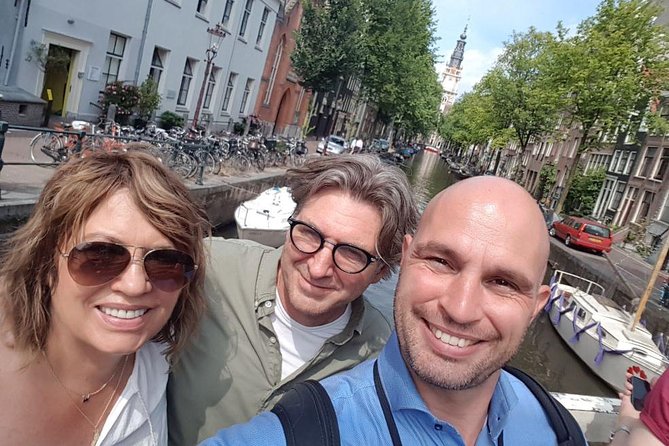
Your start is at Bistro Berlage on Beursplein (Beursplein 1). From there, the first stop is the Beurs van Berlage, an exchange building tied to Amsterdam’s financial center around the Dam.
This is a smart opening for two reasons.
First, the name alone signals what you are about to see. An exchange is where money and risk meet, and it helps you frame the rest of the tour. Even if you are not a finance person, your guide can translate the basics into city life: how trade worked, why institutions mattered, and why people cared so much about market outcomes.
Second, the practical side is good. Stop 1 admission is free, and the visit is set for about 10 minutes. That means you do not waste your budget on entry fees at the first location, and you get into the story quickly.
What I like here is that you are not just looking at old brick. You are learning how these buildings helped turn Amsterdam into a place where commerce and culture grew together. The “financial heart” concept is not abstract during this part. It feels grounded in a real site that was built for exchanging value.
Photo tip: arrive ready to shoot. This stop sits in a strong visual area, and you get natural angles before you move on.
Stadsarchief Amsterdam: When a Bank-Like Building Becomes the City’s Memory
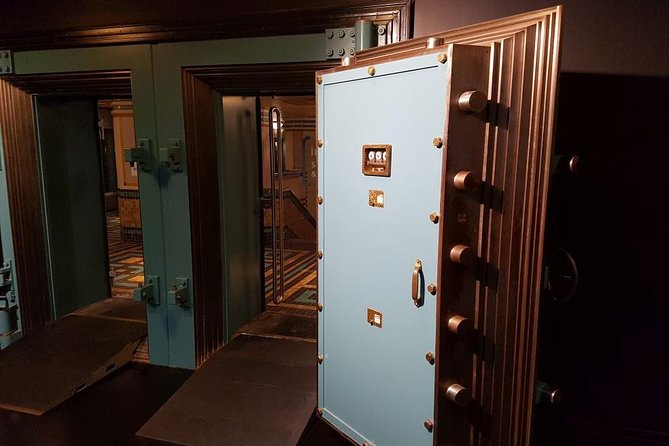
The tour’s second named stop is Stadsarchief Amsterdam, and it is very much about records. The setting sounds like something from a movie, in the best way: you visit the basement of a building associated with a 1920s bank feel, and you see what lies behind the public face.
This stop is scheduled for about 10 minutes, and admission is included. That matters because it keeps the tour smooth. You do not have to worry about extra ticket steps mid-walk, and your guide can keep the storytelling flowing.
Here is what you should pay attention to while you’re there. The tour frames the archive as a “treasury” of city records. That is not just poetic. It is an explanation of how financial systems survive. Markets are noisy, but they produce documents, and those documents become the backbone for trust.
You also get the human side. This is where the tour starts to talk about the merchants: who the rich traders were, and how they made money. The archive setting gives you a place to understand that wealth was not only about clever deals. It was also about keeping track, proving claims, and building credibility.
Potential drawback here: since the stop is short, you want to show up ready with a question or two. If your group wants deeper detail, ask early. Your guide has the most flexibility at the start of the story chain.
Tulip Mania and the Logic of Bubbles During the Walk
One of the most useful parts of this tour is that it does not stop at “Amsterdam was rich.” You also learn about how the first economic bubble was created, with a specific focus on Dutch Tulip Mania and the Amsterdam floating flower market.
Even if you already know the headline story, a local guide perspective can help you understand the mechanism. You are not just hearing the dates and the outcome. You are hearing why speculation spreads, how enthusiasm feeds pricing, and how quickly the rules can change when more people jump in.
What I find especially helpful for you is that this bubble segment ties back to what you saw in the buildings. An exchange building makes sense when you understand it as a place where expectations become numbers. An archive makes sense when you understand that markets depend on documentation and trust. Then the bubble story connects the two, showing how quickly confidence can become a product.
Another plus is the tone. This is not presented as a lecture. It is presented as a city story, which makes the bubble logic easier to remember later when you are walking around Amsterdam on your own.
A handful of other Amsterdam outings
- Amsterdam High-End Dutch Food & History Tour – Up to 8 guests
★ 5.0 · 482 reviews - From Amsterdam: Volendam Heritage & Cheese Half-Day Tour
★ 4.4 · 461 reviews - Amsterdam: Historic City Sightseeing Canal Cruise
★ 4.5 · 444 reviews - Amsterdam: Historical Highlights Walking Tour with Tasting
★ 4.6 · 381 reviews
Hidden Angles, Photo Moments, and How the Route Stays Manageable
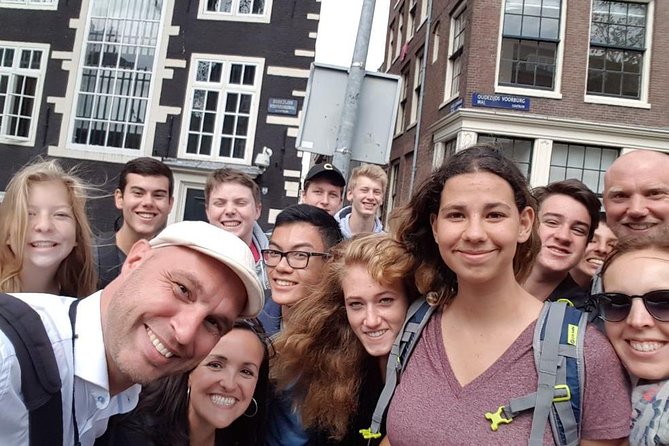
The tour promises “hidden gems” style stops and plenty of photo opportunities at recognizable locations. Even without a giant sightseeing checklist, the route works because it stays near your start and end points.
You begin at Bistro Berlage and you finish at Rokin 24H. The ending is on the other side of the Dam, about 500 meters from where you started. That detail is more than trivia. It means you can plan your day without losing hours crossing the city.
So, what does that look like in real life?
You get a tight loop with enough walking to feel like you’re seeing Amsterdam up close, but not so much that your legs take over the experience. The itinerary’s two main locations are short visits, roughly 10 minutes each, which usually leaves time for guided explanation as you move and pause.
For photo lovers, this setup is a win. You will not be rushing between ten different “look here” spots. You can also slow down when the guide points out angles or details. That is where private format pays off. Your group can decide what matters most.
If you are traveling with a mix of interests, this route still works. Architecture fans get meaningful buildings. History and culture readers get the story of money shaping heritage. People who just want great street moments get photo-friendly stops and a manageable walking pace.
English, Mobile Ticket, and the Practical Stuff That Makes It Easier
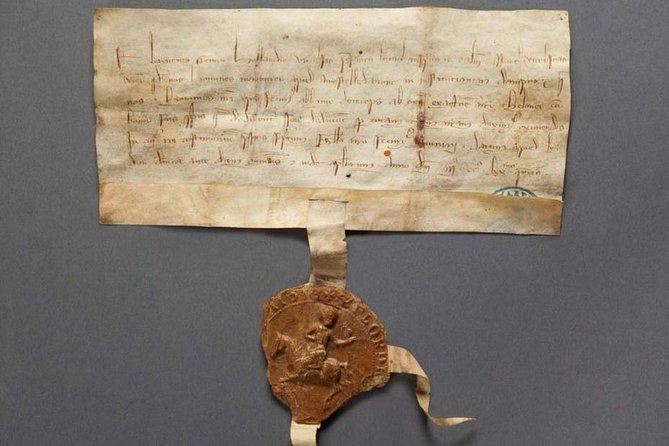
A big part of why this tour is easy to book and attend is the logistics you do not have to think about.
You get a mobile ticket, and you receive confirmation at booking. That helps you stay light on your travel day. You also have the option of an English experience.
On timing, it runs about 2 hours 30 minutes, and it is often booked around 28 days in advance on average. That does not mean you must book a month out, but it does mean the best availability can be closer to a few weeks out, especially in busy seasons.
The meeting and ending points are both in the core area near public transportation. That matters because Amsterdam is simple when you are close to the main transit threads. If you have a day with museums and canal time, you can slot this in without turning it into a whole production.
For your comfort, it lists moderate physical fitness. I would interpret that as: plan on walking through the Dam area and being on your feet for a couple of hours. Wear shoes you trust. If your group has anyone who struggles with standing still for long stretches, tell your guide at the start so they can pace explanations.
Price and Value: What $390.50 Gets You for Up to 10
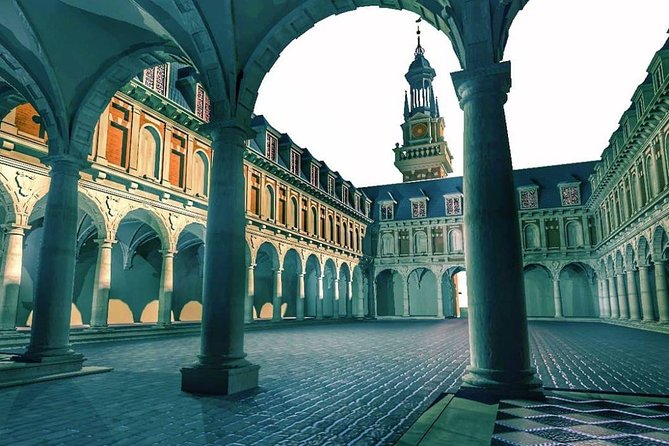
The price is $390.50 per group, up to 10 people. That pricing model changes how you should think about value.
If you are one or two people, you may feel the per-person cost compared to a large public group tour. In exchange, you get a private format with flexibility. You can ask questions, set the pace, and focus on what interests your group. In a short, dense history experience, that personalization often feels worth it.
If you have a small group, the math gets friendlier fast. With up to 10 people shared across one booking, it becomes a practical option for families or friends who want a shared activity with a guide but do not want the pace of big groups.
Also, admissions are part of the experience cost in a useful way. Beurs van Berlage’s entrance is free for Stop 1, and Stop 2 includes admission. So you are not buying a ticket and then paying extra at the door twice. You get a clear learning package tied to the two main venues.
One more value point is the guide impact. In the feedback you see a recurring theme: the guide approach is insightful and helpful, with local hints mixed in. One name that comes up is Tijs de Boer, and the takeaway is that he blends financial context with street-level tips that help you move through Amsterdam more confidently after the tour.
Who Should Book This Financial History Tour
This is a great fit if you like stories that connect money to everyday life. It is also ideal if you enjoy architectural learning that comes with explanations you can actually use.
Specifically, you will probably enjoy it if:
- You want a focused Amsterdam experience that stays in one theme
- You are curious about Dutch finance and want the Tulip Mania story explained in context
- Your group prefers a private tour with flexibility rather than a rigid group schedule
- You want photo-friendly stops without a long slog across town
You might skip it if you are only interested in broad sightseeing. This is not a “top 20 attractions” tour. It is about Amsterdam’s money-making system and the heritage it left behind.
A Quick Reality Check Before You Book
If you want an Amsterdam tour with a clear storyline, this one delivers. You start at Beurs van Berlage, continue to Stadsarchief Amsterdam, and you finish with financial history concepts that connect to Amsterdam’s cultural identity, including Dutch Tulip Mania and the floating flower market.
My call: book it if your group is curious about how markets shape cities, and you value a private guide who can tailor the pace. If you want only casual sightseeing, look for something with a wider mix of attractions. For the right kind of traveler, this is a smart, compact way to understand Amsterdam beyond the postcard view.
FAQ
Where does the tour start and end?
It starts at Bistro Berlage, Beursplein 1, 1012 JW Amsterdam, and ends at Rokin 24H, 1012 KS Amsterdam. The end point is about 500 meters from the start, on the other side of the Dam.
How long is the Financial History Tour?
The tour lasts about 2 hours 30 minutes.
Is admission included?
Stop 1 at Beurs van Berlage is free. Stop 2 at Stadsarchief Amsterdam includes admission.
Is it private, and how big is the group?
Yes, it is a private tour/activity, and only your group participates. The price is per group, up to 10 people.
What language is the tour offered in?
It is offered in English.
Do I need to bring a paper ticket?
No. It uses a mobile ticket.
What is the cancellation policy?
You can cancel for free up to 24 hours in advance for a full refund. Changes within 24 hours of the start time are not accepted.
How far in advance is it usually booked?
On average, it is booked about 28 days in advance.
Newest bookings around Amsterdam
- Amsterdam Breakfast Cruise on Private Luxury Boat★ 5.0 · 5 reviews
- Amsterdam-West Food Tour with local guide★ 5.0 · 16 reviews
- Amsterdam: Explore the Van Gogh Museum & His Masterpieces★ 3.5 · 64 reviews
- Van Gogh Museum Tour excluding Entrance Tickets★ 5.0 · 16 reviews
- Van Gogh Museum with Audio Guide★ 3.5 · 80 reviews
- Van Gogh Museum Ticket with Audio Guide and Unlimited Access Time★ 5.0 · 25 reviews
- Van Gogh Museum Entry Ticket and Guided Tour★ 4.5 · 48 reviews
- Van Gogh Museum Private Tour★ 5.0 · 5 reviews
Historical Tours, compared.
Amsterdam Food and Cultural Tour with Tastings
Read our review →
Kinderdijk UNESCO World Heritage Entry Ticket
Read our review →

Amsterdam High-End Dutch Food & History Tour – Up to 8 guests
Read our review →
Cruise through the Historic City Center with Guide
Read our review →Browse the lists this tour appears in