REVIEW · AMSTERDAM TOURS
Explore hidden streets with friends
Amsterdam hides in plain sight. This small-group walk is a friendly way to get your bearings, then zoom in on the Jordaan and other quiet corners you would not spot on your own. I like how it mixes big-picture Amsterdam, like the world’s first stock market, with human-scale details such as widows housing in a 1650 courtyard.
My other favorite part is the guide style, expect casual, chatty storytelling and plenty of room for questions, often with guides Michael or Christian leading the way. One consideration, it’s a steady 2.5-hour walk, about 4 km, so it’s best if you’re comfortable moving for the full route.
In This Review
- Key reasons this hidden-street Amsterdam walk works
- Beursplein to Dam Square: how Amsterdam became a trading powerhouse
- Crossing the Canal Ring: medieval city growth you can see
- The Nine Streets shopping zone: quieter streets with character
- Jordaan hidden lanes and squares, plus a pass by Anne Frank House
- The church for the poor: why it was built right there
- Karthuizerhof courtyard for widows, a 1650 social housing project
- Westerkerk and Rembrandt’s burial: merchants, a church, and local memory
- Walking time, group size, and how to prepare
- Price and value: what $52.81 buys you in Amsterdam time
- Who this Amsterdam walk suits best
- Should you book this hidden streets with friends tour?
- FAQ
- How long is the walking experience?
- Where does the tour start and where does it end?
- Is it offered in English?
- How big is the group?
- Are there admission tickets required for the stops?
- Is the route mostly outdoors?
- Is it near public transportation?
- Can I cancel for a refund?
Key reasons this hidden-street Amsterdam walk works
- First stock market backstory near Dam Square, so you understand why the city grew the way it did
- Canal Ring crossing that turns medieval expansion into something you can actually see
- Nine Streets shopping area with a slower pace than the main tourist routes
- Jordaan lanes, squares, and courtyards, including an early social housing stop
- Karthuizerhof and the church for the poor, both tied to care, not just pretty architecture
- Westerkerk stop with Rembrandt’s burial, a big church with very local meaning
Beursplein to Dam Square: how Amsterdam became a trading powerhouse
The walk begins at Beursplein 1-3, near the money side of Amsterdam. The vibe here is practical, not postcard. Your guide starts with the origins of the city and leads you toward a big historical takeaway, Amsterdam’s role in finance, including the world’s first stock market.
Then you shift to the central square and its importance over time. Dam Square can feel like a blur on arrival, so having context helps. Instead of just looking up at landmarks, you learn what they meant when Amsterdam was setting rules for trade, civic life, and power.
You also get a close look at a prominent building that originally served as the town hall of Amsterdam. Even if you have seen “historic buildings” before, this stop matters because it’s tied to governance, not just architecture. It helps you read the city like a system, how decisions got made, who benefited, and why certain places stayed central.
A handful of other Amsterdam outings
- Amsterdam: Van Gogh Museum Ticket
★ 4.7 · 52,054 reviews - Amsterdam: Heineken Experience Ticket including 2 Drinks
★ 4.6 · 36,014 reviews - Amsterdam Classic Saloon Boat Cruise with Drinks and Cheese
★ 5.0 · 31,825 reviews
Crossing the Canal Ring: medieval city growth you can see
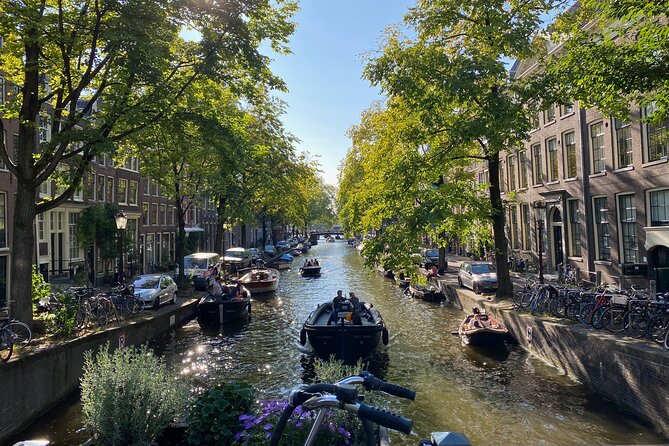
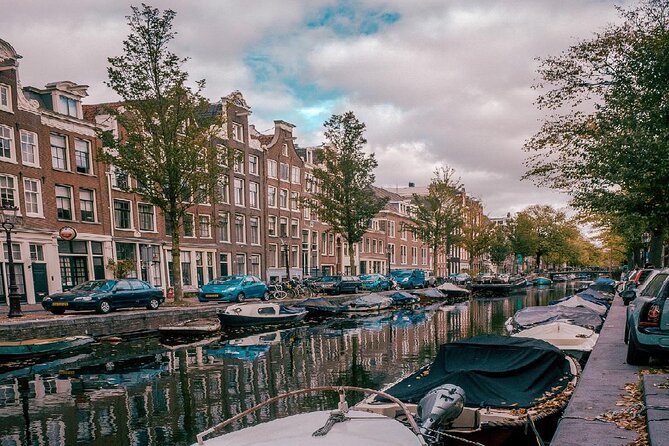
After the core squares, you cross the Canal Ring of Amsterdam. This is one of those moments where a walking tour beats a bus, because you can look at how the canals shape movement and neighborhoods. The focus here is the extension of the city during the medieval period, not just the view.
You are also told that this part does not require paid admission for the stop itself, so you can keep momentum without feeling like the tour is constantly asking for extra fees. For me, that makes the experience feel more honest, you pay for guiding and time, not a string of add-ons.
One small drawback to know up front: canal-ring walking tends to be exposed in places, especially if the weather turns. Bring a light layer and expect some open-air stretches, even though the later Jordaan parts often feel calmer.
The Nine Streets shopping zone: quieter streets with character
Next comes a section built around the Nine Streets, an area that became a cozy shopping zone away from the busiest visitor flow. This is a smart transition. You go from big civic and economic landmarks to smaller street life.
The guide points out how these streets became part of everyday Amsterdam culture. It’s not only about shopping though. It’s about rhythm. You get side-street scale again, the kind that makes the city feel lived-in rather than staged.
If you like wandering with a purpose, this stop helps. You are not just browsing, you are learning how Amsterdam organized daily life around narrow streets and local foot traffic. It’s also a good break from the larger-square intensity.
Jordaan hidden lanes and squares, plus a pass by Anne Frank House
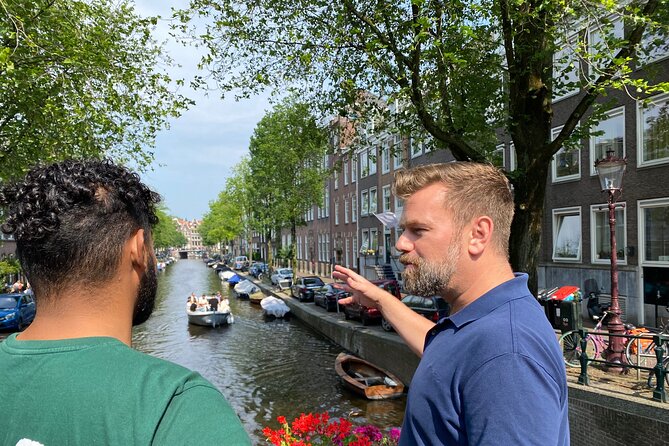
The Jordaan is where this walk really earns its name. You move through hidden streets and squares and get a strong sense of what makes this neighborhood feel like remaining authentic Amsterdam. It’s not about trendiness, it’s about the pattern of streets, courtyards, and the way locals use the area.
The guide keeps it conversational and flexible, and that matters here. The route benefits from quick questions and small detours, because the charm is in noticing details. In the Jordaan, those details are often easy to miss if you are on your own.
You will pass by the Anne Frank House during the stroll through the Jordaan. Your guide does not try to turn this into a long-ticket museum day, but the passing moment gives you a sense of location and neighborhood context, especially when you already understand Amsterdam’s broader history from earlier stops.
One consideration: the Jordaan can be a little narrow in places. If you’re traveling with a friend group and you like to chat while walking, just keep your pace aligned so nobody gets left behind at turns and tight corners.
A different way to spend an afternoon around Amsterdam:
- Amsterdam Luxury Canal Cruise + Unlimited Drinks & Bites option
★ 5.0 · 30,518 reviews - Amsterdam: Rijksmuseum Entry Ticket
★ 4.7 · 29,512 reviews - Amsterdam: Classic Saloon Boat Cruise with Cheese & Wine
★ 4.6 · 27,035 reviews - Amsterdam: Evening Cruise with Optional Wine and Snacks
★ 4.4 · 22,178 reviews
The church for the poor: why it was built right there
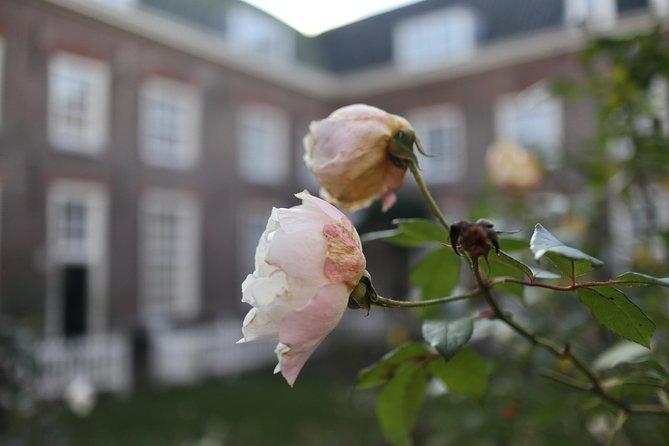
As you continue through the area, you learn about a church for the poor and why it was constructed exactly here. This is the kind of stop that changes how you view a city. Instead of treating places as decorative, the guide ties them to real social needs.
Amsterdam has a reputation for being pretty, but this kind of story reminds you it was also a city that cared for its vulnerable residents, at least through specific institutions and decisions. The church-for-the-poor theme fits the wider route, because earlier you heard about civic structures and then you move into care-focused community spaces.
If you like human stories more than grand speeches, this is a strong moment. It’s also usually quick to take in on foot, so it keeps the walking flow going.
Karthuizerhof courtyard for widows, a 1650 social housing project
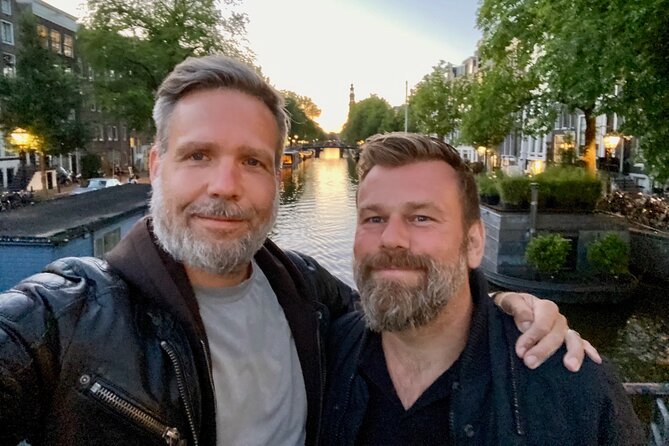
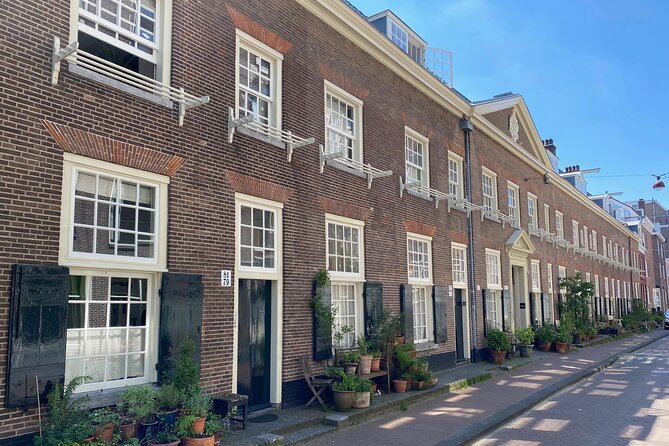
Then you reach Karthuizerhof, a beautiful courtyard constructed in 1650 for widows. The tour frames it as one of the first social housing projects in the world, and the courtyard setting matters. You are not just hearing facts, you are standing in the place where those choices played out.
The time here is brief, about 10 minutes, but it’s a meaningful beat in the route. Courtyards like this show how Amsterdam built community life into the city’s physical design. The scale is intimate compared to the big squares and larger canals, and it makes the social purpose feel personal.
A quick practical note: courtyards can feel cooler and darker than open streets. If you’re taking photos, give your phone a moment to adjust exposure. Also, keep your group together here, because courtyards are easy to lose each other in.
Westerkerk and Rembrandt’s burial: merchants, a church, and local memory
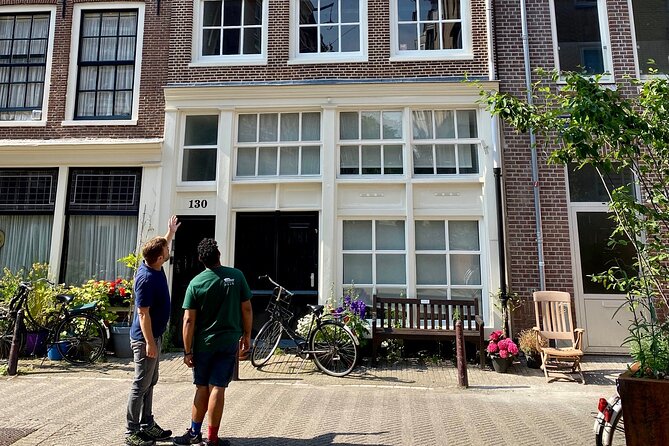
Near the end, you reach the Westerkerk. The guide explains why it was built, pointing to the rich merchants of Amsterdam who financed it. This is a key contrast to earlier stops, because you see how wealth and public work shaped the skyline.
You also hear about Rembrandt’s burial here. That detail gives the church a layer beyond architecture. It turns a major landmark into something closer to a local memory, a reminder that the city’s stories lived in specific buildings and specific places.
This is also a good moment to slow down. You are heading toward the tour ending point at Elandsgracht, and you want your last impressions to stick. If you’re traveling with friends, it’s the kind of place where you can discuss what surprised you most, the finance origin, the social housing story, or the church-and-burial connection.
Walking time, group size, and how to prepare
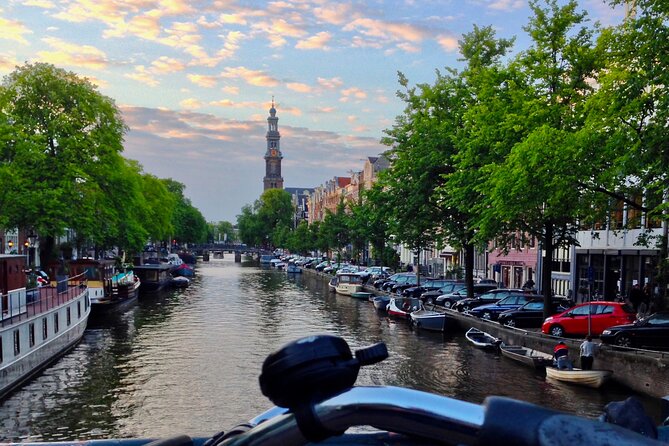
The tour runs about 2 hours 30 minutes and covers roughly 2.5 miles, about 4 km. The pace is manageable for most people, but it is still a real walk, not a hop-on hop-off situation.
Group size is capped at 10 travelers, which is part of the value. With fewer people, the guide can answer questions without rushing everyone through. That also supports the route design, because the hidden streets and courtyards work best when the group stays compact.
It’s offered in English, and you get a mobile ticket. You will be near public transportation, which helps if you want to pair this with a tram hop afterward. Service animals are allowed as well, based on the provided information.
What to wear: comfortable walking shoes matter most. Amsterdam streets can be slick, and you spend enough time on foot that you want grip. A light rain layer is also wise, even in mild weather.
Price and value: what $52.81 buys you in Amsterdam time
At $52.81 per person, this is not a tiny expense, but it is reasonable for a guided, small-group walk that lasts about 2.5 hours. The value comes from two places.
First, the route is designed so you get context as you walk. You are not just seeing Dam Square or canals, you’re learning why they mattered, including finance origins like the world’s first stock market and civic function tied to the town hall building. That kind of interpretation is hard to replicate with a self-guided audio app.
Second, the tour avoids feeling like you are paying for constant entry tickets. Stops like the Canal Ring segment are listed as free admission. So your payment mostly goes toward the guide, the stories, and the time, not a stack of admissions.
Also, the tour tends to get booked about 65 days in advance on average. If you want a specific day and you’re traveling with friends, it’s smart to reserve sooner rather than waiting until the last minute.
Who this Amsterdam walk suits best
This experience is a great match if you want Amsterdam at a human scale. The mix of squares, canals, side streets, and courtyards fits people who enjoy architecture and street-level storytelling, not only museum stops.
I think it’s especially good for small friend groups, because the route stays conversational and the guide can answer questions without the group feeling like a classroom. It also suits solo visitors who like company but do not want a huge crowd.
If you only have limited time and you want a route that teaches you how Amsterdam worked socially and economically, this walk has that structure built in. You come away with a better map in your head, so future wandering in the city feels easier.
Should you book this hidden streets with friends tour?
If you care about seeing Amsterdam through context, not just photos, I’d book it. The small group size, the conversational guides (Michael or Christian), and the focus on courtyards and neighborhood streets make it feel like a guided walk with real points to remember.
Skip it only if you hate walking for about 4 km total or you want deep museum time and long indoor stops. This one is built for the streets, and it works best when you are ready to keep moving and noticing.
FAQ
How long is the walking experience?
It runs for about 2 hours 30 minutes. You should plan on about 2.5 hours of walking time over roughly 2.5 miles, or 4 km.
Where does the tour start and where does it end?
The start is Beursplein 1-3, 1012 JW Amsterdam, Netherlands. The tour ends at Elandsgracht, Amsterdam.
Is it offered in English?
Yes, the tour is offered in English.
How big is the group?
The maximum group size is 10 travelers, which keeps the pace and the Q and A feeling personal.
Are there admission tickets required for the stops?
The information provided notes that at least one major segment includes free admission. You will also use a mobile ticket for the experience itself.
Is the route mostly outdoors?
Yes. You are walking through multiple neighborhoods, including courtyards and streets, so it is primarily an outdoor walking experience.
Is it near public transportation?
Yes, it is near public transportation.
Can I cancel for a refund?
Free cancellation is available. You can cancel up to 24 hours in advance for a full refund, and changes within 24 hours of the start time are not accepted.
Newest bookings around Amsterdam
- Amsterdam Breakfast Cruise on Private Luxury Boat★ 5.0 · 5 reviews
- Amsterdam-West Food Tour with local guide★ 5.0 · 16 reviews
- Amsterdam: Explore the Van Gogh Museum & His Masterpieces★ 3.5 · 64 reviews
- Van Gogh Museum Tour excluding Entrance Tickets★ 5.0 · 16 reviews
- Van Gogh Museum with Audio Guide★ 3.5 · 80 reviews
- Van Gogh Museum Entry Ticket and Guided Tour★ 4.5 · 48 reviews
- Van Gogh Museum Ticket with Audio Guide and Unlimited Access Time★ 5.0 · 25 reviews
- Van Gogh Museum Private Tour★ 5.0 · 5 reviews
Amsterdam Tours, compared.


Heineken Experience Ticket including 2 Drinks
Read our review →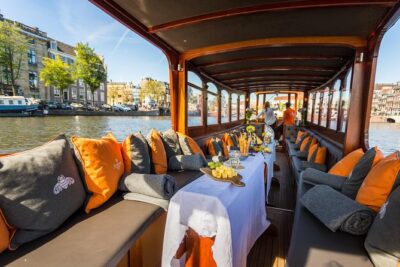
Amsterdam Classic Saloon Boat Cruise with Drinks and Cheese
Read our review →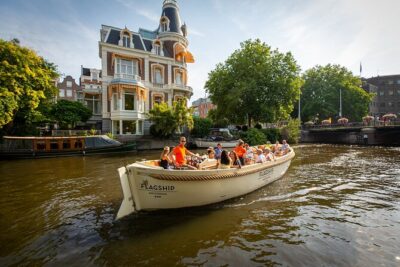
Amsterdam Luxury Canal Cruise + Unlimited Drinks & Bites option
Read our review →

Classic Saloon Boat Cruise with Cheese & Wine
Read our review →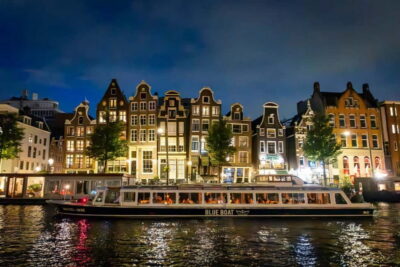
Evening Cruise with Optional Wine and Snacks
Read our review →