REVIEW · AMSTERDAM TOURS
Amsterdam Treasure Hunt: The Mystery of a Secret Sender
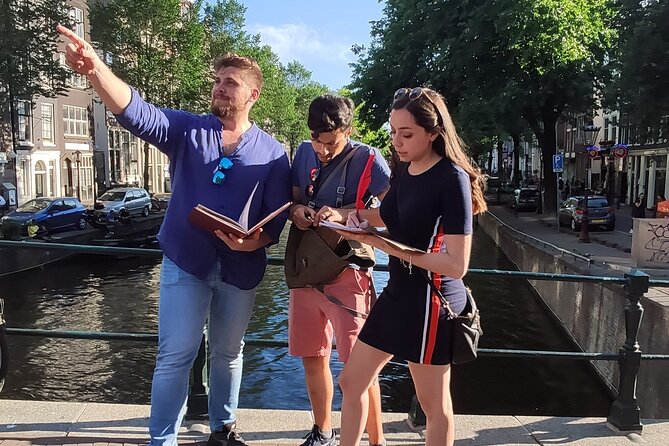
Amsterdam turns into a puzzle trail. This interactive hunt mixes city sightseeing with clue-solving as you work out who A Secret Sender really is. You’re following a story tied to the Order of the Rosy Cross, so the walk feels like more than a typical stroll.
I love how self-paced it is, which means you can slow down for the good views and move on when the next clue calls. I also like the way it threads Golden Age Amsterdam landmarks and architecture into the game, so the route stays interesting even when you’re not racing to the finish. One consideration: you are on your feet for about 2 hours, and the format is best when you stay focused and walk steadily.
You can pick a start time that fits your day, and since it’s private, it’s just your group playing. That makes it easier to coordinate, especially if you’re bringing teens who like to solve things together.
In This Review
- Key things to know before you go
- The Secret Sender premise, and why it works in Amsterdam
- Price and what you really get for $30.25
- Mobile ticket, start time choices, and your day planning
- How the scavenger hunt setup changes the way you see the city
- Stop by stop: what you’ll likely do at each location
- 1) Oude Kerk: where the mystery begins
- 2) Nieuwmarkt: using streets and squares as clue sources
- 3) Westerkerk: turning big architecture into puzzle evidence
- 4) Torensluis: canal-side walking that feels like real Amsterdam
- 5) Amsterdam Museum area: finishing with context
- Who this is best for (and who might not love it)
- The staff and the little things that make the hunt smoother
- Languages, pace, and how to keep the experience fun
- Should you book Amsterdam Treasure Hunt: The Mystery of a Secret Sender?
- FAQ
- How long is the Amsterdam Treasure Hunt?
- How far do you walk during the game?
- Where does the tour start?
- Does it end back at the meeting point?
- Is this a guided tour with a live guide?
- What languages are available?
- Is there a mobile ticket?
- Is it private, or do I join other people?
- Can I cancel for a full refund?
- Are service animals allowed?
Key things to know before you go
- A 3 km, 2 hour city-center loop built for a compact Amsterdam day, not a half-day commitment.
- Self-guided puzzle format with a mobile ticket, so you control the pace and photo stops.
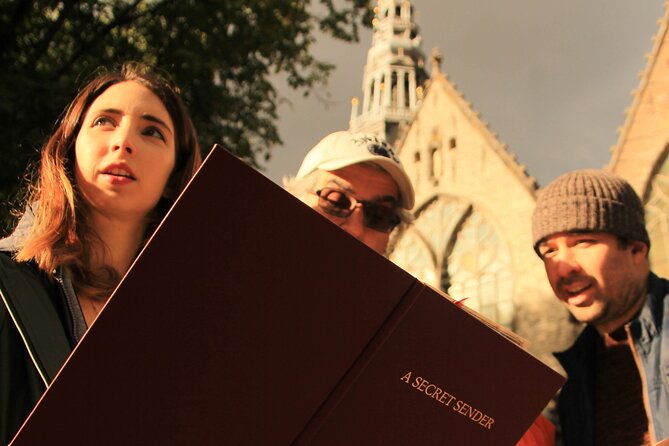
- Stops at classic Amsterdam icons including Oude Kerk, Nieuwmarkt, Westerkerk, Torensluis, and the Amsterdam Museum area.
- A mystery with built-in conversation that keeps teams talking while you walk.
- Multiple language options (English plus Dutch, French, German, Spanish, and Italian).
- A private group setup that makes the clues feel less chaotic than big, mixed groups.
The Secret Sender premise, and why it works in Amsterdam
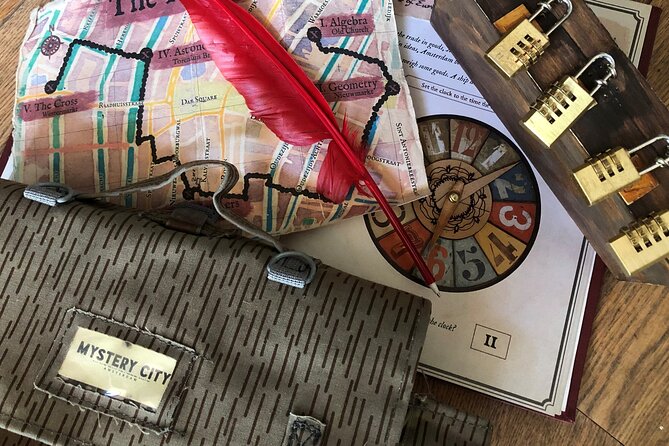
This is not a lecture tour where you listen and forget. It’s a scavenger hunt with a story: the Order of the Rosy Cross is looking for new members, and you have to prove you’re worthy by solving an ancient mystery. Your job is to uncover the identity of a historic member you only know as A Secret Sender.
That hook matters. Amsterdam is full of old buildings, narrow streets, and canal-side detail that most people speed past. The game nudges you to look closer, notice patterns, and compare what you’re seeing with what the puzzles ask for. You get a walking route and a reason to pay attention.
It also helps that the pacing is flexible. Self-guided means you can pause at a street corner that catches your eye, or backtrack a bit if you missed a clue moment. It’s one of those formats where the experience improves if you’re willing to be a little curious.
A handful of other Amsterdam outings
- Amsterdam: Van Gogh Museum Ticket
★ 4.7 · 52,054 reviews - Amsterdam: Heineken Experience Ticket including 2 Drinks
★ 4.6 · 36,014 reviews - Amsterdam Classic Saloon Boat Cruise with Drinks and Cheese
★ 5.0 · 31,825 reviews
Price and what you really get for $30.25
At $30.25 per person for about 2 hours, you’re paying for three things at once: the walking route planning, the puzzle content, and a structured way to experience Golden Age Amsterdam. The value is strongest if you like hands-on activities more than passive sightseeing.
If your goal is to tick off a couple of major sights, this may not feel worth it. But if you want a fun way to connect architecture and history to the places you pass, the price starts to make sense fast. For many people, it replaces one more typical paid activity with something that keeps them moving and thinking.
Also, it’s a good match for partial travel days. You can choose a start time that fits your schedule, then complete the loop without committing to an all-day program.
Mobile ticket, start time choices, and your day planning
You’ll use a mobile ticket, and you pick your start time. That combination makes it easier to fit into a sightseeing plan, especially if your schedule is flexible or you’re trying to avoid peak crowds around big landmarks.
Because the route is only about 3 km, you do not need a marathon mindset. Still, you should plan the experience as walking-forward time. It’s not the kind of activity where you pop in and out in short bursts.
My practical advice: start when you’re most alert. If you’re doing this on a tight itinerary, early in the day usually feels better than late afternoon, because puzzle focus can fade when you’re already tired from museums.
How the scavenger hunt setup changes the way you see the city
The core of the experience is the puzzle solving while you walk. You’ll work through clues with your friends, and each segment is connected to what you can see nearby. You’re not memorizing facts for a test. You’re building a trail of evidence as you go.
This is why the format tends to keep teens engaged. It gives you small goals every few minutes, and it turns landmarks into part of the storyline. Even when you’re not sure about an answer, the game encourages observation and teamwork, which is often half the fun.
One more detail that can affect your comfort: a review mentioned a backpack included with the materials. If you get one of those kits, test the buckle quickly before you start moving. It’s the kind of small friction that can annoy you if you’re already walking a lot.
A different way to spend an afternoon around Amsterdam:
- Amsterdam Luxury Canal Cruise + Unlimited Drinks & Bites option
★ 5.0 · 30,518 reviews - Amsterdam: Rijksmuseum Entry Ticket
★ 4.7 · 29,512 reviews - Amsterdam: Classic Saloon Boat Cruise with Cheese & Wine
★ 4.6 · 27,035 reviews - Amsterdam: Evening Cruise with Optional Wine and Snacks
★ 4.4 · 22,178 reviews
Stop by stop: what you’ll likely do at each location
Each location acts like a checkpoint in the mystery. You’ll use the surroundings to interpret clues, solve the next step, and keep the story moving. The overall route keeps you in the city center and connects major landmarks rather than scattering you across town.
1) Oude Kerk: where the mystery begins
Oude Kerk is your opening stop, and it sets the tone. Since this is a historic church, it gives you a strong landmark to anchor the first clue questions. Even if you’re not hunting for specific architectural details, you’ll likely be prompted to notice how the building and its setting look and how the puzzle instructions relate to that.
Best move here: slow down for a minute. The first checkpoint matters because it helps you understand how the puzzles want you to think for the rest of the route.
A drawback to consider: first stops can feel a bit confusing if your team is still figuring out how to interpret clues. Give yourselves a minute to sync up before you start answering confidently.
2) Nieuwmarkt: using streets and squares as clue sources
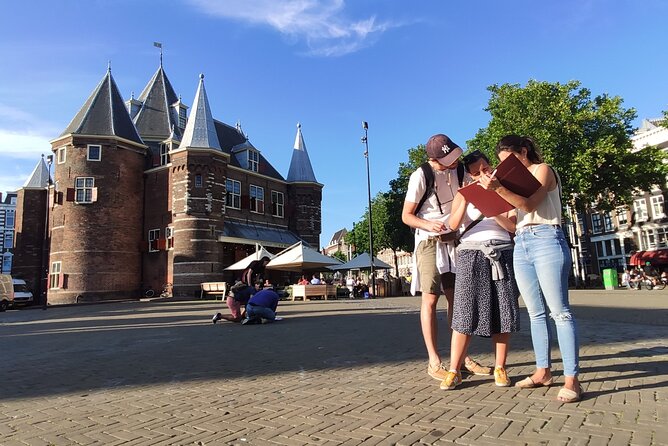
Nieuwmarkt is next, and this is where the scavenger hunt format really clicks. Squares and market areas tend to offer plenty of visible information, like street layouts, nearby landmark features, and directional context.
What I like about the placement of a clue stop like this is that it breaks the walk into a more human scale. You’re not just passing a monument from one side, you’re actively in an urban space, where routes, angles, and neighboring sights all help you reason through clues.
If your group moves too fast, you can miss the visual cues that the puzzle is leaning on. So keep a steady pace, not a sprint pace.
3) Westerkerk: turning big architecture into puzzle evidence
Westerkerk brings you to another major historic church area, which usually means the puzzle gets more tied to recognizing the kind of landmark you’re looking at. You’ll likely use the church setting as part of your clue logic rather than reading it like a guidebook.
This is often a great moment for teams who like a mix of observation and deduction. You can compare what you saw at Oude Kerk with what you see here, then apply that pattern to whatever the clue asks next.
The only drawback here is simple: it’s still walking, and church areas can involve crowds or slow-moving foot traffic depending on the time of day. Plan to stay patient and keep your team focused on the task.
4) Torensluis: canal-side walking that feels like real Amsterdam
Torensluis is a canal and bridge-area stop, and it changes the character of the hunt. You’re not only dealing with buildings now, you’re in the waterside visual world that defines Amsterdam.
This checkpoint is useful because it adds variety. After church landmarks and a market square, the puzzle moves you into the canal rhythm, where details like the way structures meet the water can influence what you look for and how you interpret the clue.
Practical tip: take one minute at this point to orient yourself. Canal-side areas can make it easy to get turned around if you rush. A short reset helps the rest of the hunt feel smoother.
5) Amsterdam Museum area: finishing with context
The last stop listed is the Amsterdam Museum area. That’s a fitting finish point because it ties your scavenger story back into the broader setting of culture and place. By the time you reach the end, you’ve already trained your eyes to look for clue evidence, so the wrap-up feels more satisfying than just reaching a final location.
This is also a good point to judge whether the hunt taught you something. The format is designed to help you notice history and architecture as you go, not as separate facts you read and forget.
Who this is best for (and who might not love it)
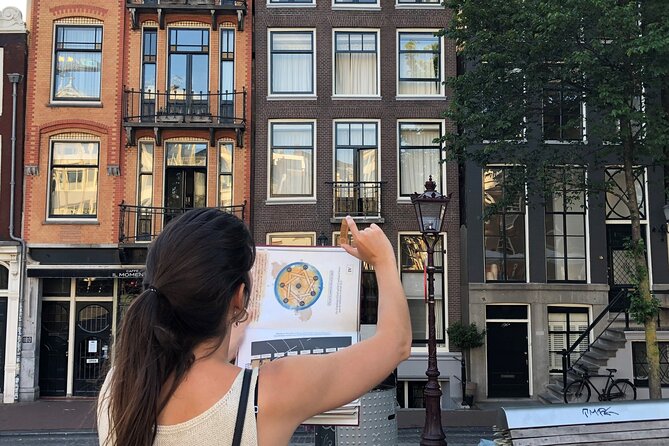
This experience is marketed to keep kids entertained, and the structure supports that. The puzzles create a shared goal, which tends to work well for families with older kids and teens. One review highlighted how the activity fit into a longer layover day, which tells me it’s flexible enough for real travel schedules.
It’s also a nice choice for couples. The walk gives you a shared activity without forcing constant conversation about what to see next. If you’re visiting Amsterdam for the first time, it’s especially helpful because the hunt pushes you into key areas and helps you learn how neighborhoods connect.
Potential mismatch: if your group hates walking or wants a sit-down experience, this is likely not the best fit. You’re looking at about 3 km and roughly 2 hours, and the puzzle format works best when you stay present.
Group size matters too. One review noted it may be harder with a larger group. Private does not mean unlimited energy. If your team is big, assign roles early so everyone stays involved and the group doesn’t stall.
The staff and the little things that make the hunt smoother
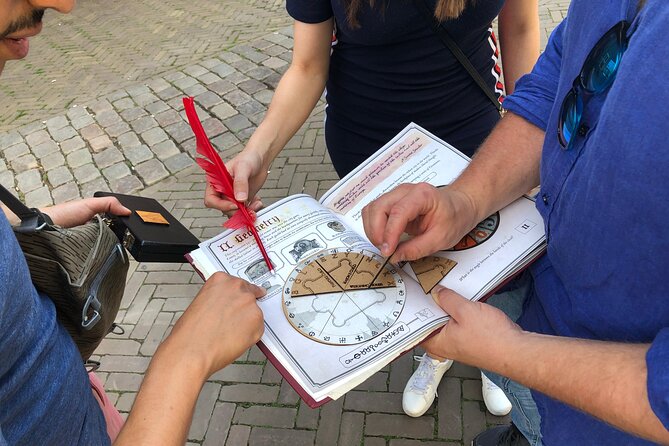
You start and end at the same meeting point, and staff are at the start and finish locations. That matters because it gives you a quick human check-in, especially useful if you have questions about how the hunt works with your mobile ticket.
One review called out a host named Ben as friendly and fun to chat with. That’s a strong sign the experience is supported with real people, not just an automated system.
Also, the route was described as good for finding restaurants after the game. That is worth noting. A walking scavenger hunt can leave you with one more activity and then a clear plan for a meal nearby, instead of sending you out wondering where to go next.
Languages, pace, and how to keep the experience fun
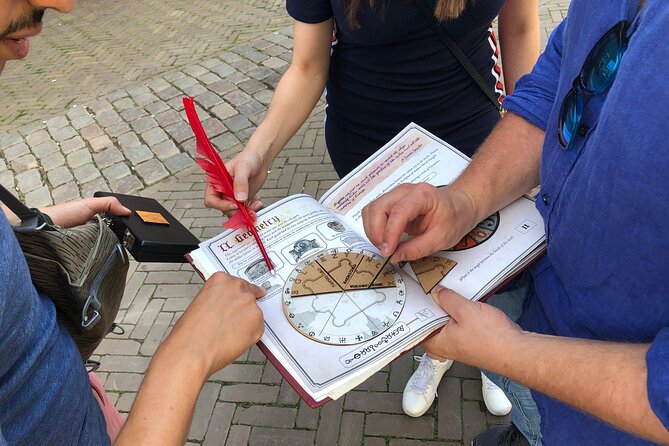
The experience is available in English, Dutch, French, German, Spanish, and Italian. So if you’re traveling as a mixed-language group, you should be able to choose the version that works best for everyone’s reading comfort.
Pacing is your job, not the game’s. With self-guided play, you set the tempo. If you rush, the puzzles may feel unfair. If you slow down and look, the clues usually fall into place more naturally.
A small strategy that often helps: when you hit a tricky puzzle, stop and scan the surroundings together. Don’t only focus on the materials, use the buildings and streets you’re already standing near. The whole point is that Amsterdam itself is the clue surface.
Should you book Amsterdam Treasure Hunt: The Mystery of a Secret Sender?
Book it if you want Amsterdam in motion, with a built-in reason to notice architecture, streets, and landmark settings. The combination of self-paced puzzles and a compact 3 km route makes it an easy win for first-time planning, family time with older kids, and couple-friendly sightseeing.
Skip it if you want a classic guided tour with lots of seated time, or if your group can’t handle about 2 hours of walking and puzzle focus. Also, if you’re traveling with a very large group, consider whether you can keep everyone participating rather than splitting into small pockets that lose the thread.
If you’re the kind of person who likes solving mysteries while exploring real places, this one fits. It’s not just another walk through Amsterdam, it’s a game that trains your eyes while you enjoy the city at your own pace.
FAQ
How long is the Amsterdam Treasure Hunt?
The experience takes about 2 hours.
How far do you walk during the game?
You’ll follow an approximately 3 km route through the city center.
Where does the tour start?
It starts at Zwanenburgwal 178, 1011 JH Amsterdam, Netherlands.
Does it end back at the meeting point?
Yes. The activity ends back at the meeting point.
Is this a guided tour with a live guide?
It is self-guided, and you explore at your own pace.
What languages are available?
The experience is offered in English, Dutch, French, German, Spanish, and Italian.
Is there a mobile ticket?
Yes, it includes a mobile ticket.
Is it private, or do I join other people?
This is a private tour or activity, so only your group participates.
Can I cancel for a full refund?
Yes. You can cancel for free up to 24 hours in advance for a full refund.
Are service animals allowed?
Yes, service animals are allowed.
Newest bookings around Amsterdam
- Amsterdam Breakfast Cruise on Private Luxury Boat★ 5.0 · 5 reviews
- Amsterdam-West Food Tour with local guide★ 5.0 · 16 reviews
- Amsterdam: Explore the Van Gogh Museum & His Masterpieces★ 3.5 · 64 reviews
- Van Gogh Museum Tour excluding Entrance Tickets★ 5.0 · 16 reviews
- Van Gogh Museum with Audio Guide★ 3.5 · 80 reviews
- Van Gogh Museum Ticket with Audio Guide and Unlimited Access Time★ 5.0 · 25 reviews
- Van Gogh Museum Entry Ticket and Guided Tour★ 4.5 · 48 reviews
- Van Gogh Museum Private Tour★ 5.0 · 5 reviews
Amsterdam Tours, compared.


Heineken Experience Ticket including 2 Drinks
Read our review →
Amsterdam Classic Saloon Boat Cruise with Drinks and Cheese
Read our review →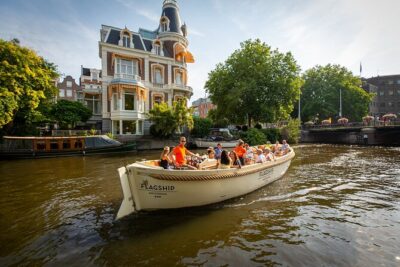
Amsterdam Luxury Canal Cruise + Unlimited Drinks & Bites option
Read our review →

Classic Saloon Boat Cruise with Cheese & Wine
Read our review →
Evening Cruise with Optional Wine and Snacks
Read our review →