
REVIEW · WALKING TOURS
Amsterdam: Private World War Two History Walking Tour
Nazi Amsterdam, mapped street by street. This private World War Two history walking tour uses preserved photos and street-level locations to explain the Nazi occupation in a way that feels personal, not museum-only. I love the tight group size, max 4 people, and the fact that you talk directly with retired historians instead of listening through an audio device. One possible drawback: the tour does not include entry to major sites like the Anne Frank House, the Resistance Museum, or Hollandsche Schouwburg, so if those are must-dos for you, plan them separately.
I also like that the stops focus on specific, heavy events you can picture, like the Dam Square shooting on May 7, 1945 and the winter of hunger with its food drops. The tour’s standout touch is a street memorial book with photos and names of Jewish residents and where they died, plus it includes a statue linked to a famous Auschwitz violin player. Still, this is emotionally weighty history, and the format is real walking, so wear comfortable shoes and bring an umbrella for the weather swings.
In This Review
- Key things to know before you go
- Entering Nazi-occupied Amsterdam from the street level
- Meeting point on Prinsengracht 263 at 9:30 AM
- How the tour actually feels: pace, questions, and no audio gear
- The entry of the German army and what welcome looked like
- Dam Square on May 7, 1945: the shooting incident
- The winter of hunger and the real cost of survival
- A Jewish street memorial book with photos, names, and deportation outcomes
- The monuments and photos that connect resistance to place
- The Auschwitz violin player statue and why it gets included
- Coffee break timing and what to do with your “extra” time
- Price and value: paying for small group access and depth
- Who this tour fits best
- Should you book this Amsterdam WWII history walking tour?
- FAQ
- How long is the Amsterdam private WWII walking tour?
- Is this tour private, and what is the maximum group size?
- What language is the tour guide?
- Where do I meet the guide?
- Is coffee or a restroom break included?
- What is included in the price?
- Are museum tickets included?
- Is the tour wheelchair accessible?
- What should I bring?
Key things to know before you go
- Private and small group (up to 4 people), so you can ask questions as you walk
- No audio system, because the focus is conversation and a personal pace
- Three retired historians guide the walk with English explanations
- Dam Square May 7, 1945 gets clear attention, not a quick mention
- A street memorial book includes photos, names, and deportation outcomes
- You skip big museum admissions, so you get street context instead
Entering Nazi-occupied Amsterdam from the street level
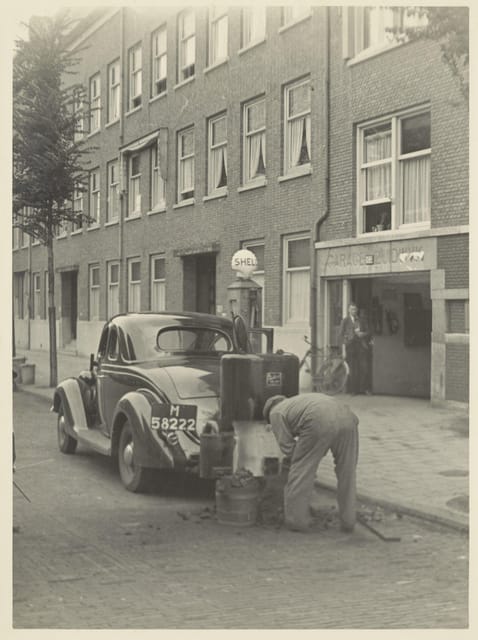
Amsterdam in World War Two was not just a backdrop. It was a city changed by occupation, control, deportation, and the slow violence of policy and propaganda. What I like about this tour is that it stays grounded in what you can actually see in the streets today. You are not trying to picture the past from one exhibit panel at a time. You are standing in the same urban rooms where people lived, feared, and resisted.
The tour is designed for people who like history that is specific and human. It is trauma-focused by necessity, since the Nazi occupation brought catastrophic harm to Amsterdam’s Jewish community and to anyone targeted by occupation authorities. The guide structure also matters here. Instead of a scripted monologue, you get a real dialogue with historians who bring context to the monuments and the stories attached to them.
You should also be aware of what this experience is not. You will not visit the Anne Frank House, the Resistance Museum, or Hollandsche Schouwburg. That can be a dealbreaker if you want those particular sites included. But if you want to understand the occupation through monuments, streets, and survivor-linked memorial elements, this walk is built for you.
More History Tours in Amsterdam
- Amsterdam Food and Cultural Tour with Tastings
★ 5.0 · 4,315 reviews - Amsterdam: Historic City Centre Canal Cruise
★ 4.3 · 659 reviews - Amsterdam: Haunted History and Ghost Walking Tour
★ 4.5 · 488 reviews
Meeting point on Prinsengracht 263 at 9:30 AM
You start at 9:30 A.M. at the front of the old Anne Frank House on Prinsengracht 263. The spot is between the museum and a Lunch Cafe, and the organizer notes a helpful way to confirm you are in the right place: there is a plate, and if you can touch the number plate 263, you are at the correct meeting point. The guide will have a big notebook in hand, which makes it easier to match the right person to the group.
This meeting point detail is more useful than it sounds. Amsterdam can be confusing at the start of a walk, even for seasoned visitors. Having a clear visual cue helps you avoid arriving late and waiting in the wrong place.
How the tour actually feels: pace, questions, and no audio gear
This is a private group with a max size of four people. That changes the whole vibe. You are not stuck in a line listening to one loud voice. The guide can slow down for your questions. They can also adjust based on how much context you want as you move.
Another practical point: there is no audio system. Some tours use headsets to keep big groups together. Here, it is built around direct conversation. If you like hearing the guide’s pacing and tone, you will probably appreciate this.
The walking pace is also flexible. The tour lasts about 3 hours, and it can run a bit longer. You get a short break about halfway through for coffee and/or a restroom visit. Refreshments at the break are not included, so budget for your drinks and any food you choose to grab. The organizer even suggests you can eat something during that stop, like a late breakfast.
If you are wheelchair users, the tour is listed as wheelchair accessible. The one detail that matters: you should email ahead so the guide can plan the coffee stop and adjust the route accordingly. That planning makes the difference between a “possible” accessibility and an actually comfortable one.
The entry of the German army and what welcome looked like
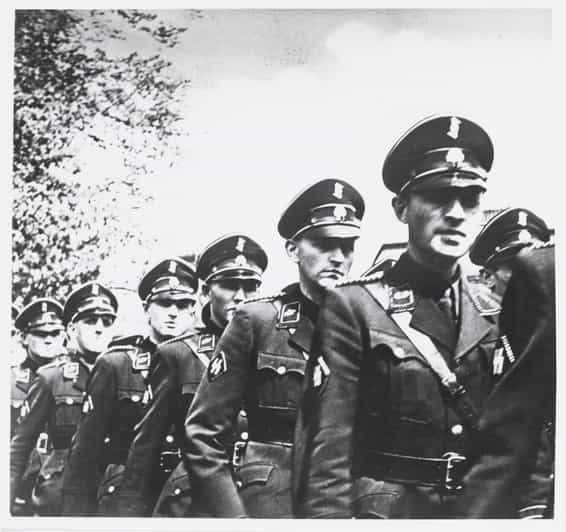
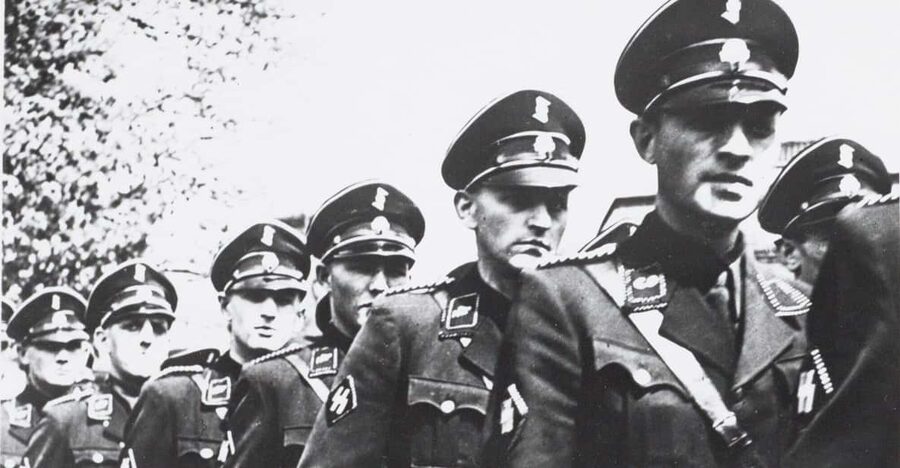
One of the tour’s core themes is how the occupation arrived, not just how it ended. You will see photos of the German army’s entry, specifically the Wehrmacht, and you will talk through what Amsterdam was experiencing in those early days.
The goal here is not to shock you with generic images. It is to help you understand how occupation power was made visible. The guide talks about the welcoming of the German army at a former town hall building, now the Grand Hotel, and then later the Canadian army was cheered in the same broader urban story arc. That detail matters because it shows how quickly streets and buildings can shift from one narrative to another.
When history is taught only through dates, it can feel abstract. When you connect an old city landmark to photographs and a sequence of occupation and liberation events, it starts to feel like a real timeline you can follow.
More Walking Tours in Amsterdam
- Amsterdam Anne Frank: Small-Group Walking Tour & Local Guide
★ 4.8 · 12,789 reviews - Anne Frank’s Story – Guided Walking Tour through Amsterdam
★ 5.0 · 11,619 reviews - Absolutely Amsterdam – the Essential Introductory Walking Tour
★ 5.0 · 3,629 reviews - Amsterdam: Anne Frank Guided Walking Tour in DE/EN/IT/ES
★ 4.9 · 3,107 reviews
Dam Square on May 7, 1945: the shooting incident
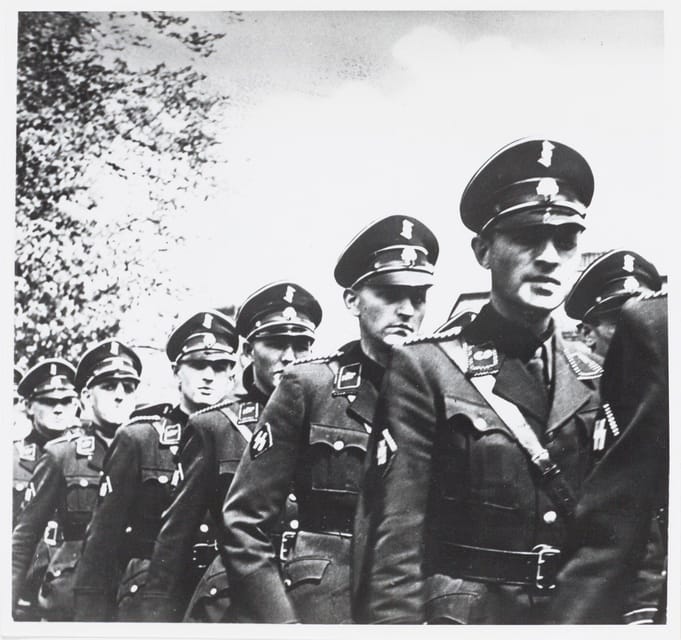
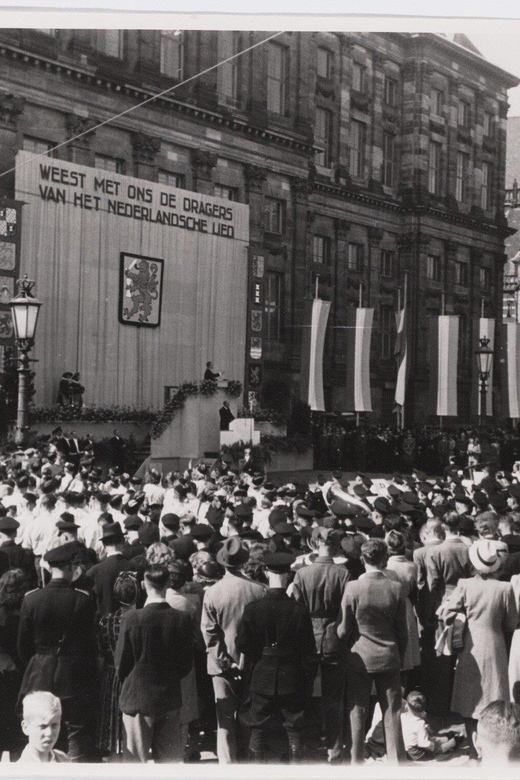
A highlight on this walk is Dam Square and the shooting incident on May 7, 1945. Even if you know that the war ended in Europe around that time, you may not know that “ending” did not automatically mean calm. The tour pays attention to what happened in the square and how it fits the chaotic moment.
This stop is valuable because Dam Square is a famous place in modern Amsterdam. It is easy to treat it like a sightseeing stage. The tour reframes it as a site of real consequence at the end of occupation. You learn why the incident happened, and you connect it to the larger story of liberation and the violence that persisted even as the war was turning.
This is the kind of stop where you will likely want to ask questions. The guide can explain how monuments and public spaces carry layers of memory. Having a private setting helps you do that without feeling rushed.
The winter of hunger and the real cost of survival
Another key topic is the winter of hunger, when Amsterdam experienced extreme deprivation. The tour includes the story of food dropping during that winter. You will also learn how that period was understood and remembered, tied to the occupation’s impacts on daily life.
Why this matters in a walking tour format: you can feel the contrast between present-day convenience and what survival meant then. Even though the buildings look similar, the stories behind them were about shortages, fear, and the struggle to keep people alive.
This part of the tour is also a useful adjustment for your brain. If your focus is only on major events like deportations or the war’s turning points, you can miss how much suffering was built into the system through routine hardship. The winter of hunger is a reminder of that.
A Jewish street memorial book with photos, names, and deportation outcomes
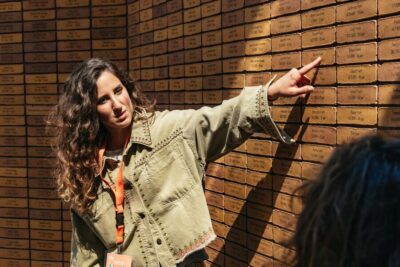
The tour’s most moving and specific element is its street memorial focus. The guide selects all the Jewish residents of one Amsterdam street and then shares a small book you can keep, with photos and names, including where they died in the extermination camps. The camps highlighted include Auschwitz and Sobibor.
This is not a broad Holocaust lecture. It is personalized to a defined place and a defined group of residents. That is exactly why it lands. It takes the enormous scale of tragedy and brings it back to the lived reality of neighborhoods.
The tour also notes that many of the preserved photos were taken by Dutch resistance fighters. That detail helps explain where these images came from and why they survived, which makes the memorial feel grounded rather than symbolic.
If you are deciding whether this experience will be right for you, think about whether you want history that is local and name-based. If yes, this is one of the best reasons to book. If you need something lighter in emotional weight, it may be too intense.
The monuments and photos that connect resistance to place
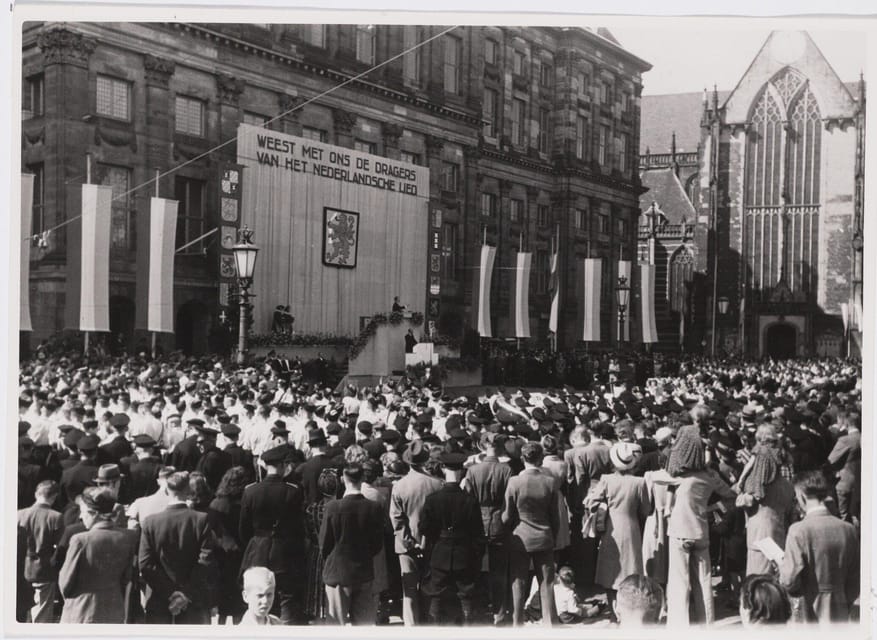
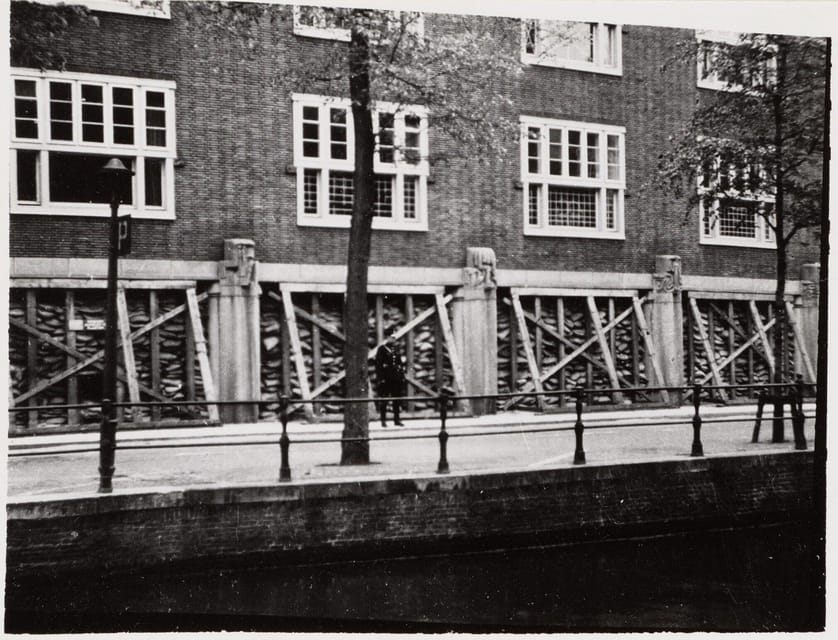
As you walk, you will pass locations tied to the Second World War and the resistance narrative. The guide reflects on resistance monuments and the stories behind them. You also see photos of the German army’s entry and other occupation-related imagery, with commentary about context at the locations where the photos connect to what you see today.
This is where the “no audio system” choice matters again. Monuments can be confusing if you just glance at them. In conversation, the guide can point out what you might otherwise miss. They can explain why a specific memorial exists at that spot, what it was meant to say at the time, and how the surrounding streets shape memory.
For me, this is one of the most practical forms of Holocaust and occupation education. It teaches you how to read the city as a document.
The Auschwitz violin player statue and why it gets included
The tour also includes a statue of the famous violin player from Auschwitz. This is included as a visible symbol linked to a person whose story is tied to Auschwitz. Even if you already know the outline of that story, the presence of a statue turns the memory into something you can locate in space.
What I appreciate is that the tour does not treat memorial statues as decorations. It links the statue to the broader discussion of deportation and fate in the extermination camps. So the stop works as a bridge between personal memorial art and the larger historical machinery that sent people to their deaths.
Coffee break timing and what to do with your “extra” time
Halfway through the walk, you get a short break for coffee and/or a restroom stop. The tour can extend a bit beyond three hours, and the guide allows for eating during the coffee break, such as a late breakfast.
Plan for a break that is useful, not rushed. Since refreshments are not included, you will decide what you want to buy. That means you can match the break to your own needs, whether you want just coffee or a small snack.
Also, since the tour is walking-based, you will feel more comfortable if you bring layers. Amsterdam weather can change fast, and the organizer explicitly suggests bringing an umbrella.
Price and value: paying for small group access and depth
The price is $188 per group up to 4 people. That can look high at first glance. But because it is priced per group rather than per person, the effective cost per person drops when you have the full group. For example, if the tour fills with four participants, you are effectively paying about $47 per person for a three-hour private, historian-led walk.
Even when it does not fill, you still get the benefit of a small-group conversation format. The guide does not rely on an audio system. You get paper information to keep, plus the street memorial book. You also get time for questions throughout, which is where the value usually shows up in real life.
If you are the type who likes structured history lectures, you might prefer a museum ticket plus guide. But if you want city-level memory work, walking stops, and a guide who can explain the why behind monuments and photos, this is one of the more focused ways to spend your time in Amsterdam.
Who this tour fits best
This tour is ideal if you:
- Want to go off the beaten path and learn a key part of Amsterdam’s past that is easy to skip on standard sightseeing days
- Prefer history told through street locations and monuments, not only inside buildings
- Like asking questions and getting straight answers in English
- Appreciate a small, private group format with a pace you control
It may be less ideal if:
- You specifically want Anne Frank House or other major sites included in the same outing, because this experience does not include those admissions
- You want a light, casual stroll. This walk is built around a traumatic occupation period, so the tone is serious by design
Also, because the tour can run a bit longer and is walking-heavy, comfortable shoes matter more than usual. And yes, bring that umbrella.
Should you book this Amsterdam WWII history walking tour?
If your goal is to understand Nazi occupation in Amsterdam through real places, photos, and memorial storytelling, I think you should book. The small group size and live conversation format mean you can actually process what you are seeing, and you get both paper handouts and a name-based street memorial book that you can take home.
The biggest decision is your tolerance for intensity and your expectations about museums. This is not a combined “everything” Holocaust itinerary. It is a street and monument focus with specific topics like Wehrmacht entry, Dam Square on May 7, 1945, the winter of hunger with food drops, and deportation outcomes tied to Auschwitz and Sobibor, plus the Auschwitz violin player statue.
If that matches what you want, this tour is a strong use of time in Amsterdam, especially when you want context that stays grounded in the city itself.
FAQ
How long is the Amsterdam private WWII walking tour?
The tour lasts about 3 hours, and it may extend a bit.
Is this tour private, and what is the maximum group size?
Yes. It is a private group tour, and the group size is never more than 4 people.
What language is the tour guide?
The tour is guided live in English.
Where do I meet the guide?
Meet at 9:30 A.M. in front of the old Anne Frank House on Prinsengracht 263.
Is coffee or a restroom break included?
A short break for coffee and/or a restroom visit is provided about halfway through the walk. The costs of refreshments are not included.
What is included in the price?
The price includes the private group experience, live English guiding without an audio system, walking at your pace, paper information to keep, and personal attention throughout.
Are museum tickets included?
No. Tickets for the Anne Frank House, the Resistance Museum, and Hollandsche Schouwburg are not included, and those sites are not visited during this tour.
Is the tour wheelchair accessible?
Yes. You can participate with a wheelchair, but it is advisable to email in advance so the coffee stop and route can be taken into account.
What should I bring?
Bring an umbrella.
If you want, tell me your travel dates and how many people are in your group, and I can help you think through whether the $188 per group pricing is likely to be best for your situation.
More Historical Tours in Amsterdam
- Amsterdam High-End Dutch Food & History Tour – Up to 8 guests
★ 5.0 · 482 reviews - From Amsterdam: Volendam Heritage & Cheese Half-Day Tour
★ 4.4 · 461 reviews - Amsterdam: Historic City Sightseeing Canal Cruise
★ 4.5 · 444 reviews - Amsterdam: Historical Highlights Walking Tour with Tasting
★ 4.6 · 381 reviews
Newest bookings around Amsterdam
- Amsterdam Breakfast Cruise on Private Luxury Boat★ 5.0 · 5 reviews
- Amsterdam-West Food Tour with local guide★ 5.0 · 16 reviews
- Van Gogh Museum with Audio Guide★ 3.5 · 80 reviews
- Amsterdam: Explore the Van Gogh Museum & His Masterpieces★ 3.5 · 64 reviews
- Van Gogh Museum Tour excluding Entrance Tickets★ 5.0 · 16 reviews
- Van Gogh Museum Ticket with Audio Guide and Unlimited Access Time★ 5.0 · 25 reviews
- Van Gogh Museum Entry Ticket and Guided Tour★ 4.5 · 48 reviews
- Van Gogh Museum Private Tour★ 5.0 · 5 reviews
Walking Tours, compared.
Amsterdam Anne Frank: Small-Group Walking Tour & Local Guide
Read our review →
Anne Frank’s Story – Guided Walking Tour through Amsterdam
Read our review →
Absolutely Amsterdam – the Essential Introductory Walking Tour
Read our review →
Anne Frank Guided Walking Tour in DE/EN/IT/ES
Read our review →
Anne Frank Walking Tour Amsterdam Including Jewish Cultural Quarter
Read our review →Browse the lists this tour appears in