
REVIEW · HISTORICAL TOURS
Amsterdam: Private Pedicab Historical Sightseeing Tour
Pedicabs make Amsterdam feel close-up. On this private 2-hour ride, I love how the route snaps you to major sights without wasting time on parking or traffic, and it all comes with a local guide telling you what you are actually looking at.
You’ll also get a strong feel for the 17th-century canal district, not just the postcard views. The best part for me is the pairing of street-level stops and big-picture context, so each bridge and canal house has a reason to exist.
One consideration: it is a short tour, so if you want lots of long photo breaks or extended wandering on foot, you may feel a bit rushed. Also bring warm clothing, even with the blanket provided.
In This Review
- Key highlights worth writing home about
- Pedicab vs. walking: how you’ll actually experience Amsterdam
- Dam Square to Zeedijk: starting where Amsterdam became Amsterdam
- Nieuwmarkt and the 15th century city gate you can’t miss
- Montelbaanstoren, the Oude Waal, and why houseboats matter
- Jewish Quarter: synagogues, the Holocaust name monument, and diamond-era canal houses
- Hermitage, the Skinny Bridge, and Amstel river views for photos
- The 17th-century canal district: half circles, merchant homes, and building patterns
- Museumsquare and the Rijksmuseum tunnel stop near Van Gogh
- Bram the guide: why the explanations feel personal
- Timing, cold weather, and who should choose this
- Value check: is $230 per group a good deal?
- Should you book this Amsterdam historical pedicab tour?
- FAQ
- Where does the tour start?
- How long is the private pedicab tour?
- Is hotel pickup and drop-off included?
- What is included in the tour?
- What languages is the guide available in?
- Do I need to bring anything?
- Is the tour suitable for everyone by weight?
Key highlights worth writing home about
- Dam Square start plus a clear “how Amsterdam began” story in the first minutes
- Private pedicab access for narrower streets cars cannot use comfortably
- Amstel river and 7 bridges viewpoints for standout photos from the water side
- Jewish Quarter focus including the Big Synagogue area and the Holocaust name monument of 102,000 bricks
- Oude Waal lookout with houseboats backed by 17th-century canal houses
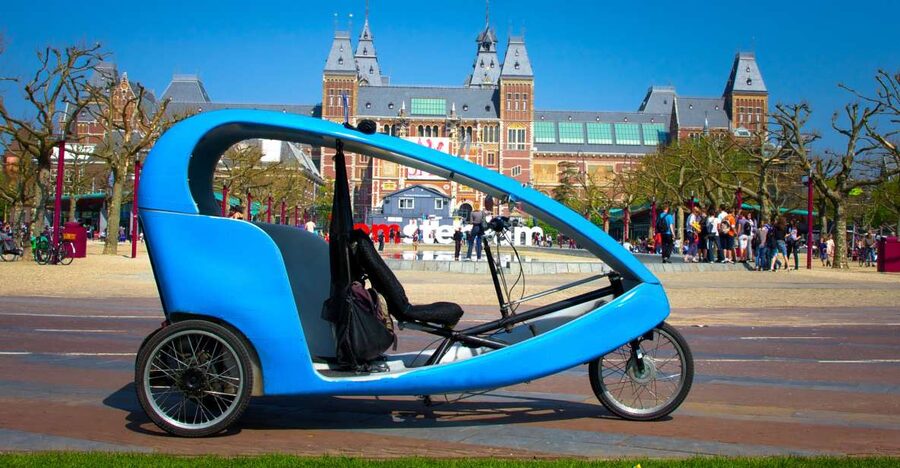
- Museumsquare finish near Rijksmuseum and Van Gogh Museum, with a stop in the square and a tunnel drive
Pedicab vs. walking: how you’ll actually experience Amsterdam
This tour is built for speed plus context. You cover a lot of ground in 2 hours, but you are not stuck watching a screen or doing a bus checklist. Instead, the pedicab moves at a human pace through areas where cars are not ideal, so the streets feel calmer and more readable.
You also travel as a private group, meaning you can ask questions and tailor the stops to your pace. That matters in Amsterdam because the “best” place to pause depends on what you care about, architecture vs. history vs. photos.
Comfort is handled with practical touches. There’s a blanket included for cold weather, and the guide’s explanations are designed to land quickly at each stop. One more thing I appreciate: the tour is capped for two people, which keeps it feeling personal instead of crowded.
More History Tours in Amsterdam
- Amsterdam Food and Cultural Tour with Tastings
★ 5.0 · 4,315 reviews - Amsterdam: Historic City Centre Canal Cruise
★ 4.3 · 659 reviews - Amsterdam: Haunted History and Ghost Walking Tour
★ 4.5 · 488 reviews
Dam Square to Zeedijk: starting where Amsterdam became Amsterdam
You kick off at Dam Square, the birthplace of the city, and the tour wastes no time explaining why this spot matters. In the same area you’ll point out major anchors like the Royal Palace and the New Church, plus the National Monument. Even if you have visited before, hearing how the city grew from this core makes the square stop feel more than just a busy meeting point.
Next you head to Zeedijk, a street now, but historically one of the dikes that helped protect the old city. This is a big deal in Amsterdam, because so much of the city’s survival and expansion came down to water management. When you connect the word “dike” to what you are standing on, the urban geography starts to click.
Then you get a quick look down Zeedijk toward Chinatown. It is not a deep Chinatown stroll, but it is a useful taste, and it helps you understand Amsterdam’s neighborhood layering, where different cultures and eras sit side by side.
Nieuwmarkt and the 15th century city gate you can’t miss
Your next anchor is Nieuwmarkt, a square full of historical weight. The highlight here is the 15th-century city gate positioned in the middle of the square. That is the kind of detail that would be easy to walk past, but from the pedicab you can take it in right away, then get a clear explanation for what it was protecting and why it ended up where it did.
If you like architecture that tells a story, this is a strong stop. You see the gate in context with the modern square, so you get a sense of how Amsterdam squeezed newer life around older defenses.
Montelbaanstoren, the Oude Waal, and why houseboats matter
From Nieuwmarkt, you move to Montelbaanstoren, an old watch and defense tower tied to Amsterdam’s expanded defense line from the early 16th century. This is one of those moments where a tower stop turns into a lesson about threats, planning, and how the city organized itself for safety.
From there, you also get a good viewpoint over the Oude Waal, the area with a row of houseboats and 17th-century canal houses in the background. This is a photo moment, but it is also a reality check. Houseboats are not just a modern gimmick here. You are looking at a long-running canal culture that has shaped how Amsterdam lives with water.
A handful of other Amsterdam outings
- Amsterdam High-End Dutch Food & History Tour – Up to 8 guests
★ 5.0 · 482 reviews - From Amsterdam: Volendam Heritage & Cheese Half-Day Tour
★ 4.4 · 461 reviews - Amsterdam: Historic City Sightseeing Canal Cruise
★ 4.5 · 444 reviews - Amsterdam: Historical Highlights Walking Tour with Tasting
★ 4.6 · 381 reviews
Jewish Quarter: synagogues, the Holocaust name monument, and diamond-era canal houses
The Jewish Quarter is one of the most meaningful parts of the ride. You’ll see the area of the very first synagogue Jewish people were allowed to build in Western Europe over 350 years ago, including the Big Synagogue. On this tour, you do not just get the name. You get the background that makes the location feel specific, not generic.
Across the street you will also see the Portuguese Synagogue. Seeing these side-by-side helps you understand that the story was not one single timeline. Different communities shaped religious life in different ways, and the architecture reflects that.
Near this area you’ll visit the Holocaust name monument, where 102,000 bricks list names of Dutch Jewish victims from World War II. This stop is heavy. The value of having it explained as part of a guided route is that you are not left trying to piece together meaning on your own in a quick, confusing setting.
Then the tour connects history to economic life. Opposite the monument, you will see a row of 17th-century canal houses that were home to successful Sephardic immigrants involved in the diamond business. This is where Amsterdam’s neighborhoods stop feeling like separate categories and start feeling like a connected human map.
Hermitage, the Skinny Bridge, and Amstel river views for photos
Next up is the Hermitage, housed in a large 17th-century widowhouse. Even from outside, the setting helps you understand why this building exists and how Amsterdam’s social structures shaped architecture over time. It is a good “palate cleanser” after the emotional Jewish Quarter stops, without losing the thread of the past.
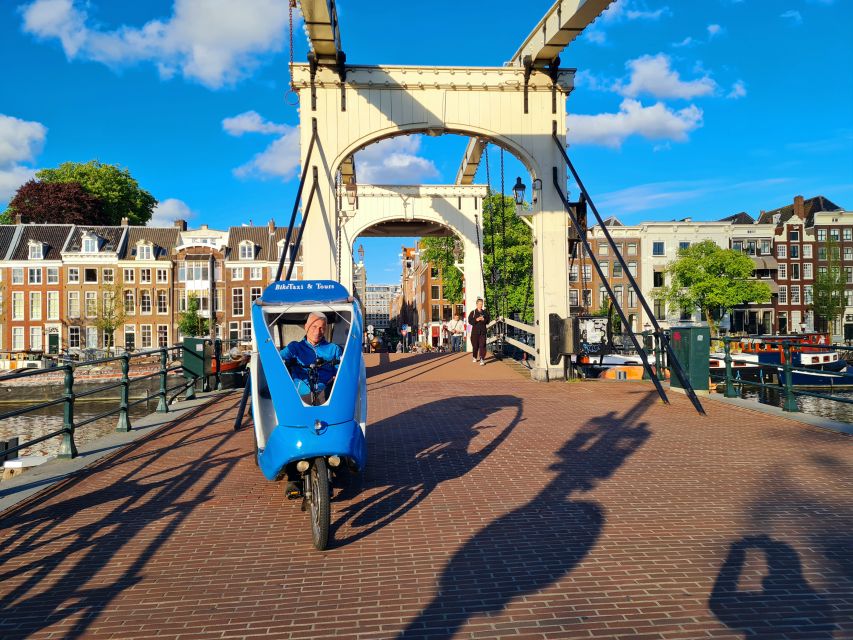
Then you reach the Skinny Bridge, one of Amsterdam’s most iconic bridges. It is especially beautiful at night, with light bulbs accenting its narrow design. Even in daylight, it still has that instantly recognizable look. I recommend taking a moment here, because a bridge can be both engineering and art, and Amsterdam does both.
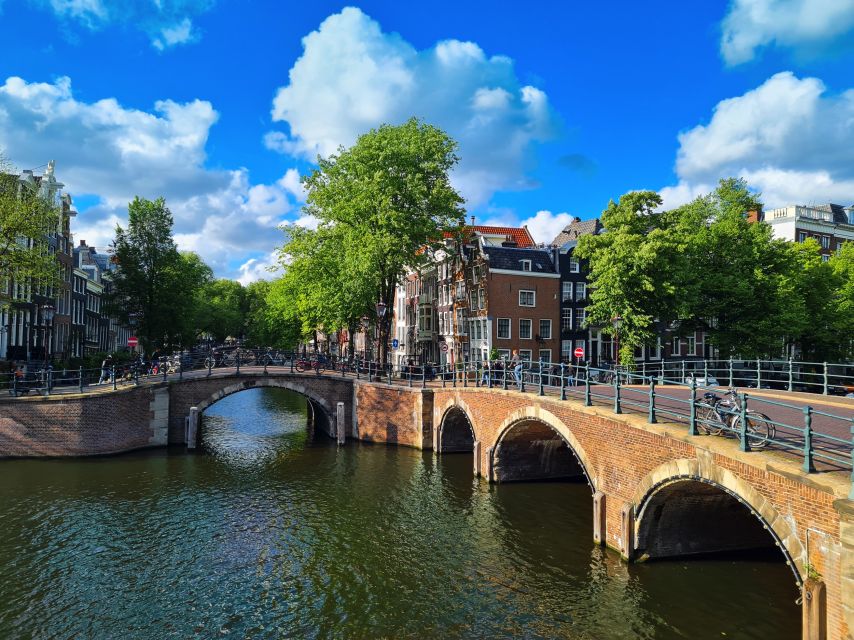
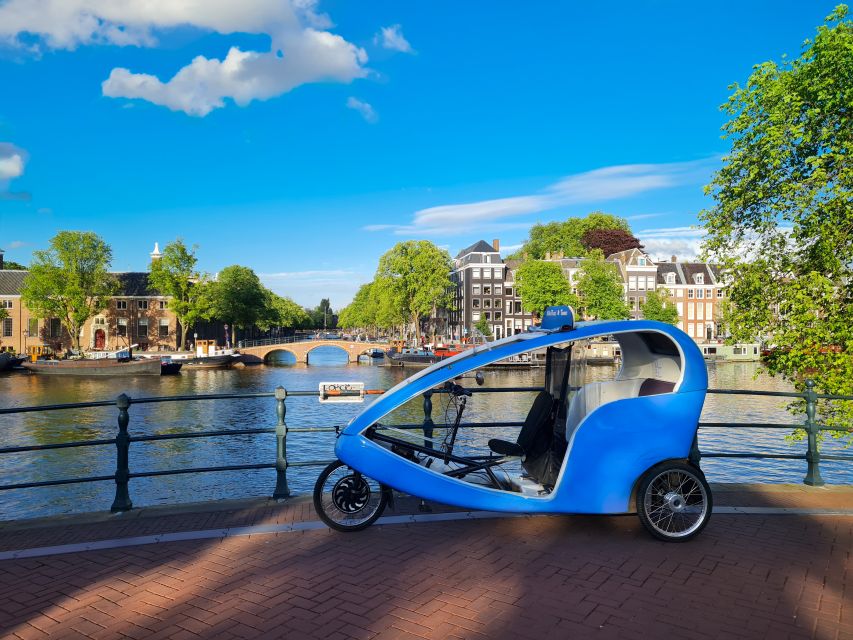
From the Skinny Bridge area, you also get panoramic views over the Amstel river, Amsterdam’s main, wider canal. For pictures, this is a strong spot because you can frame the water and buildings together. For context, it shows you why the city developed where it did and why canals are not just scenery. They are the city’s backbone.
The 17th-century canal district: half circles, merchant homes, and building patterns
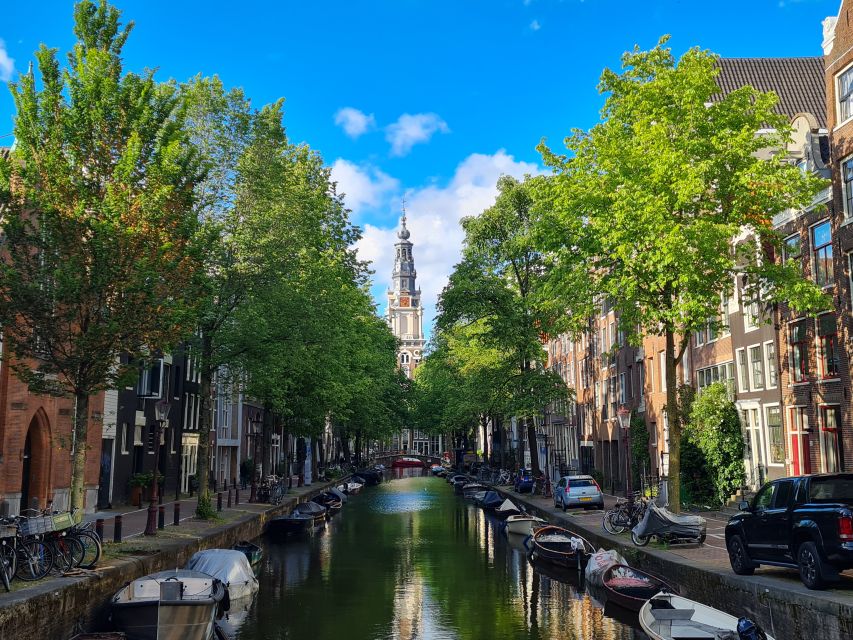
Now the ride settles into the 17th-century canal district surrounding the old centre. You can recognize this area on maps because it forms half circles around the centre. Seeing it from street level in a pedicab helps you grasp the logic of the plan, not just the idea.
Here you’ll see many of the typical canal houses that were once homes of successful merchants. The important detail is that while the houses share some recognizable features, they are not all identical. The guide helps you spot the building era through those patterns and differences, which makes the architecture feel less like random facades and more like coded information.
This portion is especially valuable if you have ever wondered why Amsterdam canals look so planned but still feel human. The answer is in the small variations, and the tour is set up so you notice them.
Museumsquare and the Rijksmuseum tunnel stop near Van Gogh
Your final stop before heading back is Museumsquare, a large green open space from the 19th century. It is also home to the country’s most important museums, including the Rijksmuseum and the Van Gogh Museum.
The tour does something practical here: it drives through the Rijksmuseum tunnel and then stops in the middle of the square. That gives you a clean overview of the museum zone without you needing to navigate by foot through crowds or traffic.
If you are planning to visit one museum later, this is a smart way to get oriented first. You can stand in the square, look outward, then decide what kind of visit fits your time.
Bram the guide: why the explanations feel personal
The experience is strongly tied to the guide. The name you will hear is Bram de Haan, and the biggest praise for him is how prepared and confident he is while keeping things easy to follow.
What makes his style work is the mix of storytelling and visuals. Several people mention he uses photos and maps to show how Amsterdam evolved over time, including how the city changed during major 20th-century events. That kind of visual support helps when you are moving quickly from stop to stop, because your brain needs a reference.
Bram also handles questions in real time and has a reputation for adapting the ride for people with limited walking ability. If you are traveling with seniors or anyone who tires easily, a pedicab plus guided commentary can be a lifesaver. And because it is private, there is less pressure to keep up with a group pace.
One small reality check: in a cold or jet lagged mood, you might want more time to hop out for photos. The tour does allow photo stops, but it still runs on a tight 2-hour schedule, so you should think about what you want most before you arrive.
Timing, cold weather, and who should choose this
This is a 2-hour private tour with hotel pickup and drop-off. That duration is ideal if you want the core highlights plus meaningful context, without turning your day into a long logistics project.
Cold weather is common in Amsterdam, so plan for it. The tour includes a blanket, but you should still wear warm clothing. I would treat this as an outdoor ride where you will get cool air between stops, especially near the Amstel and bridge viewpoints.
There are also weight and suitability notes. The maximum combined passenger weight is 200 kg, and it is not suitable for people over 220 lbs (100 kg). If anyone in your group falls near those limits, check before booking.
Food and drinks are not included, so decide ahead of time whether you will grab a bite before or after. This keeps the tour focused on the route and the guide’s explanations.
Value check: is $230 per group a good deal?
At $230 per group up to 2, you are paying for three things at once: private transport, a local guide, and hotel pickup plus drop-off. Compared with a walking tour, it costs more, but you gain comfort and you cover more ground in less time.
I think it’s especially good value if at least one person in your group:
- wants to see a lot fast without navigating on foot
- cares about history tied to specific buildings and neighborhoods
- wants photo viewpoints at canals and bridges without hunting for them
If you are traveling solo, the price is still effectively built for a duo, so it may feel less cost-efficient. But if you prefer one-on-one attention and a quiet, flexible ride, the privacy is part of the product.
Should you book this Amsterdam historical pedicab tour?
If you want an Amsterdam “greatest hits” route with real context, I’d book this. The big wins for me are the Dam Square start, the strong Jewish Quarter stops with the Holocaust name monument, and the way the guide ties canals and buildings to actual city evolution. You get photos at the Amstel and iconic bridge areas, and you end in Museumsquare so your day feels organized.
Skip it only if you know you will want lots of long, on-foot exploring breaks. This is a ride-first tour, designed to keep momentum and meaning together in 2 hours.
If you do book, show up dressed for cool weather, and come with even one question you care about, like how Amsterdam grew with water control or what made the canal rings so powerful. With a guide like Bram, those questions tend to unlock the rest of the city fast.
FAQ
Where does the tour start?
The tour starts at Dam Square.
How long is the private pedicab tour?
The duration is 2 hours.
Is hotel pickup and drop-off included?
Yes. Pickup from your hotel and drop-off are included.
What is included in the tour?
Included items are hotel pickup and drop-off, a blanket for cold weather, and an in-depth explanation about the sights.
What languages is the guide available in?
The live guide is available in English, Dutch, and German.
Do I need to bring anything?
Bring warm clothing.
Is the tour suitable for everyone by weight?
The maximum combined passenger weight is 200 kg, and it is not suitable for people over 220 lbs (100 kg).
Newest bookings around Amsterdam
- Amsterdam Breakfast Cruise on Private Luxury Boat★ 5.0 · 5 reviews
- Amsterdam-West Food Tour with local guide★ 5.0 · 16 reviews
- Amsterdam: Explore the Van Gogh Museum & His Masterpieces★ 3.5 · 64 reviews
- Van Gogh Museum Tour excluding Entrance Tickets★ 5.0 · 16 reviews
- Van Gogh Museum with Audio Guide★ 3.5 · 80 reviews
- Van Gogh Museum Ticket with Audio Guide and Unlimited Access Time★ 5.0 · 25 reviews
- Van Gogh Museum Entry Ticket and Guided Tour★ 4.5 · 48 reviews
- Van Gogh Museum Private Tour★ 5.0 · 5 reviews
Historical Tours, compared.
Amsterdam Food and Cultural Tour with Tastings
Read our review →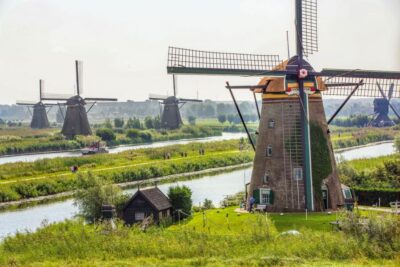
Kinderdijk UNESCO World Heritage Entry Ticket
Read our review →

Amsterdam High-End Dutch Food & History Tour – Up to 8 guests
Read our review →
Cruise through the Historic City Center with Guide
Read our review →Browse the lists this tour appears in