
REVIEW · CITY TOURS
Amsterdam Pedicab City Tour (2 hours)
Pedicabs make Amsterdam feel two degrees closer. This private eco-friendly ride trades long walks for smooth, two-wheel cruising, and the standout is how your guide connects each street to old photos and maps. I also love the custom pace, with frequent pull-overs for pictures and time to ask questions. One consideration, though, is that the tour depends on good weather, so plan for some rain possibility.
You’ll cover a true cross-section of the city in about 2 hours, from Dam Square to the Museumplein area, plus the canal district views that usually eat up half a day on foot. The route also touches key history sites like the Holocaust Names Monument and the Portuguese Synagogue area, but it stays light and easy because you are not grinding through crowds.
Finally, this is a small-group setup, up to 2 people per pedicab, so it is best if you want attention and flexibility rather than a big-ticket group experience.
In This Review
- Key highlights worth your time
- Why this Amsterdam pedicab tour is such a smart use of 2 hours
- The value question: what you pay for, and who it fits best
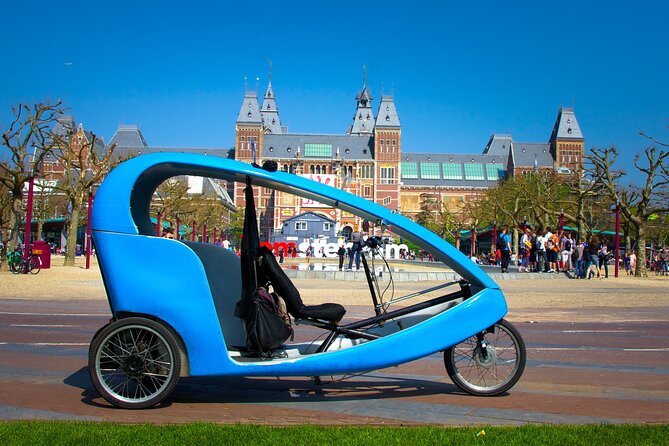
- Getting comfortable on a blue pedicab, and what to expect on pickup
- Stop-by-stop: what you’ll see, why it matters, and what to watch for
- Dam Square, the old center’s big “start here” moment
- Zeedijk, one of the oldest dike lines in town
- Chinatown, Europe’s oldest Chinese neighborhood on the mainland
- Nieuwmarkt, a square that explains the city’s fortified past
- Montelbaanstoren, a ship watch tower with canal views
- Rembrandt House Museum, seen from the outside
- Jodenbuurt, surviving streets after wartime loss
- Portuguese Synagogue of Amsterdam, a major 17th-century landmark
- National Holocaust Names Monument, passing with impact
- H’ART Museum area, passing the former orphanage and its link
- Magere Brug, the skinny bridge with postcard lighting
- Canal Ring (Grachtengordel), the 17th-century merchant arc
- Museumplein, Rijksmuseum, Concertgebouw, and the back of the Rijksmuseum
- The guide factor: why Bram de Haan’s approach makes the tour stick
- Who will enjoy this most (and who should think twice)
- Small practical tips so your 2 hours go smoothly
- Should you book the Amsterdam Pedicab City Tour?
- FAQ
- How long is the Amsterdam Pedicab City Tour?
- What is the price for the Amsterdam Pedicab City Tour?
- Is this tour private or shared?
- Is pickup included, and how do I find the pedicab?
- Does the tour include a mobile ticket?
- What language is the tour offered in?
- Are museum admissions included?
- Is good weather required?
- What is the cancellation policy?
Key highlights worth your time
- Private pedicab, up to 2: This keeps the ride calm and lets you steer the questions toward what you care about most.
- Bram de Haan’s photo-and-map storytelling: You get visual comparisons of Amsterdam then and now, not just dates.
- Rain-ready comfort: A waterproof blanket is provided if the weather turns.
- Iconic photo points without the trek: Think Magere Brug views and canal ring streets, with less walking.
- Historic neighborhoods in one loop: Jewish quarter, Chinatown, Nieuwmarkt area, and museum district areas all show up.
- Museumplein includes the Rijksmuseum back-view: You also pass through the famous bicycle tunnel under the Rijksmuseum.
Why this Amsterdam pedicab tour is such a smart use of 2 hours
Amsterdam can trick you. You think you are getting around fast, and then you look up and realize you have spent 45 minutes moving just to cross one canal. A pedicab changes that math. In a short window, you get to see far more of the center while staying relaxed enough to actually take things in.
The second big reason to book is the private guide format. On a shared tour, you often get rushed timing, and questions can feel like they happen in the margins. Here, the guide can stop when you want a photo, slow down when something catches your eye, and explain how one place connects to the next.
Is it eco-friendly? Yes, that is part of the pitch, and it matters for city travel where traffic noise and exhaust are not what you want. More importantly, the experience feels intimate. You are not stuck in line with strangers, and the ride keeps you close to the sidewalks, canal fronts, and the street-level details that make Amsterdam feel like a place instead of a checklist.
A handful of other Amsterdam outings
- Amsterdam: Van Gogh Museum Ticket
★ 4.7 · 52,054 reviews - Amsterdam: Heineken Experience Ticket including 2 Drinks
★ 4.6 · 36,014 reviews - Amsterdam Classic Saloon Boat Cruise with Drinks and Cheese
★ 5.0 · 31,825 reviews
The value question: what you pay for, and who it fits best
The price is $237.65 per group (up to 2) for about 2 hours. That is not the cheapest way to see Amsterdam, but it is not trying to be. You are paying for private transportation, plus a guide who can shape the stops around your interests.
For two people, the per-person cost lands at roughly $119 each at maximum group size. If you are traveling as a couple, that is often the sweet spot where a private tour becomes reasonable. If you are solo, you may still find the value good, but you should expect to pay the full group rate for yourself.
Also note the operational limit: there is maximum one pedicab per timeslot. That typically means smaller availability windows, but it also helps keep the experience from feeling overbooked.
Getting comfortable on a blue pedicab, and what to expect on pickup
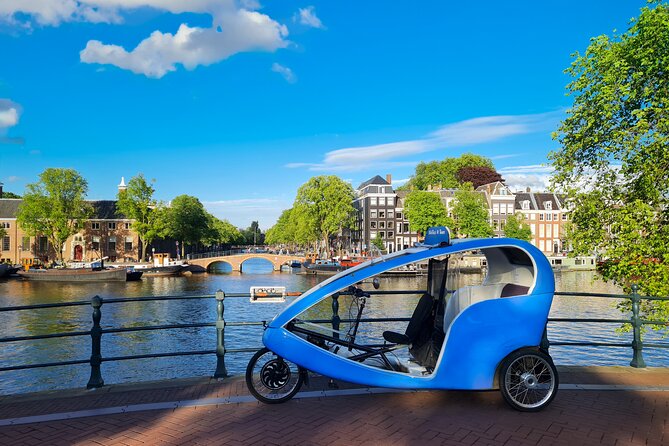
Pickup is offered. You wait in front of your hotel and look for the blue pedicab. The tour uses a mobile ticket, and it is offered in English.
Practical tip: Amsterdam weather changes quickly. Even when it looks calm, a breeze can make an otherwise mild day feel cold. Bring a light layer you can add or remove fast, and if it rains, you will have a waterproof blanket to pull over during the ride.
Your pedicab is designed for small parties, and there is a maximum total passenger weight limit of 210kg. Most travelers can participate, but if you have mobility or comfort needs, it is worth checking ahead so the experience matches your day.
Stop-by-stop: what you’ll see, why it matters, and what to watch for

This route is built for variety. You see classic landmarks, then you move into neighborhoods that add texture, then you finish with museum district views and canal-ring perspectives.
A different way to spend an afternoon around Amsterdam:
- Amsterdam Luxury Canal Cruise + Unlimited Drinks & Bites option
★ 5.0 · 30,518 reviews - Amsterdam: Rijksmuseum Entry Ticket
★ 4.7 · 29,512 reviews - Amsterdam: Classic Saloon Boat Cruise with Cheese & Wine
★ 4.6 · 27,035 reviews - Amsterdam: Evening Cruise with Optional Wine and Snacks
★ 4.4 · 22,178 reviews
Dam Square, the old center’s big “start here” moment
Dam Square is Amsterdam’s main square and the heart of the old center. Here you find the Royal Palace area, the New Church area, and the National Monument.
The reason this works early in the tour is orientation. After Dam Square, you start to understand the city’s layout and how the different districts link together. The stop is brief, but it gives you a reference point for everything that comes next.
Zeedijk, one of the oldest dike lines in town
Zeedijk traces one of the oldest dikes around the old center. It is also associated with Amsterdam’s oldest cafe, and the street has an old, lived-in vibe.
If you like details, this is where your guide’s style shines. Rather than just naming a place, the ride context helps you see why this street grew the way it did, and how geography shaped daily life.
Chinatown, Europe’s oldest Chinese neighborhood on the mainland
Amsterdam’s Chinatown is described as the oldest Chinese neighborhood of the European mainland. You will pass through an area with Chinese restaurants, supermarkets, and a Chinese temple.
A quick caution for expectations: this is not a deep dive into food or market stops. The tour keeps moving, so think of this as a cultural waypoint and photo-friendly street passing, not a full Chinatown visit.
Nieuwmarkt, a square that explains the city’s fortified past
Nieuwmarkt is one of the key squares in old Amsterdam. In the middle, you see the old city gate, the kind of structure that formed the main entrance when Amsterdam was walled and fortified before the big 17th-century expansion.
This stop is useful because it gives you a timeline anchor. Amsterdam can feel like one long “pretty day,” but Nieuwmarkt helps you remember it has layers of defense, trade, and growth.
Montelbaanstoren, a ship watch tower with canal views
The Montelbaanstoren is an old watch tower tied to the defense line and ship activity from the early 16th century. The best part is the angle it gives you toward de Oude Waal, including houseboats and historic canal houses in the background.
On a pedicab, you get those sights without needing to constantly reposition on foot. If canals are your thing, this is a stop that makes the city feel like a working system, not just a postcard.
Rembrandt House Museum, seen from the outside
You’ll look at the original Rembrandt house from the outside. Entry into the museum is possible but not included in this tour.
So if you want to go in, plan a separate visit. If you do not want museum time, the outside view still gives you a sense of place, and your guide can connect it to Rembrandt’s successful years during his time in Amsterdam.
Jodenbuurt, surviving streets after wartime loss
Jodenbuurt covers parts of the old Jewish quarter. A large portion was damaged or broken down after World War II, but there are still buildings, synagogues, and streets that survived.
This is one of the stops where your guide’s pacing matters. You spend around 10 minutes here, which is enough for understanding without turning it into a rushed lecture. It is also a reminder that Amsterdam’s story includes grief, not only charm.
Portuguese Synagogue of Amsterdam, a major 17th-century landmark
You will pass by the Portuguese Synagogue of Amsterdam, described as the largest synagogue and among the first Western European synagogues built in the late 17th century, in 1675. You also get a look at other synagogues opposite the building, now part of the Jewish museum area.
This is another stop where outside viewing fits the tour style. You are here to grasp scale and location, not to spend your whole day ticketing in museums.
National Holocaust Names Monument, passing with impact
You will pass the National Holocaust Names Monument. It features 102,000 brick stones with names, meant to remind you of Dutch Jewish victims of the Second World War.
This section is brief, about 2 minutes, but it carries weight. Even from a passing view, it is the kind of stop that changes how you read the city streets after.
H’ART Museum area, passing the former orphanage and its link
You will also pass by the Hermitage museum in Amsterdam, noted as having been a major widow house care facility built in the 17th century. It is now part of the Russian Hermitage museum.
Again, this is a passing moment, but it helps you notice how Amsterdam buildings can shift roles over time. A location can be tender, official, then museum, and still keep its bones.
Magere Brug, the skinny bridge with postcard lighting
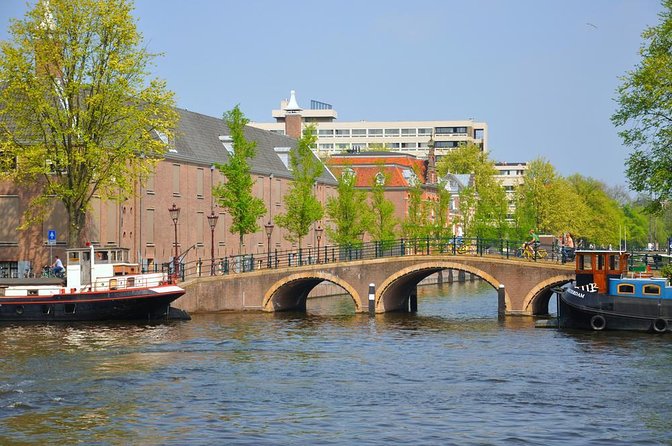
Magere Brug, the Skinny Bridge, is one of Amsterdam’s most iconic bridges. It lights up at night with hundreds of light bulbs, and from here you get a good overview over the Amstel, the main and widest canal.
Even during daylight hours, it is a visual reset point. Your guide usually encourages you to pause for photos, and on a pedicab you get a stable viewing angle without hiking along the banks.
Canal Ring (Grachtengordel), the 17th-century merchant arc
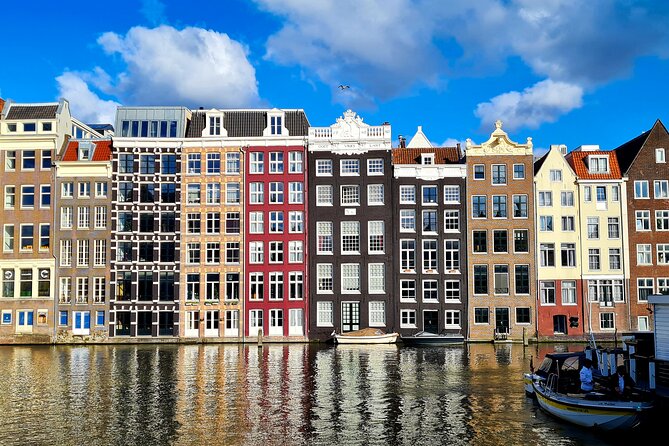
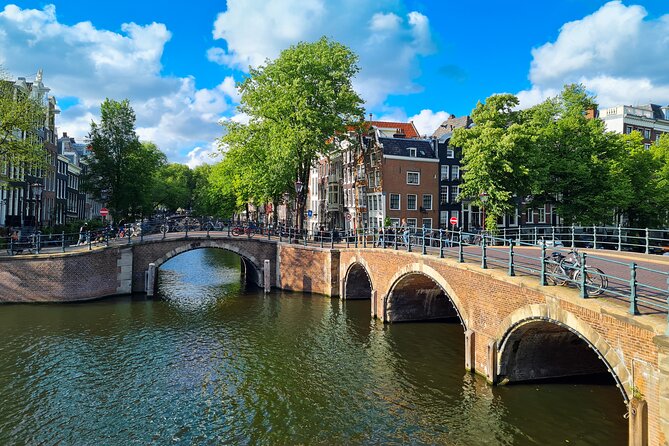
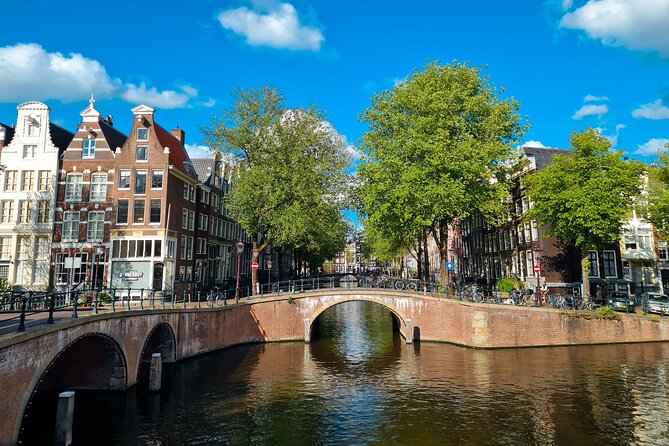
The canal ring, Grachtengordel, is the 17th-century expansion area surrounding the old center. The canals form half-circles on maps, and you see typical canal houses that were homes of successful merchants.
Your guide is likely to point out small differences between houses, and how those similarities hint at building eras. This is where your time on two wheels pays off. You can move between viewpoints while still keeping your eyes on the canal rhythm.
Museumplein, Rijksmuseum, Concertgebouw, and the back of the Rijksmuseum
Museumplein is described as one of the biggest and impressive squares in Amsterdam. On one side is the Rijksmuseum, and on the other side is the Concertgebouw. You also have nearby museums like Van Gogh, Stedelijk, Moco, and the Diamond museum areas.
You will stop here for about 10 minutes for views and guide details. The best part for many people is what happens next: you pass through the famous bicycle tunnel under the Rijksmuseum, where street artists sometimes play classical music, and then you head toward a strong viewpoint of the back of the museum, completed in 1885 and designed by Pierre Cuypers.
If you like architecture, this finale gives you a different perspective than the front facade crowds. It also ties the day together by ending near the city’s cultural heart.
The guide factor: why Bram de Haan’s approach makes the tour stick
If you get Bram de Haan as your guide, you are in for a storytelling style that mixes streets with evidence. In particular, multiple people highlight that he uses old maps and photos to show how Amsterdam has grown and changed.
That photo-and-map method is more than a gimmick. When you see current canals beside historic references, the city’s development makes sense quickly. Instead of collecting facts, you understand patterns.
You also get flexibility. The ride often includes pull-overs for extra photo time, and your guide can adjust to special interests. If it rains, the guide prepares a waterproof blanket and helps you keep moving without turning the tour into a stressful scramble.
Who will enjoy this most (and who should think twice)
This tour is a great match if you:
- Want an easy way to cover big areas fast without heavy walking
- Enjoy city history when it is explained with visual comparisons
- Prefer a private, small-group setup for questions and photos
- Are planning a first day and want a strong orientation loop
You might think twice if you:
- Are only available on a day with questionable weather, since the tour needs good conditions
- Want a long museum visit inside buildings, since entrance tickets for museums like Rembrandt House Museum are not included
- Expect a full cultural or food-focused tour with lots of stops for eating or shopping
Small practical tips so your 2 hours go smoothly
- Plan to dress for wind. Layers help more than thick jackets you cannot adjust.
- Have your camera ready early, especially around bridges and canal-ring viewpoints.
- If you have a must-see item, ask early. A private guide can often build the day around your priorities.
- Wear shoes that work on cobblestones, even if you mostly stay seated. You will occasionally step out for photos and short viewing.
Should you book the Amsterdam Pedicab City Tour?
I think it is a strong choice if you want to learn Amsterdam quickly while staying comfortable. The private pedicab format saves your legs, and the guide’s photo-and-map approach helps you remember what you saw instead of just passing through it.
Book it when you have two priorities: orientation plus history with real context. It is especially worth it for couples, small families with suitable comfort needs, or anyone who wants a calm, guided city loop without big-tour crowds.
Skip it if you are hoping for museum entry time or if your schedule can only work in iffy weather. In that case, it might be better to pick a later day and let the tour happen when you can fully enjoy the canal and bridge views.
FAQ
How long is the Amsterdam Pedicab City Tour?
The tour lasts about 2 hours.
What is the price for the Amsterdam Pedicab City Tour?
It costs $237.65 per group, up to 2 people.
Is this tour private or shared?
This is a private tour. Only your group participates.
Is pickup included, and how do I find the pedicab?
Pickup is offered. You wait in front of your hotel and look for the blue pedicab.
Does the tour include a mobile ticket?
Yes, it uses a mobile ticket.
What language is the tour offered in?
The tour is offered in English.
Are museum admissions included?
The stops are generally free to view, but admission to Rembrandt House Museum is not included. Snacks are also not included.
Is good weather required?
Yes. The experience requires good weather, and if it is canceled due to poor weather, you will be offered a different date or a full refund.
What is the cancellation policy?
Free cancellation is available. You can cancel up to 24 hours in advance for a full refund. If you cancel less than 24 hours before the start time, the amount paid is not refunded.
Newest bookings around Amsterdam
- Amsterdam-West Food Tour with local guide★ 5.0 · 16 reviews
- Amsterdam Breakfast Cruise on Private Luxury Boat★ 5.0 · 5 reviews
- Amsterdam: Explore the Van Gogh Museum & His Masterpieces★ 3.5 · 64 reviews
- Van Gogh Museum Tour excluding Entrance Tickets★ 5.0 · 16 reviews
- Van Gogh Museum with Audio Guide★ 3.5 · 80 reviews
- Van Gogh Museum Ticket with Audio Guide and Unlimited Access Time★ 5.0 · 25 reviews
- Van Gogh Museum Entry Ticket and Guided Tour★ 4.5 · 48 reviews
- Van Gogh Museum Private Tour★ 5.0 · 5 reviews
City Tours, compared.
75 Minute City Canal Cruise with Audio Guide
Read our review →
City Centre Canal Cruise including Audioguide
Read our review →

City Canal Cruise and Heineken Experience Ticket
Read our review →
City Card with Free Entrance & Public Transport
Read our review →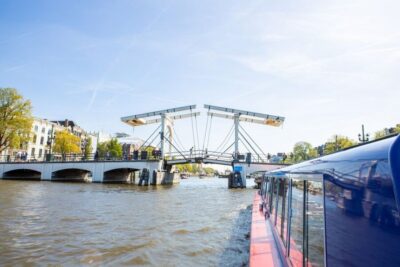

Browse the lists this tour appears in