
REVIEW · CYCLING TOURS
Amsterdam in World War Two Cycle Tour
Amsterdam feels different when you bike it. This WWII cycle tour takes you through Amsterdam South using the exact streets where occupation forces acted, with historical photos matched to what you see today. You’ll get the contrast that buses and museum walls cannot.
Two things I really liked: the way the guide links each stop to names and decisions, not just dates, and the vintage photos that show the same corners under Nazi rule. I also enjoyed the small group size of up to six, which makes it easy to hear details and ask questions without a crowd crush.
One possible drawback: the subject matter is heavy. Even though the ride is calm and practical, you’ll hear about arrests, deportations, retaliation, and executions, all in real-world locations you can still point to on a modern map.
In This Review
- Key highlights to know before you go
- A WWII Bike Tour That Uses Side Streets, Not Museum Walls
- Meeting at Tesselschadestraat and How the Ride Actually Works
- Victorieplein, the June 20, 1943 Raid, and How Arrests Happened in Plain Sight
- Merwedeplein and the Frank Family Connection You Can See, Not Just Read
- Tilex Bar at Waalstraat 48, and Lex van Weren’s Survival Detail
- Cornelis Troostplein to Museumplein: From PBA-Baracks to Nazi Offices and Bunkers
- Roelof Hartplein Coffee Stop and the Resistance Photo Shop
- Beethovenstraat and Apollolaan, Executions in Late 1944, and Gerrit van der Veen
- Memlingstraat and Rubensstraat: SD Headquarters, Stolen Possessions, and a RAF Strike Plan
- Olympiaplein and the Registration System, with Westerbork in the Background
- Valeriusplein and the Luftwaffe Headquarters at Amsterdam Lyceum
- Queen Emma’s Statue, Flower Defiance, and May 7, 1945 Tensions
- Why Cycling Matters Here, and Who Should Book
- Price and Value: What $66.09 Buys You
- Should You Book This Amsterdam WWII Bike Tour?
- FAQ
- How long is the Amsterdam in World War Two cycle tour?
- Where does the tour start and where does it end?
- What time does the tour begin?
- How many people are in the group?
- Is the tour offered in English?
- Do I need a mobile ticket?
- Is there a restroom break during the tour?
- Should I bring my own bike?
- Can I cancel for a full refund?
- FAQ
- Is there anything I should know about the tour topic?
- Where exactly does the guide take you at the end?
Key highlights to know before you go
- Quieter Amsterdam South routes where cars can’t go, so cycling feels calmer than the center
- WWII “then and now” photos tied to exact spots, so history lands fast
- Max six riders with guides Rudy and Peter, so your questions actually get answered
- Tight pacing in 2.5 to 3.2 hours, with a brief coffee break and restroom stop
- A route built around names, from the Frank family to resistance leaders and Nazi offices
A WWII Bike Tour That Uses Side Streets, Not Museum Walls
This is the kind of Amsterdam tour that makes you slow down without standing still. Instead of getting packed into a bus, you ride through neighborhoods and side streets that feel more lived-in, and that matters because occupation-era buildings are often still there. The bike also helps you cover distance without losing the thread of the story.
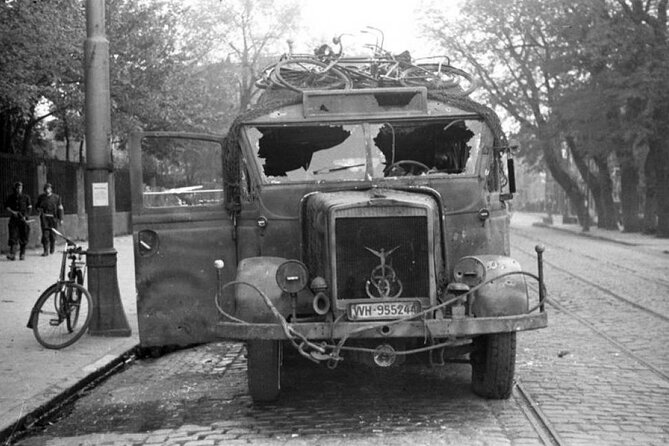
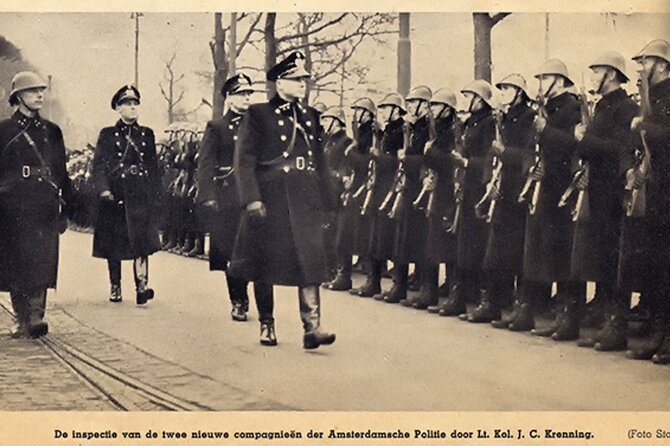
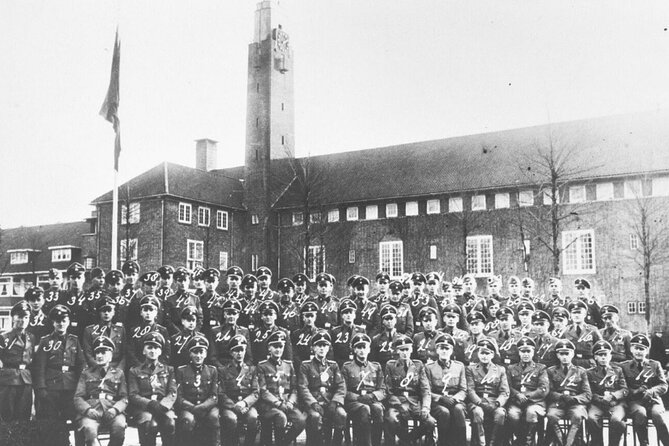
What sets this tour apart is the visual method. At multiple stops, you see WWII-era photos of the same area, then look around at today’s streets. The change is striking, but the continuity is what sticks with me, like you’re seeing layers of the same place.
And yes, you’re biking. That gives you a rhythm: ride, stop, orient yourself, look at the photo, then take in what the building footprint still tells you. When it’s done well, it beats walking tours that turn into stop-and-go crowd management.
More Bike Tours in Amsterdam
- Big Bike tour Amsterdam – See all in 3 unforgettable hours
★ 4.7 · 4,929 reviews - Small Group Guided Bike Tour of Amsterdam’s Hidden Gems
★ 5.0 · 3,936 reviews - Amsterdam: Off the Beaten Path Bike Tour in French
★ 4.9 · 1,632 reviews
Meeting at Tesselschadestraat and How the Ride Actually Works
The tour starts at Tesselschadestraat 1, 1054 ET Amsterdam. It begins at 11:00 am and runs roughly 2 hours 30 minutes to 3 hours 10 minutes, then you cycle back to the meeting point.
It’s offered in English, and you’ll receive a mobile ticket. The group stays small, with a maximum of six travelers, so the pace feels controlled and safe, not chaotic. The guides you’ll hear most about are Rudy and Peter, and multiple stops are delivered with the kind of local specificity you only get from people who have spent years around these streets.
One practical note: bring your own bike. The tour experience is built for riders, and the whole point is using cycling access to reach parts of Amsterdam that you would struggle to do quickly on foot.
Also plan to be comfortable riding through city streets. You’re not doing a fitness marathon, but this is still an active, outdoor tour. A coffee and restroom break is built into the middle, so you’re not stuck without a pause.
Victorieplein, the June 20, 1943 Raid, and How Arrests Happened in Plain Sight
The first major stop is at Victorieplein, a square that was called Daniël Willinkplein during the war. The guide anchors you on June 20, 1943, when a large raid took place in Amsterdam. At the foot of the skyscraper, Jewish citizens were arrested during what the Nazis called a Judenaktion.
This is one of those moments where the location does the emotional work. You’re looking at a spot in 2026 that still reads like a normal city corner, yet you’re being shown how mass arrests were carried out with local involvement. The tour explains that Dutch police units and Dutch volunteers from the NSB assisted, and then people were transported to places like Olympiaplein for registration before being sent to the Westerbork concentration camp in the east of the Netherlands.
If you want context without the fluff, this opening is strong. It frames the tour around a core idea: the occupation was not only German. It was also systems and people operating inside occupied Amsterdam.
Merwedeplein and the Frank Family Connection You Can See, Not Just Read
Next comes Merwedeplein 37-II, described with the building’s floor reference you’ll still hear today through the guide’s explanation. This was home to the Frank family, and the tour connects it to the summer of 1942, when Otto Frank took his family and acquaintances to “Het Achterhuis,” the Secret Annex on the Prinsengracht.
There’s also a statue commemorating Anne Frank on Merwedeplein. I like that the stop doesn’t rush past the public memory. It helps you understand that this wasn’t abstract history, it was people living normal days that were then shattered.
Then the tour shifts from home to diary publication. Around the corner is the Waalstraat bookstore area, where the story links to the first edition of Het Achterhuis published in 1947. The guide makes the point that Otto Frank bought the diary there for his daughter, which is a human detail that turns the broader timeline into something personal.
A small practical takeaway: if you walk away from this stop with only one thought, make it that the diary story has a physical trail in Amsterdam. You can still follow it.
A different way to spend an afternoon around Amsterdam:
- Amsterdam: Van Gogh Museum Ticket
★ 4.7 · 52,054 reviews - Amsterdam: Heineken Experience Ticket including 2 Drinks
★ 4.6 · 36,014 reviews - Amsterdam Classic Saloon Boat Cruise with Drinks and Cheese
★ 5.0 · 31,825 reviews - Amsterdam Luxury Canal Cruise + Unlimited Drinks & Bites option
★ 5.0 · 30,518 reviews
Tilex Bar at Waalstraat 48, and Lex van Weren’s Survival Detail
At Waalstraat 48, you’ll hear about a place that is now Café Blek. During the occupation, it was once the Tilex Bar, associated with Tilly and Lex, and the guide ties it to Lex van Weren’s survival.
The key detail here is grim but clarifying: Lex van Weren survived Auschwitz because he had to play his trumpet at executions. That kind of story is hard to hear, but it also explains how survival sometimes depended on forced roles within the machinery of terror.
I also appreciate how the stop connects history to specific people rather than keeping things at the level of institutions. You’re given a name, a place, and a specific mechanism of how the Nazi system worked on an individual level.
Cornelis Troostplein to Museumplein: From PBA-Baracks to Nazi Offices and Bunkers
The tour then moves to Cornelis Troostplein 23. This spot once accommodated PBA-baracks. Before the war, the complex was called a peace parish, with two convents and a school, and the guide explains how it became a different kind of workplace under occupation.
In spring 1942, the chief of the Sicherheitsdienst (SD) and Gestapo, Rauter, inspected the PBA and met with Heinrich Himmler at Museumplein. That connection helps you see these locations as part of a wider network, not isolated buildings.
From there, the tour focuses on Museumplein as a stronghold. Facing the concert hall, you’ll hear how the houses on the left were occupied by German offices. The guide gives concrete examples, including that the United States consulate building once housed the Central Jewish Emigration office, a Zentralstelle für Jüdische Auswanderung. Next door were offices like the Ortskommandantur and the Feldgendarmerie building, and other structures held Nazi party offices and services.
Then there’s the military side. On the square in front, the IJsclubterrein became part of the fortified system, with bunkers and anti-aircraft batteries. The tour also notes that beside the concert hall, you could find the NSB headquarters in that period, and after WWII, bunkers were blown up.
This section is a big reason the bike format works. You can’t really absorb it while stuck on a single street corner in the center. Here, the ride gives your brain space to connect the dots as you move.
Roelof Hartplein Coffee Stop and the Resistance Photo Shop
At Roelof Hartplein, there’s a short stop at Café Wildschut for coffee and a restroom visit. The time is short, about 10 minutes, and the admission ticket is free for the stop.
What I like is that the break is built into the flow, so you don’t lose momentum before the tour gets more intense. It also gives you a moment to regroup, since the next stretches involve names and operations that can feel dense.
Then you’ll hear about a photo shop near the library building on Roelof Hartstraat. During the war, the Dutch resistance used the store and developed unique photos, including images tied to the first roundup of Jews in Amsterdam by the SD/Gestapo and German police. The guide adds a small monument remembering Jews taken from the neighborhood, which turns the photo story into a place you can stand in and acknowledge.
If you’re the type who likes evidence, this section hits the sweet spot. Photos become both history and documentation of what power tried to hide.
Beethovenstraat and Apollolaan, Executions in Late 1944, and Gerrit van der Veen
At the corner of Beethovenstraat and Apollolaan, the tour shifts to retaliation and resistance. In late October 1944, the guide explains that Herbert Oelschlägel, an SS officer and Sicherheitsdienst/Gestapo agent, was executed by a Dutch resistance member.
The German response was immediate and brutal. The SD/Gestapo burned down two houses and executed 29 resistance fighters. The tour also notes that the street was called Euterpestraat during the occupation, and it brings in Gerrit van der Veen as a leader of an important Dutch resistance group.
This stop works best if you let it sit. The guide is basically showing you how one act of resistance could trigger cascading violence nearby. You’re not just learning an event, you’re learning a pattern.
Memlingstraat and Rubensstraat: SD Headquarters, Stolen Possessions, and a RAF Strike Plan
One of the most detailed sections happens around Memlingstraat and Rubensstraat. Here, there were two offices tied to Nazi oppression organizations. The tour mentions the SD HQ Amsterdam, which was an SD Außenstelle under Willy Lages, and the Hausraterfassungsstelle, focused on stealing possessions of deported Jews. This operation was part of the Central Jewish Emigration office system.
A Dutch collaborator named Henneicke is identified as the leader of the Hausraterfassungsstelle. That kind of specific naming matters, because it prevents the story from becoming faceless. It also helps you see occupation as a web of roles, including collaboration.
Then you get the operation side. In November 1944, resistance members requested the Royal Air Force via a secret radio message to attack the SD/Gestapo headquarters and the Hausraterfassungsstelle. Destroying SD/Gestapo files was a main aim.
The attack is described as being carried out by Group Captain Denys Gillam DSO, DFC, AFC, leader of 149 (Typhoon) wing. The tour also points out a resistance safehouse on the corner of Rubensstraat and Gerrit van der Veenstraat, and you’re told to look for a Stolperstein at the address.
One more detail closes the loop: in June 1944, the address was betrayed to the SD/Gestapo by a female informant, referenced as V-Frau. This is heavy, but the tour doesn’t pull punches, and it ties betrayal to consequences you can still read into the street geography.
Olympiaplein and the Registration System, with Westerbork in the Background
At Olympiaplein and Parnassusweg, the tour returns to the raid and what happened after arrests. Jewish people arrested during the June 1943 raid at the sports complex were registered by the SD/Gestapo with help from Jewish camp police sent from Westerbork concentration camp.
That “with help” detail is not there for shock value. It underlines how the Nazi system used administrative processes and forced participation to make deportations function. You’re not only learning about violence. You’re learning about organization, control, and the steps that turned people into paperwork.
On a bike, this stop feels especially direct. You move, you stop, you look, then you carry the story forward to the next institution you’ll see.
Valeriusplein and the Luftwaffe Headquarters at Amsterdam Lyceum
At Valeriusplein, near the Amsterdam Lyceum, the guide places this school building as Luftwaffe headquarters near the end of the occupation. It’s another example of how normal civic space got repurposed for military control.
I like this stop because it keeps the tour grounded in everyday structures. Schools, offices, bars, photo shops, even squares that look like recreation spots. In occupied Amsterdam, nothing stayed only one thing for long.
Queen Emma’s Statue, Flower Defiance, and May 7, 1945 Tensions
The tour also includes a stop at the statue of Queen Emma on Emmalaan and Prins Hendriklaan. In summer 1940, people placed flowers at the statue as an act of defiance against German occupiers.
This is a different emotional tone from the earlier stops, and I think it’s important. The story doesn’t only cover fear and destruction. It includes quiet resistance, like showing up with flowers when it was risky to do so.
The guide also brings in Charles Breijer, a resistance photographer mentioned earlier with the photo shop story. You hear that Breijer took a photo in 1944 of a guard at the headquarters of the Kriegsmarine.
The tour ends with the moment after surrender. When Germans surrendered on May 7, 1945, dangerous situations arose between frustrated German troops and resistance fighters. The guide points you toward a monument marking victims of one of the shootings on the last day.
From there, you cycle through Vondelpark toward Leidseplein and back to the meeting point where you started. It’s a good way to close: you leave the heavy stops behind, but you’re still on the same streets, still in the same city layers.
Why Cycling Matters Here, and Who Should Book
You’ll cover more ground by bike than walking, and that’s not just convenience. It lets you connect multiple occupation zones in the south without exhausting yourself, so the story stays coherent from stop to stop.
You’ll also see a side of Amsterdam that feels more neighborhood than postcard. Since the route focuses on Amsterdam South and areas cars can’t easily reach, the tour avoids the most congested parts of the city. It feels easier to pay attention, and that helps with the heavy history.
This tour is a great fit if you:
- like history that is tied to specific street corners
- want WWII context outside a museum building
- enjoy small-group tours with time to talk
It may not be the best fit if you:
- are not comfortable cycling city streets for around 2.5 to 3 hours
- prefer not to hear detailed accounts of arrests and executions
Price and Value: What $66.09 Buys You
The price is $66.09 per person, and for me the value comes from three things. First, you get a full narrative arc, not scattered trivia. You’re guided through a sequence of sites tied to raids, offices, resistance work, and the final surrender chaos.
Second, you get the photo method. Then-and-now visuals at the exact location make the information stick. That’s a huge upgrade over tours that just point at plaques.
Third, you get small-group attention. With a maximum of six travelers, the guide can slow down when you want more detail. Multiple stops also include names of key figures, like Otto Frank, Lex van Weren, Herbert Oelschlägel, Gerrit van der Veen, Henneicke, Denys Gillam, and Charles Breijer, which turns the tour into something you can keep thinking about later.
Even the brief coffee and restroom stop at Roelof Hartplein helps your energy. That little piece of practical planning matters when the content is intense.
Should You Book This Amsterdam WWII Bike Tour?
If you want a WWII tour that feels real because it’s on real streets, I’d book it. The small group, the bike format, and the vintage photos make it easier to understand how occupation worked day by day in Amsterdam South.
I’d think twice only if you find heavy topics hard to hear. Otherwise, this is one of those experiences that gives you context you can’t get from a single museum stop. And once you know these places, you’ll notice them differently the next time you ride past the same squares and buildings in Amsterdam.
FAQ
How long is the Amsterdam in World War Two cycle tour?
The tour runs about 2 hours 30 minutes to 3 hours 10 minutes.
Where does the tour start and where does it end?
It starts at Tesselschadestraat 1, 1054 ET Amsterdam, and it ends back at the same meeting point.
What time does the tour begin?
The start time listed is 11:00 am.
How many people are in the group?
The tour has a maximum of six travelers.
Is the tour offered in English?
Yes, it is offered in English.
Do I need a mobile ticket?
Yes, the tour uses a mobile ticket.
Is there a restroom break during the tour?
Yes. There is a short stop at Café Wildschut on Roelof Hartplein for coffee and a restroom visit.
Should I bring my own bike?
Yes. The tour is designed for cycling, and you should plan to bring your bike.
Can I cancel for a full refund?
Yes. You can cancel up to 24 hours in advance for a full refund.
FAQ
Is there anything I should know about the tour topic?
It focuses on WWII history in Amsterdam, including raids, deportations, resistance, and executions, so expect serious content.
Where exactly does the guide take you at the end?
The tour ends back at the meeting point after cycling through Vondelpark toward Leidseplein.
Newest bookings around Amsterdam
- Amsterdam Breakfast Cruise on Private Luxury Boat★ 5.0 · 5 reviews
- Amsterdam-West Food Tour with local guide★ 5.0 · 16 reviews
- Amsterdam: Explore the Van Gogh Museum & His Masterpieces★ 3.5 · 64 reviews
- Van Gogh Museum Tour excluding Entrance Tickets★ 5.0 · 16 reviews
- Van Gogh Museum with Audio Guide★ 3.5 · 80 reviews
- Van Gogh Museum Ticket with Audio Guide and Unlimited Access Time★ 5.0 · 25 reviews
- Van Gogh Museum Entry Ticket and Guided Tour★ 4.5 · 48 reviews
- Van Gogh Museum Private Tour★ 5.0 · 5 reviews
Cycling Tours, compared.
Big Bike tour Amsterdam – See all in 3 unforgettable hours
Read our review →
Small Group Guided Bike Tour of Amsterdam’s Hidden Gems
Read our review →
Countryside Bike Tour from Amsterdam: Cheese, Clogs & a Windmill
Read our review →
Windmill, Cheese, and Countryside E-Bike Tour
Read our review →
Browse the lists this tour appears in