REVIEW · AMSTERDAM TOURS
24 Jan: Organ Favourites at Westerkerk Amsterdam
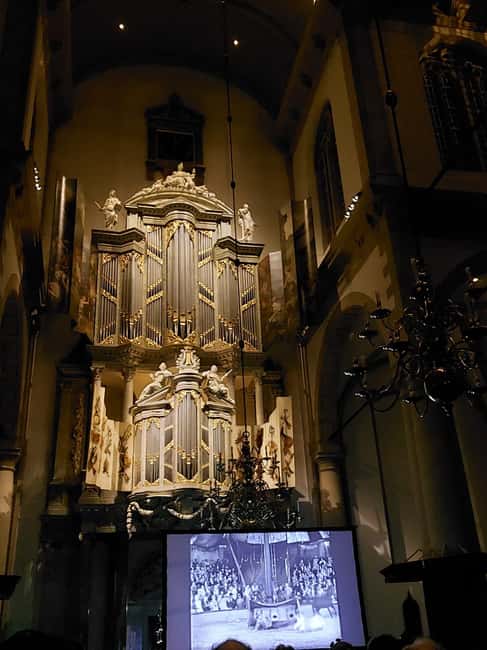
One hour, one monumental organ, in Amsterdam. This candlelit Westerkerk recital brings you face to face with the Duyschot organ, while the church itself feels like a page from the Dutch Golden Age. I especially love the way the sound carries in a big Protestant space, so even familiar pieces feel fresh.
Two things really make this stand out for me: the lineup of Bach, Buxtehude, Wagner, Franck, and other favorites, and the setting around it. You are not just listening to a concert, you are inside Westerkerk, a landmark where Rembrandt was buried and where Anne Frank wrote about hearing the church clock tower chimes nearby.
One possible drawback: candle lighting is not something you can fully control. If conditions are off, you may get the warmth and atmosphere of a church without the full candle effect, and it can also run cool in a stone building, so dress for it.
In This Review
- Key things I’d make sure you notice
- Why this Westerkerk organ recital feels different than most concerts
- Getting oriented inside the Westerkerk (and what the building does to the sound)
- The Duyschot organ: 1686 craft, Dutch Baroque sound, and why it matters
- The music program: Bach to Bach again, with big-composer variety
- Evan Bogerd and the value of performance that stays readable
- The Westerkerk setting: Rembrandt, Anne Frank, and the church clock tower
- Duration and pacing: how to plan your hour in Amsterdam
- Price and value: is $26 for one hour worth it?
- Who this recital suits best
- Should you book this Westerkerk organ recital?
- FAQ
- How long is the organ recital at Westerkerk?
- Where does the concert take place?
- Who is playing the organ?
- What organ is featured?
- When does this recital happen?
- Which composers are on the program?
- Does the concert have a specific ending piece?
- Is the organist shown during the recital?
- Is it wheelchair accessible?
- Is candle lighting guaranteed?
Key things I’d make sure you notice
- The Duyschot organ (built in 1686), one of the big reasons to choose this recital at Westerkerk.
- Evan Bogerd at the console, and the chance to follow along with his playing on a big screen.
- The church setting itself: Westerkerk is the largest built Protestant church in the Netherlands.
- Rembrandt’s memorial stone and the feeling of standing in the same space tied to major Dutch artists.
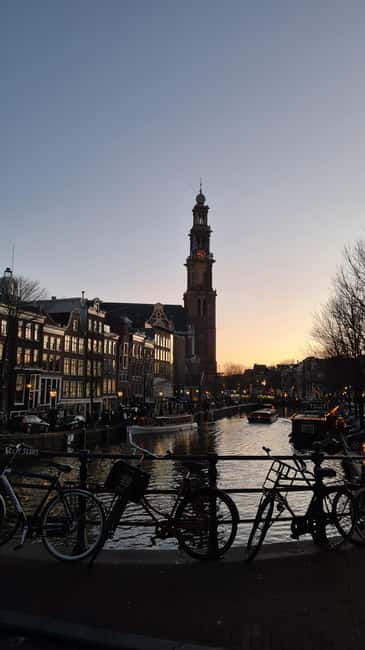
- Anne Frank’s clock tower chimes, referenced in her diary, which adds an extra layer to the listening.
- The finale with Bach’s Toccata in D minor, a crowd-pleaser that lands differently in a historic room.
Why this Westerkerk organ recital feels different than most concerts
There are plenty of classical concerts in Amsterdam. What makes this one special is the combined effect of instrument, building, and context. The Westerkerk is not a background. It is part of the music.
Start with the Duyschot organ. Built in 1686, it represents a Dutch Baroque sound world, with the kind of resonance and articulation that can make a slow passage feel carved rather than merely played. Organ music also has an unusual advantage for your focus: there is no stage business to distract you. When Bogerd leans into the sound, your attention just follows the harmonies.
Then add the fact that you are in a church where major history sits quietly under your feet. Rembrandt is buried here, and the memorial stone gives you a concrete point to link the music to real people. That connection matters. It turns what could be a straightforward hour of listening into something more personal.
A handful of other Amsterdam outings
- Amsterdam: Van Gogh Museum Ticket
★ 4.7 · 52,054 reviews - Amsterdam: Heineken Experience Ticket including 2 Drinks
★ 4.6 · 36,014 reviews - Amsterdam Classic Saloon Boat Cruise with Drinks and Cheese
★ 5.0 · 31,825 reviews
Getting oriented inside the Westerkerk (and what the building does to the sound)
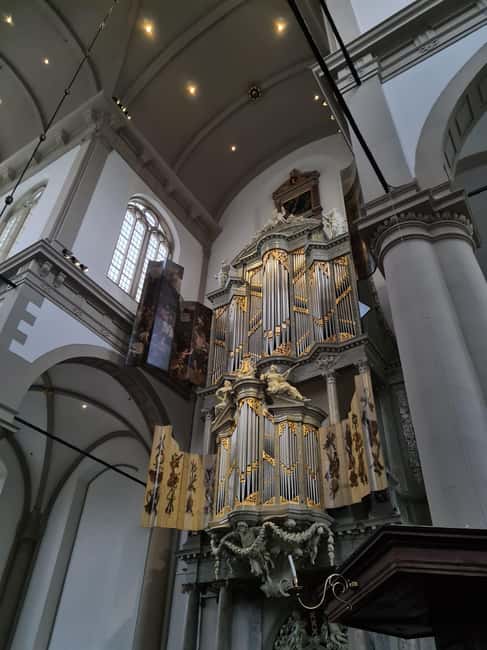
Westerkerk is the largest built Protestant church in the Netherlands, so your first impression is scale. Even before the organ begins, you can feel the space shaping how sound travels. That is a big deal for organ music, because the instrument’s full voice needs a room that can catch and carry it.
Plan to arrive with a calm mindset. You are not there to sprint through a checklist. You are there to sit, listen, and let the architecture work on the audio. In a place this tall and open, the music often feels slightly wider, like you are hearing the “air” around the notes, not just the notes themselves.
You will also likely appreciate seeing the organist in action. The recital includes a way for you to follow along on a big screen, so you can connect what you hear with what he is doing at the console. That helps a lot if you do not read organ music. Even if you do, it makes the performance easier to track, especially during quick registrations and changes in tone.
The Duyschot organ: 1686 craft, Dutch Baroque sound, and why it matters
If you care about “where the sound comes from,” the Duyschot organ is the headline. It was built in 1686, which is a sweet spot for hearing Dutch Baroque organ culture: strong structure, clear voices, and a knack for drama that does not rely on volume alone.
What I like about this setup is that you get the full visual plus audio story. The massive organ shutters are painted, and that matters more than it sounds. They were painted by Gerard de Lairesse, an acquaintance of Rembrandt van Rijn. That means the instrument is not only a machine of pipes. It is also a piece of art linked to the same cultural world as the people commemorated in the church.
And because this is an organ recital, the variety in tone is built into the instrument. Organ pieces in the Bach and Buxtehude world often feel like conversations between registers, while other composers on the program bring different colors. You can hear that play out on a well-preserved Dutch Baroque instrument, and it gives the hour a sense of momentum.
The music program: Bach to Bach again, with big-composer variety
The recital is themed around organ favorites, with pieces by Bach, Buxtehude, Wagner, Franck, Mussorgsky, and other well-loved composers. That mix is a smart choice. It prevents the program from becoming one long mood, and you get multiple ways the organ can speak.
Bach and Buxtehude tend to reward attentive listening. You hear the structure. You also hear the logic behind the drama. When people call them layered or intricate, this is what they mean, but you do not need to be an expert to enjoy it. The organ makes patterns audible, and you start spotting how the music “turns corners.”
Then the program steps into other emotional ranges with Wagner and Franck, and even Mussorgsky, which broadens the palette beyond what many listeners expect from a typical organ-only set. Even if you only recognize a couple of names, you can usually tell when the composer shifts style, because the organ colors change.
The key moment is the ending. The concert concludes with Bach’s famous Toccata in D minor. That finale is not just famous, it is famous for a reason, and in a room like Westerkerk it can feel like the building itself joins in. If you remember only one part, make it that last stretch, and give it your full attention.
A different way to spend an afternoon around Amsterdam:
- Amsterdam Luxury Canal Cruise + Unlimited Drinks & Bites option
★ 5.0 · 30,518 reviews - Amsterdam: Rijksmuseum Entry Ticket
★ 4.7 · 29,512 reviews - Amsterdam: Classic Saloon Boat Cruise with Cheese & Wine
★ 4.6 · 27,035 reviews - Amsterdam: Evening Cruise with Optional Wine and Snacks
★ 4.4 · 22,178 reviews
Evan Bogerd and the value of performance that stays readable
The performer here is organist Evan Bogerd. One of the reasons I’d pick a specific named organist for this kind of recital is that organ playing is not just technical. It is also about pacing, shaping, and knowing when to let the sound bloom and when to keep it tight.
You also get a performance support tool: you can see the organist playing on a big screen. That helps you understand what you are hearing. For organ music, the physical choices matter. What he presses, when he changes registrations, and how he balances multiple voices all shape the sound you experience.
I’d also mention the energy around the performance. Recent recitals connected to this event have been described as lively and memorable, with more than just one person involved in the on-stage setup. You do not have to hunt for details, but it is usually a sign the event is handled with care, not treated like a quick add-on.
The Westerkerk setting: Rembrandt, Anne Frank, and the church clock tower
Listening to organ music is one thing. Listening inside a church tied to major Dutch stories is another. Westerkerk gives you that second layer right away.
Rembrandt van Rijn is buried in the Westerkerk, and you can also visit his memorial stone. Even if you did not plan to tour the church as a museum, having that anchor point makes the space feel less generic. It turns the recital into an experience with a human map.
Then there is Anne Frank. She was hiding next door, and she mentioned hearing the church clock tower chimes in her diary. The idea that those chimes were part of her daily moments adds a quiet gravity to the setting. When the church sounds in the background, you are reminded that this building is not frozen in the past. It has kept time through real lives.
This is the kind of context that makes you listen differently. You start tracking not only musical notes, but also the space between them. And you might notice how chimes, echoes, and room reverb influence the mood of the pieces you are hearing.
Duration and pacing: how to plan your hour in Amsterdam
The recital is one hour long. That is a sweet duration for a day in Amsterdam. It fits neatly between museum time and dinner, and it does not force you into a half-day commitment.
Because it is only an hour, you will want to think about your arrival. Give yourself enough time to get seated comfortably and settle your focus before the music starts. In a big church, it is easy to end up feeling rushed if you show up at the last minute, and the whole point is calm listening.
Also, dress for the building. One caution from real experience is that even in a candlelit concept, a stone church can feel cold. If you run chilly, wear layers you can sit in for an hour. Warm socks and a thicker outer layer make a noticeable difference.
Price and value: is $26 for one hour worth it?
At about $26 per person for a one-hour organ recital, the value is strong, especially if you like classical music or you want a meaningful Amsterdam experience without paying for a long, complicated tour. You are paying for three things at once: a world-famous church space, a specific historic instrument (the Duyschot organ built in 1686), and a named performer (Evan Bogerd).
The price makes sense because this is not a generic “sit in a hall” concert. You are in Westerkerk, the biggest built Protestant church in the Netherlands, tied to Rembrandt and connected to Anne Frank’s diary through the clock tower chimes. That kind of layered setting often costs more when you buy it as separate tickets.
Is it worth it if you are not an organ fan? Maybe, but be honest with yourself. Some listeners find Bach especially demanding or even slow if they are expecting fireworks. If you prefer fast-paced music, you might still enjoy the program, but you should go prepared to listen for musical architecture and tone shifts rather than expecting constant excitement.
Who this recital suits best
This fits best if you meet at least one of these:
- You like organ music, or you want your first organ recital to happen on a historic instrument rather than a modern setup.
- You enjoy classical composers like Bach and Buxtehude, and you like hearing how they work in a real space.
- You want a distinctly Amsterdam experience that connects art, literature, and history in one hour.
- You want something elegant that does not take over your whole day.
If you are traveling with someone who is unsure about classical music, this can still work. A big instrument, a clear finale with Bach’s Toccata in D minor, and the Westerkerk setting give plenty to grab attention even if you are not deep into the genre.
If you are sensitive to cold, go in with layers, and be aware that candle lighting may not always be exactly as imagined.
Should you book this Westerkerk organ recital?
I think you should book it if you want an hour that feels specifically tied to Amsterdam, not just “a concert somewhere.” The pairing of the Westerkerk atmosphere, Rembrandt’s burial connection, and the Duyschot organ is the kind of experience that you remember because it is rooted in a real place.
Choose it with eyes open if you dislike slower classical listening or if you expect candles to be guaranteed. Also, if you have limited time, the one-hour format is ideal.
My practical advice is simple: arrive, get warm, and give the last piece your full attention. When the program lands on Bach’s Toccata in D minor, it is often the moment where the whole room and all that historic pipe sound click into place.
FAQ
How long is the organ recital at Westerkerk?
It lasts 1 hour.
Where does the concert take place?
The concert is at Westerkerk in Amsterdam.
Who is playing the organ?
Organist Evan Bogerd performs.
What organ is featured?
The recital is played on the monumental Duyschot Organ.
When does this recital happen?
It is scheduled for Saturday, January 24.
Which composers are on the program?
The program includes music of Bach, Buxtehude, Wagner, Franck, Mussorgsky, and other favorites.
Does the concert have a specific ending piece?
Yes, it concludes with Bach’s famous Toccata in D minor.
Is the organist shown during the recital?
Yes, you can see the organist playing on a big screen.
Is it wheelchair accessible?
Yes, the venue is wheelchair accessible.
Is candle lighting guaranteed?
The experience is described as candlelit, but you should be aware that conditions can affect how the atmosphere looks in practice.
Newest bookings around Amsterdam
- Amsterdam Breakfast Cruise on Private Luxury Boat★ 5.0 · 5 reviews
- Amsterdam-West Food Tour with local guide★ 5.0 · 16 reviews
- Amsterdam: Explore the Van Gogh Museum & His Masterpieces★ 3.5 · 64 reviews
- Van Gogh Museum Tour excluding Entrance Tickets★ 5.0 · 16 reviews
- Van Gogh Museum with Audio Guide★ 3.5 · 80 reviews
- Van Gogh Museum Ticket with Audio Guide and Unlimited Access Time★ 5.0 · 25 reviews
- Van Gogh Museum Entry Ticket and Guided Tour★ 4.5 · 48 reviews
- Van Gogh Museum Private Tour★ 5.0 · 5 reviews
Amsterdam Tours, compared.

Heineken Experience Ticket including 2 Drinks
Read our review →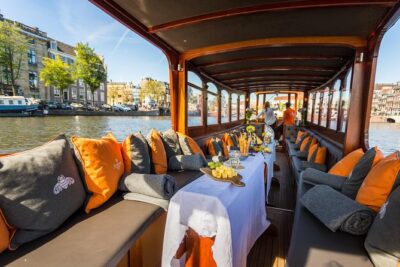
Amsterdam Classic Saloon Boat Cruise with Drinks and Cheese
Read our review →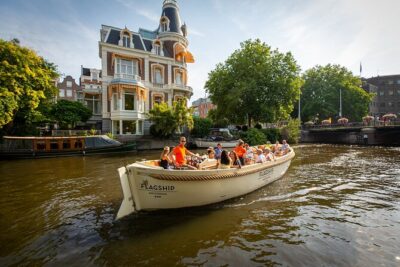
Amsterdam Luxury Canal Cruise + Unlimited Drinks & Bites option
Read our review →

Classic Saloon Boat Cruise with Cheese & Wine
Read our review →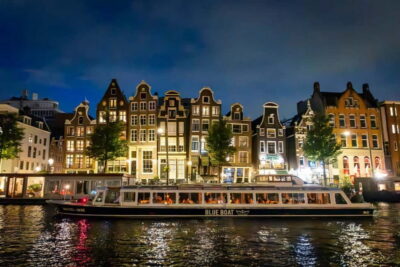
Evening Cruise with Optional Wine and Snacks
Read our review →