
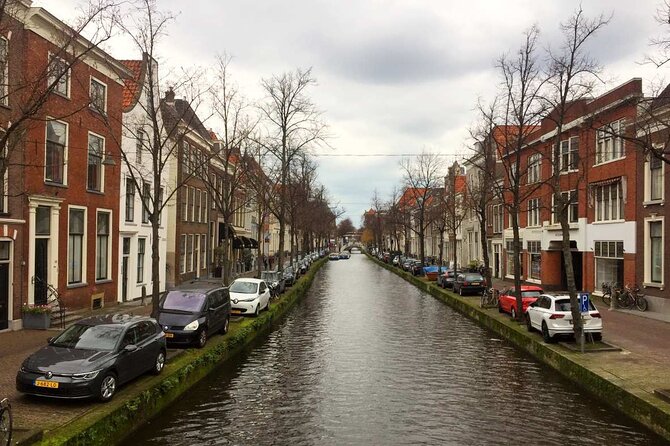
REVIEW · DELFT TOURS
The Blue’s Clues in Delft Exploration Game and Tour
A city game that turns Delft into a live puzzle. I like that it covers major landmarks like Nieuwe Kerk and the Vermeer Centrum Delft, but keeps you moving at street level instead of inside another “stand and listen” tour. I also like the flexibility, because you can pause anytime and start whenever you want. The one possible drawback is setup, if the app access process is finicky for your device.
What you end up with is a self-guided walking adventure with an app that talks you through the route, stop by stop, with questions you answer by looking around. The route ends at de Roos windmill, so the walk feels like a loop with a payoff, not just a list of photos you have to copy.
In This Review
- Key things to know before you go
- A self-guided Delft puzzle walk that runs on your phone
- Price and value: why $7.53 can feel like a bargain
- The route in plain terms: Oostpoort to de Roos windmill
- Stop 1: Eastern Gate and Delft’s Brick Gothic gate story
- Stop 2: Koornmarkt, a canal street you will actually pay attention to
- Stop 3: Medisch Farmaceutisch Museum and the fun of unusual collections
- Stop 4: An older Gothic church presence near Oude Deft
- Stop 5: Delft City Hall across from Nieuwe Kerk
- Stop 6: Markt square, Nieuwe Kerk, and the physics of a raised city center
- Stop 7: The clock tower, bells, and a connection to Hugo de Groot
- Stop 8: Vermeer Centrum Delft and the St. Lucasgilde connection
- Stop 9: Old Church roots and Delft’s charter moment
- Stop 10: Prinsenhof, William the Silent, and bullet holes in the wall
- Stop 11: de Roos windmill, Delft’s last mill memory
- The best part is how the game makes you look, not just walk
- If the app access fails, here is how to handle it
- Who should book this Delft outdoor escape game
- Should you book this Delft game?
- FAQ
- How long does the Delft escape game take?
- Do I need internet to play?
- Can I start at any time of day?
- Where do I start the game?
- Where does the game end?
- Is there a physical guide walking with me?
- Is it free for kids?
- Are service animals allowed?
Key things to know before you go
- Offline play means you can wander without worrying about cell service
- Start any hour, 24/7 so you can fit it around museums, meals, and weather
- Pause and resume whenever you want a break on a bench or at a canal viewpoint
- All group members can use their own phone at no extra charge for each person in your group
- A step-by-step app guide replaces a physical guide, so you control the pace
- Family-friendly format makes it work for kids, not just adults who like riddles
A self-guided Delft puzzle walk that runs on your phone
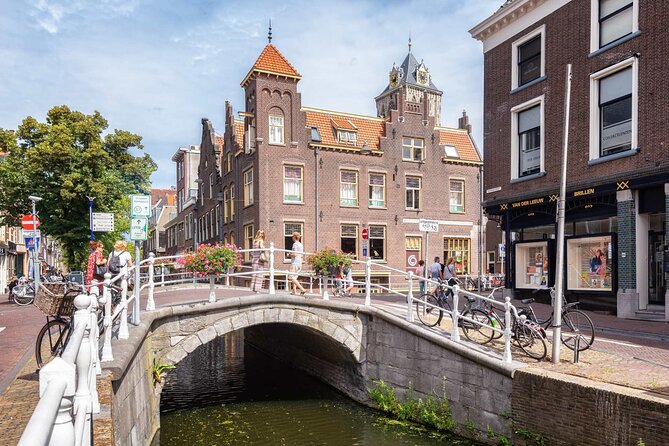
This is an outdoor escape game style tour. You follow an app through Delft and solve picture-and-reading style challenges by noticing what is in front of you. You do not need a physical guide trailing you, because the phone becomes the instructor, route planner, and hint giver.
The big practical win is that it is offline. That matters in Delft, where you want to stop often, take a wrong turn, then calmly correct course without checking data bars. The other win is flexibility. You get a game that is available 24/7 every day, and you can start at any hour, not only during a narrow morning window.
Solo works, but so does a group. Your group can each play on their own phone, and the tour is private, meaning only your group participates. So if you travel with friends or family, you get together but still have your own screen.
More Scavenger Hunts in The Hague
- Discover The Hague with a self-guided Outside Escape city tour
★ 4.5 · 35 reviews - Discover Delft with a self-guided Outside Escape city game tour!
★ 5.0 · 32 reviews - e-Scavenger hunt Delft: Explore the city at your own pace
★ 4.5 · 26 reviews
Price and value: why $7.53 can feel like a bargain
At about $7.53 per person for roughly 1 hour 30 minutes, this is priced like an activity you fit between other plans. You are not buying a guide’s time, you are buying a guided route plus challenges that keep you looking closely.
The value gets better for families. The experience is free for KIDS, and that can save real money if you are traveling with children who need something to do besides “walk and behave.” The tour also mentions group discounts, and since group members can play on their own phones free-of-charge, you are not stuck with one device for everyone.
Is it worth it if you hate puzzles? If the whole idea makes you roll your eyes, you might find it slows you down. But if you like figuring things out and you enjoy learning while you walk, it is one of those deals that feels smarter than a standard ticket.
The route in plain terms: Oostpoort to de Roos windmill
Your game starts at Oostpoort 15, 2611 RZ Delft, and it ends at Delft Windmill de Roos, Phoenixstraat 111, 112, 2611 AK Delft. The app guides you step by step, so you are not charting the entire map yourself.
The full loop runs about 1 hour 30 minutes (approx.). That is a useful duration because it is long enough to feel like you did something, but short enough that it does not hijack your whole day. I suggest pacing it like a wander with tasks. When the game asks you to look for an answer, that is your cue to slow down and scan doorways, inscriptions, and architectural details.
Also keep in mind the whole point is outdoor walking. You will be on streets and canals-adjacent areas, moving between churches, civic buildings, and a museum. If the weather is miserable, you might still pull it off, but take breaks when the app allows you to pause.
Stop 1: Eastern Gate and Delft’s Brick Gothic gate story
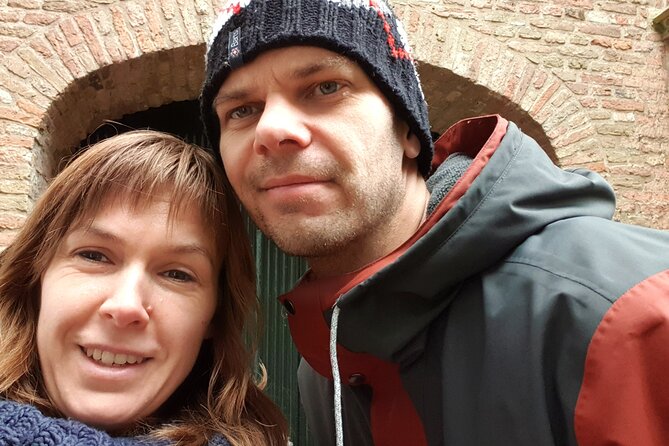
Your first challenge is at the eastern gate in Delft, a Brick Gothic structure built around 1400. Later, around 1510, the towers were enhanced with an extra octagonal level and high spires. This is the only city gate still standing in Delft, while other gates were demolished in the 19th century.
For the game, the challenge is simple and effective: you have to look around to find the information that moves you forward. This is the kind of first stop that gets your brain switched on. You start noticing material, shapes, and time periods right away, instead of saving the attention for later.
A different way to spend an afternoon around The Hague:
- The Hague: Mauritshuis Entrance Ticket
★ 4.7 · 2,706 reviews - The Hague: Madurodam Miniature Park Entry Ticket
★ 4.6 · 1,559 reviews - The Hague: The Pier SkyView Ticket with Drink and Snack
★ 4.4 · 1,398 reviews - The Hague: Hop-on Hop-off Heritage Tram Tour
★ 4.5 · 1,311 reviews
Stop 2: Koornmarkt, a canal street you will actually pay attention to
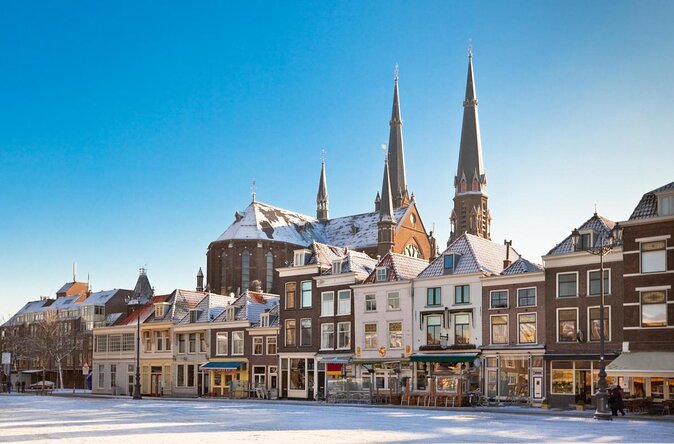
Next comes Koornmarkt, often associated with Delft’s canal-and-street rhythm. This area is part of what makes Delft feel like a lived-in city rather than a museum backdrop.
The game uses the same approach again, you look for the answer on-site and use what you see to advance. It is a nice change of pace because you are not only reading buildings. You are also learning how the street and water layout work together, and that helps the rest of the walk click into place.
Stop 3: Medisch Farmaceutisch Museum and the fun of unusual collections
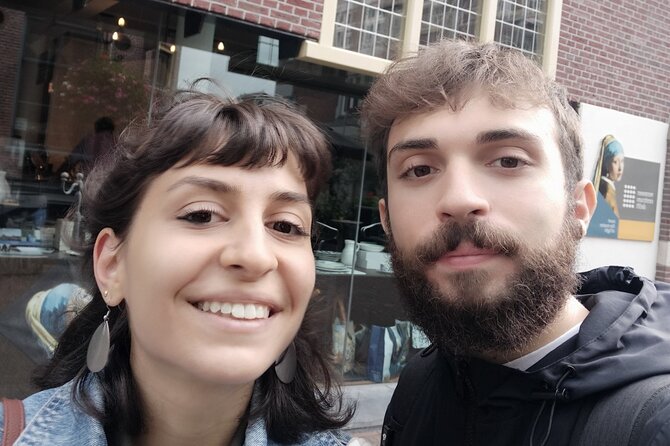
At the Medisch Farmaceutisch Museum, you shift from big civic landmarks to a niche collection: antique medical and pharmaceutical instruments. Even if you are not usually a museum person, the game format makes this easier to enjoy because you approach the building with a question to solve.
This stop also gives you variety. A Delft itinerary can become all churches and squares if you are not careful. This one adds something tactile and odd in a good way, the kind of detail that turns a standard walking route into a real memory.
Stop 4: An older Gothic church presence near Oude Deft
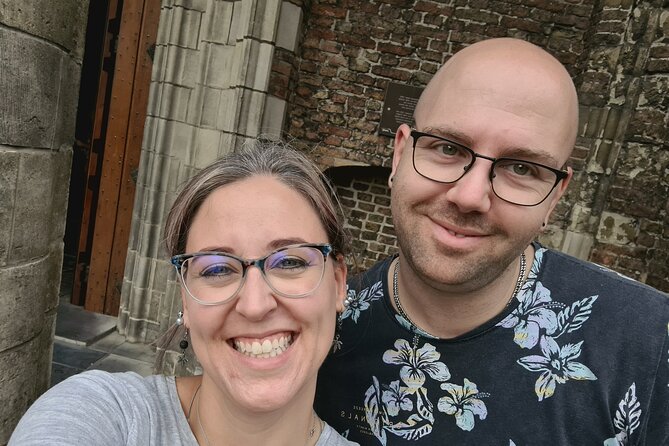
One of the stops focuses on a church built around 1400 in Gothic style and marked as a Rijksmonument since 1967. It sits on the east side of Oude Deft, and the game has you look around to find what you need to progress.
If you enjoy architecture, this is a strong moment. Gothic buildings are full of repeating patterns, and the game nudges you to pay attention long enough to notice the differences. Even if you do not know the technical terms, you can still spot how the style shapes the feel of the street.
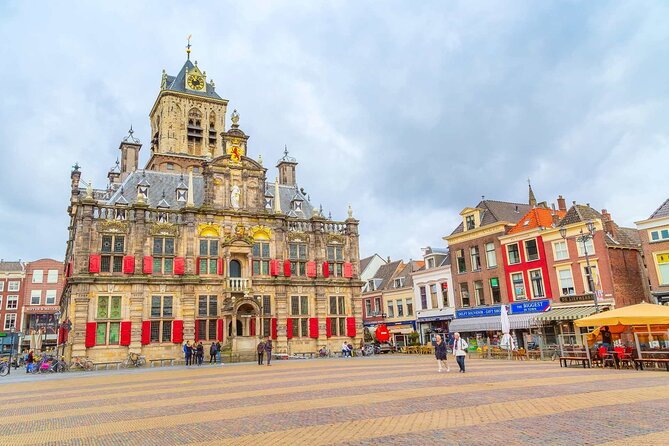
Stop 5: Delft City Hall across from Nieuwe Kerk
Next up: Delft’s City Hall, a Renaissance style building on the Markt across from Nieuwe Kerk. It is the city government seat and also known for civic wedding ceremonies. Most administrative functions moved to an office inside the Delft railway station building, but the City Hall remains a public landmark.
The game continues with your eyes doing the work. You scan the building and surrounding area to find the detail that unlocks your next step in the storyline. This stop is also a good one for people-watching, because the Markt area is where Delft’s everyday life overlaps with the historic look.
Stop 6: Markt square, Nieuwe Kerk, and the physics of a raised city center
The Markt is one of Delft’s largest historic market squares in Europe, about 120 by 50 meters. The square is almost rectangular, bordered by Nieuwe Kerk to the east and the town hall to the west. Side streets also connect into the Market.
Here is the practical context the game can help you remember: the Markt sits on a silted creek ridge, raised by a tidal channel called de Gantel. That means Delft’s core center is slightly higher ground, which you can feel in the way streets and buildings relate to one another.
In the game, this stop is another look-around challenge. On a square this size, it helps to take 20 seconds to choose a spot where you can see multiple landmarks at once, rather than wandering aimlessly.
Stop 7: The clock tower, bells, and a connection to Hugo de Groot
Then you get a details-heavy stop about the tower tied to Nieuwe Kerk. The tower was built between 1396 and 1496 by Jacob van der Borch. He also built the Dom in Utrecht between 1444 and 1475. There is also a monument for Hugo de Groot from 1781.
And yes, the clock has real personality. It includes a mechanical clock with 18 bells by Francois Hemony from 1659, plus 30 modern bells. This is the kind of information that is easy to overlook on a standard walk, but the game approach makes you stop long enough to notice the structure and clock details.
If you are traveling with kids, this is a great moment because bells and time are naturally fun. If you are traveling solo, it is still satisfying because the architecture becomes more than a backdrop. It becomes a system with specific makers and dates.
Stop 8: Vermeer Centrum Delft and the St. Lucasgilde connection
The Vermeer Centrum Delft is not just about paintings on walls. The building has its own past: it was once home to the St. Lucasgilde, a guild of painters and glass makers in the 17th and 18th century. Vermeer joined in 1653. Saint Lucas was the patron saint of painters.
The game again asks you to look around to find what you need to move forward. Even if you do not go inside for extra museum time, this stop gives you a context layer. You start seeing Vermeer not as a lone genius in isolation, but as someone linked to a working craft community.
Stop 9: Old Church roots and Delft’s charter moment
Another religious landmark stop points you toward Delft’s older church story. The Old Church is considered founded in 1246, tied to Count William II giving the city its own charter. At the time, the church was named after St Bartholomew, patron saint of the founder. Over the centuries, it developed into an impressive Gothic basilica.
In the game, you still use the same method: look around and answer to continue. The bonus here is that even a brief encounter with a church like this can change how you interpret the rest of the walk. Delft’s civic and religious buildings start to feel connected instead of random.
Stop 10: Prinsenhof, William the Silent, and bullet holes in the wall
The Prinsenhof is an urban palace built in the Middle Ages as a monastery, then later a residence for William the Silent. He was murdered in 1584, and the description includes a detail you can still see today: holes in the wall made by bullets at the main stairs.
This stop adds drama without turning the walk into theme park mode. The game keeps you focused on discovering the clues on-site, and that makes the historical note stick in your head. You are not just reading the story, you are standing near the physical evidence.
Stop 11: de Roos windmill, Delft’s last mill memory
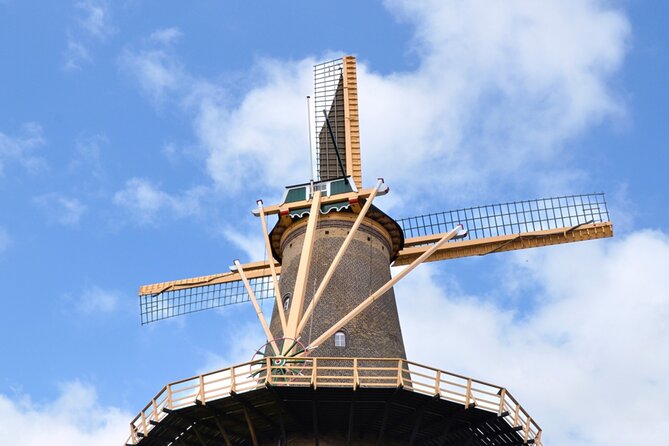
Your final stop is the de Roos windmill (The Rose). It was built in 1679 and used for grinding corn. The first mention of a mill at that location goes back to 1352. Best of all, de Roos is the only remaining windmill of fifteen that once stood in the Delft region.
This end point is a smart choice. A windmill is a clear visual marker, and it feels like a “mission accomplished” finish line after churches, squares, and museums. The game’s final look-around challenge gives you a last chance to slow down and take the area in.
The best part is how the game makes you look, not just walk
The best reviewed aspect, in my view, is that it helps you learn the not-so-obvious things about Delft while you walk outdoors. Instead of treating landmarks as backdrops, you are forced to pay attention to the specifics. That is why a self-guided game can beat a standard route. It trains your eyes in real time.
Two practical features make it easier to enjoy:
- Pause anytime: you can step into shade, grab a snack, or take a photo without the guilt of falling behind.
- Offline play: you spend your attention on Delft, not on your phone’s signal.
One consideration to keep in mind is pacing. A puzzle tour can feel slower than a pure sightseeing stroll, especially if you read everything. If you like to move fast, set a gentle rhythm: solve the challenge, then spend a short free moment absorbing the area before the next stop.
If the app access fails, here is how to handle it
One downside shows up in the experience feedback: sometimes the game fails to start after purchase due to a complicated setup flow. If that happens, you should treat it as an access problem, not a lost vacation day.
The support path mentioned is straightforward. Use the app or website chat for help, or email [email protected] to get walked through the process. Since the system relies on codes that unlock game access inside the Questo app, double-check that you are following the exact instructions sent to you after booking.
A simple travel habit helps too: plan to arrive with a little slack time. Start the app setup early enough that you are not stuck troubleshooting right at the first landmark.
Who should book this Delft outdoor escape game
This is a great match if you:
- want an independent way to explore Delft without booking a time slot
- like puzzles and reading small details on buildings
- prefer flexible touring with pause and resume
- are traveling with kids, since it is free for KIDS
- want a private activity for your group that still allows everyone to use their own phone
If you dislike walking, or you hate any type of clue hunt, you may find it frustrating. But if you enjoy turning sightseeing into a game, it is an easy yes.
Should you book this Delft game?
I think you should book it if you want a low-cost, flexible way to get a structured walk across Delft’s major sights, while still discovering the details that make the city feel specific. The combination of offline play, self-guided control, and a route that finishes at de Roos windmill makes it feel like an actual experience rather than a checklist.
Skip it only if you know you will struggle with app setup, or if you would rather have a human guide explain everything from start to finish.
FAQ
How long does the Delft escape game take?
It runs about 1 hour 30 minutes (approx.).
Do I need internet to play?
No. You can play offline while exploring.
Can I start at any time of day?
Yes. You can start at any hour, and the experience is available 24/7.
Where do I start the game?
The start point is Oostpoort 15, 2611 RZ Delft, Netherlands.
Where does the game end?
It ends at Delft Windmill de Roos, Phoenixstraat 111, 112, 2611 AK Delft.
Is there a physical guide walking with me?
No. You are guided step by step by the app, and there is no physical tour guide included.
Is it free for kids?
Yes. The experience is free for KIDS.
Are service animals allowed?
Yes. Service animals are allowed.
Newest bookings around The Hague
- Delft: City Walk with Audio Guide in 7 Languages on your Phone★ 5.0 · 4 reviews
- 3 Course Walking Dinner in Delft with Guided Tours in Between★ 5.0 · 3 reviews
- The Hague: City Walk Audio Guide in 7 Languages on your Phone★ 3.5 · 5 reviews
- e-Scavenger hunt The Hague: Explore the city at your own pace★ 3.5 · 10 reviews
- The Hague Private Walking Tour with a Local★ 4.0 · 29 reviews
- The Hague Scavenger Hunt and Highlights Self Guided Audio Tour★ 3.5 · 8 reviews
- Private Guided City Tour of The Hague & Mauritshuis Museum Entry★ 4.5 · 10 reviews
- Royal The Hague Private Guided Walking Tour★ 4.5 · 21 reviews
Delft Tours, compared.


Rotterdam, Delft and The Hague Day Trip from Amsterdam
Read our review →
Rotterdam, Delft and The Hague Small Group Tour from Amsterdam
Read our review →

The Hague, Delft and Rotterdam Small-Group Tour (Max. 8 People)
Read our review →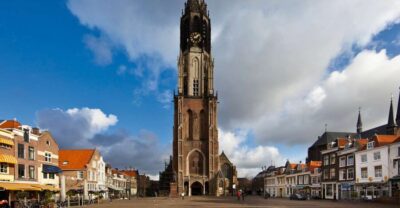
Rotterdam, Delft, The Hague Day Tour Incl. Madurodam/Royal Delft
Read our review →Browse the lists this tour appears in