
REVIEW · HIDDEN GEMS WALKING TOURS
Small Group Hidden Gems Tour in Amsterdam
Amsterdam gets personal on this guided walk. In about two hours with a max group size of 12, you’ll move between major landmarks and lesser-known stories about rights, faith, and resistance, with guides often singled out for calm, engaging storytelling (Elizabeth, Tanja, and Astrid are names that come up again and again). I also like the practical value of the price, $48.16, because the stops are ticket-free and you are paying for the guide’s perspective, not museum add-ons.
One possible drawback: the pace is brisk and most stops are short exterior moments, so if you love to linger, you may want to plan extra time on your own after the tour ends.
In This Review
- Key things I’d circle before you go
- Why this 2-hour Amsterdam story walk feels worth it
- Getting oriented on Amstel: where you meet and where you finish
- A theme you can actually feel: rights, outsiders, and people who acted
- Dutch National Opera and Ballet: a small building with a huge milestone
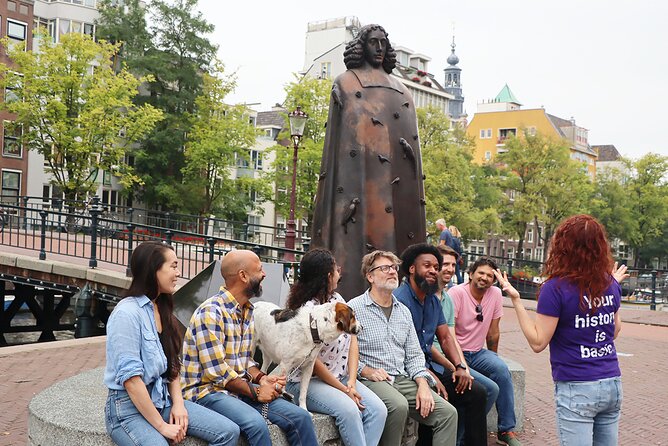
- Spinoza Monument: modern philosophy through the lens of being an outcast
- Mozes en Aaronkerk: the 17th-century free Black community you might miss
- Portuguese Synagogue of Amsterdam: faith, persecution, and a hidden route
- Hortus Botanicus: two Indonesian rebels with very different paths
- De Burcht: diamonds, labor, and rights that show up in daily life
- ARTIS Amsterdam Royal Zoo: flamingos plus influential Amsterdammers
- University of Amsterdam campus: suffrage and diplomacy in one sweep
- H’ART Museum: why fame rises and falls through a family link
- What kind of traveler this suits best
- Booking timing and weather reality
- Should you book this Amsterdam hidden-history style walk?
- FAQ
- How long is the Small Group Hidden Gems Tour in Amsterdam?
- How many people are in the group?
- Is the tour offered in English?
- Do I need to buy admission tickets for the stops?
- Do I get a mobile ticket?
- Where do I meet the guide?
- Where does the tour end?
- Is the tour refundable if I cancel?
- What happens if the weather is bad?
- Are service animals allowed?
Key things I’d circle before you go
- A small group, up to 12 people, so questions actually get answered
- English-language tour with a mobile ticket
- Ticket-free stops across nine locations, meaning you focus on stories, not entrances
- Spinoza, Jewish history, and free Black community life show up in quick, memorable snapshots
- End at H’ART Museum on Amstel so you can roll right into your next stop
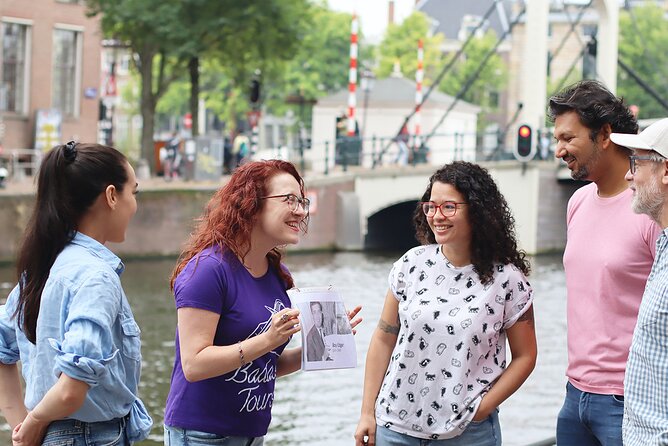
- Guides get praised for inclusivity and accessibility efforts, including making room for wheelchair and hearing limitations
Why this 2-hour Amsterdam story walk feels worth it
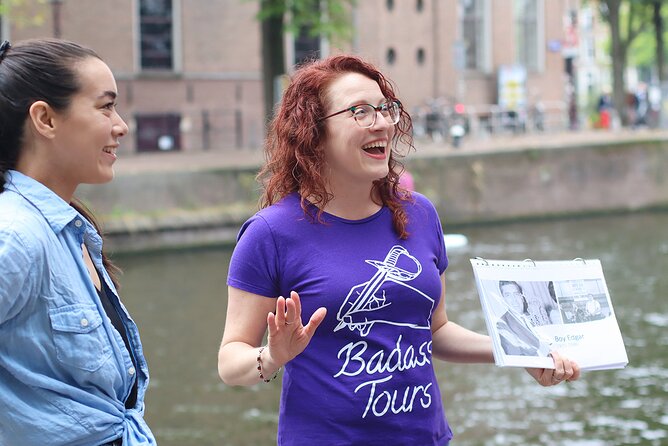
This is the kind of tour that makes Amsterdam feel bigger than the usual canal photos. You get a focused route with short stops that connect people and ideas to real places, from philosophy and minority communities to labor rights and WWII resistance. It is not a museum marathon. It is a sharp guided route that helps you see what you would miss on your own.
At $48.16 per person for about two hours, the value comes from the format: you are paying for a guide who can turn street-level landmarks into human stories. Since each stop is listed as ticket free, you are not stacking extra costs on top of the ticket price. That matters in Amsterdam, where a lot of worthwhile culture can get pricey fast.
More hidden-gem walks in Amsterdam:
- Small Group Guided Bike Tour of Amsterdam’s Hidden Gems
★ 5.0 · 3,936 reviews - Amsterdam: Hidden Gems & Highlights Guided Bike Tour
★ 4.8 · 1,404 reviews - Amsterdam City Highlights and Hidden Gems – Private & Custom Tour
★ 5.0 · 231 reviews
Getting oriented on Amstel: where you meet and where you finish
The tour starts at Amstel 23, 1011 PT near Monument Megadlé Jethomiem (meeting point). You finish at H’ART Museum (formerly the Hermitage Museum), Amstel 51, 1018 EJ, with the tour ending in front of the museum.
That start-to-finish flow is helpful. You begin near the central Amstel area, and you end at a recognizable site that is easy to work into the rest of your day. Since the format is walking between stops, I’d set aside a little buffer for transit and keep your phone charged for the mobile ticket.
A theme you can actually feel: rights, outsiders, and people who acted
Even when a stop is brief, the tour keeps returning to a handful of big threads: people who were pushed to the margins, people who fought for dignity, and people whose choices changed what was possible. You will also notice that the stories are not only about famous names. You hear about couples, communities, and workers, plus the ways institutions and public spaces shaped life.
If you like Amsterdam as a city of trade, canals, and clever architecture, you will still get that. But you also get a more honest angle on who benefited, who was excluded, and how communities built support networks anyway.
Dutch National Opera and Ballet: a small building with a huge milestone
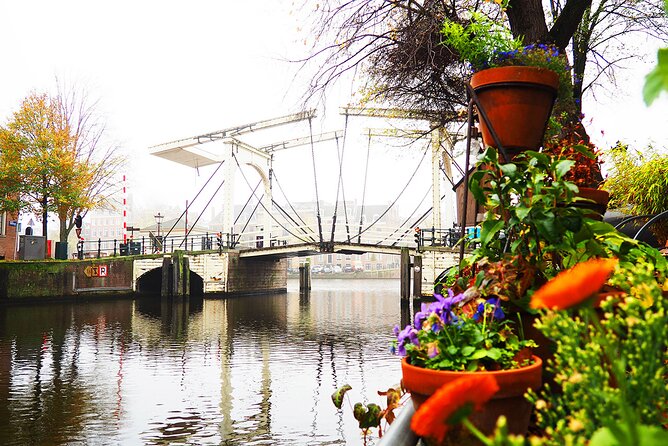
Your first stop is the Dutch National Opera & Ballet area. The story here is about the world’s first gay marriage, tied to an unassuming setting that most people would walk past without a second thought.
The practical payoff is how quickly the tour sets expectations. Within minutes, you learn to look at the city differently. Instead of treating landmark facades like backdrops, you start treating them like witnesses to real social change.
A handful of other Amsterdam outings
- Amsterdam: Van Gogh Museum Ticket
★ 4.7 · 52,054 reviews - Amsterdam: Heineken Experience Ticket including 2 Drinks
★ 4.6 · 36,014 reviews - Amsterdam Classic Saloon Boat Cruise with Drinks and Cheese
★ 5.0 · 31,825 reviews - Amsterdam Luxury Canal Cruise + Unlimited Drinks & Bites option
★ 5.0 · 30,518 reviews
Spinoza Monument: modern philosophy through the lens of being an outcast
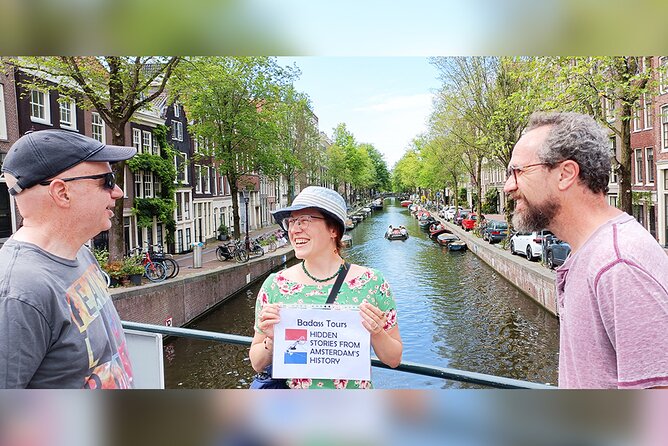
At the Spinoza Monument, the focus shifts to Baruch Spinoza and why his ideas made him an outcast in his own community. This is short, but the message lands: philosophy is not just books and big names, it can cost you belonging.
If you are the type who likes context, this stop gives you it in plain terms. You are reminded that ideas have consequences, and that communities police what they consider acceptable.
Mozes en Aaronkerk: the 17th-century free Black community you might miss
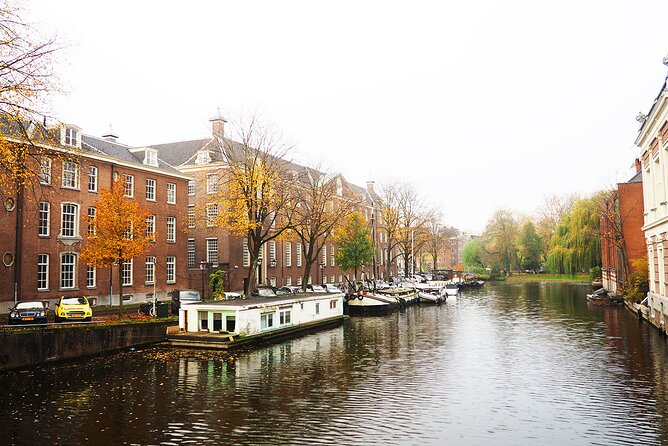
Next comes the Mozes en Aaronkerk, where you hear about the life of a couple in Amsterdam’s free Black community in the 17th century. This is one of those stops that feels quietly powerful because it refuses the usual shortcut of telling only one version of Amsterdam’s story.
What I like here is that the tour treats people as individuals, not symbols. A couple’s life becomes a doorway into the broader reality of community, safety, and social position during a period when most outsiders were not being centered at all.
Portuguese Synagogue of Amsterdam: faith, persecution, and a hidden route
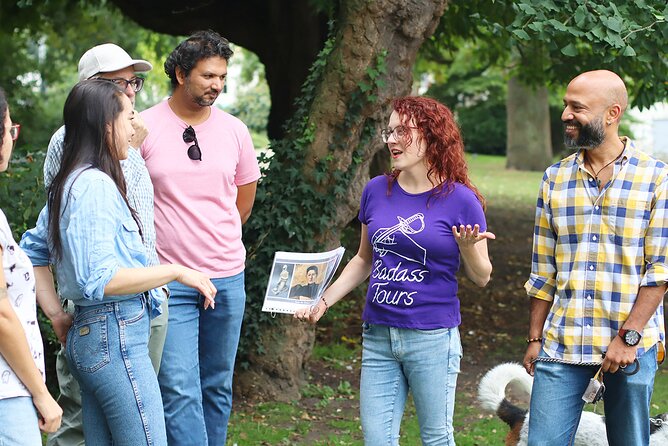
At the Portuguese Synagogue of Amsterdam, the story turns toward the Spanish and Portuguese Inquisitions and an heiress who helped create an underground railroad-style network. You are standing in a place that carries religious significance, and the tour connects that setting to real-world escape and survival.
This stop can hit hardest if you prefer history that explains how ordinary and not-so-ordinary people responded to terror. It is also a good moment for respectful attention, since the topic is weighty and the space is meaningful.
Hortus Botanicus: two Indonesian rebels with very different paths
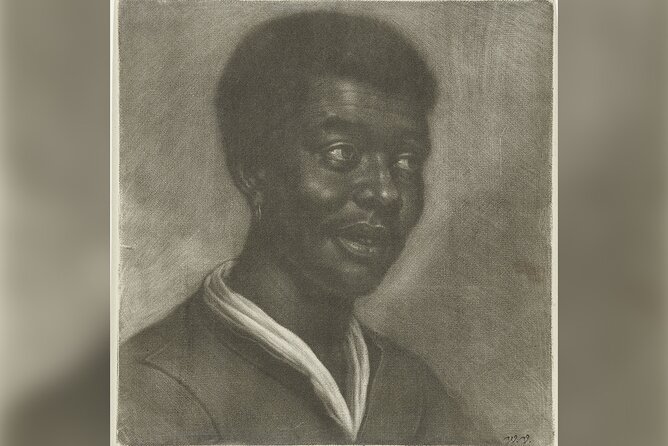
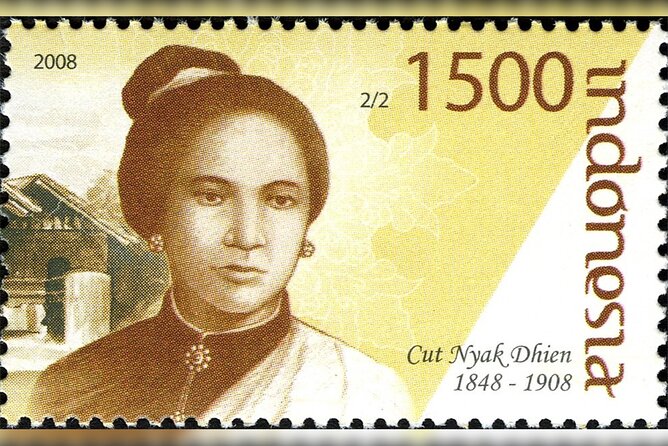
At Hortus Botanicus, you hear about two Indonesian rebels and revolutionaries who lived dramatically different lives. This is a reminder that Amsterdam’s story includes far-reaching global connections, not just local canals and domestic politics.
Because this stop is only around 10 minutes, it works best if you come with an open mind. Think of it like a guided nudge: enough detail to spark curiosity, not enough to satisfy everyone’s desire for deep specialization on the spot.
De Burcht: diamonds, labor, and rights that show up in daily life
At De Burcht, the talk moves to Amsterdam’s long diamond history and the workers’ union that built the iconic building. The story ties that labor effort to rights that citizens rely on today.
This is one of the most practical theme stops. It shows you how economic systems and civic rights can connect through real people doing real work. You also get a different lens on Amsterdam’s famous wealth, one that includes who built it and how power was contested.
ARTIS Amsterdam Royal Zoo: flamingos plus influential Amsterdammers
The route passes ARTIS Amsterdam Royal Zoo, and you learn while you are near the flamingos. The bigger hook is a set of stories about influential Amsterdammers, from groundbreaking artists to WWII resistance heroes.
The value here is contrast. A zoo can feel like a break from history, but the tour uses it as a stage for people who shaped culture and fought back. If you are traveling with someone who wants something lighter in the middle, this stop can help the tour breathe.
University of Amsterdam campus: suffrage and diplomacy in one sweep
At the University of Amsterdam, you cross the main campus area and learn about an influential suffragist and a world-changing diplomat. The stop is about 15 minutes, which gives you enough time for the guide to connect their roles without turning it into a lecture.
This is also a smart moment for photography, since campus buildings often give you a more expansive Amsterdam feel. Just remember, the most important part is the names and ideas, not the postcard angle.
H’ART Museum: why fame rises and falls through a family link
The final cultural stop is H’ART Museum, which the tour frames with a story about the rise and fall of a household-name figure. The key idea is that family connections can shape whether someone becomes famous, and how an entire story gets told over time.
This finish works well because you end right in the place where the building itself becomes part of your walking narrative. Even if you do not plan to enter the museum, you will likely look at it with more context than when you started.
What kind of traveler this suits best
This tour is ideal if you want:
- A small-group walk where a guide can answer questions and adjust to your pace
- A more human Amsterdam, focused on social change, minority stories, and the people behind institutions
- Quick stop-and-go history that helps you plan smart follow-up stops on your own
It may not be ideal if you want long indoor time at each location, or if you prefer tours that treat each stop as a full museum visit. With around nine stops in roughly two hours, the tour is designed to move, so you will get snapshots, not deep immersion at every site.
Booking timing and weather reality
The tour is commonly booked about 16 days in advance, which is a good sign for planning. It also requires good weather. If the tour gets canceled due to poor weather, you are offered a different date or a full refund, so you do not have to stress about losing the money if it is a washout day.
Should you book this Amsterdam hidden-history style walk?
Yes, if you want Amsterdam history that feels personal and ethically grounded, with ticket-free stops and a guide who turns landmarks into stories you will remember while walking around later. The pricing is also easier to justify here because you are paying for guidance and interpretation, not a stack of entry fees.
You should think twice if you get restless with short stops or you need long quiet time inside buildings. This tour favors momentum and meaning in equal measure, and it works best when you treat it like the start of a bigger history day, not the whole day.
FAQ
How long is the Small Group Hidden Gems Tour in Amsterdam?
It runs for about 2 hours.
How many people are in the group?
The tour has a maximum of 12 travelers.
Is the tour offered in English?
Yes, it is offered in English.
Do I need to buy admission tickets for the stops?
The listed stops are shown as ticket free.
Do I get a mobile ticket?
Yes, the tour uses a mobile ticket.
Where do I meet the guide?
The start point is Amstel 23, 1011 PT Amsterdam (near Monument Megadlé Jethomiem).
Where does the tour end?
The tour ends in front of H’ART Museum (formerly the Hermitage Museum) at Amstel 51, 1018 EJ Amsterdam.
Is the tour refundable if I cancel?
Yes. You can cancel up to 24 hours in advance for a full refund.
What happens if the weather is bad?
The experience requires good weather. If it is canceled due to poor weather, you will be offered a different date or a full refund.
Are service animals allowed?
Yes, service animals are allowed.
Newest bookings around Amsterdam
- Amsterdam Breakfast Cruise on Private Luxury Boat★ 5.0 · 5 reviews
- Amsterdam-West Food Tour with local guide★ 5.0 · 16 reviews
- Amsterdam: Explore the Van Gogh Museum & His Masterpieces★ 3.5 · 64 reviews
- Van Gogh Museum Tour excluding Entrance Tickets★ 5.0 · 16 reviews
- Van Gogh Museum with Audio Guide★ 3.5 · 80 reviews
- Van Gogh Museum Ticket with Audio Guide and Unlimited Access Time★ 5.0 · 25 reviews
- Van Gogh Museum Entry Ticket and Guided Tour★ 4.5 · 48 reviews
- Van Gogh Museum Skip the Queue with Audio Guide★ 4.0 · 261 reviews
Hidden Gems Walking Tours, compared.

Small Group Guided Bike Tour of Amsterdam’s Hidden Gems
Read our review →

Amsterdam City Highlights and Hidden Gems – Private & Custom Tour
Read our review →
Amsterdam Private Tour: Highlights & Hidden Gems by Bike or Foot
Read our review →
E-Bike Tour, Amsterdam’s Highlights and Hidden Gems
Read our review →

Amsterdam’s Hidden Gems and Street Art Bike Tour
Read our review →
Personalized Hidden Gems of Amsterdam Private Tour with a Local
Read our review →Browse the lists this tour appears in