
REVIEW · DELFT TOURS
Private Tour of Delft & Rotterdam with Cube House and Transfer
Two cities, one smart walking route. This private tour turns Delft and Rotterdam into a connected story, with guided stops from the Prinsenhof to modern icons like the Cube House.
I like that the guide style is built for real learning, the kind where history sticks because someone explains it clearly. I also like the practical value: the train between cities is included and you get inside access to one of the Cube House apartments.
One thing to consider is that it is primarily a walking tour, not a drive-through bus loop. If rain hits, or if you need to keep steps low, you will want to plan around pace and breaks.
In This Review
- Key highlights you will actually care about
- Delft on foot: Prinsenhof, Oude Kerk, and the Vermeer route
- Grote Markt to Beestenmarkt, then Delft Station on the move
- Train to Rotterdam Blaak: a quick leg that saves hassle
- Cube Houses inside access, then Oude Haven and Het Witte Huis
- Markthal ceiling art and Sint-Laurenskerk’s surviving tower
- Price and pace: is $228.78 worth it?
- Who should choose this private tour?
- Should you book this Delft and Rotterdam tour?
- FAQ
- How long is the Delft and Rotterdam private tour?
- What is included in the tour price?
- Do I need tickets for the Cube House?
- Is the tour private?
- Where does the tour end?
- Is pickup available?
Key highlights you will actually care about
- Private guide, just your group: you can ask questions and steer the flow a bit.
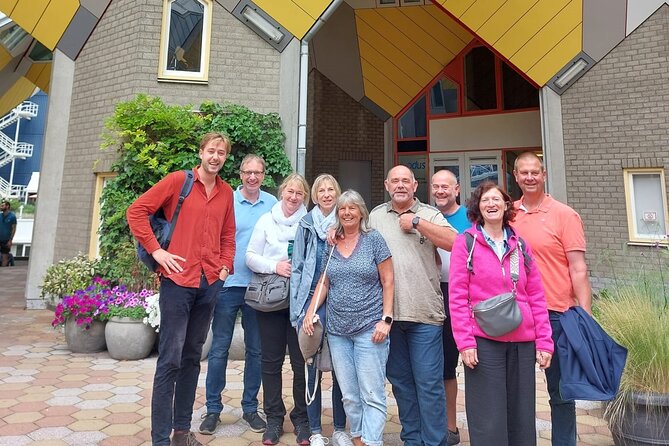
- Cube House interior visit included: not just photos from the outside.
- Train transfer included (18 minutes): saves hassle, and the fare is built in.
- Vermeer stop-by-stop connections: you get pointed locations tied to View of Delft.
- Rotterdam’s “survival” landmarks: churches and the White House tied to wartime history.
- Markthal: look up, not just around: the big interior artwork is part of the payoff.
Delft on foot: Prinsenhof, Oude Kerk, and the Vermeer route
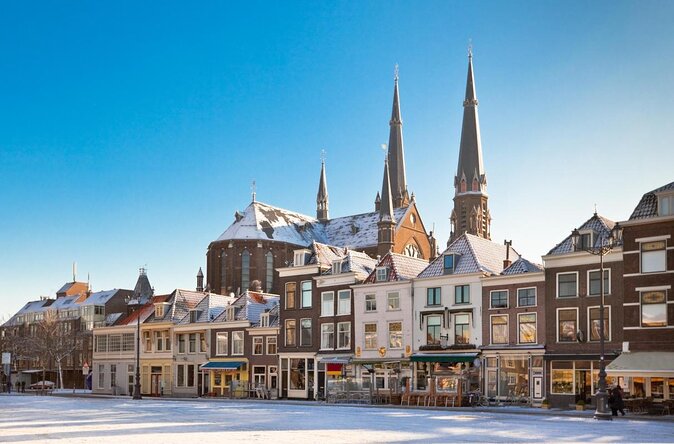
Delft is where the tour slows down in the best way, because the city is made for walking and the details reward you. You start at Museum Prinsenhof Delft, stepping into a setting that played a deciding role in Dutch history. Even if you only skim what is in front of you, the guide frames why this corner mattered, so it feels less like random sightseeing and more like a timeline you can walk through.
Next comes the Old Church, a recognizable landmark tied to Delft’s old brewing quarter. The fun part here is how the guide links the building to the city’s working life. You also get to see the skewed nature of the church, and you will hear the story behind it. It is the kind of small surprise that makes people stop without realizing they are holding their phone at arm’s length.
A few steps away is the Gemeenlandshuis van Delfland, known for its heavily decorated facade. You will learn what it was for and why it was important, which helps you understand why Delft cared about civic power, trade, and water management long before modern conveniences.
Then the tour introduces a theme you will keep seeing in different forms: art, especially Vermeer. The stops later make the connections feel purposeful, not like trivia, and Delft is the right place to do it.
More Delft outings:
- Royal Delft: Delftblue Factory and Museum Admission Ticket
★ 4.5 · 145 reviews - Walking Tour of Delft – The City of Orange and Blue
★ 5.0 · 50 reviews - Vermeer Centrum Delft Museum Admission Ticket
★ 4.0 · 45 reviews
Grote Markt to Beestenmarkt, then Delft Station on the move
From the Old Church area, you move toward the Stadhuis Delft by way of the Grote Markt. The old town hall dates to the 13th century, and it is exactly the kind of building you would pass quickly on your own. With a guide, you get the “why this matters” part, so the architecture becomes a clue.
You then reach the New Church, famous for being the second-highest church in the Netherlands and for royal burials. If you have energy for an extra climb, there is an optional tower visit. Just know it is a pretty serious climb, so I would treat it as a choose-your-own-adventure moment, not a default.
One of my favorite parts of Delft on this route is the walk along the canal toward the Armamentarium. This former weapons armory of the V.O.C. helps explain how Delft fit into the Golden Days of the Dutch Republic. It also includes a very specific art connection: you will be shown the exact spot where Vermeer was standing when he made View of Delft. That alone turns a short stop into a memorable one, because you can almost match the place to the painting’s viewpoint.
Then you head back north to the Maria van Jessekerk. This is the first Catholic church built in the city center, and you will notice something odd about its two towers. The other payoff is another Vermeer connection: it stands on the spot where Vermeer used to live and work on his paintings.
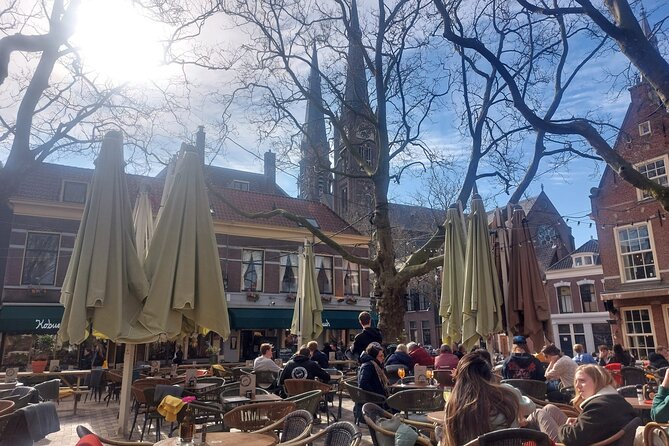
Finally, the Beestenmarkt arrives as a breather. This square is described as Delft’s coziest spot and a good target for lunch or a beer if you want to extend your day. The guide will also explain that in the past the square had a different function, so you leave with a sense of how roles change over centuries.
After Beestenmarkt, you walk toward Station Delft for the train leg. I like this structure. It prevents the day from feeling like one random loop, and it also gives you a natural transition point to get off your feet for a bit.
Train to Rotterdam Blaak: a quick leg that saves hassle
The tour uses the train from Delft to Rotterdam Blaak, only about 18 minutes. The fare is included, and you are told it costs €4.10, which matters because it avoids one more payment step during a busy itinerary.
Even better, the ride is described as a chance to see farmland and also the city of Schiedam along the way. It turns the transfer into something small but real, instead of just a waiting room between cities.
A note on timing: the tour runs about 4 to 5 hours total, so that short train segment is a practical way to squeeze in both cities without burning your whole day. When you plan your energy, treat this as your built-in rest.
Cube Houses inside access, then Oude Haven and Het Witte Huis
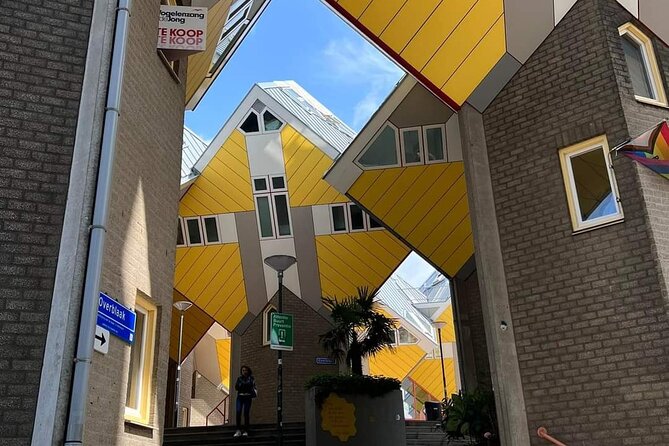
As soon as you step off in Rotterdam, you are met by the Kijk-Kubus Museum-house area, famous for the Cube Houses designed by Piet Blom. These are apartments built in the 1970s, meant as a kind of village-in-a-city concept. The key detail here is that you do not just look. You view an apartment from the inside, with the entry ticket included.
That interior access is what makes the Cube Houses worth paying for, not only because it is unusual, but because it helps you understand how the geometry feels in real life. It also gives you great photo angles without turning the visit into a frantic external-sightseeing sprint.
Next comes the Oude Haven, the Old Harbour. You will walk through a lively waterfront area with terraces, and the guide points out more Piet Blom architecture and old ships anchored for restoration. This part is nicely human-scale after the “big icon” feeling of some Rotterdam buildings.
From there, you see the Witte Huis, also called Het Witte Huis. The tour emphasizes that it dates to 1898 and is described as the oldest skyscraper in Europe. It is also noted as one of the buildings that survived the bombing of Rotterdam. In practice, this stop works because it is not abstract. You get a physical marker of resilience, and the guide ties it to what happened to the city and what endured.
A handful of other The Hague outings
- Private Tour of Delft and The Hague including Transfer
★ 5.0 · 9 reviews - Private Transfer from The Hague City to Schiphol Airport
★ 5.0 · 5 reviews - Private Tour of Rotterdam and The Hague including Transfer
★ 5.0 · 3 reviews - From Amsterdam: Keukenhof Ticket with Transfer
★ 4.4 · 4,089 reviews
Markthal ceiling art and Sint-Laurenskerk’s surviving tower
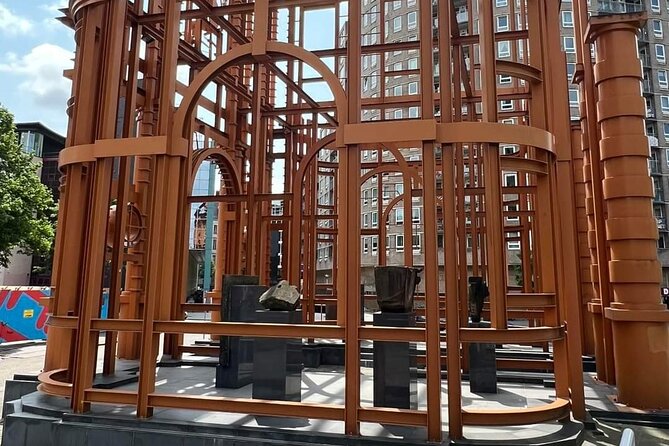
Rotterdam swings into its modern food and design era at the Markthal. You enter the Market Hall and you are encouraged to look around and also look up. The inside is described as having apartments on both sides, and there are different foods from around the world, so even if you do not stop for a meal, you can still browse the visual energy.
The guide also calls attention to one of the biggest pieces of art on the planet, which in this place means you should not just walk with your eyes at street level. If you do one thing at Markthal, make it a slow upward glance. It changes the whole experience from architecture sightseeing into design as storytelling.
Right next to Markthal is the Grote of Sint-Laurenskerk, a church dating to the 14th century. The tower is highlighted as having survived the bombing of Rotterdam, and the building is mostly used today as an event location. The contrast is striking, modern crowds in a space shaped by older faith and older survival.
The tour then wraps near Blaak again, where the original dam over the Rotte was built. There is also a practical tip here: on Tuesdays and Saturdays, there is a big outside market at Blaak. If your timing lines up, you may get a bonus taste of local street life after the guided portion ends.
Price and pace: is $228.78 worth it?
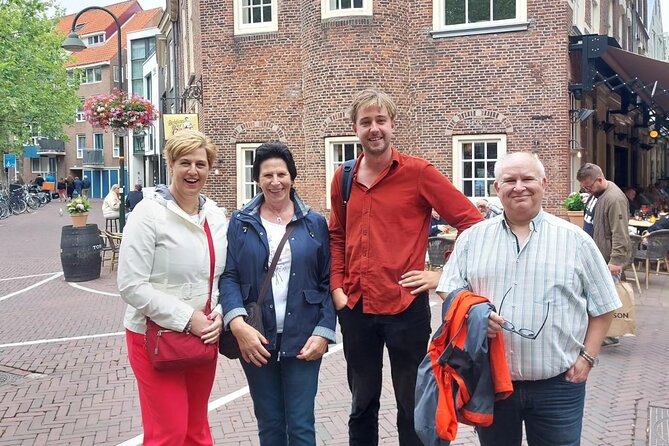
The price is $228.78 per person, and the tour targets a 4 to 5 hour window. That sounds like a lot until you break down what is actually included.
You get two private city tours, a ticket to enter a Cubic House, and the train fare between Delft and Rotterdam Blaak is included. You also get a short transfer between the two cities either by train or by car, and if you book the pickup option you can get hotel pick-up and drop-off by car, in an air-conditioned vehicle. On top of that, all fees and taxes are covered, plus you receive a mobile ticket.
Most of the Delft and Rotterdam sights on the route are marked as free to enter, which means you are mostly paying for two things: expert guiding and the one paid experience that really benefits from an inside visit, the Cube House apartment.
The main trade-off is pace. This is not a sit-and-zoom itinerary. It is designed as a walking day with short stops. In good weather it feels efficient and fun. In steady rain, you will want waterproof shoes and a plan for slower movement, especially if you have a foot issue. One review issue you should take seriously is that some people expected more driving and were disappointed when the format stayed walking-focused. Your best bet is to communicate your needs early if you want shorter stretches.
Who should choose this private tour?
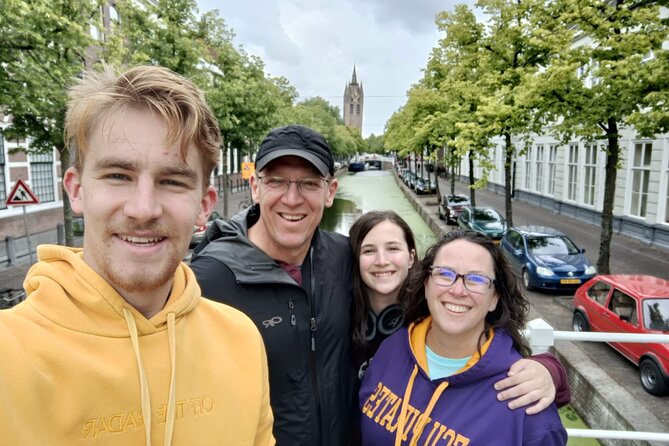
This is a smart match if you want two cities without doing logistics homework. The train link is built in, the route is tight, and the guide can connect the dots between Delft’s civic and artistic identity and Rotterdam’s architecture and survival story.
It also fits well if you like history that feels practical. The guide style here is often described as teacher-like, and names that come up include Remy, Robin, Alberto, and Tristan. The common thread in their approach is clear explanations and helpful pacing. If you have questions about Vermeer, you will be in your element. If you prefer modern design, the Cube Houses, Markthal, and Rotterdam’s skyline history will keep you interested.
If you need a very low-walking day, this may still work only with careful planning. You can’t expect zero walking within each city. But if your goal is to see the best highlights and learn the meaning behind them, this private format is a strong option.
Should you book this Delft and Rotterdam tour?
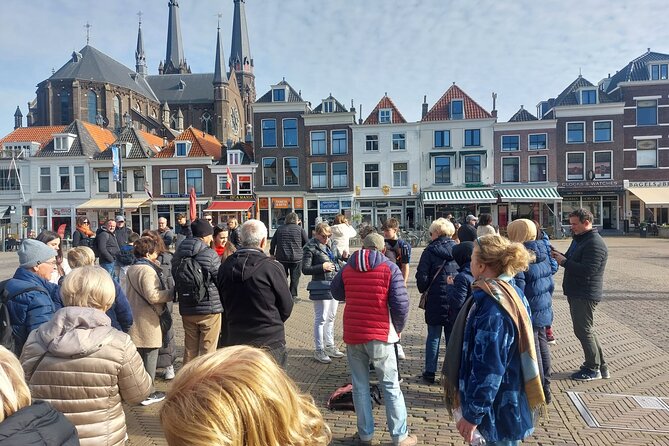
Book it if you want a guided route that connects Delft and Rotterdam into one coherent story, and you value inside access at the Cube House. The included train and the included Cube House admission help the price feel less like a markup and more like expert-led value.
Skip it or rethink it if you hate walking in rain or you need frequent step-free breaks. In that case, ask in advance how the guide will manage pacing, and consider whether the car transfer option between cities would reduce strain.
If you are flexible and enjoy learning as you go, this is an efficient, high-hit itinerary that makes both cities feel more understandable, and a lot more fun.
FAQ
How long is the Delft and Rotterdam private tour?
It runs about 4 to 5 hours.
What is included in the tour price?
The price includes two private city tours, a ticket to enter a Cube House, the train transfer between Delft and Rotterdam Blaak (18 minutes, €4.10 included), and all fees and taxes. If you choose it, pickup and drop-off by car can be included.
Do I need tickets for the Cube House?
Yes, but the ticket to enter a Cube House is included in the tour price.
Is the tour private?
Yes. It is a private tour/activity, so only your group participates.
Where does the tour end?
The tour ends in a different location than where you start, ending around Blaak in Rotterdam.
Is pickup available?
Pickup is available if you book the option that includes it. You are picked up from your selected location up to 1 hour before the tour starts and dropped off again afterwards.
Newest bookings around The Hague
- Delft: City Walk with Audio Guide in 7 Languages on your Phone★ 5.0 · 4 reviews
- 3 Course Walking Dinner in Delft with Guided Tours in Between★ 5.0 · 3 reviews
- The Hague: City Walk Audio Guide in 7 Languages on your Phone★ 3.5 · 5 reviews
- e-Scavenger hunt The Hague: Explore the city at your own pace★ 3.5 · 10 reviews
- The Hague Private Walking Tour with a Local★ 4.0 · 29 reviews
- The Hague Scavenger Hunt and Highlights Self Guided Audio Tour★ 3.5 · 8 reviews
- Private Guided City Tour of The Hague & Mauritshuis Museum Entry★ 4.5 · 10 reviews
- Royal The Hague Private Guided Walking Tour★ 4.5 · 21 reviews
Delft Tours, compared.


Rotterdam, Delft and The Hague Day Trip from Amsterdam
Read our review →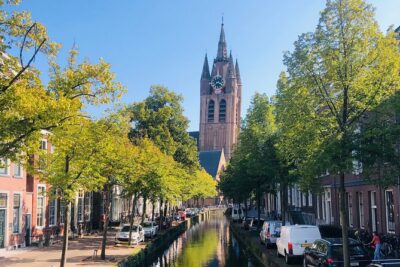
Rotterdam, Delft and The Hague Small Group Tour from Amsterdam
Read our review →

The Hague, Delft and Rotterdam Small-Group Tour (Max. 8 People)
Read our review →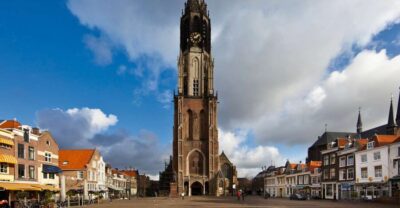
Rotterdam, Delft, The Hague Day Tour Incl. Madurodam/Royal Delft
Read our review →Browse the lists this tour appears in