
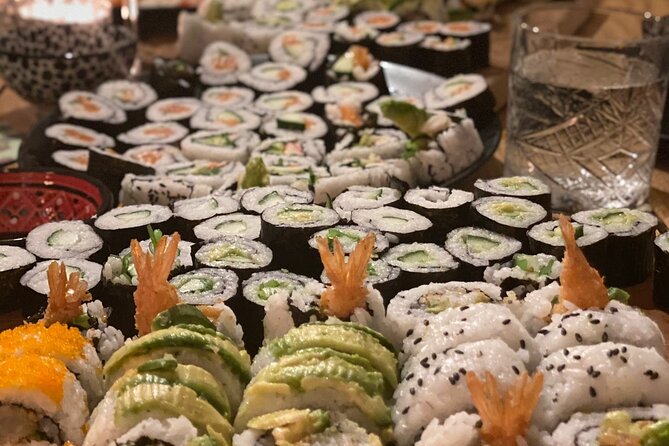
REVIEW · WORKSHOPS
Private Sushi Workshop in Hilversum
Sushi lessons in Hilversum feel surprisingly personal. In North Holland, Nigel van der Weerd and the team run a private, hands-on sushi workshop where you make four styles, then eat what you made. I like the way the coaching stays practical, starting from rice to toppings so you leave with skills, not just photos.
There are two big wins here for your time and money: you get personal guidance while you craft maki, nigiri, uramaki, and temaki, and you sit down right after to enjoy the dinner with included snacks and drinks. One thing to consider is that this works best with a group of at least 4 people, so if you’re traveling solo or as a couple, check what group size they can accommodate.
In This Review
- Key Points You Should Know Before You Go
- Hilversum Sushi Workshop, Just Outside the Amsterdam Orbit
- Price and What You’re Getting for $108.45 Per Person
- From 5:00 pm Dinner-Time to a Full 2.5 Hours of Practice
- The Sushi Skills You’ll Learn: Maki, Nigiri, Uramaki, Temaki
- Maki: the seaweed roll basics
- Nigiri: shaping that clean, compact bite
- Uramaki: the inside-out twist
- Temaki: the cone-shaped, casual bite
- How the Workshop Becomes Your Dinner (Not Just Demo Food)
- Dietary Options: Meat and Fish, or Vegetarian Adaptations
- What Makes the Teaching Style Work: Patient, Passionate, Practical
- Bringing the Workshop to Your Airbnb If You Have a Kitchen
- Who This Is Best For (And Who Might Want a Different Class)
- Final Call: Should You Book This Private Sushi Workshop in Hilversum?
- FAQ
- Where is the sushi workshop located?
- What time does the workshop start?
- How long is the private sushi workshop?
- What types of sushi will I learn to make?
- Are snacks and drinks included?
- Can this workshop be held at an Airbnb or vacation rental?
Key Points You Should Know Before You Go
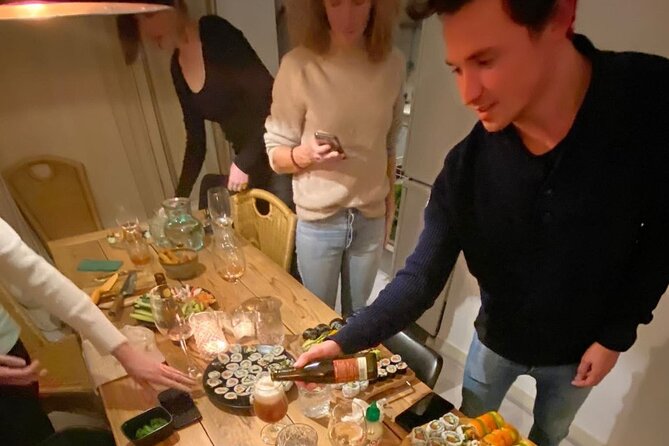
- Chef-led, private format: small-group feel with up to 10 people, guided closely by Nigel van der Weerd.
- Four sushi styles, all made by you: maki, nigiri, uramaki, and temaki, not just one or two.
- Real dinner at the end: the sushi you make becomes your meal, with wine, beer, or non-alcohol drinks included.
- Flexible menu options: meat and fish menus are possible, and it can be adapted for vegetarians.
- You can host it at your place: the workshop can come to your vacation rental if you have a kitchen.
- Built-in learn-by-doing: you’ll practice through the full process from rice to toppings, with patient instruction.
Hilversum Sushi Workshop, Just Outside the Amsterdam Orbit
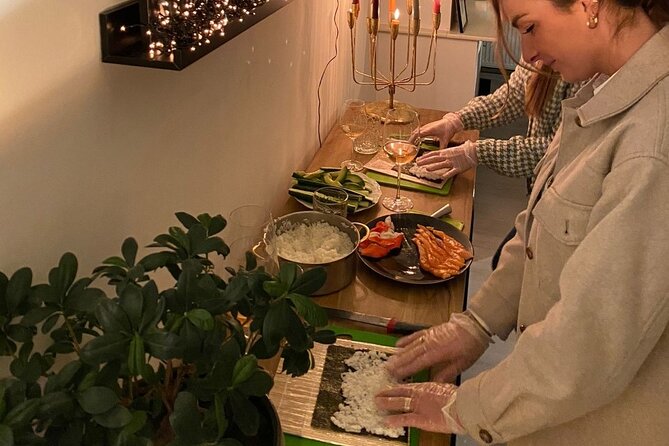
This workshop is based in Hilversum, North Holland, with the address at Kometenstraat, 1223 Hilversum. It’s close enough to Amsterdam that you still get that Netherlands-city energy, but the setting feels calmer and more local. The vibe is practical Japanese cooking, not a performance.
The experience is led by Nigel van der Weerd, who is described as a former sushi restaurant owner and chef. That matters. When the teacher has real restaurant experience, you get less generic lecturing and more of the small technique points that make sushi actually work.
From the feedback, Nigel teams up with Chantal as part of the instruction. The standout theme in the comments is that they teach with patience, passion, and knowledge. That’s what you want if you’ve never rolled maki before, or if nigiri shaping feels intimidating.
A handful of other North Holland outings
- Amsterdam: Traditional Dutch Syrup Waffle Making Workshop
★ 4.8 · 4,093 reviews - Amsterdam Traditional Dutch Syrup Waffle Making Workshop
★ 5.0 · 960 reviews - Amsterdam: Bols Cocktail Experience and Cocktail Workshop
★ 4.8 · 666 reviews
Price and What You’re Getting for $108.45 Per Person
At $108.45 per person for about 2 hours 30 minutes, the value comes from three places.
First, it’s hands-on and private. You’re not watching someone else cook. You’re making sushi during the workshop, and then eating it. That turns the session into a meal, which offsets the cost more than a typical cooking class where you leave hungry.
Second, food and drinks are included. You get snacks plus alcoholic beverages (wine or beer are included) and non-alcohol drinks as well. Sushi often pairs well with something chilled, and here you don’t have to hunt down a bar before or after.
Third, the workshop covers four different sushi types. If you’ve ever tried to learn sushi from online videos, you know one style already takes practice. Four styles in one evening is a serious payoff, especially with guidance.
The only caution on value is the group size preference. The workshop is preferably with a minimum of 4 persons. If your travel party is smaller, it may still be possible, but it’s smart to confirm availability early.
From 5:00 pm Dinner-Time to a Full 2.5 Hours of Practice
The start time is 5:00 pm, and the activity ends back at the meeting point. That’s a big deal. It’s scheduled like an early dinner, so your brain can stay in meal mode the entire class.
About timing: you’re there for roughly 2 hours 30 minutes. That’s enough time to learn rice basics and practice rolling or shaping for multiple sushi styles, without it turning into a marathon. It also fits a typical travel day, especially if you’re sightseeing earlier in Amsterdam or around the region.
This is near public transportation. Even if you’re coming by tram or bus from the Amsterdam area, you should be able to get there without relying entirely on taxis or a car.
Also, you get a mobile ticket, which is helpful when you’re juggling travel schedules and don’t want to print anything.
The Sushi Skills You’ll Learn: Maki, Nigiri, Uramaki, Temaki
This is the heart of the workshop. You’ll make four varieties: maki, nigiri, uramaki, and temaki. Each one teaches a different set of techniques, so you don’t just get one toolset.
A different way to spend an afternoon around North Holland:
- Private Electric Boat Rental in Haarlem (No License Required)
★ 5.0 · 186 reviews - Windmills Zaanse Schans small group tour-region Amsterdam
★ 5.0 · 55 reviews - Texel: Electric Fatbike Rental with Map
★ 4.8 · 28 reviews - Fresh nose tour with the canoe through the nature near Amsterdam
★ 5.0 · 26 reviews
Maki: the seaweed roll basics
Maki is the classic roll. Expect to work with rice and fillings, then form it into a neat cylinder. The chef guidance is especially valuable here because small issues like too much or too little filling can throw off the final roll. You’ll also likely get tips that make rolling easier to repeat.
Nigiri: shaping that clean, compact bite
Nigiri is the hands-on shaping style, where rice and topping come together. If you’ve only had nigiri in restaurants, making it yourself is where you understand how delicate the balance is. You’re not just assembling, you’re learning shape and texture control.
From the workshop approach described, the instruction starts from the rice and moves outward. That’s exactly the right order, because rice is the foundation for both rolling and shaping.
Uramaki: the inside-out twist
Uramaki is the inside-out roll, usually associated with California roll style. The technique is different from maki because the structure and placement feel reversed. That makes it a great second or third technique in the class, once you’ve gotten comfortable with handling rice and fillings.
Temaki: the cone-shaped, casual bite
Temaki is the hand cone. It’s often easier to start with than strict roll styles, but it still needs skill to keep the cone from collapsing. Temaki also feels fun because you can focus on filling balance and getting the angle right.
The best part of learning all four is the contrast. You start to see sushi as a set of techniques, not one mysterious product. By the end, you should feel more confident ordering sushi too, because you’ll recognize what makes each style different.
How the Workshop Becomes Your Dinner (Not Just Demo Food)
After you make the sushi, you eat it. The description is clear: the beautiful sushi you create becomes your dinner. That’s one of the smartest ways to structure a cooking class. You practice, you finish, then you enjoy right away while everything is fresh.
Drinks are included with the meal. Wine, beer, or non-alcohol options are part of the package. This is ideal if you want a true evening experience rather than a class that ends at the cutting board and sends you back out into the evening.
You should also expect snacks during the workshop. That keeps energy steady while your hands are busy learning new shapes.
One practical tip for you: since it’s an eating moment, not only a cooking moment, plan to go hungry. Sushi prep can be slow and fiddly, and you don’t want to spend your appetite budget before you arrive.
Dietary Options: Meat and Fish, or Vegetarian Adaptations
The menus can include meat and fish, and they can also be adapted for vegetarians. That flexibility is important in a sushi workshop, because sushi toppings and fillings can go beyond the usual fish scenario.
If you’re vegetarian, it’s worth planning your comfort level with how the class handles toppings like eggs or plant-based options. The key point you can rely on is that the workshop can adapt.
If you have allergies, the safest move is to ask for specifics ahead of time, since the available ingredients are not listed here. Still, the structure suggests the team can adjust the menu based on dietary preferences.
What Makes the Teaching Style Work: Patient, Passionate, Practical
The standout theme from the experience feedback is how warm and patient the instruction feels. Nigel and Chantal are described as a cozy, friendly pair that explains sushi with patience and passion.
That teaching style matters for a private workshop. When instruction is calm and guided, you can ask questions in real time and correct mistakes without feeling rushed. Sushi is picky. If the rice is too wet, or you overfill a roll, the result changes fast. Patient coaching helps you fix it right then.
You’ll also learn through the full chain, from rice to toppings. That means you’re not only learning how to wrap seaweed or shape nigiri. You’re learning the build process that makes the sushi taste cohesive.
Bringing the Workshop to Your Airbnb If You Have a Kitchen
One of the more interesting features is the option to host the workshop at your vacation rental. The workshop can be organized at your guest or Airbnb location, as long as you have a kitchen.
For many people, that’s the main reason to consider this experience over a standard public class. It turns a cooking lesson into a private night in your own space, with less travel on the back end.
The catch, of course, is the kitchen requirement. If your rental has a kitchen that can handle food prep, then this option becomes a strong value add. If not, the Hilversum meeting point is the straightforward plan.
Who This Is Best For (And Who Might Want a Different Class)
This workshop fits best if you want a hands-on skill session and you like having your meal built into the experience.
You’ll probably love it if:
- You want to learn more than one sushi type in a single evening.
- You enjoy step-by-step instruction and don’t want to guess from videos.
- You’re traveling with at least 4 people and want the group to do something together.
- You care about technique and not just eating sushi.
It may be less ideal if:
- You’re traveling solo and need a guaranteed small-group booking. The workshop is preferably with a minimum of 4.
- You want a lighter, purely observational cooking experience. This is about doing the cooking.
The private format also makes it a good fit for people who prefer a calm setting over a crowded demo environment.
Final Call: Should You Book This Private Sushi Workshop in Hilversum?
I’d book it if you want a true sushi skill session that ends as dinner. The combination of chef-led instruction, making four sushi styles, and getting wine or beer included is a strong value for an evening activity. Add in the vegetarian adaptation option and the possibility of hosting it at your Airbnb if you have a kitchen, and it’s flexible enough to fit different travel setups.
Before you commit, double-check two things with yourself: your group size (it works best with at least 4) and whether your schedule can handle a 5:00 pm start. If that lines up, this is exactly the kind of class that leaves you with skills you can repeat at home, not just a memory.
FAQ
Where is the sushi workshop located?
The workshop starts at Kometenstraat, 1223 Hilversum, Netherlands, and it ends back at the same meeting point.
What time does the workshop start?
The start time is 5:00 pm.
How long is the private sushi workshop?
It lasts about 2 hours 30 minutes.
What types of sushi will I learn to make?
You will learn to make maki, nigiri, uramaki, and temaki.
Are snacks and drinks included?
Yes. Snacks are included, and alcoholic beverages like wine or beer are included, along with non-alcohol drinks.
Can this workshop be held at an Airbnb or vacation rental?
Yes, it can be organized at your guest or Airbnb location if you have a kitchen available.
Newest bookings around North Holland
- e-Scavenger hunt Schagen: Explore the city at your own pace★ 4.0 · 4 reviews
- Windmills Zaanse Schans small group tour-region Amsterdam★ 5.0 · 55 reviews
- Private Transfer Service Between Ijmuiden and Amsterdam★ 5.0 · 6 reviews
- 3-Hour E-fatbike Rental in Texel★ 4.5 · 9 reviews
- Guided Bike Tour along the Dutch Tulip Fields in Noord Holland★ 5.0 · 9 reviews
- Fresh nose tour with the canoe through the nature near Amsterdam★ 5.0 · 26 reviews
- Amsterdam to Schiphol Airport Transfer Comfort & service.★ 5.0 · 6 reviews
- IJmuiden to Amsterdam Private Transfer★ 5.0 · 6 reviews
Workshops, compared.
Traditional Dutch Syrup Waffle Making Workshop
Read our review →Amsterdam Traditional Dutch Syrup Waffle Making Workshop
Read our review →
Amsterdam Bols Cocktail Experience and Cocktail Workshop
Read our review →Amsterdam Traditional Dutch Blue Tile Painting Workshop
Read our review →Browse the lists this tour appears in