
REVIEW · HISTORICAL TOURS
LGBTQI+ History Tour of Amsterdam
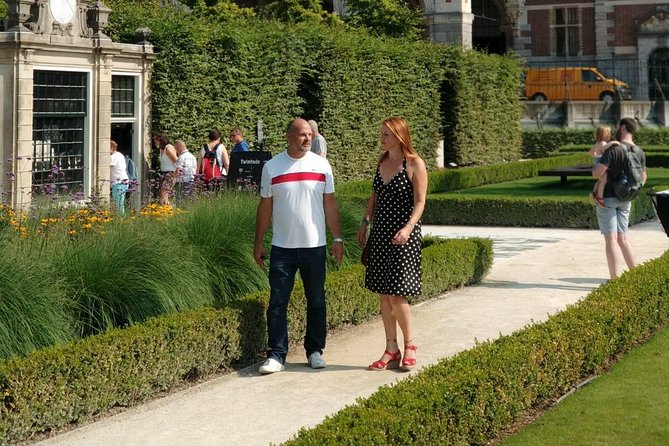
Amsterdam tells its LGBTQ story in the streets. On this LGBTQI+ History Tour of Amsterdam, you follow canals, squares, and old neighborhoods while Henk ties gay rights to the way this city was planned and built. Expect small-group attention and a guide who lived through the early days of Amsterdam’s gay movement.
I love how the tour welcomes straight allies without making anyone feel like they have to perform. Henk mixes history with personal perspective, and you get time for questions instead of a fast rush-through.
One consideration: this is a walking tour, and you will be on your feet for about two hours, so comfortable shoes and a realistic pace matter.
In This Review
- Key highlights worth planning around
- Why Amsterdam LGBTQI+ history works as a walking story
- Meeting Henk at Westermarkt and getting oriented fast
- Gay Monument stop: a memorial with a clear message
- Canal walk toward Dam Square, plus 17th-century city planning
- Royal Palace on Dam Square: what you will see and what you skip
- Dam Square: the central stage for LGBTQ-related stories
- Red Light District walk and the leather street angle
- China Town history, an old gay bar, and Bet van Beeren
- Why Henk’s style makes this tour feel different
- Price and what you actually get for $42.33
- Who this tour suits best in Amsterdam
- Practical tips for a smooth 11:00 am start
- Should you book this LGBTQI+ History Tour of Amsterdam?
- FAQ
- Where do I meet for the tour?
- What time does the tour start?
- How long is the tour?
- What is the group size limit?
- Is the tour in English?
- What is the tour route like, and where does it end?
- What should I bring?
- Are service animals allowed?
Key highlights worth planning around
- Henk’s lived perspective on Amsterdam’s early gay movement makes the stories feel personal, not textbook
- Small group size (max 15) means you can actually ask questions along the way
- Ally-friendly tone so you can come as you are and still feel fully included
- Memorial start at the Gay Monument, with the tour framing past, present, and future
- Canals and 17th-century city layout, so this is history plus real urban context
- End on Zeedijk near Central Station, giving you an easy place to continue your night
Why Amsterdam LGBTQI+ history works as a walking story
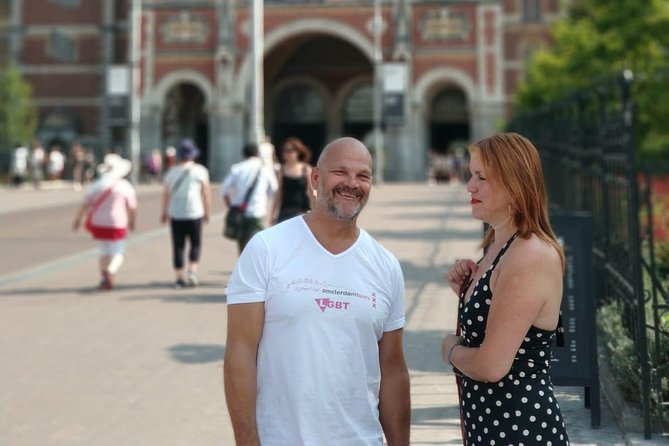
Amsterdam can feel like a postcard, even when you are standing in a place with a heavy past. This tour uses that contrast on purpose. You start at a memorial, then move through the city’s power spots, ending in nightlife territory.
What I like most is the way the route connects civil rights to geography. Dam Square, canal houses, and neighborhood streets are not just scenery here. They help explain how visibility, safety, and public life shifted over time.
And because the group is small, the tour does not feel like you are watching history from behind a crowd. You are walking with one guide who can slow down when a question lands.
More History Tours in Amsterdam
- Amsterdam Food and Cultural Tour with Tastings
★ 5.0 · 4,315 reviews - Amsterdam: Historic City Centre Canal Cruise
★ 4.3 · 659 reviews - Amsterdam: Haunted History and Ghost Walking Tour
★ 4.5 · 488 reviews
Meeting Henk at Westermarkt and getting oriented fast
You meet at Westermarkt 2L, 1016 DW Amsterdam, and the start time is 11:00 am. From the beginning, the tone is practical: this is a walking format, with points you can picture later even if you forget an exact date.
The tour lasts about two hours and runs in English. You also get a mobile ticket, which matters if you like to travel light and avoid paper sorting.
A nice touch for first-timers is that the route naturally orients you. You do not need to know Amsterdam geography in advance. The walk itself helps you understand where key places sit relative to each other.
Gay Monument stop: a memorial with a clear message
The tour begins at the Gay Monument, with a schedule block of about 30 minutes. This is not a casual photo stop. The monument is dedicated to gay victims in past, present, and future, and it also recognizes the Netherlands for having one of the earliest memorials of its kind.
I find memorials hit harder when the guide gives you both context and emotional framing. Henk’s approach is not just facts. He connects what you are seeing to what people fought for, and why remembering matters when you are trying to understand current rights.
You also get the sense that Amsterdam’s LGBTQI+ story is not one smooth line. It has breaks, losses, and hard moments. Starting here sets the right emotional baseline for everything after.
Canal walk toward Dam Square, plus 17th-century city planning
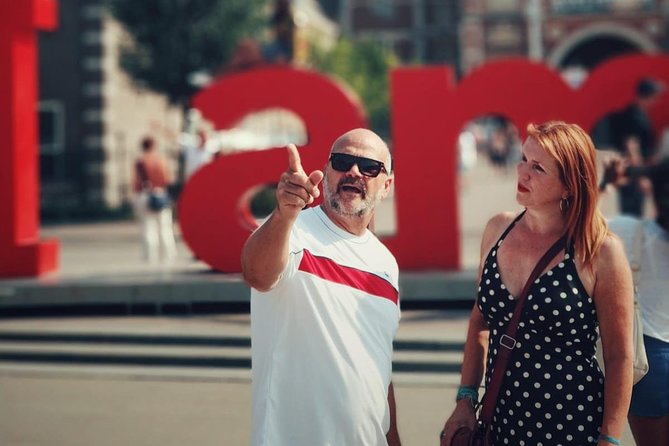
After the monument, you head toward Dam Square by way of the canal-side streets. Along the way, Henk talks about 17th-century houses and how Amsterdam’s planning shaped the city people lived in.
This part is valuable because it shows why public space matters. When a city is designed in a certain way, it influences where people gather, where they hide, and where they can be seen. Even if you are not a planning-history person, you will probably look at the canals differently afterward.
The pace stays walking-first, story-second. In other words, it does not feel like a lecture delivered while you wait for the next corner.
A handful of other Amsterdam outings
- Amsterdam High-End Dutch Food & History Tour – Up to 8 guests
★ 5.0 · 482 reviews - From Amsterdam: Volendam Heritage & Cheese Half-Day Tour
★ 4.4 · 461 reviews - Amsterdam: Historic City Sightseeing Canal Cruise
★ 4.5 · 444 reviews - Amsterdam: Historical Highlights Walking Tour with Tasting
★ 4.6 · 381 reviews
Royal Palace on Dam Square: what you will see and what you skip
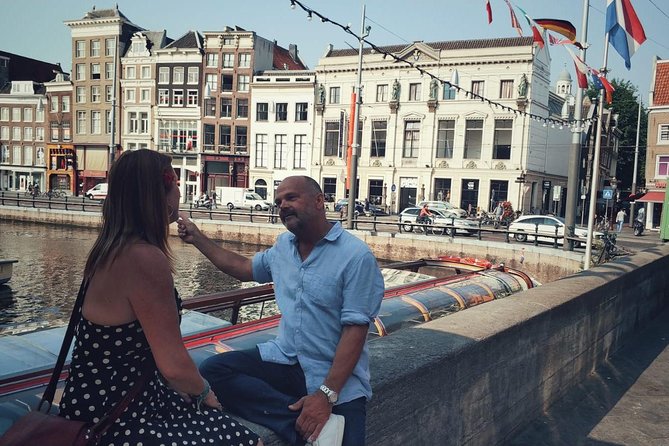
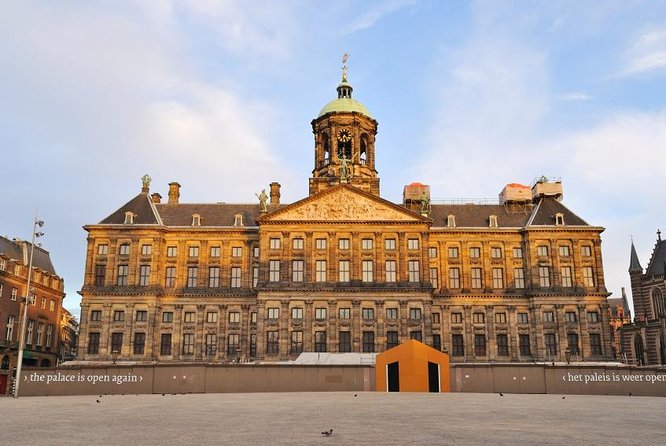
You reach Dam Square and the Royal Palace Amsterdam area, with a scheduled 15 minutes for this stop. The key detail is that you do not go inside, so treat this as a guided framing of the palace area and its origins.
The tour focuses on what the palace and the square meant in the 17th century and how that connects to gay life in that era. You get the “why this location” version of the story, not the museum experience.
If you want palace interior views, plan that separately later. The tour is meant to move you through the city’s meaning, not to replace paid admissions.
Dam Square: the central stage for LGBTQ-related stories

Dam Square is one of Amsterdam’s big historic stages, and you get a dedicated 10 minutes here, with the schedule noting admission ticket included for this segment. The guide explains the square’s long history and zeroes in on what is LGBTQ-related.
This is the moment where you start seeing how visibility works in public space. Dam Square is the kind of place where national identity, politics, and everyday life collide. If you understand the stories behind it, the square stops being generic.
I also like that Henk keeps the focus from floating into broad “Amsterdam is progressive” talk. You get a line that connects past conditions to later changes in recognition.
Red Light District walk and the leather street angle
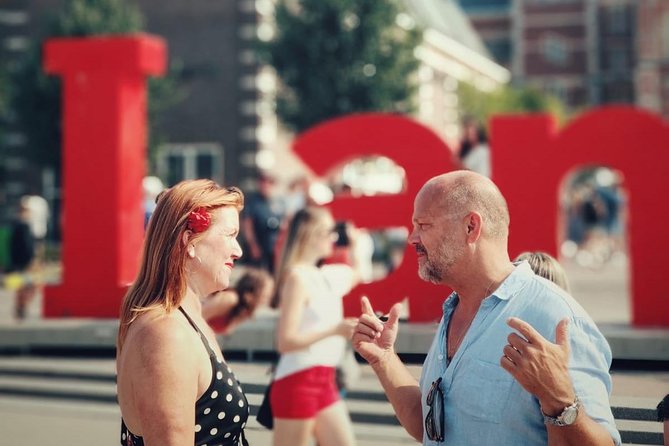
Next you move through the red light district and learn how the area connects to the LGBTQ story. The route specifically points out the concept of the leather street of Amsterdam, and you can ask Henk for details if you are curious.
This part can be intense for some people, and it is also where respectful curiosity matters. You are not there to gawk, you are there to understand how neighborhoods develop reputations and how identity can become entangled with economics and risk.
A practical tip for this section: expect some visual noise. That is normal in this part of town. The best way to enjoy it is to let the guide steer your attention toward the context rather than trying to process everything at once.
China Town history, an old gay bar, and Bet van Beeren
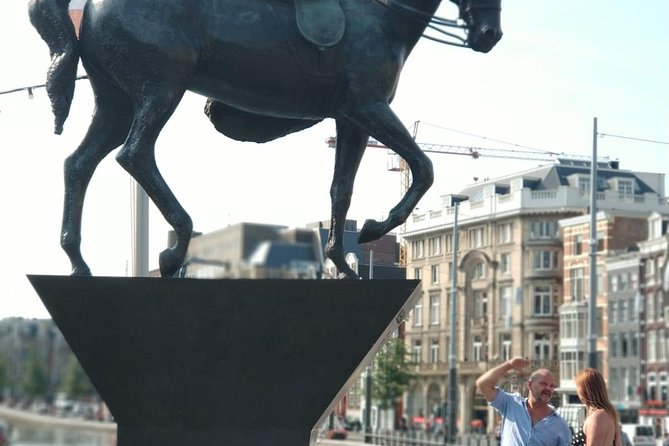
The tour continues to the area often called China Town, described here as once the roughest street in Amsterdam. You get a guided explanation of how the neighborhood ties into LGBTQ life, including mention of the oldest gay bar in Amsterdam.
There is also a WWII-related thread in the walk: the tour covers why German soldiers were not allowed in this part of the city, according to the route’s story. Again, the point is not to turn this into a debate. It is to show how local resistance and social rules shaped who could enter and who could feel safe.
You end at the bar of Bet van Beeren, which gives you a clean landing point after the walking. If you want to keep the theme going, this is a practical place to do it since it ends where the story naturally ends.
Why Henk’s style makes this tour feel different
A lot of city tours claim they are personal. This one actually has a reason to feel that way. Henk is not only a guide, he lived through the early days of Amsterdam’s gay movement, so his stories have firsthand weight.
In the best parts of the experience, you get history plus human context. Henk also uses humor, and that matters because it prevents heavy material from feeling like it is trapped in a museum box. Some tours handle tough topics by rushing past them. Here, the guide acknowledges loss and struggle while still keeping the walk moving and engaging.
From what you will experience on the ground, the combination works like this:
- you learn where the fight happened
- you learn what it cost
- you learn how people kept going
That balance is one of the big reasons people recommend this tour.
Price and what you actually get for $42.33
At $42.33 per person for about two hours, this is priced like a solid walking experience, not a budget stroll. The value is strongest in two places.
First, you get a small group with max 15 travelers, which translates into real guide interaction. Second, the route includes specific planned stops where admissions are called out in the schedule, including the Gay Monument and the Dam Square segment, while the Royal Palace stop is noted as not included.
Add in the fact that it is offered in English with a mobile ticket, and you can see why it is a popular pick for your first days in Amsterdam. You are not just buying a walk. You are buying a guided lens on key city locations.
Bring your own water and walking shoes. The tour does not list other supplies, so plan for comfort. Even in a city built for walking, two hours adds up if your shoes are not up to the task.
Who this tour suits best in Amsterdam
This tour works well if you:
- want LGBTQI+ history that stays grounded in actual streets and landmarks
- like asking questions instead of sitting through a monologue
- are traveling with friends or family and want an inclusive tone
- enjoy city context, not only dates and names
It also fits allies well, because the guide’s welcome is built into the format. You do not need to arrive with a specific level of knowledge. You do need to be ready to listen, and to treat the spaces with respect.
If you prefer hands-on museum time or long indoor stops, you might find this tour better as a companion to another attraction later. This one is intentionally walking-forward.
Practical tips for a smooth 11:00 am start
The tour begins at 11:00 am, so if you plan breakfast nearby, aim to arrive a few minutes early. You also finish on Zeedijk, at Café t Mandje, Zeedijk 63, and it is walking distance from Central Station, which is convenient for onward plans.
It does require good weather, and if weather forces a change, you will be offered a different date or a full refund. So check conditions the morning of your tour and keep expectations realistic.
Finally, you are in a city known for bikes, trams, and crowds. A smooth experience comes from slowing down mentally, walking with the group, and letting Henk guide your attention block by block.
Should you book this LGBTQI+ History Tour of Amsterdam?
I think you should book it if you want LGBTQI+ history with a local, human voice and you enjoy walking tours that connect people to places. The small group size, the ally-friendly atmosphere, and Henk’s lived perspective are the three strongest reasons to choose this over a generic overview.
Skip it or pair it with something else if you want a heavy focus on indoor sites or if you cannot comfortably walk for around two hours. Otherwise, this is a high-impact tour because it teaches you how Amsterdam’s story of rights and recognition is written into the city itself.
FAQ
Where do I meet for the tour?
You meet at Westermarkt 2L, 1016 DW Amsterdam.
What time does the tour start?
The tour starts at 11:00 am.
How long is the tour?
It is about 2 hours.
What is the group size limit?
The tour has a maximum of 15 travelers.
Is the tour in English?
Yes, the tour is offered in English.
What is the tour route like, and where does it end?
You start near Westermarkt, visit the Gay Monument, then walk toward Dam Square and through the red light district and China Town, and you end at Café t Mandje, Zeedijk 63, 1012 AS Amsterdam.
What should I bring?
Bring your own water and walking shoes.
Are service animals allowed?
Yes, service animals are allowed.
Newest bookings around Amsterdam
- Amsterdam Breakfast Cruise on Private Luxury Boat★ 5.0 · 5 reviews
- Amsterdam-West Food Tour with local guide★ 5.0 · 16 reviews
- Amsterdam: Explore the Van Gogh Museum & His Masterpieces★ 3.5 · 64 reviews
- Van Gogh Museum Tour excluding Entrance Tickets★ 5.0 · 16 reviews
- Van Gogh Museum with Audio Guide★ 3.5 · 80 reviews
- Van Gogh Museum Ticket with Audio Guide and Unlimited Access Time★ 5.0 · 25 reviews
- Van Gogh Museum Entry Ticket and Guided Tour★ 4.5 · 48 reviews
- Amsterdam Van Gogh Museum with Audio or Guided Tour★ 4.0 · 266 reviews
Historical Tours, compared.
Amsterdam Food and Cultural Tour with Tastings
Read our review →
Kinderdijk UNESCO World Heritage Entry Ticket
Read our review →

Amsterdam High-End Dutch Food & History Tour – Up to 8 guests
Read our review →
Cruise through the Historic City Center with Guide
Read our review →Browse the lists this tour appears in