
REVIEW · FOOD & DRINK
Guided Walking Street Food Tour of De Pijp & Beyond
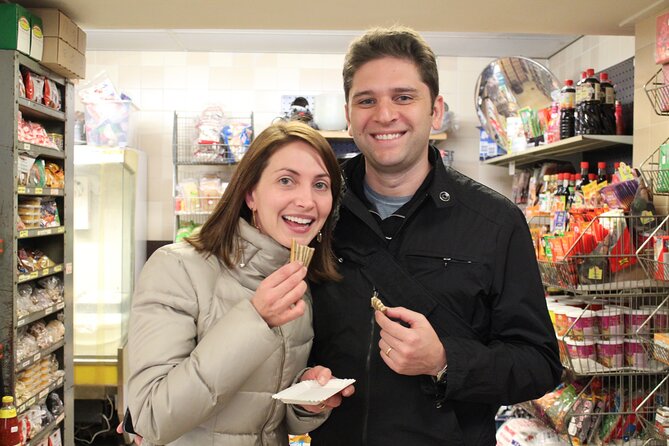
Street food is the fastest way to read a city. This guided walk through De Pijp and beyond pairs classic Amsterdam flavors with everyday neighborhood life, starting at Albert Cuyp Market and moving into the side streets where locals actually shop and snack. You’ll get a real sense of how food crosses cultures here, from Dutch staples to flavors you can taste across Indonesia, Suriname, and Japan.
I particularly like the small-business focus, not cookie-cutter stops, and the way the guide helps you connect what you’re eating to the local rhythm of Amsterdam. The group stays small, and that size makes the tour feel personal and chatty, which comes through in the praise for guides like Sharmain and Sara.
One thing to consider is that this is a walking, tasting format. If you want a long sit-down meal or need lots of seating breaks, you might find the pace a little more active than a traditional dinner plan.
In This Review
- Key reasons to do this De Pijp street food walk
- Why De Pijp and Albert Cuyp Market make a great food walk
- Albert Cuyp Market: your street-food warm up with Dutch classics
- What to do during the market portion
- A practical consideration
- De Pijp on foot: toko shops, narrow lanes, and international street bites
- What you gain from the De Pijp portion
- The main drawback to plan around
- The tasting math: at least seven street foods plus drinks
- How I’d pace it as you go
- A note on expectations
- Guide energy matters: the banter factor and the history context
- How to get the most out of your guide
- Meeting at Albert Cuypstraat 75, and planning for the end location
- Price and value: what you get for $155.68 in 4 to 5 hours
- Who this tour is best for in Amsterdam
- Should you book this De Pijp street food tour?
- FAQ
- How long is the Guided Walking Street Food Tour of De Pijp & Beyond?
- Where does the tour start?
- What time does the tour start?
- How much does it cost, and what do I get?
- Is the tour offered in English?
- How large is the group?
- What is the cancellation policy?
Key reasons to do this De Pijp street food walk
- Albert Cuyp Market start: family businesses, market vendors, and newer food entrepreneurs in one concentrated stop
- De Pijp street-level variety: narrow streets plus toko shops stocked with Indonesian and Surinamese influences
- At least seven street foods and a few drinks: enough sampling to get a broad picture, without needing a restaurant reservation
- Small group size (up to 8): more time to ask questions and enjoy that light banter people rave about
- Multi-culture menu choices: Dutch classics alongside flavors like Japanese sandos and other international bites
- 4 to 5 hours for orientation: a half-day that helps you understand where you are, not just what you ate
Why De Pijp and Albert Cuyp Market make a great food walk
De Pijp is where Amsterdam feels like a working neighborhood, not a theme park. You’ll see the texture of daily life, with people popping into small shops, grabbing quick bites, and moving through narrow streets without turning it into a spectacle.
Starting at Albert Cuyp Market is smart because it gives you an immediate baseline for the local food scene. From there, the tour keeps moving so you’re not stuck in one busy area all morning. You get a map in your head, and food becomes the thread that connects it all.
This is also the kind of tour that helps you skip tourist traps. The goal is to support the small places that Amsterdammers rely on, including older family spots and newer entrepreneurs operating right in the same ecosystem.
More Food Tours in Amsterdam
- Amsterdam Food and Cultural Tour with Tastings
★ 5.0 · 4,315 reviews - 10 Tastes of Amsterdam: Food Tour by UNESCO Canals and Jordaan
★ 5.0 · 3,020 reviews - Amsterdam Jordaan Food & Drinks Tour with Eating Europe
★ 5.0 · 2,425 reviews
Albert Cuyp Market: your street-food warm up with Dutch classics
The first stop is Albert Cuyp Market, a concentrated world of snack energy. The plan is to meet small, family-run businesses and a mix of sellers, including both established favorites and newer food entrepreneurs.
What makes this stop especially useful is the variety of flavors. You can expect a spread that points to Dutch street-food essentials, with examples like herring, broodje pom, kroket, and stroopwafels. Those aren’t random picks, either. They’re part of the everyday snack logic here, which is exactly what helps you understand Amsterdam’s food culture beyond a menu.
This stop runs about 45 minutes, and there’s no paid admission ticket required for the tasting portion. You’re not meant to wander for an hour alone. You’re meant to sample, ask what makes each item special, and use the guide as your translator for what you’re seeing.
What to do during the market portion
- Arrive hungry, but not desperate. Tasting works best when you can taste clearly instead of rushing through bites.
- If you’re not sure what you’re holding, ask. Market food is often best when you know what to expect in the first bite.
- Pace your water. Several of these classics are fried or sweet, and it’s easier to enjoy everything when your mouth isn’t overwhelmed.
A practical consideration
Markets can be busy, and this is a walking tour format, not a quiet museum visit. Expect to stand, move, and keep following the group. If you hate crowds, you might feel the pressure. If you’re okay with that, you’ll likely love how efficient and lively this start is.
More Walking Tours in Amsterdam
- Amsterdam Anne Frank: Small-Group Walking Tour & Local Guide
★ 4.8 · 12,789 reviews - Anne Frank’s Story – Guided Walking Tour through Amsterdam
★ 5.0 · 11,619 reviews - Absolutely Amsterdam – the Essential Introductory Walking Tour
★ 5.0 · 3,629 reviews - Amsterdam: Anne Frank Guided Walking Tour in DE/EN/IT/ES
★ 4.9 · 3,107 reviews
De Pijp on foot: toko shops, narrow lanes, and international street bites
After the market, the tour shifts into De Pijp itself, where the streets get more narrow and local. This segment is longer, about 3 hours, which gives you enough time to do real street-level exploration rather than a quick drive-by.
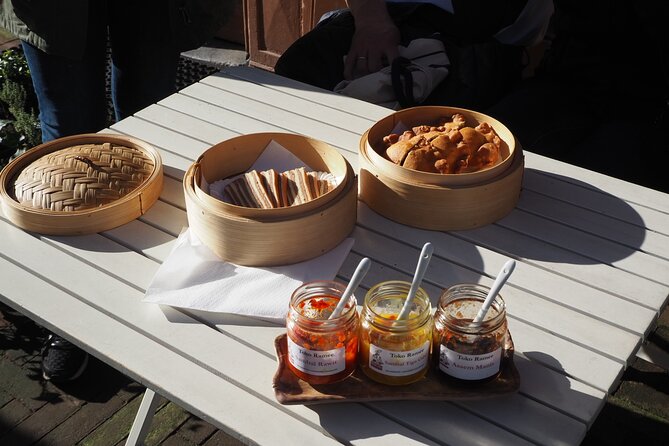
The tour style here is hands-on. You’ll visit favorite local spots in a mix of categories, including toko’s (small grocery stores and eateries) that carry Indonesian or Surinamese foods, plus lots of Asian food products. That matters because it shows you what locals buy, not just what they order when they’re sightseeing.
You’ll also see Dutch street-food favorites again in different forms: herring, fries, kroket, poffertjes, and stroopwafels. The point isn’t repetition for its own sake. It’s contrast. You’ll taste similar ideas across different shops and pick up how each place treats the same comfort-food concept.
And then there’s the international angle. The tour includes newer international eateries, including Japanese sandos. That’s one of the reasons this walk feels current, not frozen in time.
What you gain from the De Pijp portion
- Context for everyday shopping: You see how food choices connect to the cultures represented in Amsterdam neighborhoods.
- A stronger mental map: After this walk, De Pijp stops being vague. You’ll recognize streets and clusters of shops.
- More than one food culture in a single afternoon: You’ll taste across Dutch and international street traditions without needing multiple restaurant reservations.
The main drawback to plan around
This is a long, food-focused walk, so comfortable shoes are not optional. Also, because you’re tasting multiple items, you’ll likely want to keep your day flexible afterwards. Think of it as your main food mission for the afternoon, not a small side activity.
The tasting math: at least seven street foods plus drinks
The highlight here is volume, not just one signature stop. The tour is designed for you to try at least seven street foods and a few drinks across the route. That’s a big deal for value, because street food is often priced as individual items. Bundle enough tastings together and the pricing starts to make sense.
In a typical meal, you choose one or two things and move on. On this tour, you get multiple bites, so you can compare textures, flavors, and how different cultures show up on the same street.
How I’d pace it as you go
- Take smaller bites when something is very rich or sweet. Stroopwafels and fried items can stack up fast.
- Sip water between tastings instead of waiting until you feel thirsty.
- If a drink is offered with a tasting, treat it as part of the flavor sequence, not an extra task to finish.
A note on expectations
This is not a full sit-down dinner. You’ll snack your way through the neighborhood. The upside is you get variety and context. The downside is you’ll feel active during the hours, not settled on a chair.
Guide energy matters: the banter factor and the history context
This is one of those tours where the guide changes the experience. In the feedback, the standout theme is banter and fun, including praise for hosts like Sharmain, who was described as able to read the group and keep things entertaining while you move.
Another frequently noted strength is how the guide connects food to story and context. Sara, for example, is praised for being knowledgeable and fun, and for making the food meaningful through history. Even if you don’t care about dates and timelines, this kind of storytelling helps your tasting land. You’re not just eating, you’re learning why it’s served this way and why it shows up in these neighborhoods.
How to get the most out of your guide
- Ask what locals order when they want a quick bite. The best street-food answers often come from how people use the food in real life.
- Mention any dietary limits up front. The tour is built around tastings, so it helps to know what can and cannot be swapped.
- Lean into conversation. With a maximum group size of 8, you’ll actually get time to talk instead of feeling like you’re shouting at a microphone.
Meeting at Albert Cuypstraat 75, and planning for the end location
Logistics are simple but worth respecting. The meeting point is Albert Cuypstraat 75, 1072 CN Amsterdam. Start time is 11:00 am, and this is offered in English.
The tour uses a mobile ticket, which makes entry straightforward when you meet up. It’s also near public transportation, so you’re not forced into a long trek from the tram or metro.
One practical detail: the tour ends in a different location. So, before you book your next activity, glance at your afternoon plan and give yourself some buffer. It’s smart to schedule something flexible nearby, rather than a tight train connection that requires exact timing.
Price and value: what you get for $155.68 in 4 to 5 hours
At $155.68 per person, this isn’t a bargain-basement food walk. But the value story here is clear when you line up the pieces: you get a guided route, a small group capped at 8, and enough tastings that the tour functions like a curated food course spread across a neighborhood.
You’re also paying for selection. Market food can be random if you’re on your own. Here, you’re guided to popular local spots and helped interpret what you’re eating and where it fits in Amsterdam life.
Then there’s the neighborhood benefit. This is partly about street food, but it’s also about orientation and how the city works day to day. If you like to return from a trip with practical knowledge, this kind of walking tour can save you time later.
The fact it’s commonly booked about 34 days in advance suggests demand for this format. If you have fixed plans, booking earlier is usually a smart move, especially in peak seasons.
Who this tour is best for in Amsterdam
This is a strong fit if you want food plus local street-level insight. It’s also a good choice if you like mixing cultures through everyday places, not only through museums or staged experiences.
It’s especially suitable for:
- Food lovers who want variety in one afternoon
- Travelers who want to understand De Pijp beyond postcards
- Small-group people who dislike big crowds
- Anyone who enjoys talking with a guide and learning as they walk
The tour is offered in English and most travelers can participate. Service animals are allowed too, so it works for more travelers than you might expect from a walking-focused format.
Should you book this De Pijp street food tour?
If your goal is to eat your way through Amsterdam’s neighborhood culture, this tour is an easy yes. You’ll start at Albert Cuyp Market, then spend a meaningful chunk of time in De Pijp with a guide who can keep the energy up through banter and food context. The combination of at least seven street foods plus drinks, a small group size, and a clear local focus gives you a lot for a single half-day commitment.
Book it if you want an efficient way to learn where things are and how Amsterdam’s everyday food scene works. Skip it only if you strongly prefer seated dining, or if constant walking and tasting feels like work to you.
FAQ
How long is the Guided Walking Street Food Tour of De Pijp & Beyond?
It runs about 4 to 5 hours.
Where does the tour start?
The meeting point is Albert Cuypstraat 75, 1072 CN Amsterdam, Netherlands.
What time does the tour start?
The start time is 11:00 am.
How much does it cost, and what do I get?
The price is $155.68 per person, and you should expect at least seven local street foods plus a few drinks.
Is the tour offered in English?
Yes, it is offered in English.
How large is the group?
The tour has a maximum of 8 travelers.
What is the cancellation policy?
Free cancellation is available up to 24 hours in advance for a full refund. If you cancel less than 24 hours before the start time, the amount paid is not refunded.
More Food in Amsterdam
- Amsterdam: River Cruise With All-You-Can-Eat Dutch Pancakes
★ 4.4 · 1,504 reviews - Amsterdam: Food and Culture Walking Tour with Tastings
★ 4.9 · 838 reviews - Eating Amsterdam: Food Tour & Canals Cruise
★ 5.0 · 496 reviews - Amsterdam High-End Dutch Food & History Tour – Up to 8 guests
★ 5.0 · 482 reviews
Newest bookings around Amsterdam
- Amsterdam Breakfast Cruise on Private Luxury Boat★ 5.0 · 5 reviews
- Amsterdam-West Food Tour with local guide★ 5.0 · 16 reviews
- Amsterdam: Explore the Van Gogh Museum & His Masterpieces★ 3.5 · 64 reviews
- Van Gogh Museum Tour excluding Entrance Tickets★ 5.0 · 16 reviews
- Van Gogh Museum with Audio Guide★ 3.5 · 80 reviews
- Van Gogh Museum Ticket with Audio Guide and Unlimited Access Time★ 5.0 · 25 reviews
- Van Gogh Museum Entry Ticket and Guided Tour★ 4.5 · 48 reviews
- Van Gogh Museum Skip the Queue with Audio Guide★ 4.0 · 261 reviews
Food & Drink, compared.
Amsterdam Food and Cultural Tour with Tastings
Read our review →
10 Tastes of Amsterdam: Food Tour by UNESCO Canals and Jordaan
Read our review →
Amsterdam Jordaan Food & Drinks Tour with Eating Europe
Read our review →

Premium Henri Willig Cheese Tasting Experience
Read our review →


Zaanse Schans and Cheese Tasting Guided Tour from Amsterdam
Read our review →Browse the lists this tour appears in