
REVIEW · RED LIGHT DISTRICT TOURS
Exclusive small-group Amsterdam Red Light District tour
One sentence can say a lot about Amsterdam. This 2-hour small-group walk through De Wallen keeps the focus on local context, not shock value, and it pairs street-level sights with city-shaping details like Amsterdam’s wooden-pole foundations. I also like the chance to ask questions as you go, since the guides are consistently praised for being engaging and informative, and it helps you make sense of what you’re seeing in real time. The main drawback is simple: this area is sensitive, so if you prefer a strictly family-friendly route, you might want to think twice.
The tour is also short enough that you can fit it into a packed itinerary without losing a whole day, but you’ll be walking through tight streets, so limited mobility folks may find it tough.
In This Review
- Key highlights to know before you go
- The De Wallen walk that stays practical (and asks you to look closer)
- Meeting at Geldersekade 2HS and getting oriented fast
- Two hours in the narrow streets of De Wallen
- Stop-by-stop: the Old Town layers you might miss on your own
- The Dam area and Amsterdam’s “built on trees” logic
- Oldest neighborhood context inside De Wallen
- Pub The Ape (Int Aepjen): one of Amsterdam’s remaining wooden buildings
- The Waag: from city gate to crafts guild space
- The smallest house of Amsterdam: VOC storage to long-term living
- The world’s first condom shop, since 1987
- Why the guide makes (or breaks) a sex-work-area tour
- Price and value: $63.67 for 2 hours that actually teaches you something
- Who this tour suits best, and who should reconsider
- Should you book? My straight answer
- FAQ
- How long is the Amsterdam Red Light District tour?
- What is the price per person?
- Where do I meet for the tour?
- Does the tour use a mobile ticket?
- How big is the group?
- Are there multiple start times?
- What is the cancellation policy?
Key highlights to know before you go
- Small-group size (max 32) for a more personal walking pace
- Multiple start times so you can work it into your day
- Local perspective on De Wallen and how myths formed around the district
- Old Town stops that connect the sex work area to the city’s deeper roots
- Practical guide Q&A time, with guides praised for how they handle questions
- Mobile ticket and easy meeting point at Geldersekade 2HS
The De Wallen walk that stays practical (and asks you to look closer)
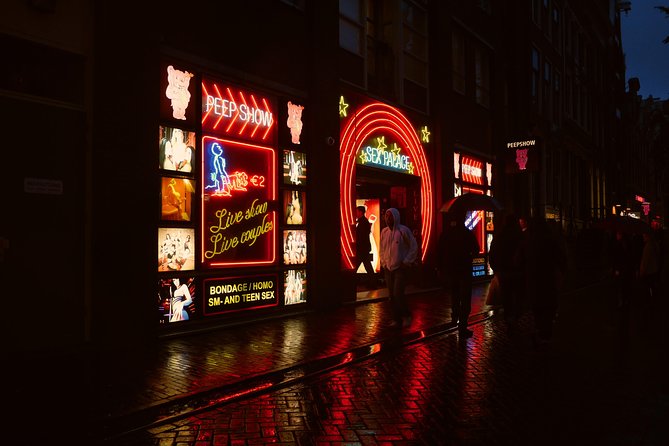
Amsterdam’s Red Light District has a reputation that can feel like it’s been exaggerated for the internet, and that’s exactly why this kind of guided walk works. In just about two hours, you get a structured path through De Wallen that helps you read the neighborhood like locals do: what it is, how it developed, and how the city’s oldest fabric still shows through.
I like that the tour doesn’t only point at what’s visible. It also gives you the “why” behind it, so the streets start making sense instead of feeling like one long blur. And because the group is capped at 32 people, you’re not stuck far back watching from a distance.
One more practical plus: this is designed for people with limited time. If you only have a half-day chunk to spare and you still want the real story behind the myths, this format respects that.
More Red Light District walks:
- Amsterdam: Red Light District Tour in DE/EN/IT/ES/FR
★ 4.9 · 7,136 reviews - Amsterdam: Red Light Secrets Museum Entry Ticket
★ 4.2 · 5,722 reviews - Amsterdam Red Light District & Coffee Shop Tour
★ 4.6 · 4,134 reviews
Meeting at Geldersekade 2HS and getting oriented fast
Your start point is Geldersekade 2HS, 1012 BH Amsterdam, and the tour ends back where it begins. That matters more than it sounds. In Amsterdam, walking routes can sprawl, and you don’t want to burn time trying to find your way out of the area afterward.
Since it’s near public transportation, you can likely pair it with other nearby stops without building your day around one single district. And because it uses a mobile ticket, you can keep things simple on the day and avoid digging around for paper confirmations.
If you hate last-minute stress, pick a start time that gives you room for one extra wander after the tour. Two hours moves quickly, and Amsterdam rewards slow, second looks.
Two hours in the narrow streets of De Wallen
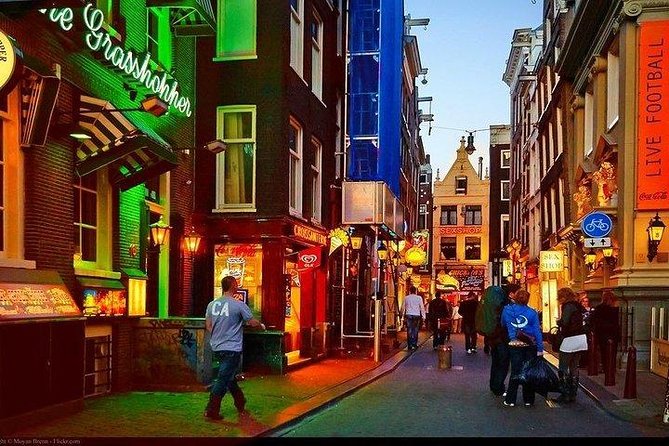
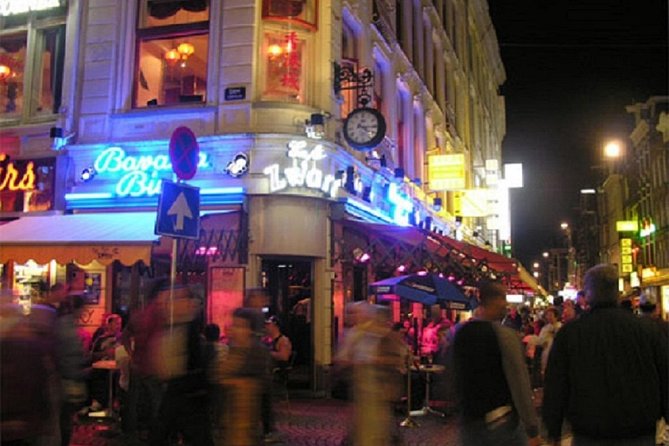
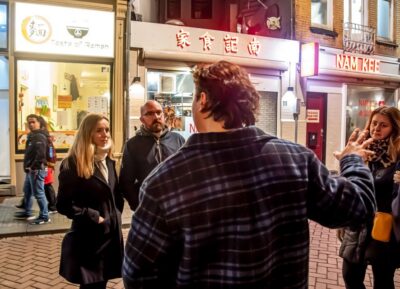
The core of the experience is a walking tour through De Wallen with a local perspective. You’ll spend time in the narrow streets of the district and hear how Amsterdam’s coffeeshop culture and sex work industry fit into the broader city story.
Here’s what I think you should watch for as you go. Don’t treat the neighborhood like a single scene. It’s a cluster of streets with different layers. The best part of a guide is that they help you notice those layers, from how the area is shaped to why people talk about it the way they do.
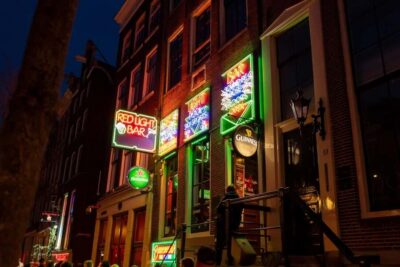
The tour also leans into context: you’ll learn how the Red Light District got its fame and why the popular stories are only part of the picture. That framing helps you keep your bearings when you’re surrounded by bright signage, tight corners, and people doing what they do in their own neighborhood.
Stop-by-stop: the Old Town layers you might miss on your own
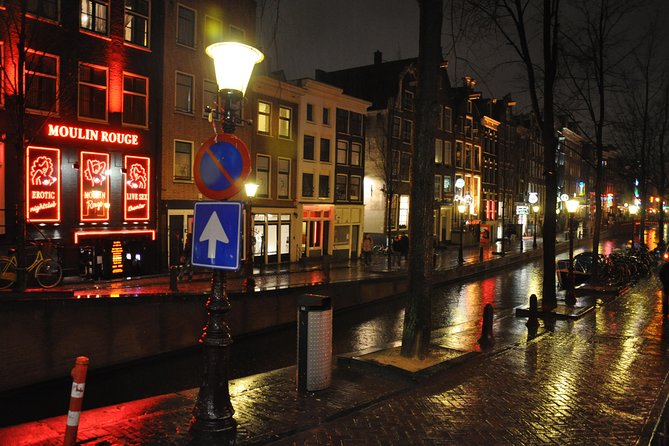
This tour works because it doesn’t only stay in De Wallen. It also connects you to Amsterdam’s older bones, so you understand why this part of the city is so tightly built and so historically loaded.
A handful of other Amsterdam outings
- Amsterdam: Van Gogh Museum Ticket
★ 4.7 · 52,054 reviews - Amsterdam: Heineken Experience Ticket including 2 Drinks
★ 4.6 · 36,014 reviews - Amsterdam Classic Saloon Boat Cruise with Drinks and Cheese
★ 5.0 · 31,825 reviews - Amsterdam Luxury Canal Cruise + Unlimited Drinks & Bites option
★ 5.0 · 30,518 reviews
The Dam area and Amsterdam’s “built on trees” logic
One of the stops points you toward the Dam area, connected to the idea of Amsterdam as a city built on wood. The key fact is that Amsterdam’s soil includes thick layers of fen and clay. To make stable ground, buildings were set on wooden foundation piles driven deep into clay, peat, and water until they reach a first layer of solid sand, about 11 meters deep.
Why this matters for your experience: you’ll be walking through an old district where the physical city looks romantic and compact, but the stability was engineered. When you learn the ground story, you stop thinking of the old streets as scenery and start seeing them as infrastructure. It changes how you perceive everything else you’re about to notice.
Oldest neighborhood context inside De Wallen
Another part of the route places you in the Old Town context, explaining that this area is part of the Red Light District while also being among the city’s oldest sections. The practical payoff is that you can connect the neighborhood’s present-day function to the long arc of Amsterdam’s growth.
If you’ve only heard headlines about De Wallen, this framing gives you something steadier: a sense that you’re not watching a modern phenomenon appear overnight. You’re looking at a district that’s been part of the city’s evolution for a long time.
Pub The Ape (Int Aepjen): one of Amsterdam’s remaining wooden buildings
You’ll stop at Pub The Ape, known in Dutch as Int Aepjen. The details here are the kind that make a guide worth it. The building dates to around 1540, and it’s described as one of only two remaining wooden buildings in Amsterdam.
It also comes with a sharp historical lesson: after a major fire in 1452, the government decided buildings should have brick facades. So when you see a surviving older wooden structure, you’re not just looking at a pub. You’re seeing a remnant of a city that once built differently.
A drawback to consider: if you’re expecting only “modern nightlife” stories, this stop pulls you into preservation and urban history. That’s a good thing for many people, but it’s not a pure scandal-and-street performance route.
The Waag: from city gate to crafts guild space
Next up is the Waag, described as a former city gate from around the 1400s, and noted as the second oldest building in Amsterdam. Later, it functioned as a space for guilds and craftsman organizations, with groups based within the Waag and around the square.
This is a useful pivot because it shows how Amsterdam’s civic and commercial life used to cluster in physical hubs. If you’ve only experienced Amsterdam as canals and museums, this stop reminds you the city was also built for trade, organization, and skilled work.
The smallest house of Amsterdam: VOC storage to long-term living
You also get a stop at the smallest house of Amsterdam, built around the 1700s. The idea here is practical and human. It was first used as storage for the VOC trading company. Over time, people began living in the house for a very long stretch.
Even if you don’t get emotional about architecture, this kind of story helps you understand the pressures that shaped where and how people lived. Amsterdam didn’t just have space and glamour. It also had logistics, commerce, and housing realities that played out in tight footprints.
The world’s first condom shop, since 1987
The route includes a stop for a shop described as the world’s first condom shop, specializing in condoms and operating since 1987. The tour notes that you can get size customized condoms and other special types.
This stop is unexpected, but it fits the overall aim of the tour: show how the district’s adult-business reality connects to everyday commerce and health products. It also helps puncture the idea that the area is only about rumor. There’s industry, organization, and service behind it.
If you’d rather avoid that kind of content, it’s good to know this stop exists. You can mentally prep yourself before you arrive.
Why the guide makes (or breaks) a sex-work-area tour
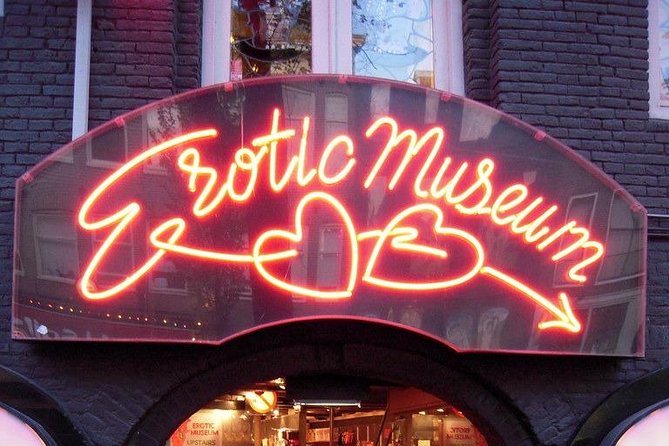
This is the part where I’d trust the consistent feedback. Guides on this experience are praised for being very entertaining and very informative, with a real ability to handle questions without turning the walk into awkward silence.
The guide names that show up in feedback include Adam and Aarre. In both cases, the big theme is the same: you get a friendly pace, plus enough context that you leave with understanding instead of a messy collection of impressions.
For you, that means the difference between
- Seeing De Wallen like a tourist photo backdrop, versus
- Understanding it like a real neighborhood with history, rules, and local storytelling.
Price and value: $63.67 for 2 hours that actually teaches you something
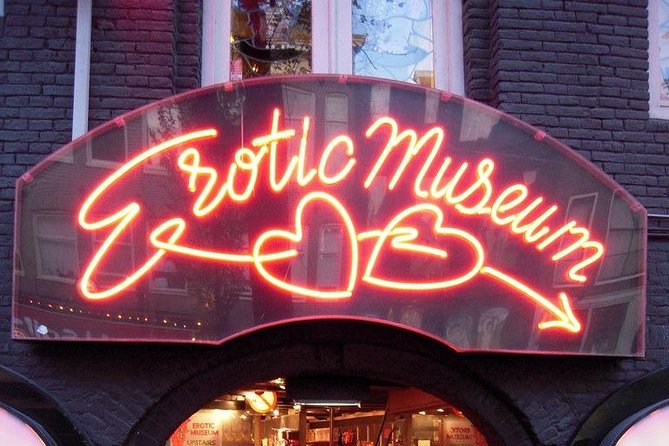
At $63.67 per person for roughly two hours, you’re paying for two things: guided interpretation and a structured route that saves you time.
This is not a free self-guided walk through a famous place. A guide is doing the work of connecting the sights to the bigger picture: how De Wallen got its myths, how Old Town context fits in, and why buildings like the Waag and Pub The Ape matter in a district you might only associate with nightlife.
Also, the tour notes group discounts, plus it uses a mobile ticket. Small details like that can improve the day if you’re coordinating multiple activities. And with a cap of 32 travelers, you’re more likely to get a meaningful conversation than you would on a giant bus-tour style crowd.
If you’re the kind of traveler who reads a city through architecture, street layout, and history-of-place, this price starts to feel reasonable fast.
Who this tour suits best, and who should reconsider
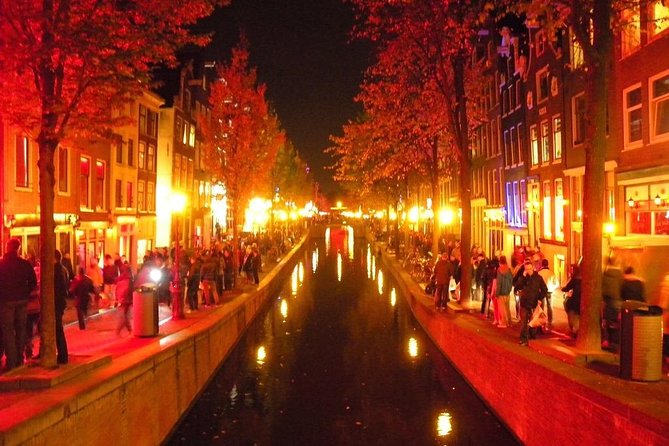
This tour is ideal if:
- You have limited time in Amsterdam and want the Red Light District explained in a walking format
- You want local perspective on myths and how De Wallen fits into the city
- You like mixing adult-zone context with Old Town architectural stops
- You enjoy asking questions while walking, rather than sitting in a classroom
You might reconsider if:
- You need a route that is easy for limited mobility
- You prefer to avoid any adult-topic stops, since the route includes specific content and a specialized condom shop stop
- You want a purely entertainment-focused experience rather than context and city understanding
Should you book? My straight answer
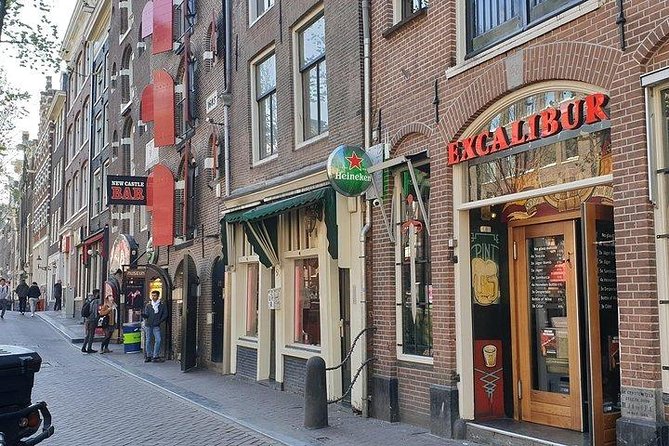
Yes, if your goal is understanding. This is a short, guided way to see De Wallen and also learn how Amsterdam’s older city structure shows up around it. The strongest reason to book is the guide quality, with people pointing out guides like Adam and Aarre as entertaining, accommodating, and great at answering questions.
If you’re uneasy about adult-topic neighborhoods, treat this as a “know before you go” situation. You’ll still get practical context, but you can’t expect a sanitized route. For the right mindset, it’s one of the most efficient ways to turn a famous Amsterdam district into a place you actually understand.
FAQ
How long is the Amsterdam Red Light District tour?
It’s about 2 hours.
What is the price per person?
The price is listed as $63.67 per person.
Where do I meet for the tour?
The meeting point is Geldersekade 2HS, 1012 BH Amsterdam, Netherlands.
Does the tour use a mobile ticket?
Yes, the experience includes a mobile ticket.
How big is the group?
The tour has a maximum size of 32 travelers.
Are there multiple start times?
Yes, the tour offers multiple start times to fit your schedule.
What is the cancellation policy?
You get free cancellation, and you must cancel at least 24 hours before the start time for a full refund.
Newest bookings around Amsterdam
- Amsterdam Breakfast Cruise on Private Luxury Boat★ 5.0 · 5 reviews
- Amsterdam-West Food Tour with local guide★ 5.0 · 16 reviews
- Amsterdam: Explore the Van Gogh Museum & His Masterpieces★ 3.5 · 64 reviews
- Van Gogh Museum Tour excluding Entrance Tickets★ 5.0 · 16 reviews
- Van Gogh Museum with Audio Guide★ 3.5 · 80 reviews
- Van Gogh Museum Ticket with Audio Guide and Unlimited Access Time★ 5.0 · 25 reviews
- Van Gogh Museum Entry Ticket and Guided Tour★ 4.5 · 48 reviews
- Amsterdam Van Gogh Museum with Audio or Guided Tour★ 4.0 · 266 reviews
Red Light District Tours, compared.

Amsterdam Red Light District & Coffee Shop Tour
Read our review →
Red Light District Pub Crawl with Unlimited Shots
Read our review →
Private Amsterdam Red Light District and Coffee Shop Tour
Read our review →
Browse the lists this tour appears in