
REVIEW · DELFT TOURS
Delft: Canal House Museum ‘Paul Tetar van Elven’ Ticket
A Delft house full of artist tools and treasures. In the heart of Delft, this Paul Tetar van Elven museum turns a historic canal house into a 19th-century time capsule, with rooms that feel lived in. Two things I especially love: the lavish interior you get to walk through, and the painted Salon ceiling that celebrates the old masters Tetar admired.
At the same time, it is a house museum, so it is mostly about what’s inside, not big outdoor sights. If you are hoping for a long, varied program with stops across Delft, you may want to pair it with other nearby sights and plan your meal separately since food and drinks are not included.
In This Review
- Key things to notice before you go
- Where this Delft canal house museum fits in your day
- The house itself: what makes it feel so authentic
- Entering the lavish drawing rooms and portraits
- The Salon ceiling: Abraham Gips and the old masters names
- The studio and Tetar’s working life
- The library: antique books as part of the collection
- Porcelain cabinets and Delft blue: the collector’s eye
- Price and value: is $14 fair for this ticket?
- Practical visit tips for a smooth Delft interior day
- Who should book this Delft museum ticket
- Should you book the Paul Tetar van Elven ticket?
- FAQ
- Where is the Paul Tetar van Elven museum located?
- How much does the ticket cost?
- How long is the experience valid for?
- Is food and drinks included?
- What collections can I expect to see?
- What makes the museum special in terms of the house itself?
- What is the Salon ceiling, and who decorated it?
- What languages are available for the host or greeter?
- Is the ticket entry only, or does it include other activities?
- Is there a cancellation window?
Key things to notice before you go
- Koornmarkt canal house setting: a house on a historically wealthy Delft street, tied to the era after the 1536 Great Fire
- Lavishly furnished drawing rooms: rooms staged the way Tetar wanted, with paintings and portraits of his circle
- Salon ceiling by Abraham Gips: names of old masters Tetar copied or admired, including Raphaël, Rubens, Rembrandt
- Artist studio with personal possessions: you get a clearer picture of Tetar as a drawing-master
- Antique books in the library: not just art on the wall, but culture on the shelves
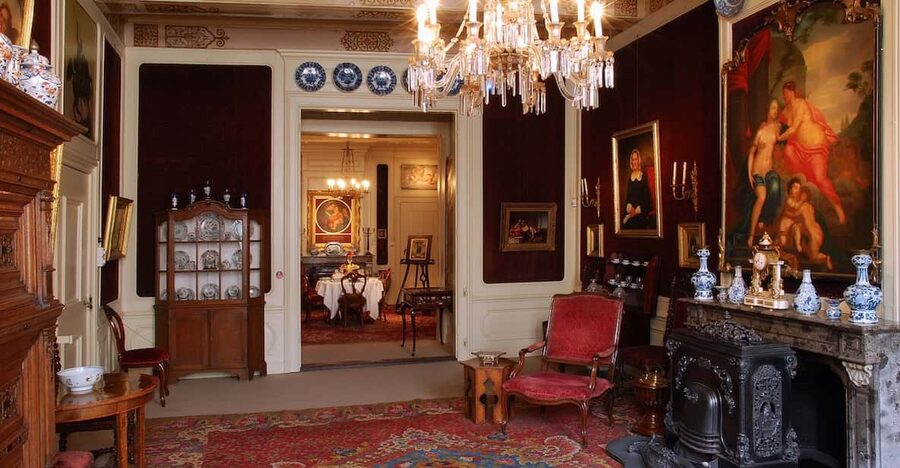
- Cabinets of Delft blue plus Far East porcelain: a strong collector’s-eye finish to the visit
Where this Delft canal house museum fits in your day
Delft is the kind of city where you can lose an afternoon just following canals and brick facades. This museum gives you a different kind of Delft fix. Instead of focusing on views, you focus on interiors and objects, inside a canal house that was saved for you the way its owner left it.
The museum sits in the centre of Delft, on the Koornmarkt. That matters because the Koornmarkt became one of the wealthiest parts of Delft after the 1536 Great Fire. Even though the house dates back to the 16th century, later renovations shaped what you see today. That mix of time periods is part of the appeal. You are looking at layers, but you’re also walking through a single person’s curated life.
Your ticket is for a one-day visit, and you should check available starting times. In practice, that means you can drop this into a day when you are already exploring downtown. Since the experience is concentrated in one building, you do not need to plan a complex route.
More Museum Tours in Delft
- Royal Delft: Delftblue Factory and Museum
★ 4.6 · 588 reviews - Delft: Vermeer Centrum Delft Museum Entry Ticket
★ 4.6 · 189 reviews - Royal Delft: Delftblue Factory and Museum Admission Ticket
★ 4.5 · 145 reviews
The house itself: what makes it feel so authentic
Paul Tetar van Elven lived here from the time he bought the place in 1864. Before that, the house traces back to shortly after the Great Fire, and it later received a new front façade and other modernization around the year 1800. Tetar did not do further renovations himself, but he adapted the interiors to the fashions of his day.
That is why the museum works. It is not a reconstruction meant to look old. It is presented as the preserved, authentic example of a 19th-century artist’s house in the Netherlands. In a lot of museums, you get artifacts. Here, you get the setting those artifacts belonged to.
The museum’s basic promise is also a good one: the interiors “breathe” the presence of Tetar and his wife. In plain terms, that means you are walking into rooms that feel intentional. Furniture, display spaces, paintings, and collections all reinforce the same idea, this was a home built around drawing, teaching, and collecting.
And because Tetar was not just an artist but also a drawing-master at the Polytechnic School, now the Technical University of Delft, the house makes more sense. You can see how a teacher and collector lived, rather than just how an artist posed for posterity.
Entering the lavish drawing rooms and portraits
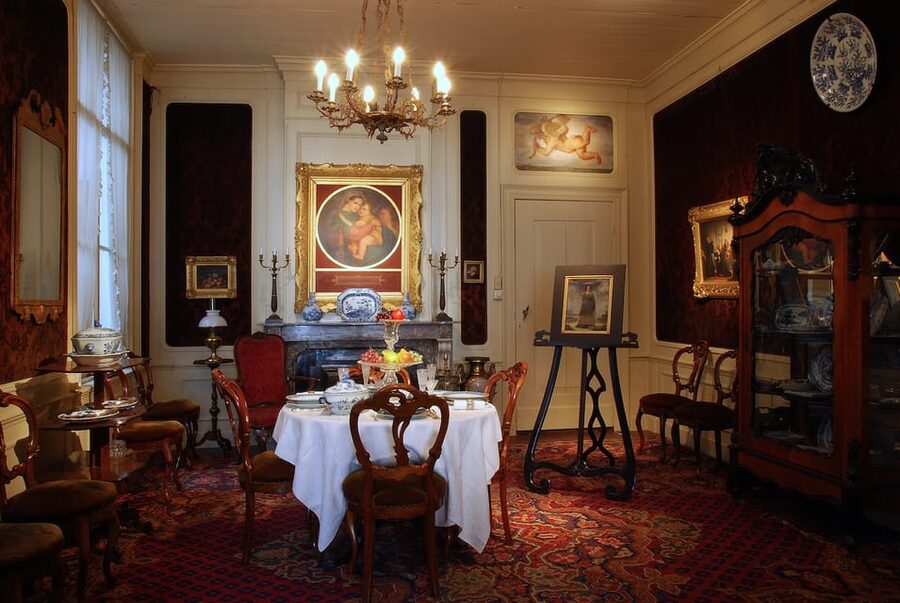
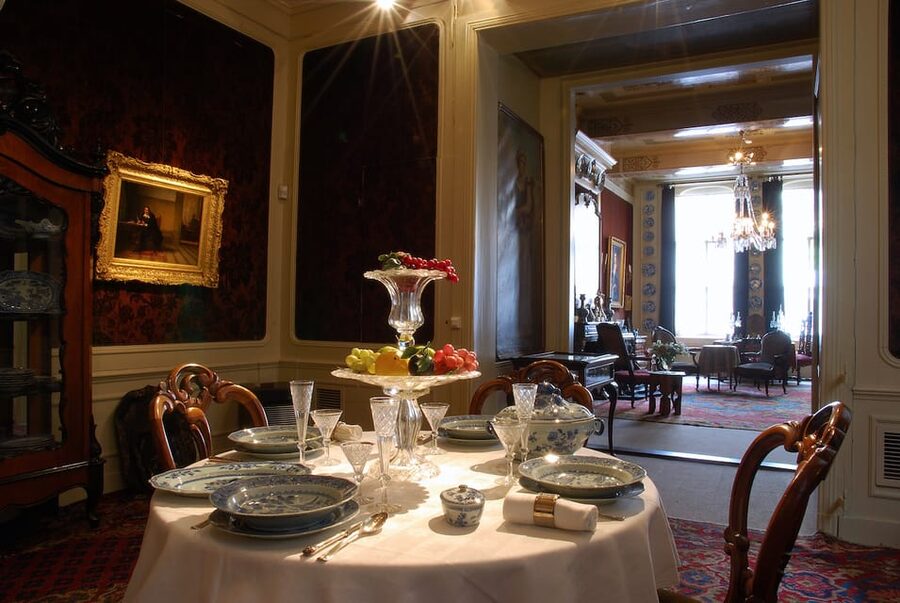
When you step inside, you are immediately in Tetar’s world. The museum includes richly decorated and furnished living rooms that reflect the era he lived in, plus portraits and paintings made by Tetar and artists of his time.
What I like about this part is how it keeps you grounded. You are not floating from one display label to the next. Instead, you start with the social space of the house, the rooms where guests would have been welcomed, where conversation and culture would have mattered. That helps you understand why the collection is arranged the way it is.
Look closely at the mix of what’s on display and what’s around it. The rooms do not feel like storage for objects. They feel like a personal environment. Tetar’s collecting interests are visible across the house, but the living rooms are where you get the emotional tone first.
A small consideration: if you mainly want hands-on history, this won’t be that kind of visit. This museum is about seeing. You will get the most from it if you slow down and really watch details in the rooms.
The Salon ceiling: Abraham Gips and the old masters names
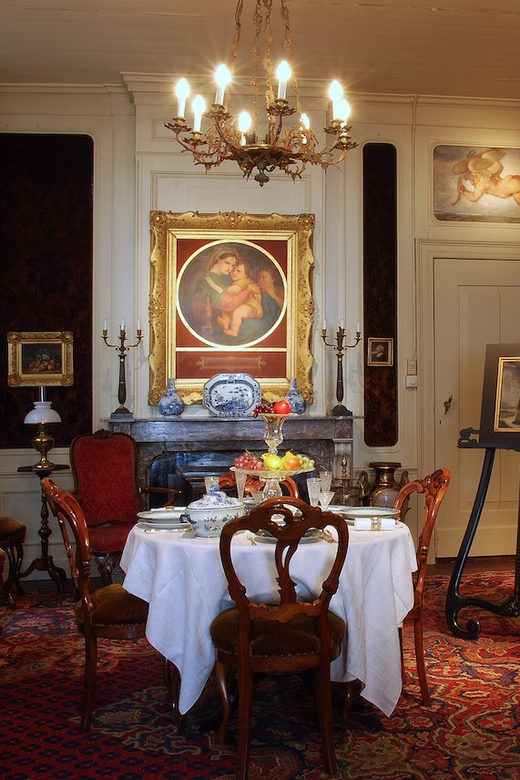
One of the most memorable moments is the Salon ceiling. Tetar’s most striking addition was commissioning painter Abraham Gips (1861 to 1943) to decorate it with the names of the old masters Tetar admired and copied.
The old masters mentioned include Raphaël, Rubens, Rembrandt, and others. Even if you recognize just a couple of names, it clicks quickly what the ceiling is doing. It is turning personal taste into decoration.
This matters because it connects the man to the work. Tetar was a drawing-master, and his admiration for specific artists shaped his practice. Seeing those names high overhead changes your sense of the whole house. You start thinking of the ceilings, the walls, and the objects as part of one teaching mindset.
Practical tip: when you reach the Salon, give yourself a moment before looking at the rest of the room. The ceiling is the feature that rewards your attention first. Then the rest feels easier to parse, because you understand what Tetar valued.
More Delft outings:
- From Amsterdam: Rotterdam, Delft & The Hague Guided Day Tour
★ 4.2 · 2,065 reviews - Rotterdam, Delft and The Hague Day Trip from Amsterdam
★ 4.0 · 892 reviews - Rotterdam, Delft and The Hague Small Group Tour from Amsterdam
★ 4.5 · 599 reviews - From Amsterdam: Guided Trip to Rotterdam, Delft & The Hague
★ 4.2 · 529 reviews
The studio and Tetar’s working life
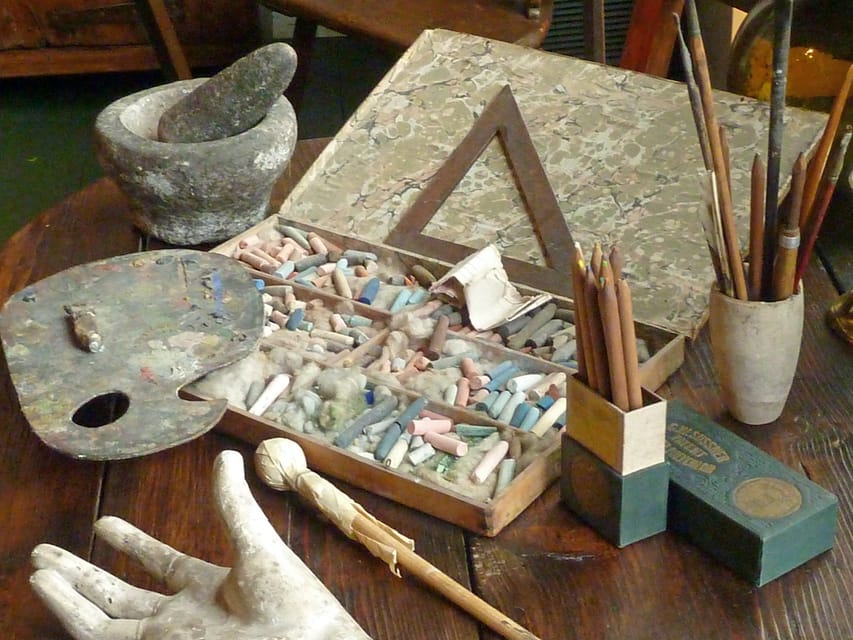
After you’ve taken in the standout visual feature, you move into spaces that feel more “workshop” than living room. The museum includes a studio where you can see Tetar’s personal possessions.
This is where your perspective shifts from decor to practice. Tetar wasn’t only collecting art and objects. He was also training others, drawing, and shaping technique. A studio space helps you understand that collecting and drawing likely fed each other. You can imagine how references, prints, books, and study would have shown up in daily routine.
If you are the type who likes to connect the dots, the studio section does a good job. It suggests Tetar’s home was both a gallery and a workplace. You get to see how those roles overlap instead of treating them as separate identities.
The library: antique books as part of the collection
Next, the museum moves from a drawing-focused space to a reading and research space with a library containing antique books. It is not only a place for quiet. It is part of Tetar’s collecting identity.
Books are often the missing piece in art museums. Here, the museum includes them as objects of interest. That means you can better understand why Tetar would admire certain painters and copy them. Even if the books vary in subject, the idea is the same: learning and reference mattered.
I like that the library does not feel tacked on. It fits the house narrative. You start the visit in social rooms, you see the ceiling that broadcasts artistic influence, and then you end up somewhere that supports study.
If you tend to rush through text-heavy displays, pace yourself here. Even without reading everything, you can get a sense of what kind of collector Tetar was, based on the presence of those antique books.
Porcelain cabinets and Delft blue: the collector’s eye
Near the end, you get to the part many people come for: cabinet displays with Tetar’s collection of pottery and porcelain. The museum focuses on Delft blue pottery and also porcelain from the Far East.
This section is valuable for two reasons.
First, it shows collecting as something personal and practical. Delft blue is tied to local identity. Far East porcelain points beyond the town, to trade routes and tastes that reached Europe. Having both in one house gives you a more complete picture of what collecting meant in Tetar’s lifetime.
Second, it turns the “house museum” idea into something visual and tactile. Instead of only paintings, you get ceramic forms and decorative styles that you can compare in your mind. The cabinets make it easier to look at objects like a collector would, grouped by interest.
A consideration: if you are expecting huge quantities, you may find this section more curated than sprawling. But for $14, you are paying for access to the entire house and its collections, not a single room. The cabinets are part of that whole package.
Price and value: is $14 fair for this ticket?
At $14 per person, this ticket is priced like a focused museum stop, not a big-day-out attraction. The value comes from what you actually get access to: a well-preserved 19th-century artist’s house with multiple key rooms, plus Tetar’s art and collecting categories under one roof.
Here is what makes that price feel reasonable.
You are not just paying for a few displays. You are paying for a historic interior, including drawing rooms, a Salon with a ceiling commission, a studio with personal items, a library, and ceramic cabinets. That range is hard to find in a small museum ticket price.
Also, the museum’s claim matters. It is described as the only well-preserved, authentic example of a 19th-century artist’s house in the Netherlands. When a museum can make that kind of uniqueness claim, the ticket price often makes more sense because you are not competing with dozens of similar experiences.
One more practical point: food and drinks are not included, so consider bringing water or planning a meal before or after. That can affect how “cheap” the day feels once you factor in your total spend.
Practical visit tips for a smooth Delft interior day
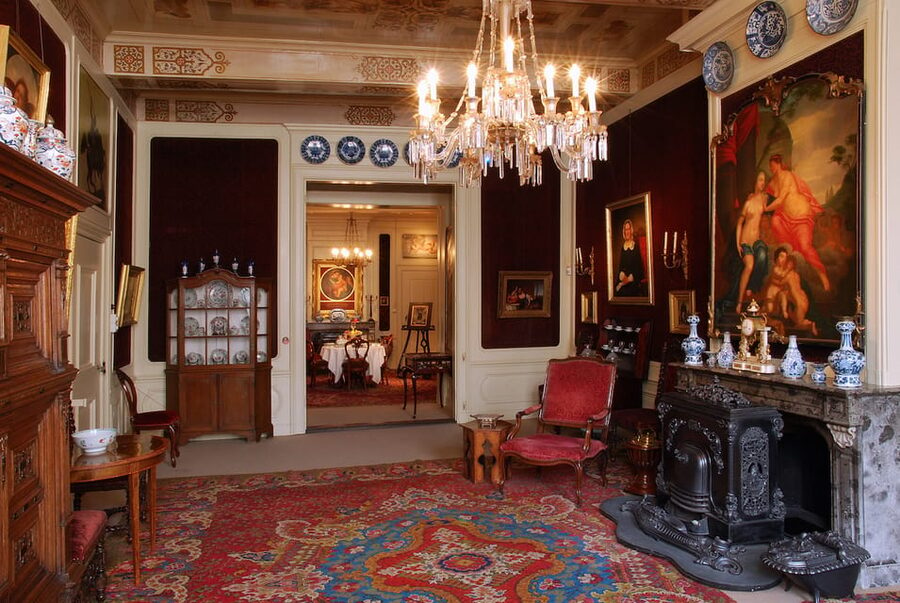
This is a downtown museum experience, in a house. So your main practical job is to plan your time and pacing.
- Plan a slow start: begin with the rooms rather than rushing straight to the ceiling feature. The museum works as a narrative, not a checklist.
- Set aside time for looking upward: the Salon ceiling is a key piece, and you will enjoy it more if you pause.
- Use the room order: living rooms first help you orient yourself, then studio and library sharpen the artist-teacher angle.
- Then finish with the cabinets: Delft blue and Far East porcelain land well after you’ve already grasped Tetar’s interests.
Language is English and Dutch with an English, Dutch host or greeter. If you want to maximize clarity, go with the language you feel most comfortable reading in, since the museum experience depends on details and object context.
Who should book this Delft museum ticket
This is a great fit if you like:
- Delft blue and ceramics, especially when paired with local and international collecting
- Art and drawing culture, not just famous paintings, but the tools and influences behind them
- House museums, where you see objects in the rooms they belonged to
- A quieter, curated stop in central Delft without needing long transfers
It may be less ideal if you want a high-energy, modern, interactive attraction. This is an interior-focused experience. The payoff is attention, not motion.
Also, if you are doing a full Delft day, this museum pairs well with other canal-and-centre sightseeing. Because it’s concentrated in one location, it acts like an anchor stop.
Should you book the Paul Tetar van Elven ticket?
Yes, I’d book it if you want an authentic 19th-century artist’s house in Delft with art, books, and real collections under one roof. The $14 price feels fair because you get variety across rooms: decorated drawing spaces, a ceiling commission by Abraham Gips naming the old masters Tetar admired, a studio with personal possessions, and cabinets with Delft blue and Far East porcelain.
If you are visiting mostly for canal views and outdoor highlights, you might still enjoy it, but treat it as an interior break and plan your meal separately. If that sounds like your pace, this ticket is a smart use of time in the centre of Delft.
FAQ
Where is the Paul Tetar van Elven museum located?
It is located in the centre of Delft on the Koornmarkt, in South Holland, Netherlands.
How much does the ticket cost?
The ticket price is listed as $14 per person.
How long is the experience valid for?
The ticket is valid for 1 day. You should check availability to see starting times.
Is food and drinks included?
No. Food and drinks are not included.
What collections can I expect to see?
You can see collections including Delft blue pottery and pottery and porcelain from the Far East, plus antiques and antique books.
What makes the museum special in terms of the house itself?
It is presented as the only well-preserved, authentic example of a 19th-century artist’s house in the Netherlands.
What is the Salon ceiling, and who decorated it?
The Salon has a painted ceiling commissioned by Abraham Gips (1861 to 1943), decorated with names of old masters Tetar admired and copied, including Raphaël, Rubens, and Rembrandt.
What languages are available for the host or greeter?
The host or greeter is available in English and Dutch.
Is the ticket entry only, or does it include other activities?
Your included component is entry to the Museum Paul Tetar van Elven.
Is there a cancellation window?
Free cancellation is offered up to 24 hours in advance for a full refund.
More Museums in Delft
- Vermeer Centrum Delft Museum Admission Ticket
★ 4.0 · 45 reviews - Private Tour of Delft + Visit to Royal Delft Museum
★ 5.0 · 4 reviews - Amsterdam: Van Gogh Museum Ticket
★ 4.7 · 52,054 reviews - Moco Museum Amsterdam Entrance Tickets with Banksy & More
★ 4.4 · 10,088 reviews
Newest bookings around Delft
- The Hague, Delft and Rotterdam Small-Group Tour (Max. 8 People)★ 4.5 · 234 reviews
- Kinderdijk Windmills and Delft Small-Group Tour from Amsterdam★ 5.0 · 21 reviews
- Rotterdam, Delft, The Hague Day Tour Incl. Madurodam/Royal Delft★ 5.0 · 215 reviews
- Visit the Girl with the Pearl Earring, The Hague & Delft City★ 5.0 · 63 reviews
- Rotterdam, The Hague, Delft Private Tour from Amsterdam★ 5.0 · 44 reviews
- Private Tour Delft The Hague(Delft Blue/Royal Fam)6 hrs 1-15 pers★ 5.0 · 5 reviews
- Private Rijksmuseum Tour- The Dutch Masters, Rembrandt & Vermeer★ 5.0 · 54 reviews
- Private Delft and The Hague Tour incl. Madurodam from Amsterdam★ 5.0 · 7 reviews
Delft Tours, compared.


Rotterdam, Delft and The Hague Day Trip from Amsterdam
Read our review →
Rotterdam, Delft and The Hague Small Group Tour from Amsterdam
Read our review →

The Hague, Delft and Rotterdam Small-Group Tour (Max. 8 People)
Read our review →
Rotterdam, Delft, The Hague Day Tour Incl. Madurodam/Royal Delft
Read our review →Browse the lists this tour appears in