
REVIEW · HAARLEM TOURS
Corrie Ten Boom and WW2 Experience
Haarlem packs big World War II stories into a short walk. This tour connects places tied to the Dutch resistance and the Holocaust, starting in the calm of Kenaupark and ending at a sobering Jewish memorial. I especially love how the guide turns names and landmarks into plain, human stories, and I love that the route balances heavy moments with small pockets of quiet green and architecture. One consideration: the Corrie ten Boom House itself is not included, so you will be guided by context rather than a full museum visit.
You’ll get a very tight 2-hour structure with time to look, photograph, and ask questions, and the group stays small (up to 18). I also like that it is offered in English with a mobile ticket, so you can focus on the city instead of logistics. A possible drawback is that the experience depends on good weather, so you may need to plan around rain.
In This Review
- Key highlights
- Haarlem’s WWII Story, Told on Foot (Not From a Textbook)
- Kenaupark and Hannie Schaft: The Resistance in One Park
- Haarlem Railway Station: Why a Train Stop Belongs in This Story
- The Corrie ten Boom House: An Introduction, Not a Full Museum Entry
- Grote Markt: Haarlem’s Center, with WWII Shadows in the Background
- Wijngaardtuin and Wijde Appelaarsteeg: Quiet Spaces, Specific Names
- De Koepel: A Former Prison Turned into Something Different
- The Joods Monument Haarlem: Where the Story Lands
- Price and What You Actually Get for $39.10
- Guide Quality, and the Difference a Storyteller Makes
- Who Should Book This Tour
- Should You Book It?
- FAQ
- How long is the tour?
- How much does it cost, and where is it offered?
- Is the Corrie ten Boom Museum entrance included?
- Where does the tour start and end?
- What is the group size limit?
- Are service animals allowed?
Key highlights
- Hannie Schaft memorial in Kenaupark, including the story behind the Girl with the Red Hair
- Haarlem Railway Station (opened 1839), a quick but meaningful stop on Dutch independence and daily life
- Corrie ten Boom House introduction, with orientation rather than museum entry
- Quiet courtyards and steeg lanes, like Wijngaardtuin and Wijde Appelaarsteeg, that slow you down
- Joods Monument Haarlem, a clear end point tied to the deportations from Haarlem
- Guide storytelling with real momentum, with Manuel often praised for making details come alive
Haarlem’s WWII Story, Told on Foot (Not From a Textbook)
If you want World War II history without the feeling of being led through a slideshow, this is the kind of tour that works. The route is built on location. You walk past a memorial, pause at a historic train station, and then move through the parts of Haarlem that connect resistance efforts, Jewish community landmarks, and what happened after Nazi occupation tightened its grip.
The value here is not just the subject. It’s the pacing and the choice of stops. In about two hours, you cover a lot of ground while still getting short breaks at each site, enough time to read what is there and absorb what the guide is explaining. And because the group is limited to 18 people, it tends to stay conversational rather than lecture-only.
The tour is also a good fit if you are curious but not trying to become a World War II historian before breakfast. You get the key names, the big story lines, and the local Haarlem angle, then you end near a memorial that brings the whole thing into focus.
A handful of other Haarlem outings
- Haarlem: Sightseeing Canal Cruise through the City Center
★ 4.3 · 762 reviews - Haarlem: Sightseeing Boat Tour with Snacks and Drinks
★ 4.5 · 398 reviews - Haarlem: Guided Highlights Canal Cruise on Open Boat
★ 4.7 · 363 reviews
Kenaupark and Hannie Schaft: The Resistance in One Park
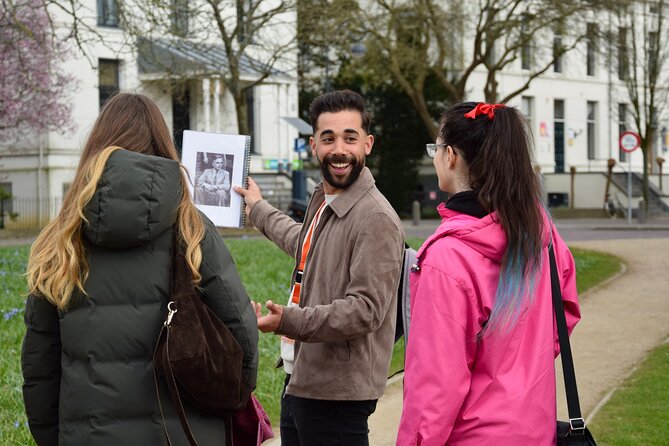
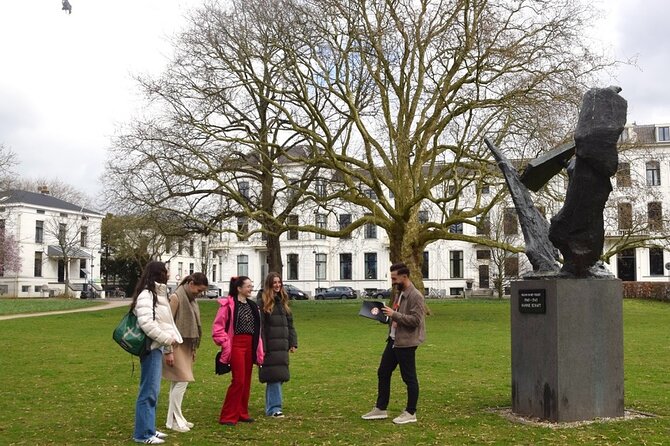
Your first stop is Kenaupark, a green pocket of Haarlem that gives you room to think before the story turns heavy. At the center of the park is a monument to Hannie Schaft, often remembered as the Girl with the Red Hair. The guide frames her not as a distant hero, but as a young person operating in and around Haarlem during the occupation.
This stop matters because it teaches you how resistance work often happened in plain sight. The park setting helps you notice the contrast between what you see now and what the area meant then. You hear about ordinary people who took extraordinary risks, including themes like espionage and sabotage, and you also learn how betrayal could cut through even careful planning. That mix is essential, because it makes the story feel real rather than tidy.
What I like about starting here is the emotional landing. You are not thrown immediately into a museum room. You’re outdoors under old trees, with 19th-century architecture around you, reading a memorial and letting the weight of it settle. It’s also one of the best places on the route to take photos without feeling rushed.
The only drawback is simple: because it is outdoors, you depend on conditions. If weather is bad, the guide still keeps things moving, but your comfort level will be tied to what Haarlem is doing that day.
Haarlem Railway Station: Why a Train Stop Belongs in This Story
Next you head to Haarlem Railway Station, opened in 1839, and noted as the oldest train station in the Netherlands. This is a short stop, but it is not filler. The guide uses it to anchor the idea that daily life kept going in occupied cities, and that transportation networks shaped both escape routes and controls.
This is also a smart timing choice. A station stop early in a tour gives you orientation to the city, especially if you are using landmarks to navigate later on your own. If you like history that connects to how people moved around, this brief visit helps you picture the practical side of occupation life.
If you are expecting a long explanation or a museum-style experience inside the station, that is not what this stop is. It’s a quick, guided context pause, then you move on.
The Corrie ten Boom House: An Introduction, Not a Full Museum Entry
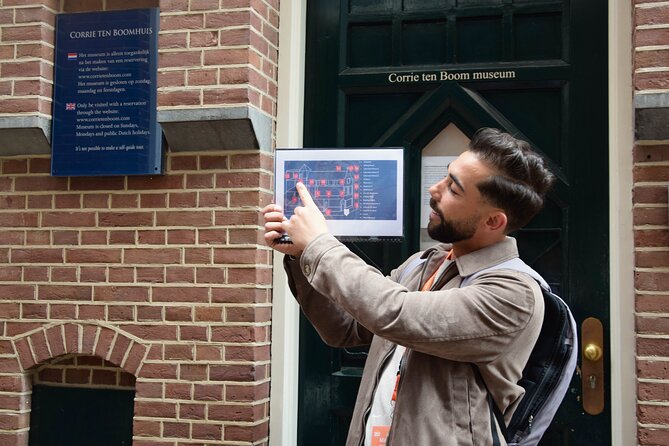
One of the biggest things to understand before you go is that the tour is an introduction to the Corrie ten Boom House, not a full museum admission. The time you spend at the house area is guided, but museum entrance is not included.
That can be a plus if you want clarity first. You learn the ten Boom family story in a way that prepares you to visit the museum later, or helps you decide whether you want to add the museum after the walk. It’s also helpful if you are short on time and want the key story beats without committing to a longer indoor visit.
The challenge is that if you were hoping for a guided walk through every room, you may leave wanting more access. Still, the format works well because you are not stuck indoors for the full two hours. The guide connects the house area to the broader Haarlem resistance network you heard about at Kenaupark, so the story flows rather than feeling like separate facts.
A different way to spend an afternoon around Haarlem:
- Haarlem: 50 minutes Boat Cruise
★ 4.5 · 272 reviews - Haarlem Open-Boat Canal Cruise with Live Guide (Electric Boat)
★ 5.0 · 233 reviews - Haarlem: Windmill ‘De Adriaan’ Guided Tour
★ 4.7 · 197 reviews - Luxury Shared Canal Tour with live guide
★ 4.5 · 87 reviews
Grote Markt: Haarlem’s Center, with WWII Shadows in the Background
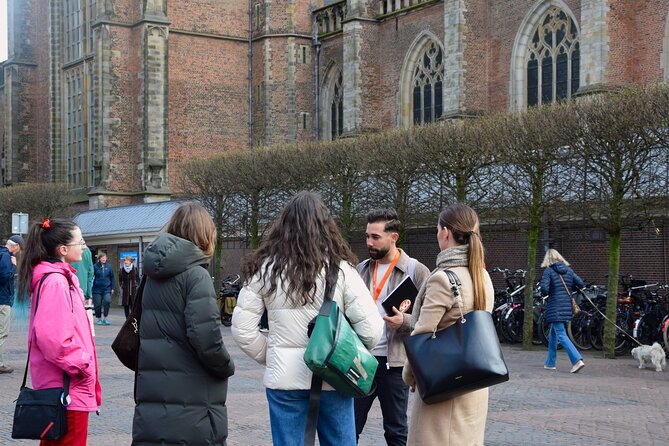
From the ten Boom context, the route moves to Grote Markt, Haarlem’s central square. This is one of the stops where you feel the city as a city, with landmarks and everyday motion around you.
The tour uses Grote Markt to shift your perspective from a single story to a wider city scale. You can look around and imagine how people lived and gathered, even as occupation changed what was possible. The guide helps you connect that atmosphere to the larger narrative, so the square does not feel like a random sightseeing pause.
This stop is also good for practical reasons. It gives you a chance to orient your bearings in the center of Haarlem. After this, the route threads into smaller lanes and quiet gardens where the mood changes again.
If you are tired by the second half of a tour, remember this is still one of the shorter pauses. It’s meant to keep the walk moving without losing the meaning.
Wijngaardtuin and Wijde Appelaarsteeg: Quiet Spaces, Specific Names
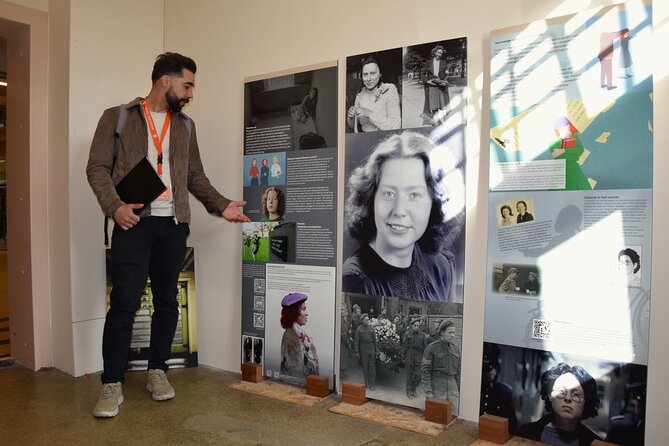
Two of the more reflective stops are smaller and easy to overlook if you are wandering on your own.
First is Wijngaardtuin, a tucked-away garden courtyard behind central Haarlem streets. You get a chance to slow down in a protected space, which helps your brain transition from the heavier memorial content to a more intimate, human scale of reflection. Even if you do not know what you’re looking for at first, the guide explains what makes the site matter in the overall route.
Then you visit Wijde Appelaarsteeg, where there is an honorary plaque to Simon Philip de Vries, a Dutch rabbi and scholar who served the Jewish community in Haarlem for nearly five decades (October 4, 1870 to March 24, 1944). This stop is valuable because it emphasizes continuity and contribution, not only tragedy. It reminds you that communities were built by people with roles, education, and long-term presence, not just by the moment they were destroyed.
If you like when a tour gives you a few name anchors that you can later research on your own, this is the part of the walk that often sticks.
De Koepel: A Former Prison Turned into Something Different
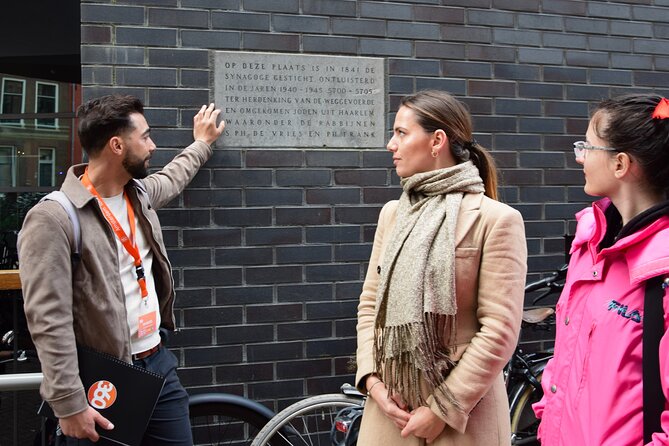
Next comes De Koepel, an architectural transformation that turns an earlier prison into a cultural and educational hub. Even without going inside for a long visit, the idea matters. You see how a building can outlive its original purpose and be used again, which adds a different layer to your understanding.
The guide ties this stop into themes that feel bigger than any one building. You start to notice that WWII sites are not always dramatic monuments. Sometimes the meaning is carried by structures that still look like part of ordinary city life.
One word of caution: because the tour keeps a brisk pace overall, you might not spend as long with each detail as you would on your own. If De Koepel is a must-see for you, it can be worth planning an extra visit after the walk.
The Joods Monument Haarlem: Where the Story Lands
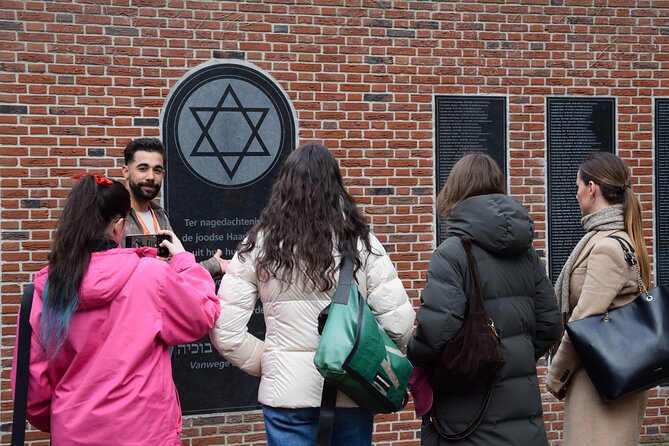
Your final stop is Nauwe Appelaarsteeg 1, at the Joods Monument Haarlem. This is a solemn tribute to the 715 Jewish residents of Haarlem who were deported and murdered during the Holocaust. The monument was unveiled on September 23, 2012, and it is placed near what was once the main synagogue site.
This ending matters because it does not let you leave with only resistance tales. The tour has built toward this point, step by step, by connecting individuals, community presence, and what occupation did to daily life. The memorial gives you a clear focal target for reflection, and it also gives you an exact place to remember when you leave the neighborhood.
If you want to capture your thoughts, this is the moment to do it. Take a minute, read what is there, and let the guide’s closing context settle in.
Price and What You Actually Get for $39.10
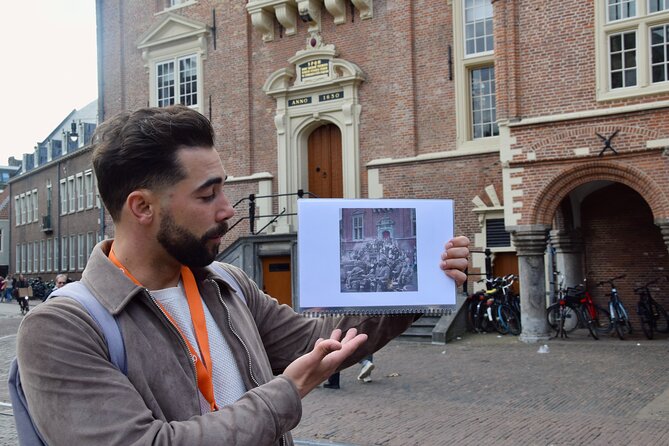
At $39.10 per person for about two hours, this tour sits in a fair range for a guided, location-based experience in central Haarlem.
Here’s the value logic I see:
- You are paying for a guide to connect multiple sites into one coherent WWII route.
- You get a small group size, up to 18, which tends to make it easier to ask questions.
- Several stops are free to access on foot or by viewing monuments, so the cost is mostly for the storytelling and navigation between meaningful points.
- The big content anchor, the Corrie ten Boom House area, is guided but not entered with museum admission. That reduces what you get inside, but it increases how much you can cover in the short time.
So, if you are the type who likes a guided narrative more than a self-paced museum session, this price can feel like good use of time. If you are hoping to spend long indoor hours in the Corrie ten Boom museum itself, you may want to plan for a separate museum ticket later.
Guide Quality, and the Difference a Storyteller Makes
One theme that really comes through is the guide experience. In the English-speaking version of this tour, Manuel is frequently described as engaging and professional, with the kind of pacing that makes facts feel connected rather than memorized. People also note his ability to answer questions and keep adding context points when the group is ready for it.
There is also a practical perk: even if the weather turns ugly, the guide knows how to keep momentum. One set of comments specifically points out a day with lousy conditions, but the tour still landed with real detail and a strong sense of purpose.
Finally, the tour timing tends to feel flexible in the best way. When a guide is clearly enjoying the material, you often get more Q and A, and you leave with a stronger grasp of what you just saw.
Who Should Book This Tour
This experience is a strong match if you:
- want a guided WWII route in Haarlem that does not require museum-only time
- like history that connects specific people and landmarks, not just broad timelines
- appreciate when a guide helps you understand the city’s layout and why these sites are placed where they are
- are traveling with limited time, but still want a meaningful story arc
It may be less ideal if you:
- specifically want an included Corrie ten Boom House museum visit with full entry time
- dislike walking and prefer long indoor stops
- need a strict end time with no chance of added discussion
The tour is a moderate-fitness walk. You will be on your feet across multiple short stops, mostly outdoors.
Should You Book It?
Yes, book it if you want a well-organized Haarlem walk that connects resistance and Holocaust memorial sites into one understandable route. The small group size, the stop choices, and the guide storytelling style are what make this more than a quick sightseeing loop.
If your main goal is an in-depth museum experience, treat this as the warm-up and orientation, not the final stop. You’ll likely appreciate it even more if you plan a follow-on museum visit afterward.
If you want your Haarlem visit to carry meaning, not just photos, this is a solid use of two hours.
FAQ
How long is the tour?
It runs for about 2 hours.
How much does it cost, and where is it offered?
The price is $39.10 per person, and the tour is offered in English.
Is the Corrie ten Boom Museum entrance included?
No. The Corrie ten Boom House is part of the route, but admission to the Corrie ten Boom Museum is not included.
Where does the tour start and end?
It starts near the Central square of Haarlem (Grote Markt) and ends at Nauwe Appelaarsteeg 1, Haarlem.
What is the group size limit?
The tour has a maximum of 18 travelers.
Are service animals allowed?
Yes, service animals are allowed.
Newest bookings around Haarlem
- Haarlem Battle Quest: Self-Guided City Defense Adventure★ 4.5 · 13 reviews
- Walking Tour of Haarlem with a Local Guide★ 4.5 · 4 reviews
- Self Guided Asian Food Tour Haarlem★ 5.0 · 3 reviews
- e-Scavenger hunt Haarlem: Explore the city at your own pace★ 4.5 · 12 reviews
- Private Haarlem Canal Cruise with Captain (Electric Boat)★ 5.0 · 71 reviews
- Discover Haarlem with a self-guided Outside Escape city game tour★ 4.5 · 12 reviews
- Luxury Shared Canal Tour with live guide★ 4.5 · 87 reviews
- Haarlem Private Food Walking Tour with 8 Tastings★ 5.0 · 12 reviews
Haarlem Tours, compared.

Sightseeing Canal Cruise through the City Center
Read our review →



Haarlem Open-Boat Canal Cruise with Live Guide (Electric Boat)
Read our review →


Frans Hals Museum Entrance Ticket with Audio Guide
Read our review →Browse the lists this tour appears in