
REVIEW · UTRECHT TOURS
Castles, Canals and Good Folk: A Self-Guided Audio Tour of Utrecht
Utrecht unfolds best when you can pause anytime. This self-guided VoiceMap route lets you explore on your schedule, with offline audio and maps so you are not stuck when service gets spotty. You’ll follow a clear path through classic sights, easy breaks for cafés, and quieter stretches in the north, including a wartime bunker.
What I like most is the mix of everyday city life with big historic anchors. You start with the energy of a Dutch city centre market, then move into layers of Utrecht’s working-class past, faith, and civic buildings like Oudaen castle. One thing to consider: the earliest directions can be a bit vague at first, so have the map ready right away and plan to check it early on.
In This Review
- Key reasons to try this Utrecht audio walk
- Why Utrecht’s self-guided route feels effortless
- Price and value: $8.99 that can pay off twice
- Getting started at Hoog Catharijne P5 (Interparking), and downloading for offline
- Stop 1 and the market mood: starting your Utrecht story in the city centre
- Working-class Utrecht in the 1920s: a small museum stop with big meaning
- Jacobikerk and faith on the street: Utrecht’s Protestant story
- Oudaen castle and craft beer cellars: a real break you’ll remember
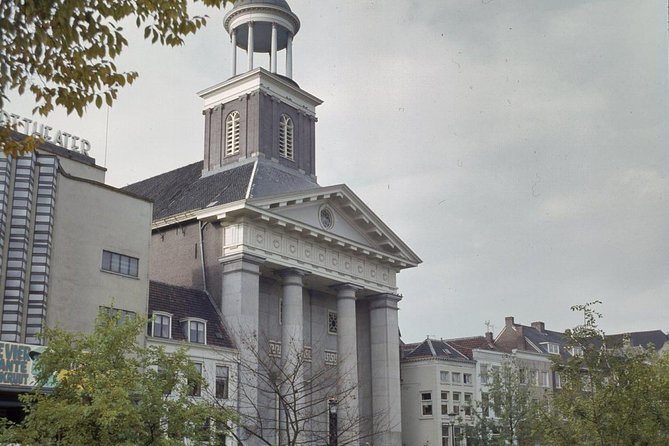
- Neude square and the Netherlands’ most beautiful post office
- Fabric market for 400 years: old commerce, new energy
- A boutique hotel tied to an eye hospital, plus Utrecht’s university streets
- Sculpture, a wartime bunker, and ending near Janskerk
- Time on your feet, what to pack, and how to use the pauses well
- Who this Utrecht audio tour fits best
- Should you book this self-guided Utrecht audio tour?
- FAQ
- How much does the Utrecht self-guided audio tour cost?
- How long is the tour?
- What languages are available?
- Do I need an internet connection during the walk?
- What do I need to bring?
- Where does the tour start and end?
- Are entrance tickets to stops included?
- Is it refundable if I cancel?
Key reasons to try this Utrecht audio walk
- Offline-first VoiceMap means audio, maps, and geodata stay available as you walk
- A market-to-monuments route that balances eating, people-watching, and real context
- Oudaen castle plus a craft brewery cellar stop gives you history you can picture
- Neude square highlights include the famous post office and a long-running fabric market area
- Faith and education thread through the walk, from Jacobikerk to university neighbourhood streets
- Northern quarters and a wartime bunker add a deeper, more sobering layer late in the route
Why Utrecht’s self-guided route feels effortless
A guided tour is great when you want someone else to do the timing. But in a place like Utrecht, I think the sweet spot is self-guided, because the city rewards lingering. You can slow down for a coffee, drift toward a canal view, or cut back if you find a street you love.
This route is built for that. It is designed as a walking story, not a checklist. The app gives you spoken chapters as you go, and the path is close enough to keep you confident, even if you pause for croquettes, pickled herring, fresh bread, or cheese tasting at the market stops.
The value angle is strong too. At $8.99 per person, you are not paying for a one-time experience. You get lifetime access to the English tour, plus offline support, which is exactly what you want in a city where you might want to repeat highlights on a later visit.
A handful of other Utrecht outings
- Utrecht: City Canal Cruise
★ 4.3 · 2,895 reviews - Utrecht: De Haar Castle + Gardens Entry Ticket
★ 4.7 · 1,838 reviews - Utrecht: DOMunder Entry Ticket with Guide
★ 4.4 · 706 reviews
Price and value: $8.99 that can pay off twice
Let’s talk value in plain terms. You pay $8.99 per person for an audio tour that runs about 1 hour to 1 hour 30 minutes. That is a good length for Utrecht, because it hits multiple neighbourhoods without dragging.
Where the value really improves is in what you get with that price:
- lifetime access to the tour in English
- the VoiceMap app for Android or iOS
- offline access to audio, maps, and geodata
So the cost is not just for one walk. If you come back later, or you want to show up for only part of the route, you can. Add in that the ending point is near cafés and not too far from the start, and you can easily turn the walk into a simple loop for an afternoon.
Getting started at Hoog Catharijne P5 (Interparking), and downloading for offline
The tour starts outside the east entrance to Hoog Catharijne, at Hoog Catharijne P5 (Interparking) on Daalsesingel. If you’re using public transport, this location is convenient, and you do not need to fight for parking.
Before you head out, download the VoiceMap content ahead of time so it works offline. This matters because you’ll be walking through multiple areas, including the northern parts. Offline audio also means you can keep your phone in airplane mode if you want, saving battery and avoiding constant reconnection.
Tip for smooth navigation: have your screen brightness up just enough to see the map. The app can give early directions that are not super pinpoint, so you may want to confirm where you are before you commit to a turn. Once you get a few stops behind you, it generally feels easier to follow.
Stop 1 and the market mood: starting your Utrecht story in the city centre
You begin right at the edge of Utrecht’s busy hub, which is smart. Starting at Hoog Catharijne means you’re already near transit links, and you can join the route quickly without a long preamble.
The next chapter moves you toward a market stop. This is where the tour shifts from transport convenience to city character. A Dutch city-centre market is made for grazing and lingering, not rushing. Expect strong local texture here, with foods like croquettes, pickled herring, fresh bread, and an unusually wide range of cheeses.
Why this works in an audio tour: you get historical context later, but you start by grounding yourself. You smell the food, you hear the street sounds, and you learn the city as a living place, not just as scenery.
Practical note: bring a little cash or a payment card you trust. If you plan to snack during the walk, it’s easier when you do not have to plan around a single vendor.
A different way to spend an afternoon around Utrecht:
- Utrecht: Dom Tower Entry Ticket and Guided Tour
★ 4.6 · 513 reviews - Utrecht: De Haar Castle Gardens and Park Only Entry Ticket
★ 4.5 · 223 reviews - Utrecht 2-Hour Walking Tour | Discover The City With A Local
★ 5.0 · 138 reviews - Utrecht: Rietveld Schröderhuis UNESCO Entry Ticket
★ 4.8 · 119 reviews
Working-class Utrecht in the 1920s: a small museum stop with big meaning
One of the most compelling parts of the route is a small but impressive museum that focuses on the working-class neighbourhoods of Utrecht in the tough times of the 1920s. Even if you do not stay long, this is the kind of stop that changes how you read the streets.
Look at it this way: cities often tell their stories through grand monuments. This museum section gives you a different lens. It helps you connect everyday life to the architecture around you, and it makes later religious and civic stops feel more grounded.
What to watch for as you pass through this chapter: you are not just collecting dates. You’re building a sense of what life could have been like for ordinary residents during economic pressure. That context tends to make the rest of the walk more meaningful.
If you are short on time, you can still treat it like a focused “stop and reset” moment. Even a brief visit to absorb the main points works well in this kind of self-guided route.
Jacobikerk and faith on the street: Utrecht’s Protestant story
Utrecht has long played an important role in the Netherlands’ religious life, and this tour puts that in your path quickly. The walk includes the Jacobikerk, an important Protestant church, and it sets up the walk through a neighbourhood full of stories tied to faith and commitment.
Here’s the value for you: religious sites can feel like background scenery if you do not have context. The audio guide gives you a framework so you can see the church not just as architecture, but as a signpost for community history.
When you reach Jacobikerk, slow down and listen. Also, watch how the street layout and surrounding buildings support the feeling of a lived-in neighbourhood. Utrecht tends to reward that kind of attention, because it is not only landmarks. It is streets that matter.
Oudaen castle and craft beer cellars: a real break you’ll remember
Next comes Oudaen, a city castle built around 1276. That date matters because you are stepping into a building that has already survived centuries of change. This stop also works as a natural refreshment pause, and the audio guide points you toward a craft brewery in the cellars.
Even if you do not go inside for a tasting, this is still a great moment to take a breath. Castles can be intimidating when you only see the exterior. Here, the connection to the brewery cellars helps you imagine old storage spaces and older rhythms of city life, then translate that into something modern and local.
One practical strategy: decide whether you want a drink or a snack before you enter this area. If you plan to buy something, do it right when you hit Oudaen, so you are not wandering with a timeline hanging over you.
Neude square and the Netherlands’ most beautiful post office
You reach Neude Square, a key Utrecht hub. The tour highlights the most beautiful post office in the Netherlands on Neude square. That phrasing is bold, but it signals something useful: this is not just a building you pass by. It’s a landmark with character.
In an audio tour, post offices can seem random. But they’re not. They connect to how cities moved information and people. Once the audio chapter frames that idea, it becomes easier to notice details in the façade and the space around it.
Take a moment in this square to orient yourself. Utrecht’s centre can feel compact, but the street angles and canals create quiet surprises. A pause here helps you navigate the remaining stretch without rushing.
Fabric market for 400 years: old commerce, new energy
After Neude, the route guides you to the fabric market area. This is described as the largest and oldest fabric market in the Netherlands, with activity going for around 400 years.
So here’s the trick for enjoying this chapter: don’t expect it to feel like a museum exhibit. A living market is not frozen in time. Instead, focus on the continuity. The point is less about whether the stalls look exactly like they did centuries ago, and more about why the city keeps the same kind of commercial focus in the same kind of place.
If you like shopping, this is where you might actually stop. If you do not, you can still do window browsing and let the audio give you the historical framing.
A boutique hotel tied to an eye hospital, plus Utrecht’s university streets
The tour passes by a boutique hotel that was home to an eye hospital in the past. This stop is a good reminder that city buildings often have layers. A façade today might be connected to healthcare, education, or public services from another era.
From there, the route moves through the old University neighbourhood of Utrecht. This part matters because it shifts the vibe. You trade heavy institutional architecture for neighbourhood streets that feel more like daily life. You’re likely to see calmer corners and more “walkable” residential streets.
Audio tourism is strongest when it changes your pace, and the university area tends to do that. It gives you space to walk without constantly hitting big landmark moments, which can make the late chapters feel more impactful.
Sculpture, a wartime bunker, and ending near Janskerk
The later segment includes a powerful sculpture of a remarkable young woman, described in the tour as someone who continues to have meaning in our lives long after her passing. The audio chapter here is designed to make you slow down. Sculpture is one of those things that can look obvious, but only becomes personal when you understand why it was made.
Then, you head through northern quarters and include a wartime bunker. This is where the tone takes a more serious turn. It’s also one of the reasons I like this tour route: it doesn’t only stay on pretty streets. It also shows Utrecht’s heavier side in a way that fits a self-guided walk.
Finally, the tour ends near Janskerk with a story about the Order of the Knights of Utrecht. Ending near Janskerk is practical, because it’s close to cafés. It’s also close enough to the starting area that you can easily stitch together the rest of your day without building a second travel plan.
Time on your feet, what to pack, and how to use the pauses well
The tour runs about 1 hour to 1 hour 30 minutes. That is enough time to:
- follow the audio chapters without feeling rushed
- stop briefly at key sites
- take a snack or drink at the natural breaks
What can change the duration is what you decide to do at Oudaen and at market areas. If you only listen and walk through, you’ll be closer to 1 hour. If you stop to eat, you’ll extend it.
Pack smart:
- Smartphone, with enough battery for the whole walk
- Headphones (the tour itself needs your device and audio output)
- Download completed before you go, so the tour works offline
- A comfy pair of shoes, Utrecht streets are easy to love, but you still walk a lot
If you want the route to feel easy, use a simple rhythm. Listen to a chapter, take 2 to 5 minutes to look around, then move on. When you hit market stops, loosen that rhythm. Eat first, then listen again.
Who this Utrecht audio tour fits best
This tour suits you if you want:
- an easy self-guided way to get first impressions of Utrecht
- a route with both everyday city life and major historic anchors
- offline audio and maps so you can walk without stress
- a clear time window that fits with cafés and extra wandering
It’s also a good choice if you like learning through scenes, not just facts. The working-class 1920s museum stop, the Jacobikerk chapter, and the wartime bunker later on all help you understand Utrecht as more than a pretty canal city.
I’d be slightly cautious if you need ultra precise turn-by-turn directions from the very first minute. The early guidance can be a bit ambiguous, and you’ll likely lean on the map early on to get your bearings.
Should you book this self-guided Utrecht audio tour?
Yes, I think you should book it if you want a low-cost way to experience Utrecht with context and control. At $8.99, lifetime access, and offline support, the value is real, especially for a city you might revisit.
Book it if you enjoy markets, churches, long-running commercial places like the fabric market, and you like ending with a meaningful story near Janskerk. The route gives you breaks, keeps you moving, and adds darker chapters like the wartime bunker so the city feels honest.
Skip it only if you strongly prefer a fully guided format where every instruction is pinpoint from the first step. Otherwise, this is a practical, enjoyable way to learn Utrecht while still living your own pace.
FAQ
How much does the Utrecht self-guided audio tour cost?
It costs $8.99 per person.
How long is the tour?
It takes about 1 hour to 1 hour 30 minutes.
What languages are available?
The tour is offered in English.
Do I need an internet connection during the walk?
No. The VoiceMap app includes offline access to audio, maps, and geodata, as long as you download beforehand.
What do I need to bring?
Bring your smartphone and headphones.
Where does the tour start and end?
The tour starts outside the east entrance to Hoog Catharijne at Hoog Catharijne P5 (Interparking), Daalsesingel, Utrecht. It ends near Janskerk at Faculteit Recht, Economie, Besturr en Organisatie (REBO), Utrecht.
Are entrance tickets to stops included?
No. Tickets or entrance fees to museums or other attractions are not included.
Is it refundable if I cancel?
No. This experience is non-refundable and cannot be changed for any reason.
Newest bookings around Utrecht
- Utrecht: Rietveld Schröderhuis UNESCO Entry Ticket★ 4.8 · 119 reviews
- Utrecht: Lofen Palace with Entry Ticket & Guide★ 4.5 · 61 reviews
- Utrecht: Museum Speelklok Entry Ticket★ 4.5 · 48 reviews
- Utrecht: De Haar Castle Gardens and Park Only Entry Ticket★ 4.5 · 223 reviews
- Utrecht: Highlights and Secrets with a Walking Tour★ 5.0 · 17 reviews
- Utrecht: Ludwig’s Original Pub Crawl with VIP Club Entry★ 3.3 · 42 reviews
- Utrecht: Guided Food Tour★ 4.7 · 10 reviews
- Utrecht Food Tour: 7 food stops and a fantastic local guide★ 4.4 · 15 reviews
Utrecht Tours, compared.
De Haar Castle Gardens and Park Only Entry Ticket
Read our review →
Utrecht 2-Hour Walking Tour | Discover The City With A Local
Read our review →
Browse the lists this tour appears in