
REVIEW · RED LIGHT DISTRICT TOURS
Amsterdam Red Light District tour with a private guide
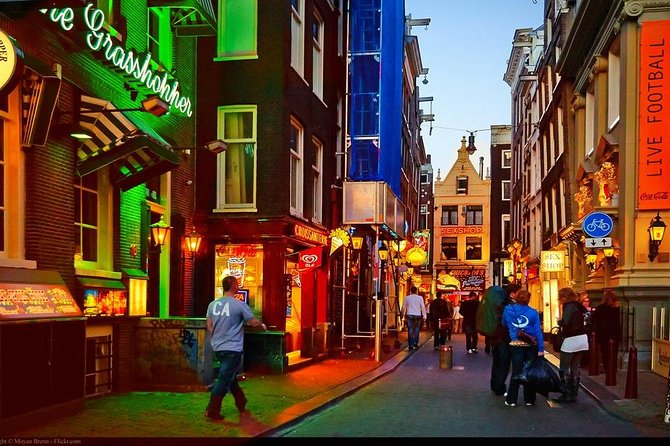
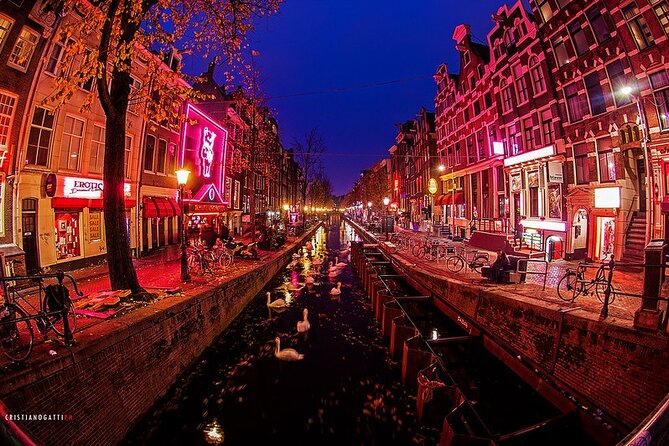
De Wallen reads differently with a guide. This private 2-hour walk with an English-speaking guide turns the Red Light District and nearby Old Town landmarks into a story you can follow, not just a street you pass through. I like that you get a custom-fit pace for your group size, up to 8 people, and the guide helps you understand what you are seeing in De Wallen today, with history that connects street corners to real buildings.
What I like most is the blend of street-level walking with specific place details, like Waag and Pub The Ape (Int Aepjen). If you happen to get a guide like Stan, the route feels smarter too, since he tends to point out narrow streets and sights you might miss on your own. A possible drawback is that this is mostly a guided walk and explanation, not a guarantee of any special access, so if you expect a checklist of photo stops or behind-the-scenes viewing, you may be underwhelmed.
Still, the tour is a solid way to get your bearings fast, especially if you want more than guidebook facts and you prefer someone local guiding the flow.
In This Review
- Key highlights to know before you go
- Why De Wallen works best with a private guide
- Start at Prins Hendrikkade, then read the Old Town like a local
- De Wallen streets: history, current situation, and how the guide frames it
- Dam area and Amsterdam’s city-on-trees foundations
- Pub The Ape (Int Aepjen), the 1540 wooden building story, and why it survived
- Waag, guilds, and the defensive wall that became a craftsman square
- Smallest house, VOC storage, and the condom shop since 1987
- Price and value: splitting $327.64 across your group
- Who should book this Amsterdam Red Light District private tour
- Should you book this tour?
- FAQ
- How long is the Amsterdam Red Light District tour?
- Is this a private tour?
- What is the group size limit?
- What language is the tour offered in?
- Do I need to buy admission tickets for the stops?
- Where do we meet for the tour?
- What is the cancellation policy?
- Are service animals allowed?
Key highlights to know before you go
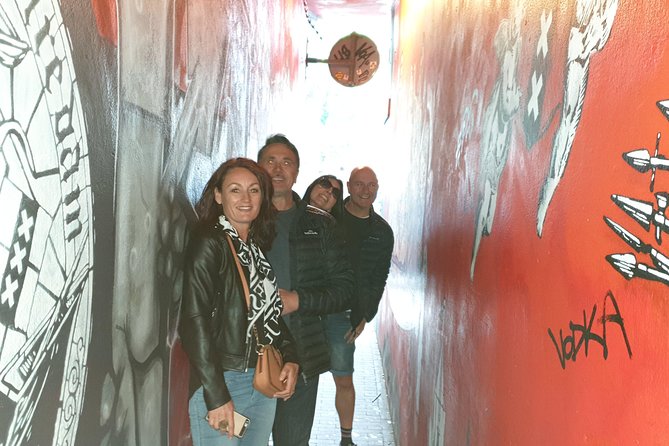
- Private for your party (up to 8): no mixed-group shuffle, you can set the tempo together.
- De Wallen history plus current situation: you walk the narrow streets with context, not just commentary.
- Dam area, Amsterdam on wooden piles: you’ll understand how the city’s foundations work, where it all began to settle on sand.
- Pub The Ape (Int Aepjen), built around 1540: one of the last wooden buildings from an era shaped by the 1452 fire.
- Waag on the defensive wall: a gate from the 1400s, later used by guilds and craftsman organizations.
- Smallest house and VOC storage: built around the 1700s, tied to the Dutch trading company story.
Why De Wallen works best with a private guide
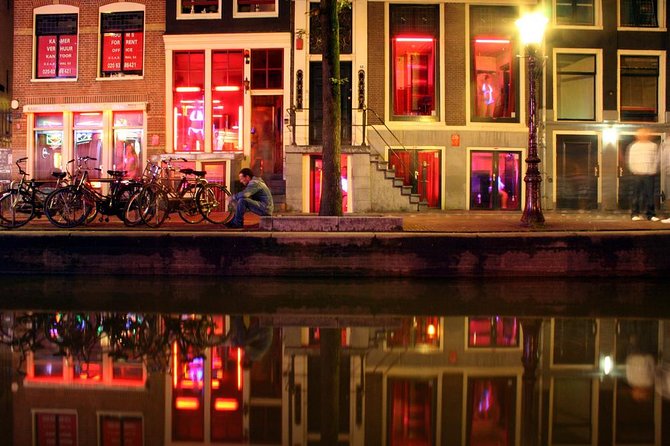
De Wallen can be a lot for first-timers. Even if you already know the basics, the area still surprises you with its tight streets, overlapping eras, and the way the Old Town shows up around the edges. A private guide helps because the district is not one single thing. It is a neighborhood layered with architecture, trade, governance, and modern life, all packed into a small walkable radius.
With a group limited to your party (up to 8), you also get something most DIY plans lack: a guided route that keeps you from wandering in circles. I find this matters here, because the street pattern is exactly the kind that makes you feel lost, even when you think you are close. A guide keeps the walk moving and helps you connect what you see to what it means.
The tour is offered in English and uses a mobile ticket, so you can focus on the walk instead of chasing paperwork. And because it is explicitly designed as a private experience, you can usually match the pace to what your group wants, whether you prefer short stops and quick pictures or slower listening moments.
More Red Light District walks:
- Amsterdam: Red Light District Tour in DE/EN/IT/ES/FR
★ 4.9 · 7,136 reviews - Amsterdam: Red Light Secrets Museum Entry Ticket
★ 4.2 · 5,722 reviews - Amsterdam Red Light District & Coffee Shop Tour
★ 4.6 · 4,134 reviews
Start at Prins Hendrikkade, then read the Old Town like a local
You meet at ParkBee Parking NH Collection Amsterdam Barbizon Palace, Prins Hendrikkade 59, 1012 AD, Amsterdam. From there, the walk is designed to bring you back to the meeting point at the end, so you do not have to puzzle out what happens after the last stop.
I like this setup for a couple reasons. First, it reduces stress. You are not thinking about trains, taxis, or whether you are walking too far in the wrong direction. Second, it means the guide can build a coherent route, instead of jumping around based on whoever’s navigation app is acting up.
This area is part of the broader Old Town story, which is why the tour pays attention to foundations and early city design, not just modern nightlife. You will see how places that look ordinary from the outside were tied to defense, commerce, and civic decisions that shaped Amsterdam for centuries. Even when you are standing in the middle of De Wallen, you are not stuck inside one theme.
Most travelers can participate, and service animals are allowed, which helps make the experience more flexible for real groups. And since the meeting area is near public transportation, it is a manageable plan even if your day in Amsterdam is already packed.
De Wallen streets: history, current situation, and how the guide frames it
The main walking time is centered on De Wallen itself, with a focus on narrow streets and the district’s history plus its current situation. That matters because De Wallen is often talked about in a single-note way, but it is actually a place where old city structure still shapes everyday movement.
As you walk, the guide’s job is to help you interpret what you are seeing without turning it into a weird or uncomfortable spectacle. I appreciate that the tour is pitched as learning from facts and insights, rather than trying to shock you or rush you. The narrow streets are the point. They change how you experience the district, and they also explain why the area developed the way it did.
You should also expect a tour like this to talk about the realities of the district today. One of the themes is that De Wallen’s current situation is complicated and evolving, so your guide may explain what that means in practice as you go. If you prefer an ultra-simple sightseeing checklist, you might feel this kind of context-heavy approach is slower than you planned. If you want to understand the neighborhood, it is exactly what you came for.
If you are worried about this being too much, the private format helps. You can ask your guide for the tone you want, and since it is your party only, you are not stuck with someone else’s level of curiosity or comfort.
Dam area and Amsterdam’s city-on-trees foundations
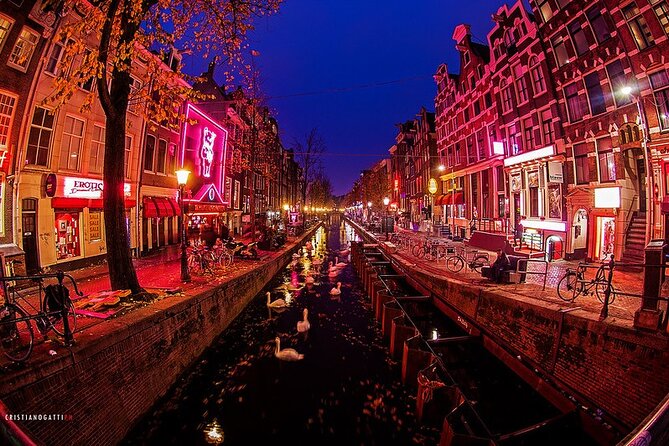
One of the most memorable parts is the Dam area connection, where you get the idea Amsterdam is literally built on trees, at least in how the foundations work. The tour explains that Amsterdam sits on thick layers of fen and clay. Because of that, many buildings rely on wooden poles fixed in sand layers deeper underground, about 11 meters down.
Standing on the surface, it is easy to forget that Amsterdam’s stability depends on engineering decisions made centuries ago. This stop makes that visible in your mind. You learn that older houses were known to be built on wooden foundation piles driven deep into clay, peat, and water until they reached the first layer of solid sand.
This is a great “mental reset” in the middle of a tour known for modern headlines. It pulls you back to city design and real constraints. And since the Dam area is also part of the older parts tied into the Red Light District area, it reinforces a key idea: the district sits on deep historical groundwork, not a blank space where everything new simply happened later.
It also adds something for architecture lovers. Even if you are not a building nerd, you start noticing how a compact city like Amsterdam had to solve practical problems in order to grow.
A handful of other Amsterdam outings
- Amsterdam: Van Gogh Museum Ticket
★ 4.7 · 52,054 reviews - Amsterdam: Heineken Experience Ticket including 2 Drinks
★ 4.6 · 36,014 reviews - Amsterdam Classic Saloon Boat Cruise with Drinks and Cheese
★ 5.0 · 31,825 reviews - Amsterdam Luxury Canal Cruise + Unlimited Drinks & Bites option
★ 5.0 · 30,518 reviews
Pub The Ape (Int Aepjen), the 1540 wooden building story, and why it survived
You also get a stop at Pub The Ape, known in Dutch as Int Aepjen. This pub is built around 1540, and it is described as one of only two remaining wooden buildings in Amsterdam. That detail is more than trivia. It is a clue to how the city rebuilt itself after disaster.
The big turning point here is the 1452 fire. After that, the government decided buildings should have brick facades. When you hear that, the survival of a wooden building becomes meaningful. It tells you the city did not just change tastes. It changed rules, and those rules shaped what you see today.
For me, this is where a guide earns their fee. You do not just pass a pub and move on. You learn why it is rare. You learn why it matters. And once you understand the reason for the building’s existence, you start noticing the surrounding context differently.
If you are the type who likes to understand why a city has certain landmarks in certain spots, you will appreciate this stop. If you only care about the Red Light District portion, it can feel like a tonal shift. But it fits the tour’s promise: more than guidebook browsing, real connective tissue between eras.
Waag, guilds, and the defensive wall that became a craftsman square
Another highlighted stop is the Waag. You’ll hear that it used to be one of Amsterdam’s city gates, part of the defensive wall, built around the 1400s. It is also described as the second oldest building in Amsterdam.
Then the story keeps moving. The tour explains that later on it became used as a guild space, where craftsman organizations situated themselves within the Waag and around the square. That is an important detail because it shows how architecture can evolve from defense to civic economy.
This is one of the reasons I like pairing De Wallen with Old Town structures. When the guide talks about Waag, the Red Light District is no longer the whole picture. You start placing it inside a broader city system of trade, regulation, and organized work.
Even if you do not know Dutch history, you can follow the thread. A gate exists because a city needs control. A guild exists because skilled people need a place to gather and function. Those are different worlds, but they connect.
And since this is a walking tour, you also get to see how these buildings sit in real street space. You are not looking at Waag in isolation, you are experiencing it on the same map scale as De Wallen and the Old Town landmarks around it.
Smallest house, VOC storage, and the condom shop since 1987
The smallest house of Amsterdam is another stop you will hear about, built around the 1700s. The tour explains its first use as a storage place for the VOC trading company, and later, people started living there for a very long time.
That combination is fascinating. VOC storage points you to Amsterdam’s trading era. Living in a tiny footprint points you to how people actually occupied city space when life required it. Even if you only see the exterior, the story adds weight to what you think you are looking at.
Then the tour takes a modern turn with a stop connected to the condom shop specialized for condoms, described as the world’s first condom shop of its kind and in place since 1987. You can get size customized condoms and other special types. That is a surprising detail, and it matters because it shows De Wallen and adjacent Old Town spaces are not stuck in one stereotype.
You get a neighborhood that can include defense-era stone, guild-era civic life, trading-company commerce, and then modern retail focused on sexual health. It is a reminder that cities are layered, not themed.
Price and value: splitting $327.64 across your group
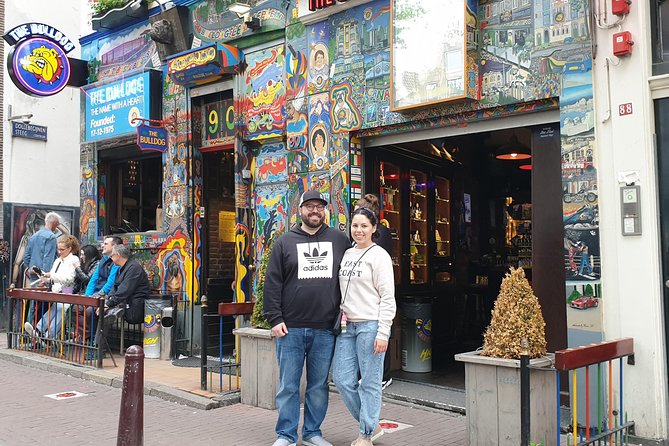
This tour costs $327.64 per group, for up to 8 people. If you fill all 8 spots, that pencils to roughly $41 per person. If you have fewer people, the per-person cost rises, so the math becomes more about group size than about the subject.
I think this price works best when you value context more than just walking through a neighborhood. You are paying for a private guide’s pacing, explanations, and the ability to point out places like Int Aepjen, Waag, the smallest house, and the condom shop in a way that feels connected instead of random.
If your group is made of people who like history, architecture, and understanding what a place means today, you will likely feel the value quickly. If your group prefers a DIY plan and you are comfortable using maps and guidebooks, you could likely recreate the route on your own. The guide is what turns that route into a meaningful walk.
Who should book this Amsterdam Red Light District private tour
Book it if you want to walk the narrow streets of De Wallen with real context, especially if your group includes at least one person who enjoys city history and building stories. It is also a strong fit for couples or small groups who want privacy and a guided flow without joining strangers.
Choose carefully if your main goal is quick sightseeing with minimal listening. This kind of tour is built for interpretation, not just snapping photos and moving on.
A good rule: if you are curious about how Amsterdam’s foundations work, how older buildings survived policy changes after fires, and how defensive architecture became civic spaces, you will enjoy this walk. If you only want a headline experience, this might feel too thoughtful.
Should you book this tour?
Yes, if you want a private, guided De Wallen walk that connects the district to older Amsterdam landmarks like Waag, the Dam foundations story, Pub The Ape (Int Aepjen), the smallest house, and even the condom shop since 1987. The guide factor is the difference between walking around and actually understanding what you are seeing.
Skip it if you already know exactly what you want to do and you want to minimize guided time. In that case, a self-guided map route could suit you better.
If you do book, I’d go into it with one mindset: you are not here to collect shocks. You are here to read the city in street-level detail.
FAQ
How long is the Amsterdam Red Light District tour?
It lasts about 2 hours.
Is this a private tour?
Yes. It is private, and only your group will participate.
What is the group size limit?
Up to 8 people per group.
What language is the tour offered in?
The tour is offered in English.
Do I need to buy admission tickets for the stops?
Admission is listed as free for the tour stop described as the main walk.
Where do we meet for the tour?
The tour starts at ParkBee Parking NH Collection Amsterdam Barbizon Palace, Prins Hendrikkade 59, 1012 AD Amsterdam.
What is the cancellation policy?
You can cancel for a full refund if you cancel at least 24 hours before the experience starts.
Are service animals allowed?
Yes, service animals are allowed.
Newest bookings around Amsterdam
- Amsterdam Breakfast Cruise on Private Luxury Boat★ 5.0 · 5 reviews
- Amsterdam-West Food Tour with local guide★ 5.0 · 16 reviews
- Amsterdam: Explore the Van Gogh Museum & His Masterpieces★ 3.5 · 64 reviews
- Van Gogh Museum Tour excluding Entrance Tickets★ 5.0 · 16 reviews
- Van Gogh Museum with Audio Guide★ 3.5 · 80 reviews
- Van Gogh Museum Ticket with Audio Guide and Unlimited Access Time★ 5.0 · 25 reviews
- Van Gogh Museum Entry Ticket and Guided Tour★ 4.5 · 48 reviews
- Van Gogh Museum Skip the Queue with Audio Guide★ 4.0 · 261 reviews
Red Light District Tours, compared.
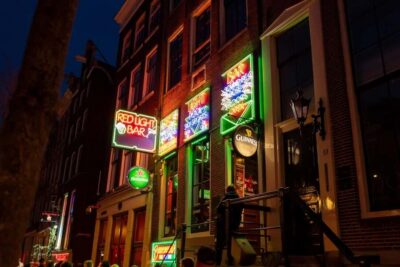
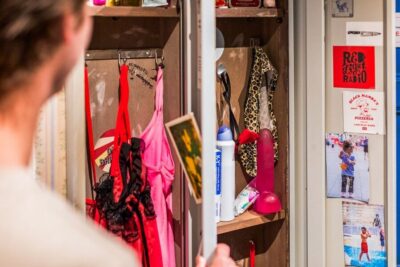
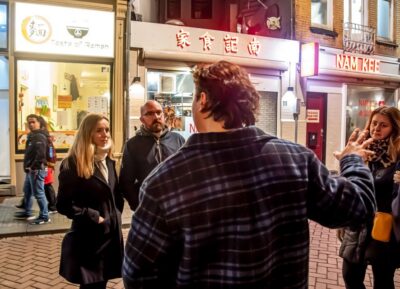
Amsterdam Red Light District & Coffee Shop Tour
Read our review →
Red Light District Pub Crawl with Unlimited Shots
Read our review →
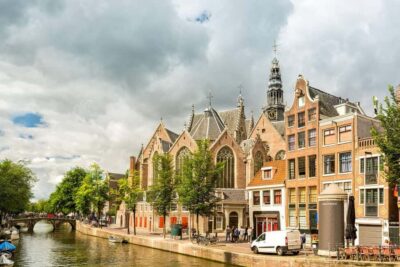
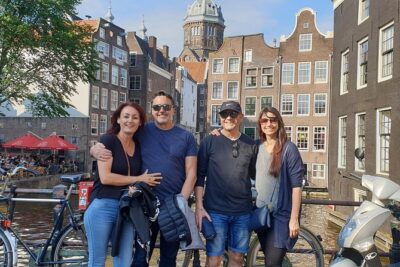
Private Amsterdam Red Light District and Coffee Shop Tour
Read our review →
Browse the lists this tour appears in