
REVIEW · JEWISH QUARTER WALKING TOURS
Amsterdam: Jewish Quarter and History Guided Tour
WWII reaches your doorstep here. This 2-hour Jewish Quarter walking tour in Amsterdam connects Jewish life before and during the Nazi occupation to the streets you can still walk today, starting by the Amstel River and ending near Anne Frank’s House. You’ll see landmarks tied to the occupation years, including the Portuguese Synagogue, the Jewish Historical Museum, the Jewish Council headquarters, Dokwerker, and memorials such as the Auschwitz Monument.
What I love most is how the guide turns buildings into everyday stories, so the neighborhood feels lived-in, not like a postcard. I also like that you spend real time with memorial sites and learn what they meant to people then, not just what they represent now.
One consideration: the topic is heavy, and the walk can move briskly. Also, the tour description says it finishes in front of Anne Frank’s House, but at least one booking reported ending near a Holocaust memorial instead, so it’s worth confirming where you’ll be let off if that matters to you.
In This Review
- Key things I found especially useful
- Entering the Jewish Quarter from the Amstel River
- Getting the pre-occupation context you can actually use
- Portuguese Synagogue and the Jewish Historical Museum: why these stops matter
- The Jewish Council headquarters: where authority and pressure meet
- Dokwerker and the Auschwitz Monument: understanding place as evidence
- How the Anne Frank House ending changes the emotional shape
- Guides who handle hard questions well
- Price and value for a 2-hour, central Amsterdam walk
- Practical tips to get the most from the walk
- Who this tour suits best
- Should you book the Amsterdam Jewish Quarter and History guided tour?
- FAQ
- How long is the Amsterdam Jewish Quarter walking tour?
- Where does the tour start and where does it end?
- What are the main landmarks included on the walk?
- Is this tour private or shared?
- What languages are the guides?
- Is food or drinks included?
Key things I found especially useful
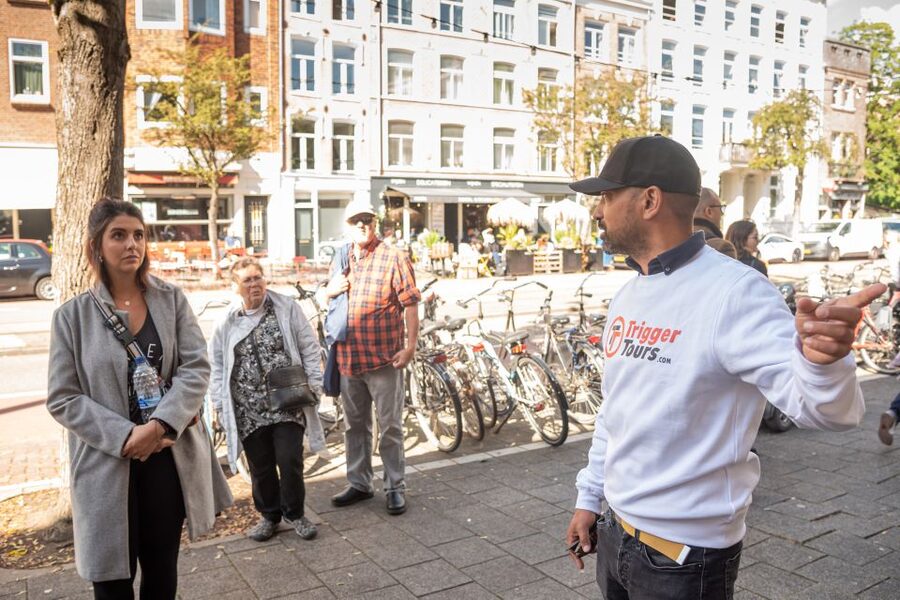
- Small-group focus: Many groups report plenty of room for questions without the tour feeling rushed.
- Memorial meaning, not just photos: Stops like the Auschwitz Monument and Dokwerker get explained in context.
- Jewish Quarter landmarks in sequence: Portuguese Synagogue, Jewish Historical Museum, and the Jewish Council headquarters help you form the bigger picture.
- Sensitive, factual interpretation: Guides are praised for handling personal questions and heavy subject matter carefully.
- Anne Frank’s story tied to publication: You’ll hear how her diary reached the world through her father, Otto Frank.
Entering the Jewish Quarter from the Amstel River
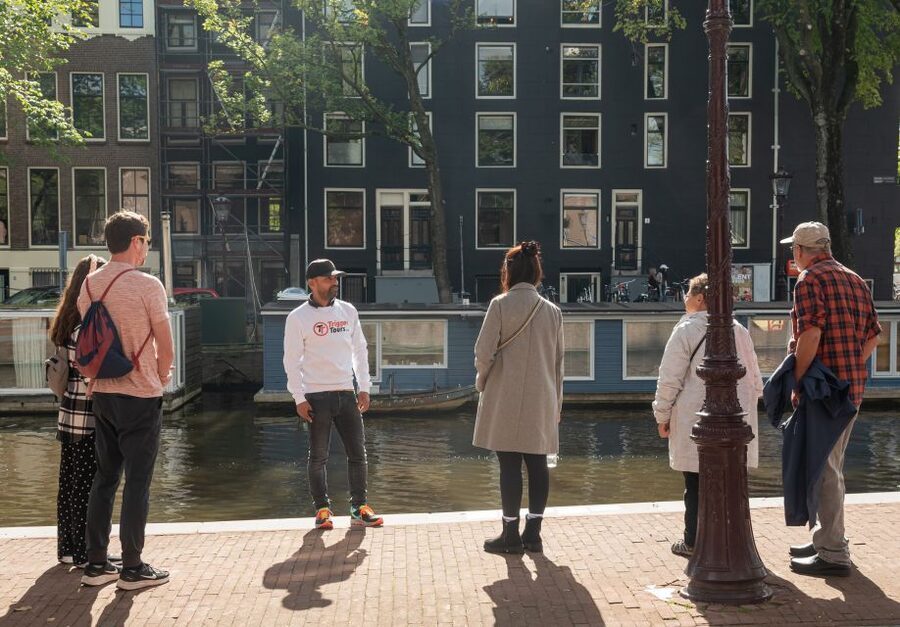
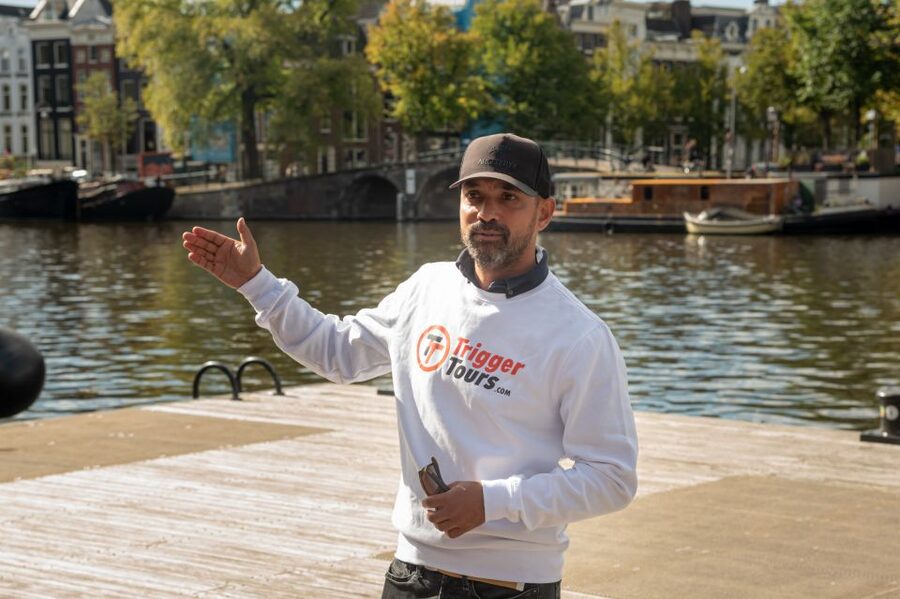
This tour starts by grounding you in location. The meeting point can vary, but the walk begins along the Amstel River, which is a smart way to start because it reminds you Amsterdam is not just one museum stop after another. It’s a city with real routes, real neighborhoods, and real distances people had to travel during the occupation.
From the first stretch, the framing matters. Instead of treating WWII as an abstract timeline, the guide looks at the occupation through the lens of Jewish life in Amsterdam. That approach helps you understand why certain buildings matter, even when they look ordinary from the sidewalk.
You’ll also get the basic time window right away, with the Nazi occupation of the Netherlands spanning from 1940 to 1945, and the focus narrowing quickly to what it meant in the capital for the Jewish community. That context keeps the rest of the walk from feeling like a list.
More History Tours in Amsterdam
- Amsterdam Food and Cultural Tour with Tastings
★ 5.0 · 4,315 reviews - Amsterdam: Historic City Centre Canal Cruise
★ 4.3 · 659 reviews - Amsterdam: Haunted History and Ghost Walking Tour
★ 4.5 · 488 reviews
Getting the pre-occupation context you can actually use
Most people visit Amsterdam and remember the famous bits. This walk does something different. It builds the background needed to understand why the Jewish Quarter was so affected once the occupation tightened.
As you move, your guide connects “day-to-day life” with what changed under Nazi rule. That can be more emotionally challenging than history that stays safely distant, but it’s also more memorable. The goal is not only to know what happened. It’s to understand what life looked like before it was destroyed, and how daily routines and safety got pulled away.
This is where the best guides make the difference. In the feedback, multiple guides are singled out by name, including James, Aaron, Joshua, Jyry, Masha, Guido, and Marsha. The common thread is that the tour stays factual and sensitive, and they’re willing to answer personal, hard questions without turning the conversation into something awkward.
Portuguese Synagogue and the Jewish Historical Museum: why these stops matter
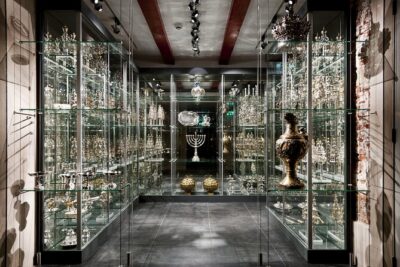
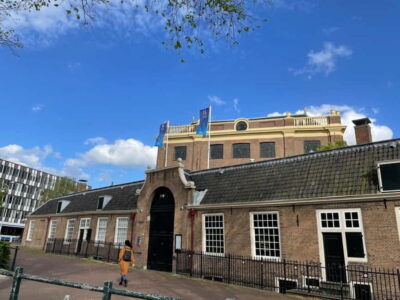
A key part of the route includes the Portuguese Synagogue and the Jewish Historical Museum. Even if you’ve seen synagogue buildings before, this is the kind of stop where the guide’s interpretation helps you notice details you might miss on your own.
The synagogue is a starting point for understanding continuity and community. It signals that Jewish life in Amsterdam was not only survival, it was also culture, institutions, and identity. Then the museum adds the time depth. You’re not just looking at one era. You’re being shown how the Jewish community shaped Amsterdam over time, and how that history mattered when persecution arrived.
If you’re the type who likes to know what each place represents, you’ll appreciate that the tour links each landmark to a specific part of the story. That prevents the common problem with walks like this, where you end up with a collage of photos and no clear thread.
The Jewish Council headquarters: where authority and pressure meet

Another major stop is the headquarters of the Jewish Council. This is one of those locations that can feel emotionally strange at first because you’re in a working city, looking at streets and buildings. But the guide helps you connect the dots between Nazi policy and the institutions Jewish people were forced to deal with.
This section of the walk is valuable because it shifts the story from pure background into mechanics. Instead of only focusing on what happened in camps or at the edges, you learn how occupation systems operated inside the Netherlands and inside daily life.
A common praise in the feedback is that guides handle the sensitive material with care, and they explain it in a way that stays respectful and impartial. If you care about getting the story right, not just hearing a sad outline, this is the kind of stop you’ll remember later when you read more about the era.
More Jewish Quarter walks:
- Anne Frank and Jewish Quarter Amsterdam Private Walking Tour
★ 5.0 · 684 reviews - Amsterdam: Anne Frank and Jewish Quarter Tour
★ 4.7 · 434 reviews - Amsterdam: Anne Frank and Jewish Quarter Walking Tour (TOP RATED)
★ 4.5 · 430 reviews - Anne Frank and the Jewish History of Amsterdam Private Tour
★ 5.0 · 307 reviews
Dokwerker and the Auschwitz Monument: understanding place as evidence
Then comes the part that gets heavy fast: memorials that are tied to Nazi-occupied Netherlands and the fate of Amsterdam’s Jews. The tour includes the Dokwerker and the Auschwitz Monument, and the guide gives meaning to these stops so you understand what you’re standing next to.
The Auschwitz Monument is especially important for interpretation. It’s not just a marker. It’s a reminder of what deportation meant, and it anchors the WWII story to a specific geography and a specific outcome.
Dokwerker often catches people off guard because it sounds less familiar than the biggest names they may have heard. That’s exactly why it’s worth including. It helps you see how the occupation worked through locations that were part of ordinary life, not only through famous sites.
In a few comments, visitors liked that the guide retraced the darkest moments in history in a way that honored Jewish resilience. That balance is not easy, but it’s what makes this walk more than a somber stroll. You come away with a sense of both loss and persistence, without the lesson turning into a slogan.
How the Anne Frank House ending changes the emotional shape
The walk ends in front of Anne Frank’s House, and the story doesn’t stop at the landmark itself. You’ll learn about her best-selling diary, and you’ll hear how it was published by her father, Otto Frank, and how it gained worldwide fame.
That last stretch helps make the tour feel complete. Earlier you’re building the background, understanding how Jewish life was reshaped and crushed during occupation. At the end, you get one of the most widely known personal accounts from the era, plus the context of how her writing became public.
It’s a powerful pairing. The tour uses the neighborhood and memorials to show context first, then uses Anne Frank to show a human voice that survived long enough to become history.
Do note one caution. One booking reported that their tour ended at a Holocaust memorial rather than directly in front of Anne Frank’s House. The official tour description says it should finish at Anne Frank’s House, so if that specific end point is essential for you, confirm with your operator before you go.
Guides who handle hard questions well
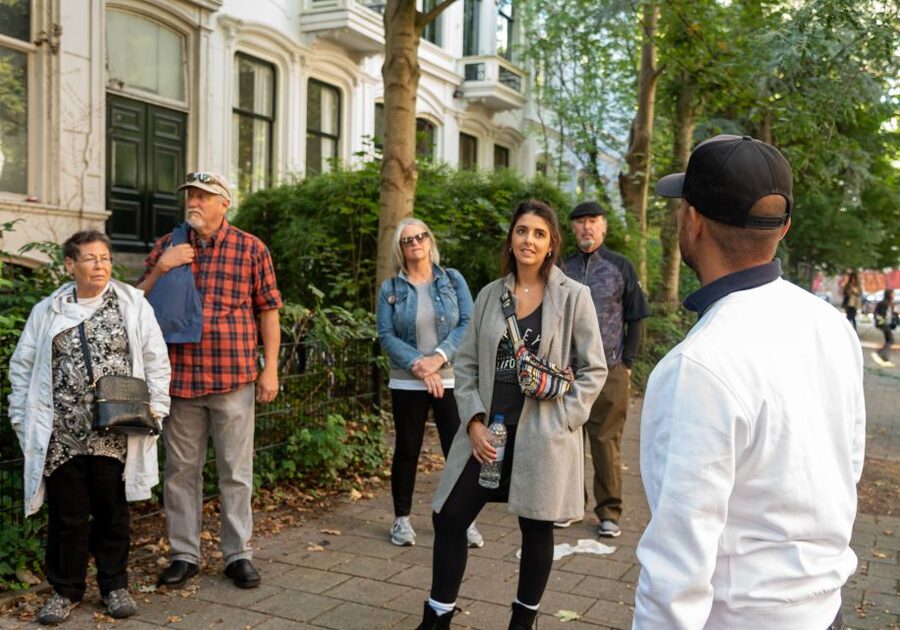
A lot of WWII tours can fall into one of two traps. They either become too lecture-like, or they become too gentle and gloss over what you actually came to learn. This tour tends to avoid both, largely because the guides are praised for how they teach.
Names you’ll see repeated in the feedback include James, Aaron, Joshua, Jyry, and Masha. Visitors repeatedly mention that guides are easy to understand, answer questions patiently even when the topic is personal and sensitive, and keep the pacing appropriate for the time allowed.
I also like that the tour can be private or a small group. In smaller groups, you’re more likely to ask the questions you actually care about, like how different institutions functioned during the occupation, or what specific landmarks meant at the time. And because the guide is walking with you, you get answers where the story is happening, not an hour later after you’ve moved on.
Price and value for a 2-hour, central Amsterdam walk
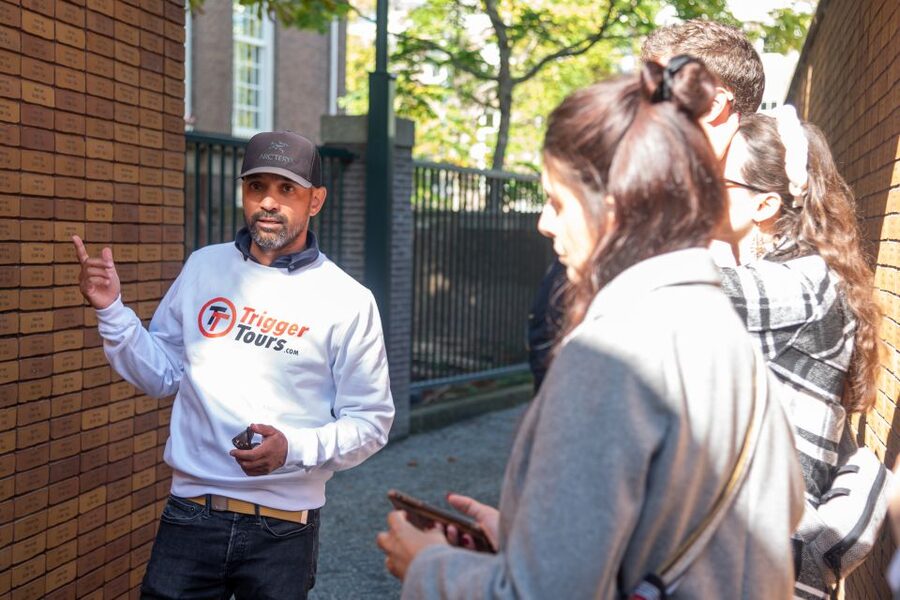
The price is $23 per person for a 2-hour guided walking tour. That sounds simple, but the value comes from what you’re paying for: interpretation, context, and careful navigation through sites tied to WWII persecution.
In Amsterdam, a guided walk that covers a dense set of meaningful locations for the same price category often leaves gaps. Here, you get multiple landmark categories in one format: community institutions (like the Portuguese Synagogue and Jewish Historical Museum), occupation-era governance (Jewish Council headquarters), and memorials connected to deportation and Auschwitz (including the Auschwitz Monument and Dokwerker). For many people, that combination is exactly what they want in a short time.
Also, you’re not paying for anything you don’t need. Food and drinks are not included, so the price stays focused on the guided walk itself.
If you’re budgeting, this is also a smart “first history stop” option. You can walk these streets once with context, then decide what to revisit later at your own pace.
Practical tips to get the most from the walk
Because this is a walking tour that lasts about 2 hours, you’ll want to think of it like a guided education session outdoors. You’ll likely spend much of that time on your feet, moving from one significant spot to the next.
This is also a good tour for people who want clarity. The guides are consistently described as patient and prepared, and they connect the purpose of each monument and each building to the broader WWII story.
Two extra bits that can improve your day:
- If you prefer a calmer atmosphere for photos and reflection, picking a time with fewer crowds can help. One booking specifically recommended Sunday morning for a quieter feel.
- Pay attention to pacing. One visitor suggested that the pace sometimes felt a bit quick, with less time to absorb each moment before moving on.
If you know you like to linger, you can still do that mentally. Just don’t expect deep self-paced time at every single stop in a tightly packed 2-hour route.
Who this tour suits best
You’ll probably love this tour if:
- You want Amsterdam history that goes beyond canals and museums into lived experiences during WWII
- You like walking routes that connect sites into a clear narrative
- You care about how memorials and institutions fit into the occupation story, not only the famous names
You might think twice if:
- You’re looking for a light, casual stroll. This is somber by design.
- You need a very slow pace with lots of quiet time at each location. The walk is structured to cover major points in limited time.
For families, it can work depending on ages and emotional readiness, but the tour content is clearly built for adults who can handle WWII subject matter with seriousness.
Should you book the Amsterdam Jewish Quarter and History guided tour?
I think you should book it if you want one of the best ways to understand what the Jewish Quarter meant, both before and during Nazi occupation, using real landmarks you can still see in Amsterdam today. The repeated praise for sensitive, factual guidance, plus the standout inclusion of sites like Dokwerker and the Auschwitz Monument, makes this a strong value at $23 for a 2-hour guided walk.
Book it with two small expectations in mind: the subject is heavy, and you’ll follow a planned route within a set time. If the end point matters to you, especially finishing specifically in front of Anne Frank’s House, confirm that detail when you reserve.
If you’re ready for a serious, place-based history walk that respects the subject and teaches with care, this is an easy yes.
FAQ
How long is the Amsterdam Jewish Quarter walking tour?
It runs for 2 hours.
Where does the tour start and where does it end?
It begins by the Amstel River. The tour description says it finishes in front of Anne Frank’s House.
What are the main landmarks included on the walk?
You’ll pass key sites such as Anne Frank’s House, the Portuguese Synagogue, the Jewish Historical Museum, the headquarters of the Jewish Council, Dokwerker, and the Auschwitz Monument.
Is this tour private or shared?
Both options are available, including private or small groups, depending on what you book.
What languages are the guides?
Guides are available in English and Spanish.
Is food or drinks included?
No. Food and drinks are not included in the tour.
More Historical Tours in Amsterdam
- Amsterdam High-End Dutch Food & History Tour – Up to 8 guests
★ 5.0 · 482 reviews - From Amsterdam: Volendam Heritage & Cheese Half-Day Tour
★ 4.4 · 461 reviews - Amsterdam: Historic City Sightseeing Canal Cruise
★ 4.5 · 444 reviews - Amsterdam: Historical Highlights Walking Tour with Tasting
★ 4.6 · 381 reviews
Newest bookings around Amsterdam
- Amsterdam Breakfast Cruise on Private Luxury Boat★ 5.0 · 5 reviews
- Amsterdam-West Food Tour with local guide★ 5.0 · 16 reviews
- Amsterdam: Explore the Van Gogh Museum & His Masterpieces★ 3.5 · 64 reviews
- Van Gogh Museum Tour excluding Entrance Tickets★ 5.0 · 16 reviews
- Van Gogh Museum with Audio Guide★ 3.5 · 80 reviews
- Van Gogh Museum Ticket with Audio Guide and Unlimited Access Time★ 5.0 · 25 reviews
- Van Gogh Museum Entry Ticket and Guided Tour★ 4.5 · 48 reviews
- Van Gogh Museum Skip the Queue with Audio Guide★ 4.0 · 261 reviews
Jewish Quarter Walking Tours, compared.

Anne Frank and Jewish Quarter Amsterdam Private Walking Tour
Read our review →
Anne Frank and Jewish Quarter Walking Tour (TOP RATED)
Read our review →
Anne Frank and the Jewish History of Amsterdam Private Tour
Read our review →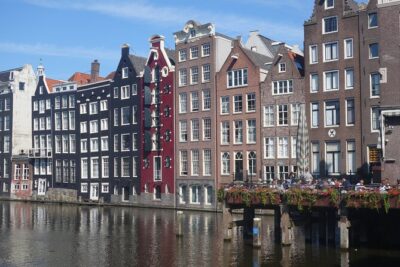
Anne Frank and Amsterdam Jewish History Walking Tour
Read our review →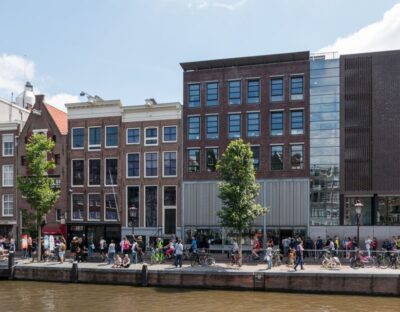
Browse the lists this tour appears in