
REVIEW · WALKING TOURS
Amsterdam Central Walking Tour
Canals and stories start at your feet. Yellow Bike’s Amsterdam Central Walking Tour stitches together canal-side views, crooked houses, and big-name sights in just 2 hours, with small groups (12 or fewer) and local guides who connect old streets to what Amsterdam feels like now.
The only real downside is the winter timing. The walk runs rain or shine, so bring gear for cold, wet cobbles, and the café stop is a break, but drinks are not included.
In This Review
- Key reasons this tour is worth your time
- Entering Amsterdam Central at Nieuwezijds Kolk 29 with Yellow Bike
- Price, group size, and why $26 feels fair for this kind of walking tour
- Winter-ready shoes, warm layers, and how to handle rain or shine
- From Amsterdam’s oldest core to crooked, tilted houses on wooden poles
- Nieuwe Haarlemmersluis: how Amsterdam fights seawater with engineering stories
- Westertoren views and the rules of the Westerlijke Wallen
- Koepelkerk and the copper-clad Lutheran church story after a major fire
- Grain routes, breweries, and why Amsterdam earned the nickname Booze Capital
- Jan Roodenpoortstoren prison cells and Torensluis, the oldest bridge vibe
- Bartolotti House and the elegance of an Amsterdam mansion
- Gay monument, WWII memory at Anne Frank House, and why these stops matter
- The Westertoren, cafés, and a real pause at Brown Cafe Pitstop
- Negen Straatjes and Kalverstraat, shopping streets with a story
- Spui and the Provo statue: civil resistance, student protests, and squatting stories
- Ending at Dam Square, then back to Yellow Bike at Nieuwezijds Kolk
- Who this Amsterdam Central Walking Tour is best for
- Should you book? My straight answer
- FAQ
- Where is the meeting point for the Amsterdam Central Walking Tour?
- How long is the walking tour?
- How much does it cost?
- What’s included in the price?
- Is the café break included, and are drinks covered?
- What should I bring for this winter walk?
- What languages are the guides?
- Does the tour run in bad weather, and is it wheelchair accessible?
Key reasons this tour is worth your time
- Small group size, max 12, often fewer, so you actually hear your guide
- Local-run Yellow Bike, one of Amsterdam’s original tour companies
- Two hours for $26, focused on high-impact sights and stories
- Free luggage storage at the start, so you can travel lighter
- A café pitstop at a traditional Dutch spot, with snacks or warm drinks for sale
- Stops with serious context, including Anne Frank House, handled in a thoughtful way
Entering Amsterdam Central at Nieuwezijds Kolk 29 with Yellow Bike
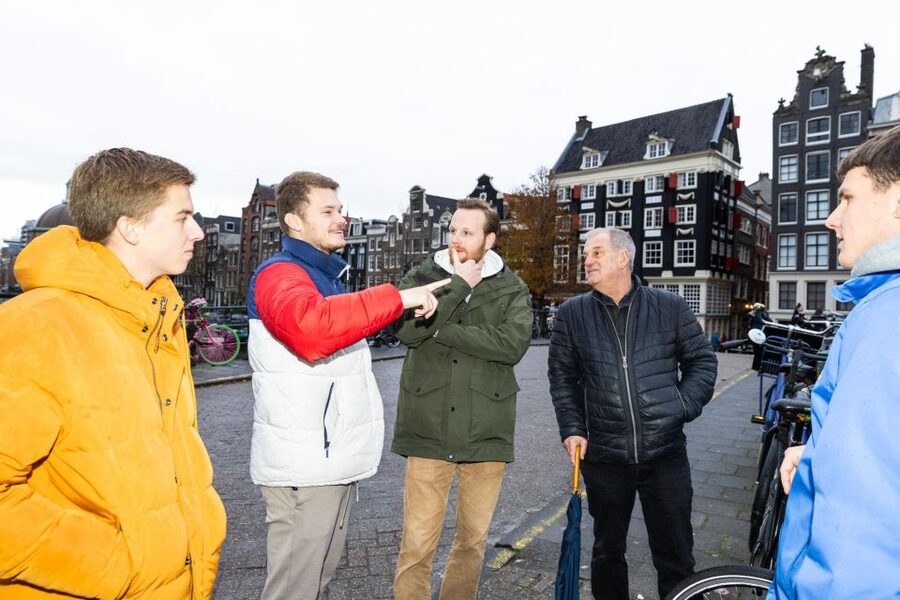
You start at Nieuwezijds Kolk 29, meeting at the Yellow Bike location. The check-in is done at the counter, so arrive a few minutes early and you will be on time without stressing. This is a compact route, and that matters in a city where the streets can feel endless when you are doing it alone.
This tour is listed at 2 hours, which is a sweet spot. Long enough to get orientation and real stories, short enough that you can still use the rest of the day for museums, canals, or just wandering. The big idea is simple: you get a guided thread through central Amsterdam, not a nonstop sprint.
Also, you get free luggage storage, which is a quiet but big quality-of-life perk. If you are coming from the train station or from an early arrival, being able to stash bags before walking makes the whole day easier.
More Walking Tours in Amsterdam
- Amsterdam Anne Frank: Small-Group Walking Tour & Local Guide
★ 4.8 · 12,789 reviews - Anne Frank’s Story – Guided Walking Tour through Amsterdam
★ 5.0 · 11,619 reviews - Absolutely Amsterdam – the Essential Introductory Walking Tour
★ 5.0 · 3,629 reviews
Price, group size, and why $26 feels fair for this kind of walking tour
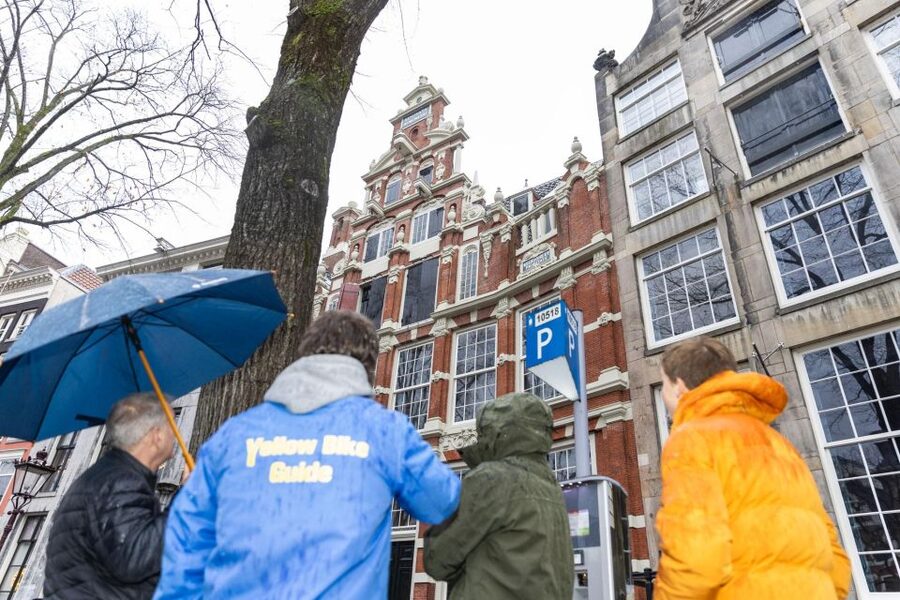
At $26 per person for a 2-hour walk, you are paying for two things: a good guide and time-efficient routing. In Amsterdam, the guide portion is where the value shows. You are not just getting pretty views. You are getting context for why houses tilt, why canals behave the way they do, and why certain neighborhoods have rules around photography and lingering.
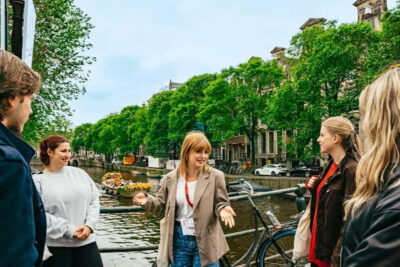
The group limit is 12 participants, and in practice it can be even smaller. That usually means your guide can keep a conversation going instead of talking to a crowd like a loud radio. A smaller group also helps when you reach tighter streets near major sights.
You will also notice a recurring theme about the guides: people have called out guides such as Sid, Willem, and Willen for mixing street-level history with practical current context. English comes through clearly too, which is important if you want to actually catch details while walking.
Winter-ready shoes, warm layers, and how to handle rain or shine
This is a rain or shine tour. That line can sound routine, but in Amsterdam it is real. Cobblestones get slick, wind off the water bites, and the cold feels sharper when you are standing still to listen.
Bring comfortable shoes first. Then think layers: warm clothing, plus a hat, gloves, and a scarf. If you do that, the walking part stays fun instead of turning into a survival task.
One more thing: the tour includes a café break, but drinks are not included. You are getting the stop, not the bill. That means you can choose what warms you up, whether that is tea, coffee, or something stronger.
From Amsterdam’s oldest core to crooked, tilted houses on wooden poles
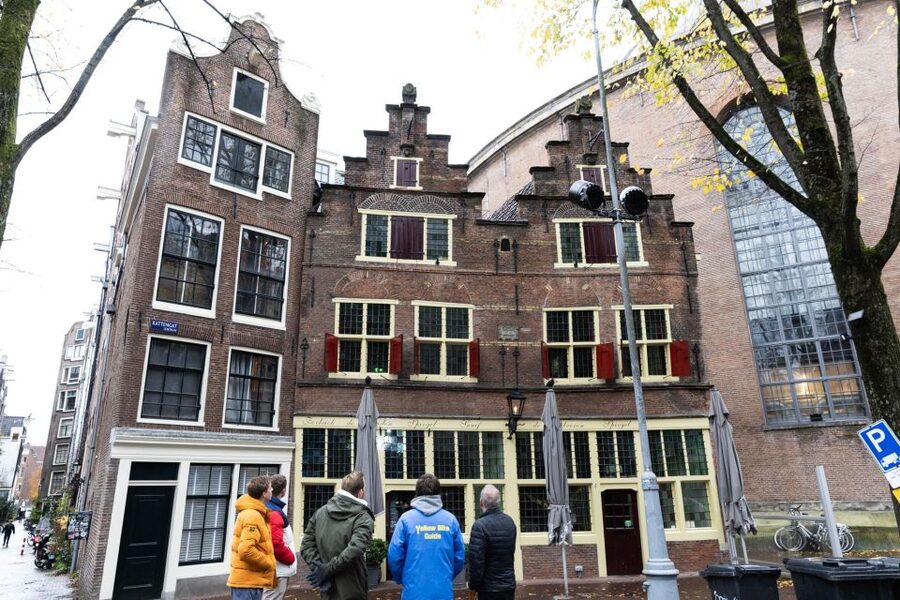
The tour begins in the oldest part of Amsterdam, where the city’s early story comes into focus. You will hear how the land and water pressures helped shape the way Amsterdam was built, including the fact that many structures sit on wooden poles. It sounds technical, but it also explains the weird charm you see everywhere: houses that look like they are leaning in for gossip.
This is where the crooked houses stop makes sense. You get to admire them, then you get the reason behind the look. It is the kind of detail that makes a “photo stop” turn into a memory.
From there, the walk connects waterways, trade, and daily life through small, memorable stories instead of lectures. You go from street view to city system, and suddenly Amsterdam’s shape feels less random.
A different way to spend an afternoon around Amsterdam:
- Amsterdam: Van Gogh Museum Ticket
★ 4.7 · 52,054 reviews - Amsterdam: Heineken Experience Ticket including 2 Drinks
★ 4.6 · 36,014 reviews - Amsterdam Classic Saloon Boat Cruise with Drinks and Cheese
★ 5.0 · 31,825 reviews - Amsterdam Luxury Canal Cruise + Unlimited Drinks & Bites option
★ 5.0 · 30,518 reviews
Nieuwe Haarlemmersluis: how Amsterdam fights seawater with engineering stories
One of the clever stops is Nieuwe Haarlemmersluis, which ties the canal world to real water management. Amsterdam has to manage water constantly, not just for scenery but for survival and stability.
This part of the walk is valuable because it makes the city’s infrastructure feel human. You are not memorizing terms. You are learning why a place that looks calm is actually doing serious work behind the scenes.
If you like cities where the details explain the bigger picture, this is a highlight. It also balances out the more emotional stops later, because it gives you problem-solving stories.
Westertoren views and the rules of the Westerlijke Wallen
Amsterdam’s Westerlijke Wallen area comes with a clear cultural message: respect and boundaries. The tour includes discussion of the Red Light District as a place where no photos are taken and no lingering is permitted. That is not just a guideline for “being polite.” It is part of the lived reality of the area.
You also get the Westertoren (Amsterdam’s tallest church tower) in the mix. The tower becomes a visual anchor, so even while you are walking at street level, you are reminded of the city’s skyline scale.
This is a good moment to slow down mentally. The tour moves you between contrasting Amsterdam experiences, and doing it with a guide keeps it from becoming awkward or disrespectful.
Koepelkerk and the copper-clad Lutheran church story after a major fire
Another standout stop is Koepelkerk, the copper-clad Lutheran church. What makes this stop more than just architecture is the story around Amsterdam’s resilience after a major fire.
You get a sense of how cities rebuild, not just how they decorate. Amsterdam’s beauty often comes with layers of recovery, and this is one place where that idea becomes clear.
If you care about how religion, politics, and city planning intersect, this stop does that job without turning into a history textbook.
Grain routes, breweries, and why Amsterdam earned the nickname Booze Capital
The walk then shifts to Brouwersgracht, tied to the supply chain behind the city’s beer culture. You learn about the movement of grain for breweries, and the nickname Booze Capital starts to feel less like a joke and more like a clue to how Amsterdam made money and built identity.
This is a fun segment because it reframes “Old Amsterdam” as a working city. Trade routes and shipping were the engines. The canals were the highways.
And it gives you a helpful lens for the rest of the trip. When you see warehouse-like buildings or canal warehouses later, you will know that they were part of real production, not just old scenery.
Jan Roodenpoortstoren prison cells and Torensluis, the oldest bridge vibe
Two bridge-adjacent stops bring in a darker thread: Jan Roodenpoortstoren and Torensluis. At Jan Roodenpoortstoren, the story includes historic prison cells hidden beneath the bridge area. That kind of detail changes how you look at bridges. They stop feeling purely decorative and start feeling structural and political.
Then you hit Torensluis, described as the oldest bridge in Amsterdam and once part of the city’s defensive wall. You are basically walking the line between civilian streets and the old logic of defense.
This combination works well in the tour’s pacing. Earlier you get trade and religion. Here you get control and confinement. Then later the route turns more toward human stories from the 20th century.
Bartolotti House and the elegance of an Amsterdam mansion
Next up is Bartolotti House, which is an elegant mansion tied to important local history. This stop adds a contrast to the trade stories, showing how wealth and architecture traveled through the city.
It also helps you understand the variety of Amsterdam in one walk. Some neighborhoods and structures tell you about industry. Others show how money shaped the look of power.
If you like art and architecture, this is a pleasant breather where the guide can tie style to meaning instead of just pointing out features.
Gay monument, WWII memory at Anne Frank House, and why these stops matter
The route includes a Gay monument, connected to the Dutch LGBTQ+ community’s struggles and victories and the site of the world’s first gay marriage. It is the kind of stop that turns a city street into a timeline of rights.
Then you reach Anne Frank House. This part of the walk is heavier, and the value is in how the guide frames the context. You are not just passing a famous name. You are hearing why the story became global and how Amsterdam’s history intersects with the Second World War.
These stops can feel emotionally intense even when you are standing only briefly. A good guide keeps it respectful and grounded, so you walk away with understanding, not just a checklist of famous sites.
The Westertoren, cafés, and a real pause at Brown Cafe Pitstop
After all the key sights, you get a break at Brown Cafe Pitstop, a traditional Dutch café. This is where the tour earns its comfort points. After standing, walking, and listening, you get a chance to warm up and reset.
The reminder to know is simple: drinks are not included. So if you want hot chocolate, a coffee, or something local, plan to buy it. Still, having a scheduled stop is useful, because Amsterdam can otherwise stretch your endurance without warning.
This is also a moment to ask quick questions. A strong guide will often suggest what to do next based on what you care about, whether that is canals, museums, or neighborhoods outside the center.
Negen Straatjes and Kalverstraat, shopping streets with a story
Two shopping areas show up with context rather than “buy stuff” energy.
First is the Negen Straatjes. The guide explains that this area once housed artisans, and now it is known for trendier boutiques and café culture. The point is not the shopping. The point is continuity: you can see how work and street life evolved into a modern retail district.
Then comes Kalverstraat, described as the Netherlands’ most renowned shopping street. Again, the value comes from understanding the street’s role in the city, not just the brands.
If you want to mix iconic sightseeing with time to actually wander, this segment is a good fit. It is also where you can buy small souvenirs, snacks, or gifts without committing to a full market detour.
Spui and the Provo statue: civil resistance, student protests, and squatting stories
Spui is where the tour brings in more recent Amsterdam narratives. You hear about the Provo statue and how Provos orchestrated events advocating civil resistance.
Then the walk connects to squatting history along Spuistraat. That is a memorable pairing because it ties protest culture to the way people used space, housing, and public pressure.
This segment is one reason the tour works so well even if you have seen some Amsterdam highlights already. Instead of repeating the same canal-photo routine, it gives you a lens on how Amsterdam argues with itself, reforms, and redefines what the city should be.
If you like politics and social movements, you will appreciate that the guide keeps it relevant and understandable, even while you are moving.
Ending at Dam Square, then back to Yellow Bike at Nieuwezijds Kolk
The tour ends at Dam Square, and from there you walk back to Yellow Bike at Nieuwezijds Kolk. That makes the ending feel complete, rather than dropping you in the middle of the busiest tourist zone and hoping you find your way.
Dam Square is a central, recognizable finish line. It also sets you up well for the rest of your day, since you are now positioned for museums, canal walks, or easy transit.
Who this Amsterdam Central Walking Tour is best for
This is a great pick if you want to understand Amsterdam quickly, with minimal planning. You get a tightly connected route that mixes architecture, canals, trade, and social history.
It is also strong for people who care about the human side of famous sites. The tour includes serious stops like Anne Frank House and memorial topics like the Gay monument, so it works well for visitors who want more than scenery.
Because it is a walking tour on city streets and cobbles, you should consider comfort and mobility carefully. The tour is listed as wheelchair accessible, but it also says it is not suitable for people with mobility impairments. If that includes you, I would treat that as a warning sign and plan a different format.
Should you book? My straight answer
Book it if you want high-impact central Amsterdam stories in 2 hours, with a guide who can connect the landmarks to real city life. The price is fair for the time and the small-group approach, and the free luggage storage is a practical bonus.
Skip it if you are looking for a long, sit-down museum-style day, or if cold rain and walking cobblestones are a deal-breaker. Also, if mobility limits are a factor, take the “not suitable” note seriously and consider a different tour style.
If you are deciding between a DIY stroll and a guided orientation, this one is an easy win. It helps you get your bearings fast, and it keeps Amsterdam from turning into only pictures.
FAQ
Where is the meeting point for the Amsterdam Central Walking Tour?
You meet at Nieuwezijds Kolk 29. Look for Yellow Bike and check in at the counter.
How long is the walking tour?
The tour lasts 2 hours.
How much does it cost?
The price is listed as $26 per person.
What’s included in the price?
Included are a friendly local guide and free luggage storage.
Is the café break included, and are drinks covered?
A café break is included, but drinks are not included.
What should I bring for this winter walk?
Bring comfortable shoes, warm clothing, and a hat, gloves, and a scarf.
What languages are the guides?
Tours are available in Dutch and English.
Does the tour run in bad weather, and is it wheelchair accessible?
The tour runs rain or shine. It is listed as wheelchair accessible, but it also states it is not suitable for people with mobility impairments.
Newest bookings around Amsterdam
- Zaanse Schans Windmills, Fishing Villages & Countryside★ 5.0 · 18 reviews
- Zaanse Schans & Volendam Private Tour: Windmills and Cheese★ 5.0 · 5 reviews
- Amsterdam: Zaanse Schans and Giethoorn Day Trip with Cruise★ 4.8 · 89 reviews
- Amsterdam: Zaanse Schans E-Bike Tour with Windmills & Cheese★ 4.5 · 12 reviews
- Zaanse Schans: Half-Day Private Guided Tour★ 5.0 · 4 reviews
- Zaandam: Paint a Perfect Portrait workshop★ 5.0 · 5 reviews
- VIP Private Full Day Tour of the Netherlands★ 4.8 · 6 reviews
- Vecht River: Full-day Cruise with Lunch★ 4.8 · 9 reviews
Walking Tours, compared.

Amsterdam Anne Frank: Small-Group Walking Tour & Local Guide
Read our review →
Anne Frank’s Story – Guided Walking Tour through Amsterdam
Read our review →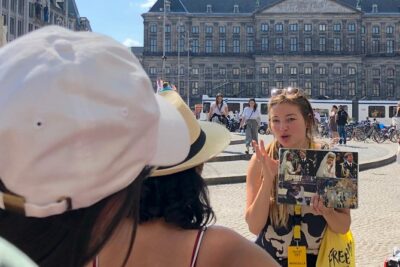
Absolutely Amsterdam – the Essential Introductory Walking Tour
Read our review →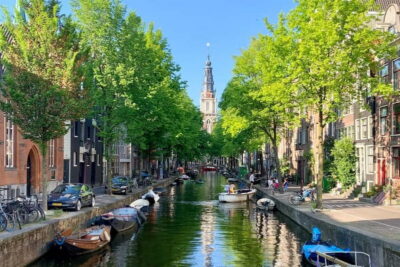
Anne Frank Guided Walking Tour in DE/EN/IT/ES
Read our review →
Anne Frank Walking Tour Amsterdam Including Jewish Cultural Quarter
Read our review →Browse the lists this tour appears in