
REVIEW · WALKING TOURS
Amsterdam 2 Hour History Walking Tour
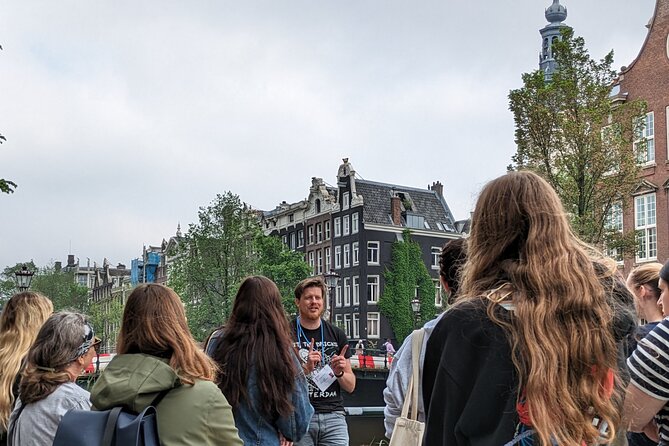
Canals, churches, and surprising stories, all on foot. This 2-hour Amsterdam walk keeps a relaxed pace while you learn how the Dutch shaped their world through water, trade, religion, and resilience. You’ll also get funny, easy-to-follow context that helps new visitors understand what they’re actually seeing.
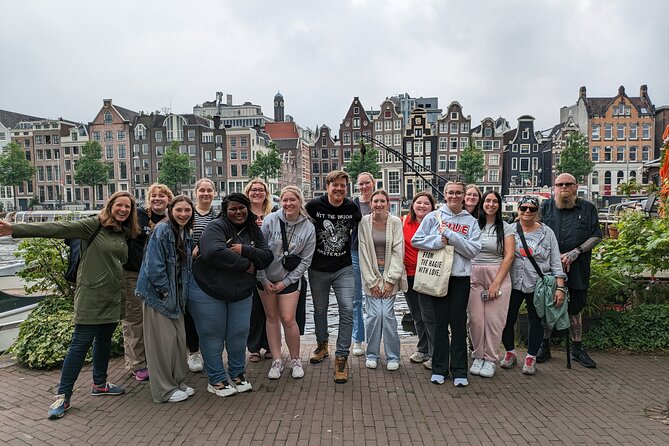
I particularly like the small-group size (max 10), which makes it feel laid back instead of rushed. The guide style is a big part of it too, with people calling out guides like Axel for being engaging and Mark for being personable and funny.
One thing to think about: the tour depends on good weather, so if conditions are poor you may need to switch dates or get a refund.
In This Review
- Key highlights to look for
- A two-hour plan that helps you read Amsterdam fast
- Meeting at Hit the Bricks, then walking with a max of 10
- Canal Ring (Grachtengordel): where water shaped Dutch mindset
- De Wallen and Dam Square: the city’s contrast in 15 minutes
- South Church inner courtyard: why religion changed the map
- Jewish Quarter start point: remembering the human cost
- Begijnhof: a secret garden and a different kind of community
- East India House HQ: how a small country chased empire
- Stopera Pier: modern pride, even if locals call it ugly
- Royal Palace area: the origin story of Dutch royalty and orange
- Groenburgwal and the Monet bridge photo moment
- Price and value: what $30.04 buys you in Amsterdam time
- How to get the most out of this walk
- Should you book this Amsterdam 2-hour history walk?
- FAQ
- FAQ
- How long is the Amsterdam 2 hour history walking tour?
- Where do you meet and where does the tour end?
- What time does the tour start?
- Is the tour offered in English?
- What is included in the price?
- Is admission to all stops included?
- Do I need to bring water?
- Are service animals allowed, and what if the weather is bad?
Key highlights to look for
- Small-group pacing (max 10) means more back-and-forth and less waiting around
- History with humor helps heavy topics feel understandable, not overwhelming
- Iconic photo moments, including a stop for the Monet bridge look
- First-timer friendly route that links major neighborhoods to the bigger Dutch story
- A mix of famous and quieter sites, like the Begijnhof secret garden
- Easy transit finish on Dam Square, close to multiple options
A two-hour plan that helps you read Amsterdam fast
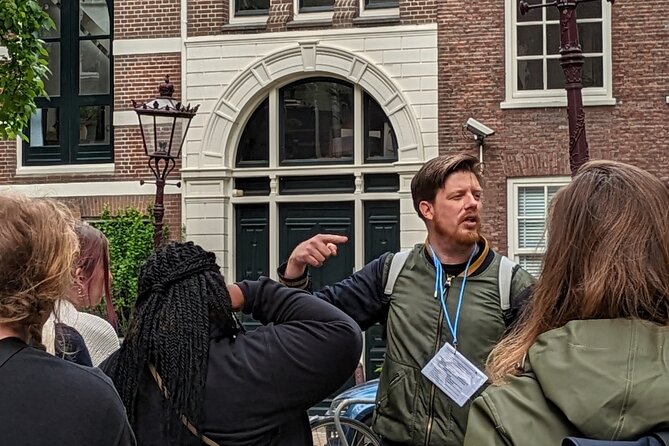
This is the kind of tour that helps you stop feeling like you’re just walking through pretty streets. You spend about two hours moving between key areas, and the guide gives you a story thread you can carry into the rest of your trip. The route is built for quick orientation, so when you later explore on your own, things click.
I like that it’s not a marathon. At roughly 10 stops, you’re usually there for only a few minutes at each location, which keeps the energy up and lets you cover more ground without getting numb. If you’re jet-lagged or simply want a gentle start, this format fits.
Also, it’s priced at $30.04 per person, which is a sensible range for an expert local guide focused on a tight walking loop. You’re not paying extra museum fees during most stops, since several of the sights are free to view and the tour is built around explanations outside.
More History Tours in Amsterdam
- Amsterdam Food and Cultural Tour with Tastings
★ 5.0 · 4,315 reviews - Amsterdam: Historic City Centre Canal Cruise
★ 4.3 · 659 reviews - Amsterdam: Haunted History and Ghost Walking Tour
★ 4.5 · 488 reviews
Meeting at Hit the Bricks, then walking with a max of 10
You meet at Hit the Bricks Walking Tours, Prinsenstraat 13 (1015 DA), with the tour starting at 11:00 am. You end at Dam Square, only a short walk from central transit.
The small group size matters. With up to 10 people, you usually get a calmer vibe and more room to hear the guide without craning your neck. You can also ask small questions on the go, which is helpful when you’re trying to understand why Amsterdam looks the way it does.
One practical note: bottled water isn’t included, but the tour setup includes several spots where you can refill. Bring a refillable water bottle so you’re not stuck buying drinks every time you stop.
Canal Ring (Grachtengordel): where water shaped Dutch mindset
Your walk begins in the Canal Ring, the famous belt of canals that defines central Amsterdam. This is where the guide sets the rules of the story: Amsterdam had to negotiate with water, not fight it like an opponent in a movie.
You’ll hear how the city grew around water management and why that shaped Dutch culture and thinking over time. Even if you already know Amsterdam is “the Venice of the North,” this stop helps you understand the logic behind the canals and the mentality that came with building and living in a watery environment.
What makes this stop valuable is that it gives you a framework. Later on, when you reach places tied to floods, rebuilding, and national priorities, you’ll recognize the same thread.
De Wallen and Dam Square: the city’s contrast in 15 minutes
Next up, you head into the Red Light District area (De Wallen). The focus here is history and how the neighborhood works, plus the Dutch perspective on it. This can feel like a strange choice for a “history” tour, but that’s exactly why it fits: Amsterdam doesn’t hide its contradictions, and the guide helps you see the context.
A few minutes later, you’re at Dam Square, Amsterdam’s central square. This is where the tour connects the idea of Dutch fight against the water to national culture and way of thinking. You’re not just looking at a postcard. You’re getting a reason for why certain themes keep showing up in Dutch life.
If you’re sensitive about mature subject matter, treat this as a heads-up. The tour covers it through history and explanation, not as a spectacle. It’s still useful to come with an open mind, because De Wallen is part of how the city developed.
More Walking Tours in Amsterdam
- Amsterdam Anne Frank: Small-Group Walking Tour & Local Guide
★ 4.8 · 12,789 reviews - Anne Frank’s Story – Guided Walking Tour through Amsterdam
★ 5.0 · 11,619 reviews - Absolutely Amsterdam – the Essential Introductory Walking Tour
★ 5.0 · 3,629 reviews - Amsterdam: Anne Frank Guided Walking Tour in DE/EN/IT/ES
★ 4.9 · 3,107 reviews
South Church inner courtyard: why religion changed the map
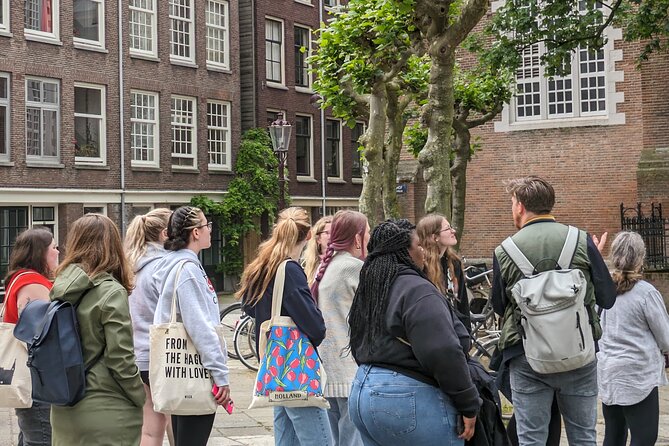
You then move to the South Church area, focusing on the transition from Catholic to Protestant life. The point is not religious trivia for trivia’s sake. It’s about how big beliefs led to changes you can actually spot in the buildings and their settings.
The mention of the serene inner courtyard next to the church is key. Amsterdam can feel exposed when you’re just walking streets, so this stop gives you a small pause. You get a quiet pocket, then you connect what happened centuries ago to why Amsterdam looks like it does today.
Jewish Quarter start point: remembering the human cost
In the Jodenbreestraat area, the tour turns serious. This is where the Jewish Quarter begins, and you’ll learn about the tragic fate of tens of thousands of Jewish people who lived in Amsterdam before and during the war. The guide also brings up the Hunger Winter, a term tied to extreme hardship.
This stop is short, but it’s one of the most important parts of the walk. A good guide keeps it respectful and helps you understand the magnitude without turning it into a distant lecture.
A useful way to get more from it: pause afterward for a moment on the street. Let the information settle, then continue walking when you feel ready.
Begijnhof: a secret garden and a different kind of community
Next comes the Begijnhof, a place that feels tucked away even though it sits in the middle of the city. You’ll learn about the beguine sisters and how they built this hidden garden space.
This stop balances the heavier material earlier. It also gives you a sense of how Amsterdam’s social fabric worked beyond politics and war. The Begijnhof is calm, enclosed, and easy to miss if you’re only scanning for famous landmarks.
When I’m choosing a first-day walking tour, I look for stops like this: places that teach you how people lived day to day, not only how governments fought.
East India House HQ: how a small country chased empire
At Bushuis, also known as Oost-Indisch Huis, you’ll hear about the Dutch East India company and how a small nation grew into a major empire through trade. The key themes here are spices, competition, and the fact that the company operated with constant pressure and conflict just to survive.
This stop helps you connect Amsterdam’s wealth and global role to the storefront-level reality of the city you see today. You get the “why” behind the mercantile power that made Amsterdam a hub.
It’s also a nice change of pace after the religious and war-focused stops. Trade and empire can sound abstract, but the guide anchors it to a real building tied to decision-making power.
Stopera Pier: modern pride, even if locals call it ugly
Then you reach Stopera Pier on the banks of the Amstel River, home to Amsterdam’s modern city hall. The tour explains why locals call it Stopera, and why, despite criticism about its looks, it still carries pride for Amsterdammers.
This is a smart move in a history tour. It reminds you history is not only medieval or museum-themed. It includes more recent choices, public identity, and the way a city debates itself.
If you like architecture even a little, keep your eyes open here. The river setting also helps, because you’re not staring only at facades. You get a wider city view.
Royal Palace area: the origin story of Dutch royalty and orange
You’ll then reach Royal Palace Amsterdam, with learning focused on how the Dutch royal family came to be, the French connection, and the national colors. The tour notes orange as a national color, and the flag colors as red, white, and blue.
One practical point: admission to the Royal Palace isn’t included. You’re learning from the outside and in the area connected to the palace, unless you choose to add entry on your own.
This stop is still worth it if you’re curious about why national symbols look the way they do. For many visitors, the colors feel random until someone explains the lineage behind them.
Groenburgwal and the Monet bridge photo moment
The walk finishes with a classic photo break near Groenburgwal, where you’ll stop for the famous look associated with the Monet bridge. This is a quick moment, but it’s timed well so you don’t end up scrambling for your shot while the group is moving.
It also serves a nice purpose: after serious topics and big-picture lessons, you get a light, visual payoff before you head to Dam Square.
Price and value: what $30.04 buys you in Amsterdam time
For $30.04, you’re paying for three things that matter in a short trip: an expert local guide, structured context across major neighborhoods, and practical tips for making the rest of your stay easier.
You also benefit from the tour’s design. Most stops are free to access, so you’re not stacking extra ticket costs onto a 2-hour walk. The only clearly called-out additional admission is the Royal Palace.
The small-group cap also supports value. In a larger group, you might spend more time waiting and less time hearing the guide clearly. Here, the pacing is built to keep you moving and informed.
A bonus: there are discount codes for other tours available upon request, which can help you stretch your time in the city if you decide you want more guided experiences.
How to get the most out of this walk
If you want this tour to feel like a cheat code for your Amsterdam trip, do two things.
First, arrive a few minutes early. There’s a mention of a cat named Koko at the meeting point area, so it can be a fun warm-up before the walk begins.
Second, wear comfortable shoes and treat the 2-hour pace like an orientation hike. You’ll be outdoors a lot, and the stops are short. If you want to take photos, plan for quick snapshots rather than long sessions.
Finally, bring your own refillable water bottle. It’s simple, but it helps you stay comfortable for a walk that moves through multiple neighborhoods.
Should you book this Amsterdam 2-hour history walk?
I’d book it if you fit one of these profiles:
- You’re new to Amsterdam and want fast orientation across multiple neighborhoods
- You prefer history explained with humor and real-world context
- You want a short guide-led walk that sets you up for exploring on your own
I might skip it if:
- You want only peaceful, low-contrast sightseeing and would rather avoid discussion of mature neighborhood history
- You need lots of time in museums or indoor attractions, since most of this experience is outside and brief at each stop
- Weather is questionable on your date, since the tour requires good conditions
FAQ
FAQ
How long is the Amsterdam 2 hour history walking tour?
The tour is about 2 hours.
Where do you meet and where does the tour end?
You start at Hit the Bricks Walking Tours, Prinsenstraat 13, 1015 DA Amsterdam, and you end at Dam Square, Dam, 1012 Amsterdam.
What time does the tour start?
The start time is 11:00 am.
Is the tour offered in English?
Yes, the tour is offered in English.
What is included in the price?
The price includes an expert local guide, tips and tricks to get the most out of your trip, and discount codes for other tours (upon request). It also uses a mobile ticket.
Is admission to all stops included?
Most stops are free to access, but Royal Palace Amsterdam admission is not included.
Do I need to bring water?
Bottled water isn’t included, but there are several stops where you can fill a refillable water bottle, so bringing one is a good idea.
Are service animals allowed, and what if the weather is bad?
Service animals are allowed. The tour requires good weather, and if it’s canceled due to poor weather you’ll be offered a different date or a full refund. You can also cancel for a full refund if you cancel at least 24 hours in advance.
More Historical Tours in Amsterdam
- Amsterdam High-End Dutch Food & History Tour – Up to 8 guests
★ 5.0 · 482 reviews - From Amsterdam: Volendam Heritage & Cheese Half-Day Tour
★ 4.4 · 461 reviews - Amsterdam: Historic City Sightseeing Canal Cruise
★ 4.5 · 444 reviews - Amsterdam: Historical Highlights Walking Tour with Tasting
★ 4.6 · 381 reviews
Newest bookings around Amsterdam
- Amsterdam Breakfast Cruise on Private Luxury Boat★ 5.0 · 5 reviews
- Amsterdam-West Food Tour with local guide★ 5.0 · 16 reviews
- Amsterdam: Explore the Van Gogh Museum & His Masterpieces★ 3.5 · 64 reviews
- Van Gogh Museum Tour excluding Entrance Tickets★ 5.0 · 16 reviews
- Van Gogh Museum with Audio Guide★ 3.5 · 80 reviews
- Van Gogh Museum Ticket with Audio Guide and Unlimited Access Time★ 5.0 · 25 reviews
- Van Gogh Museum Entry Ticket and Guided Tour★ 4.5 · 48 reviews
- Amsterdam Van Gogh Museum with Audio or Guided Tour★ 4.0 · 266 reviews
Walking Tours, compared.

Amsterdam Anne Frank: Small-Group Walking Tour & Local Guide
Read our review →
Anne Frank’s Story – Guided Walking Tour through Amsterdam
Read our review →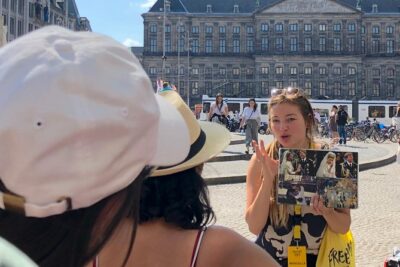
Absolutely Amsterdam – the Essential Introductory Walking Tour
Read our review →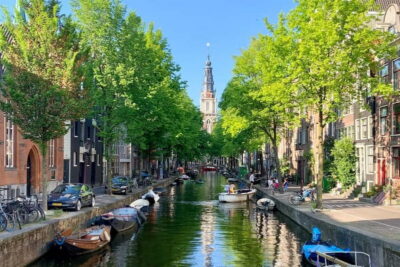
Anne Frank Guided Walking Tour in DE/EN/IT/ES
Read our review →



Anne Frank Walking Tour Amsterdam Including Jewish Cultural Quarter
Read our review →Browse the lists this tour appears in