
REVIEW · 3-HOUR EXPERIENCES
3 Hours itinerary between Amsterdam & Utrecht: The Heart Of Holland In A Sidecar
Two wheels beat a bus for country views. This private sidecar tour turns the Amsterdam to Utrecht stretch into quick, scenic storytelling. I love how the route mixes river estates, castles, and nature without long dead time, and I love the way your guide brings the Dutch context to each stop. One thing to consider, there are no included snacks or drinks, so you will want to plan around that if you get hungry.
I took a shine to the pace Marco used, he kept things moving while still answering your questions about Dutch life. You share the ride with just one other person, and the seating setup means you get a front-row feel for the road and the scenery, including pickup options from central locations (with an added fee if you want a specific spot).
In This Review
- Key things to know before you ride
- Why a sidecar tour between Amsterdam and Utrecht feels different
- The river-estate start on the Vecht (and what it says about Dutch power)
- Breukelen castle area: a 1275 origin point with a modern twist
- A garden pause that breaks up the history rhythm
- Lage-Vuursche: protected village views, monuments, and a church from 1650
- Paleis Soestdijk: an ex-royal palace and the Juliana era
- Loosdrechtse Plassen: water sports and nature on the Amsterdam-Utrecht corridor
- Bethunepolder and the idea of recreation plus conservation
- Goois Natuurreservaat: forest tunnel roads near Lage Vuursche
- Nieuwe-Wetering: rural farm houses when you need a real palate cleanser
- Molen Geesina: a restored flour mill still producing flour
- Fort Ruigenhoek: the New Dutch Water Line and a 1940 failure point
- Slot Zuylen: a 13th-century castle and an outspoken 18th-century writer
- Price and timing: how $300 per group can actually feel reasonable
- What Marco’s guide style adds to the value
- Who should book the Heart of Holland in a Sidecar
- Should you book this sidecar tour or choose something else?
- FAQ
- How many people can ride in the sidecar?
- Is pickup from Amsterdam or Utrecht included?
- What is the duration of the tour?
- Does the price include helmets, fuel, and a guide?
- Are coffee or meals included?
- What happens if it rains?
Key things to know before you ride
- Sidecar seating for two: one rider in the sidecar and one riding behind the driver.
- Private route control: you follow a preset route or create your own itinerary.
- Short, meaningful stops: most stops are around 5 minutes, with a longer start at the Vecht.
- Admission varies by stop: some are ticket-free, others are not included if you want to go inside.
- Rain plan included: if it rains, the tour can shift to a minivan setup (same price, with two more persons).
- You get the gear and guide: helmets, fuel, and an English-speaking Dutch guide/driver are included.
Why a sidecar tour between Amsterdam and Utrecht feels different
This is one of those experiences that changes how you see a route you have already heard of. The Amsterdam to Utrecht area is close enough that most people treat it like a connection, not a destination. Here, it becomes the main event.
The big win is the small-group, private format. You are not competing for the best photo spot, and your guide can adjust what you linger on. The other win is the ride itself. Sitting in a sidecar makes speed feel calmer, and it turns winding lanes, canals, and forest roads into something you can actually enjoy.
The trade-off is simple: the tour is built around stops, not long café breaks. If your ideal trip is mostly hanging out in one town with plenty of time to shop and snack, this may feel a bit fast. If you like steady scenery and history in short bursts, you will probably love it.
A handful of other Utrecht outings
- Utrecht: City Canal Cruise
★ 4.3 · 2,895 reviews - Utrecht: De Haar Castle + Gardens Entry Ticket
★ 4.7 · 1,838 reviews - Utrecht: DOMunder Entry Ticket with Guide
★ 4.4 · 706 reviews
The river-estate start on the Vecht (and what it says about Dutch power)
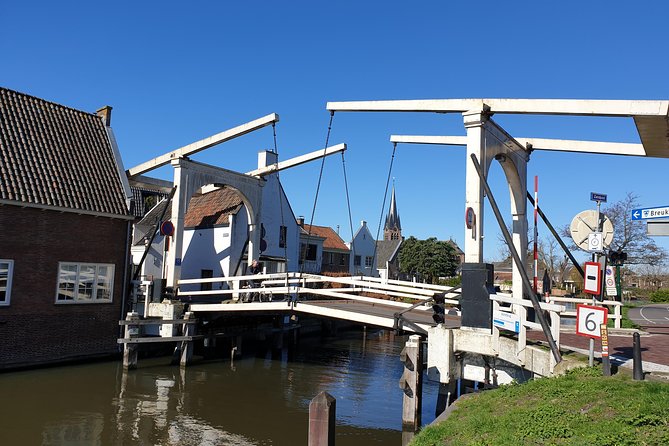
You begin at the Vecht, a curvy river that shaped how wealth looked in the 17th and 18th centuries. Rich merchants and administrators from Amsterdam built country estates along the banks, and you can feel the idea of status as you move through the area.
Even though the stop is short, it helps you understand a Dutch pattern: water is not just scenery. It is a working system, a travel corridor, and historically, a place where influence landed. You also get a nice warm-up for the rest of the route, because the rest of the day keeps returning to this mix of human plans and nature.
At this stage, the tour is also a practical win. The ride brings you into a different “slice” of the countryside than you would get from a standard walking tour, and it saves you from having to figure out how to hop between spots efficiently.
Breukelen castle area: a 1275 origin point with a modern twist
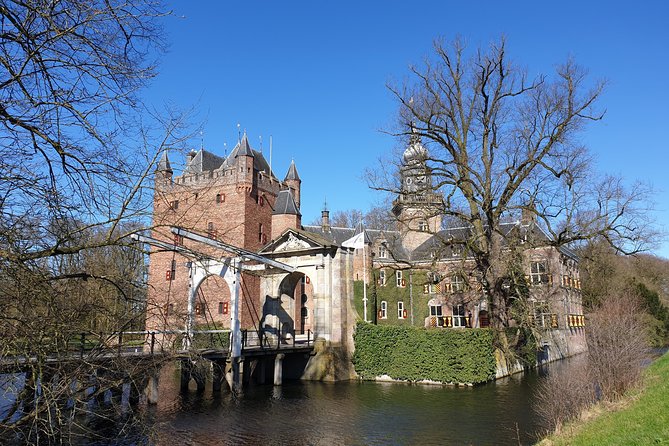
Next you pass through Breukelen, where you get a quick look at a castle dating to about 1275. Today, the site is tied to an International Business University.
Here is the useful thing to know: admission is not included at this stop. That does not mean you should skip it, it just means you decide whether you want to go in and potentially pay extra. Even if you mainly use the stop for photos and orientation, it still works because it’s a real anchor point for thinking about how old fortifications and institutions overlap in the Netherlands.
If you like history but you do not want a full museum day, this style of stop hits a sweet spot. It is brief, but it gives you a specific place, not vague “some castle somewhere” energy.
A garden pause that breaks up the history rhythm
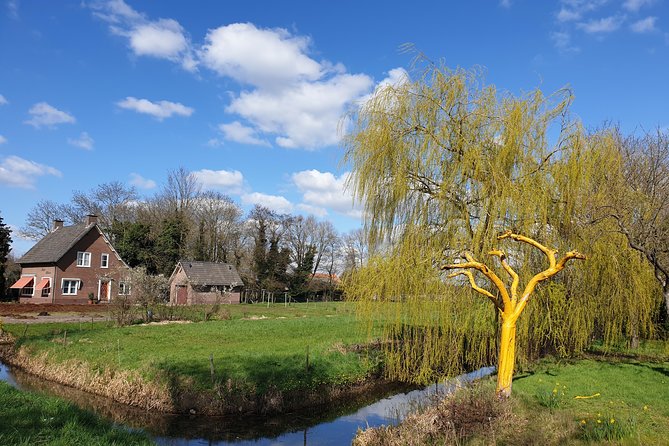
Between the more obvious landmarks, there is a garden stop. It is short, but it does an important job: it resets your eyes after stretches of estates, buildings, and heritage sites.
This is one of those choices that makes the whole half-day feel smoother. A garden stop tends to be more relaxed, and it helps you enjoy the ride instead of treating every stop like a checklist.
If you are the kind of traveler who likes taking a breath between major highlights, you will appreciate this break.
A different way to spend an afternoon around Utrecht:
- Utrecht: Dom Tower Entry Ticket and Guided Tour
★ 4.6 · 513 reviews - Utrecht: De Haar Castle Gardens and Park Only Entry Ticket
★ 4.5 · 223 reviews - Utrecht 2-Hour Walking Tour | Discover The City With A Local
★ 5.0 · 138 reviews - Utrecht: Rietveld Schröderhuis UNESCO Entry Ticket
★ 4.8 · 119 reviews
Lage-Vuursche: protected village views, monuments, and a church from 1650
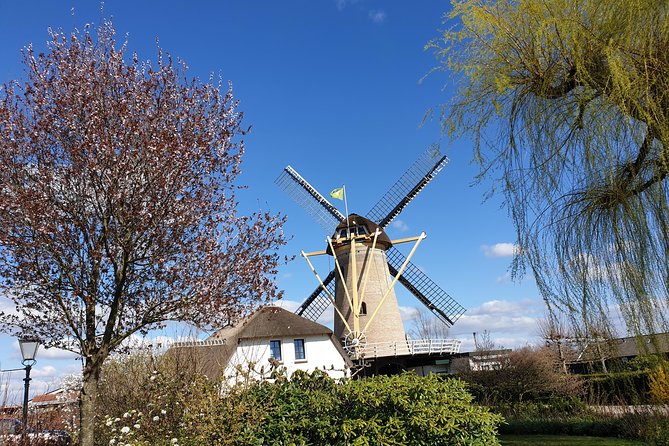
Lage Vuursche is a village view area that’s protected, with a number of 18th and 19th century houses and many national monuments. You also get a chance to see the Reformed Church, which dates to 1650.
This stop is one of the best examples of why a guided ride matters. The area sounds like a photo stop, but it’s also about how the Dutch built rules around places they want to keep. Protected views and protected structures are part of how the Netherlands preserves charm without freezing everything in time.
The practical detail: admission is free at this stop. That means you can spend your time just looking and learning without feeling pressured to pay to access something. Short, focused stops like this are a great way to see what the Netherlands values, because you catch it in real scale, not in a curated package.
Paleis Soestdijk: an ex-royal palace and the Juliana era
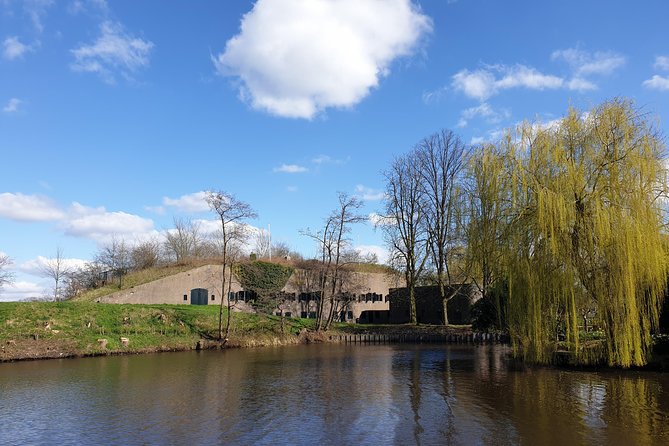
Then you reach Paleis Soestdijk, an ex-royal palace originally built in the 17th century. From 1937, it served as the residence of Crown Princess Juliana and her German husband, Prince Bernhard van Lippe-Biesterfeld.
This stop brings a different kind of Dutch story. Many of the earlier points are about wealth, estates, and civic power. Here, you get a direct connection to monarchy and the 20th century royal household in the Netherlands.
Admission is not included at Paleis Soestdijk, so again, you choose what you want to do beyond the exterior and the surrounding area. Even if you do not enter, the guide’s framing can still make the site click, especially if you are the type who likes connecting architecture to people and political eras.
Loosdrechtse Plassen: water sports and nature on the Amsterdam-Utrecht corridor
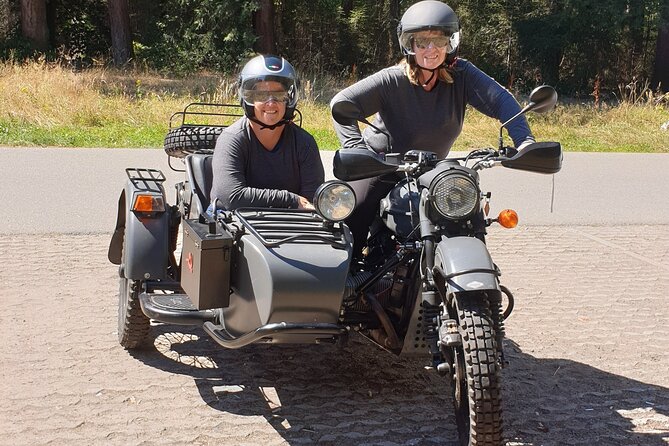
Loosdrechtse Plassen is a water sports and nature area between Amsterdam and Utrecht. This stop is less about a single building and more about understanding the Netherlands as a system of water-based living.
The good news for you: admission here is free. That means you can enjoy the feel of the area without budgeting for a ticket. It also helps your day feel varied. After estates and formal heritage stops, a water-and-nature setting gives your senses a different kind of reward.
If you like seeing how “countryside” actually functions today, this is the moment.
Bethunepolder and the idea of recreation plus conservation
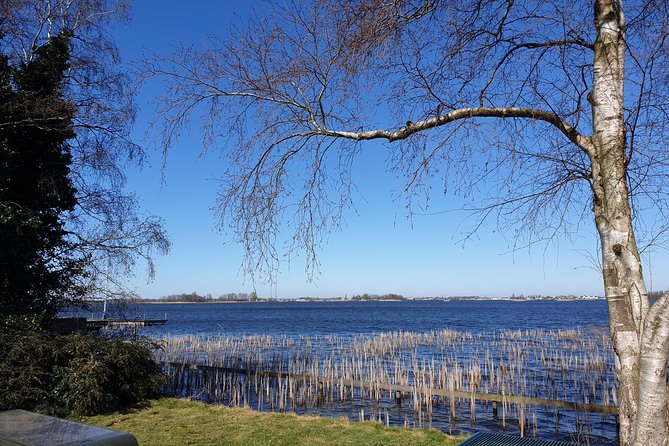
Bethunepolder is a polder where recreation and nature conservation are central. The area is known for special animal and plant species.
This stop helps you connect one of the Netherlands’ most important concepts to a real place. In the Netherlands, managing land and water is not just an engineering topic. It is also a lifestyle and a policy choice that shapes ecosystems.
Admission is free here too. That makes it easy to treat as a learning pause rather than a paid attraction. If you enjoy thoughtful stops where the guide points out why a place is protected or managed, you will likely get a lot out of Bethunepolder even with limited time.
Goois Natuurreservaat: forest tunnel roads near Lage Vuursche
Goois Natuurreservaat is forest near Lage Vuursche, known for its forest tunnel roads. It’s the kind of detail that you understand best from being on the route, not just standing still.
This is one of the stops where the sidecar format really earns its place. You can appreciate how the road bends and how the trees create a changing “corridor” feeling as you move forward. On foot, you might take longer and still not experience the same sense of flow.
Admission is free. In practical terms, you spend your time on observation and on what the guide says, not on buying access.
Nieuwe-Wetering: rural farm houses when you need a real palate cleanser
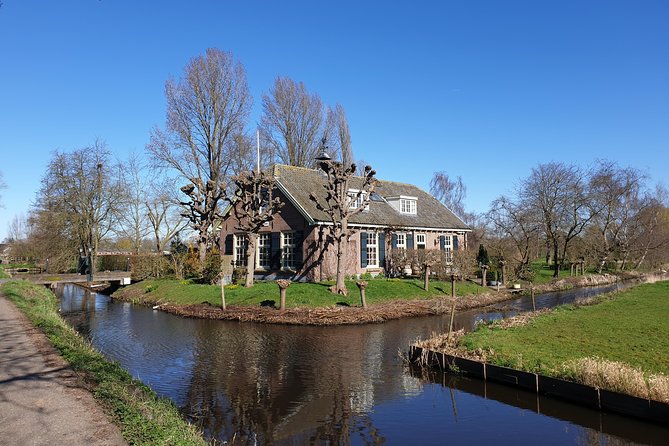
Nieuwe-Wetering is not even a village, just very rural space with farm houses. It is a quick stop, but it matters because it gives you contrast.
After a forest and nature stops, this kind of rural lane and farm-house scenery can feel like the Netherlands in its simplest form. It also helps you understand that the area between Amsterdam and Utrecht is not only estates and tourist landmarks, it is working farmland too.
Admission is free. This is a nice kind of stop for travelers who enjoy “ordinary” places more than only famous ones.
Molen Geesina: a restored flour mill still producing flour
Next comes Molen Geesina, a flour mill likely built around 1843. It has been restored and still produces flour.
This is one of those highlights that turns heritage into something practical. A mill is not just a pretty landmark. It is an example of how people used local production and machinery to survive and prosper.
Admission is free at this stop. That makes it easy to appreciate what you are seeing without extra friction. If you like food heritage, local industry, or just love seeing historical technology that still has a job, this is a strong moment in the ride.
Fort Ruigenhoek: the New Dutch Water Line and a 1940 failure point
Fort Ruigenhoek is part of the New Dutch Water Line Defence System, built in the years 1869 to 1870. The guide’s framing includes a blunt detail: in 1940, German forces were able to fly over it. It is also not at Almere, it is near Utrecht.
This stop adds weight to the day. Earlier stops explained wealth and life through buildings, water, and land. Here you get the Netherlands thinking defensively, using terrain and water systems as part of strategy.
Admission is free. Even with limited time, it helps if you like history that is grounded in geography. The New Dutch Water Line is one of those topics where understanding the purpose of the area makes the physical structure feel more meaningful.
Slot Zuylen: a 13th-century castle and an outspoken 18th-century writer
You finish with Slot Zuylen, a castle dating back to the 13th century. The area is connected to an 18th-century French-speaking writer and composer who lived there. She is described as well educated and known for emancipation. The information shared includes statements like I have no talent for subordination and I want to be a citizen of everyone’s country.
Admission is not included at Slot Zuylen, so treat this as a choice. If you love entering historic sites, you may want to factor that extra time and possible ticket cost into your plans. If not, the stop still works because the story connected to the castle gives you context that you would miss without a guide.
This is also a strong ending because it ties the day together. You started with water and estates, you moved through village protection and royalty, you saw working countryside and fortifications. Then you close with a castle that links architecture to ideas and personal identity.
Price and timing: how $300 per group can actually feel reasonable
At $300.06 per group, the math depends on who you ride with. The tour fits up to 2 people, so if you split it with someone, it can land in a range that feels closer to a guided private day than a big “tour price” you cannot justify.
What you get for that money is not just transportation. You get a sidecar ride, helmets, fuel, and a multilingual Dutch driver and tour guide (English is offered). It is also a private tour, so you are not sharing the guide’s attention with strangers.
The duration is listed as about 2 to 4 hours. That spread matters. On a good day with smooth timing, you likely feel like you saw a lot. With weather changes or slower moments, you might use more of your time. Still, it is not designed for a half-day of sitting around.
Also keep in mind the food reality: coffee and any food or drinks are excluded. Plan to start hydrated and consider a snack before or after. It will make the day feel more comfortable.
If you want pickup, it is offered from central locations, and you can pick a location in consultation for an extra 20 euros.
What Marco’s guide style adds to the value
The best reviews highlight something you can feel in the day: the guide does not just point, he explains. Marco, in particular, is described as fun, with travel experience, and able to answer questions about history and Dutch culture while you ride.
That matters because these stops are short. If your guide is only reciting dates, you may feel rushed. But when the guide ties each place to daily life, it turns brief stops into something you remember.
You also get the benefit of being able to ask questions on the move. A sidecar ride is not quiet and stiff like a museum visit. It creates an easy flow for conversation, and that is part of why people love this format.
Who should book the Heart of Holland in a Sidecar
I think this tour is a great fit if you want:
- A private way to see countryside between Amsterdam and Utrecht without planning transport between stops.
- A mix of history and nature, where each stop is quick but meaningful.
- A first-time motorbike style adventure, especially if you are curious but want it guided and organized.
It is less ideal if you:
- Want long sit-down meals and lots of free time in one town.
- Are traveling with a group larger than two, since the sidecar itself is limited to two riders (one in the sidecar, one behind).
There is also a clear family rule: one participant must be an adult responsible for the non-adult, and the non-adult participant must be at least 12 years old. If that fits your group, it can be a memorable, active way to see Holland.
Should you book this sidecar tour or choose something else?
Book it if you want variety in a single half-day, and you like the idea of being guided through water, villages, forts, and a working mill without doing the logistics yourself. The best part for me is that it makes the Amsterdam-Utrecht corridor feel like a real destination, not a commute.
Skip it if you strongly prefer slow travel, long indoor museum time, or you want food and drinks included. This tour is built around movement, stops, and a guided story, not a relaxed lounge day.
If you are on a weather-dependent trip, also watch the forecast. The experience requires good weather, and if it rains you may go by minivan, with two more persons coming for the same price. That flexibility is a big plus, because it protects your time.
FAQ
How many people can ride in the sidecar?
The sidecar can take two persons. One rides in the sidecar itself and the other rides on the back of the bike with the driver.
Is pickup from Amsterdam or Utrecht included?
Pickup is offered from central pickup points. You can also choose a different pickup location for an extra 20 euros.
What is the duration of the tour?
The tour lasts about 2 to 4 hours.
Does the price include helmets, fuel, and a guide?
Yes. The tour includes the sidecar, helmets, fuel, and a multi-lingual Dutch driver and tour guide (English is offered).
Are coffee or meals included?
No. Coffee and/or tea and any food and drinks are excluded.
What happens if it rains?
The tour requires good weather, and in case of rain the provider can go with a minivan. In that case, two more persons can come for the same price. You will still do the activity.
Newest bookings around Utrecht
- Utrecht: Rietveld Schröderhuis UNESCO Entry Ticket★ 4.8 · 119 reviews
- Utrecht: Lofen Palace with Entry Ticket & Guide★ 4.5 · 61 reviews
- Utrecht: Museum Speelklok Entry Ticket★ 4.5 · 48 reviews
- Utrecht: De Haar Castle Gardens and Park Only Entry Ticket★ 4.5 · 223 reviews
- Utrecht: Highlights and Secrets with a Walking Tour★ 5.0 · 17 reviews
- Utrecht: Ludwig’s Original Pub Crawl with VIP Club Entry★ 3.3 · 42 reviews
- Utrecht: Guided Food Tour★ 4.7 · 10 reviews
- Utrecht: Family-Friendly Walking Tour with Guide★ 5.0 · 5 reviews
3-Hour Experiences, compared.
Zaanse Schans 3-Hour Private Tour from central Amsterdam, Airport or Port
Read our review →


Guided 3-Hour Food Tasting Experience in Rotterdam
Read our review →Browse the lists this tour appears in